Table of Contents >> Show >> Hide
- The Crohn’s–eye connection (without the medical textbook voice)
- Common Crohn’s-related eye problems (and what they actually feel like)
- Less common (but important) eye issues linked to Crohn’s
- Sometimes it’s not Crohn’sit’s the treatment
- Malabsorption: when nutrition sneaks into the vision story
- How to know what’s urgent vs. what can wait
- What diagnosis and treatment usually look like
- Practical habits that protect your eyes when you have Crohn’s
- Specific examples (realistic scenarios you can recognize)
- FAQ: quick answers that are actually helpful
- Conclusion
- Experiences (what it can feel like when Crohn’s targets your eyes)
- SEO JSON
Crohn’s disease is famous for causing gut dramacramps, diarrhea, fatigue, the whole exhausting cast. But sometimes Crohn’s
decides it wants a cameo in your eyes, too. That’s not your imagination, and it’s not “just allergies” every single time.
Crohn’s is an immune-driven inflammatory condition, and inflammation doesn’t always respect the boundaries of your digestive
tract. When it shows up in the eyes, it can range from mildly annoying (think: red, irritated eyes) to genuinely urgent
(think: eye pain, light sensitivity, and blurry vision that needs same-day evaluation).
This guide breaks down how Crohn’s can affect vision, the most common Crohn’s-related eye problems, how to tell the difference
between “watch it” and “go now,” and what treatments typically look like. We’ll also cover a sneaky twist: sometimes it’s not
Crohn’s itselfit’s the medications used to treat Crohn’s that can affect your eyesight over time.
The Crohn’s–eye connection (without the medical textbook voice)
Crohn’s disease belongs to a group of conditions called inflammatory bowel disease (IBD). IBD is “systemic” in the sense that
the immune system activity isn’t confined to your intestines. In some people, immune inflammation can spill into other tissues
and cause what clinicians call extraintestinal manifestationssymptoms outside the gut. Eyes are one of those possible targets.
Here’s the useful mental model: your immune system is trying to be helpful, but it’s sometimes like an overconfident intern
with access to every department. When the immune response gets misdirected, it can irritate the surface tissues of the eye,
the deeper layers inside the eye, or (less commonly) the structures that support vision like the retina and optic nerve.
The good news: most Crohn’s-related eye issues are treatable, especially when caught early.
Common Crohn’s-related eye problems (and what they actually feel like)
1) Episcleritis: the “red eye” that often tracks with gut flares
Episcleritis is inflammation of a thin layer of tissue on the surface of the eye (between the white of the eye and the inner
eyelid lining). It often looks dramaticbright redness that can make you look like you pulled an all-nighter scrolling your phone.
Symptoms may include redness, mild tenderness, and irritation. For many people, episcleritis is more uncomfortable than painful,
and vision is usually normal.
A key pattern doctors watch for: episcleritis often shows up around the same time as increased Crohn’s activity. When the gut
flare improves, episcleritis frequently calms down, too. Supportive care can include lubricating drops, anti-inflammatory drops,
and treating the underlying Crohn’s inflammation so the eye stops getting dragged into the argument.
2) Uveitis (often anterior uveitis/iritis): the “don’t wait” eye inflammation
Uveitis is inflammation inside the eye. In Crohn’s and other autoimmune conditions, it commonly affects the front of the eye
(anterior uveitis, sometimes called iritis). This one matters because it can threaten vision if untreated.
Typical symptoms include:
- Eye pain (not just surface scratchiness)
- Light sensitivity (bright rooms feel rude)
- Blurred vision
- Redness, sometimes more around the colored part of the eye
- Possible floaters (spots or strands drifting across vision)
Unlike episcleritis, uveitis may appear even when your Crohn’s symptoms are relatively quiet. That’s why any combination of
pain + light sensitivity + blurry vision is a “get evaluated quickly” situation, not a “let’s see how it feels tomorrow”
situation.
3) Scleritis: deeper inflammation with deeper pain
Scleritis is inflammation of the sclera (the sturdy white outer wall of the eye). It’s less common, but it’s usually more severe.
People often describe the pain as intense or “boring,” and it can worsen with eye movement. Scleritis can be associated with
autoimmune disease and can lead to complications if not treated. If episcleritis is the eye’s way of saying “I’m irritated,”
scleritis is the eye’s way of saying “I need help, loudly.”
4) Dry eye: the gritty, burning, blinking-a-lot experience
Dry eye can occur for many reasons, including inflammation and reduced tear quality. In Crohn’s, dry eye may sometimes be tied
to nutrient absorption issuesespecially if the disease affects absorption of fat-soluble vitamins (like vitamin A).
Symptoms can include burning, stinging, itching, a foreign-body sensation (“sand in my eye”), and fluctuating blurry vision that
improves after blinking.
Dry eye is usually not dangerous on its own, but severe dryness can irritate the surface of the eye and increase the risk of
infection or inflammation. Treating dry eye often involves artificial tears, environmental changes (hello, humidifier), and
addressing any underlying deficiency or inflammation.
Less common (but important) eye issues linked to Crohn’s
Beyond the “big three” (episcleritis, uveitis, scleritis), Crohn’s has been associated with other ocular complications that are
less frequent but still clinically important. Examples can include:
- Keratopathy: corneal changes that may be detected on exam and often don’t affect vision
- Retinal inflammation or vascular issues (rare)
- Optic nerve inflammation (rare, but can impact vision and color perception)
- Orbital inflammatory problems around the eye (uncommon, but possible)
You don’t need to memorize this list. The practical takeaway is simpler: if you have Crohn’s and you notice new or worsening
eye symptomsespecially pain, light sensitivity, or vision changesget evaluated.
Sometimes it’s not Crohn’sit’s the treatment
Crohn’s medications are often lifesaving and quality-of-life restoring. But some treatments can have eye-related side effects,
particularly with long-term use. The headline here is steroids.
Long-term corticosteroids: cataracts and glaucoma risk
Oral or systemic corticosteroids (like prednisone) can increase the risk of cataracts (clouding of the lens)
and elevated eye pressure, which can lead to steroid-induced glaucoma. The tricky part is that increased eye
pressure can be silent for a long timeno pain, no obvious rednessuntil it starts affecting peripheral vision.
That’s why regular eye exams matter if you’ve needed prolonged steroid courses.
Immunosuppression and infections
Some Crohn’s therapies reduce immune activity (that’s often the point). But a calmer immune system can also mean certain
infections become more likely. If you develop eye redness with discharge, crusting, or feveror you’ve been exposed to someone
with a contagious eye infectionmention your Crohn’s medications to the clinician evaluating you. It helps them choose the right
workup and treatment.
Malabsorption: when nutrition sneaks into the vision story
Crohn’s can interfere with nutrient absorption, especially during active disease, after significant intestinal inflammation,
or after certain surgeries. One nutrient with direct visual importance is vitamin A, a fat-soluble vitamin
involved in the visual cycle and surface health of the eye.
When vitamin A levels are too low, people may experience:
- Night blindness (difficulty seeing in dim light)
- Dry eye and surface irritation
- Increased susceptibility to eye surface problems
Vitamin A deficiency isn’t the most common explanation for eye symptoms in Crohn’sbut it’s an important one, because it’s
treatable. If your clinician suspects malabsorption, they may check labs and discuss supplementation or nutrition support.
How to know what’s urgent vs. what can wait
Eye symptoms can be deceptively similar. Redness can mean dry eye, episcleritis, allergy, infection, or uveitis. Here’s a
practical “triage” guidestill not a substitute for medical evaluation, but helpful for deciding how fast to move.
Seek same-day evaluation (urgent care, ER, or ophthalmology) if you have:
- Eye pain (especially moderate to severe)
- Light sensitivity
- New blurry vision or decreased vision
- New floaters, flashes of light, or a curtain-like shadow
- Severe headache with eye symptoms, nausea, or halos around lights
Schedule a prompt (but not necessarily emergency) check if you have:
- Persistent redness without pain
- Gritty, burning eyes that don’t improve with basic lubrication
- Recurring “red eye” episodes, especially during Crohn’s flares
- Long-term steroid use and you haven’t had an eye exam in a while
What diagnosis and treatment usually look like
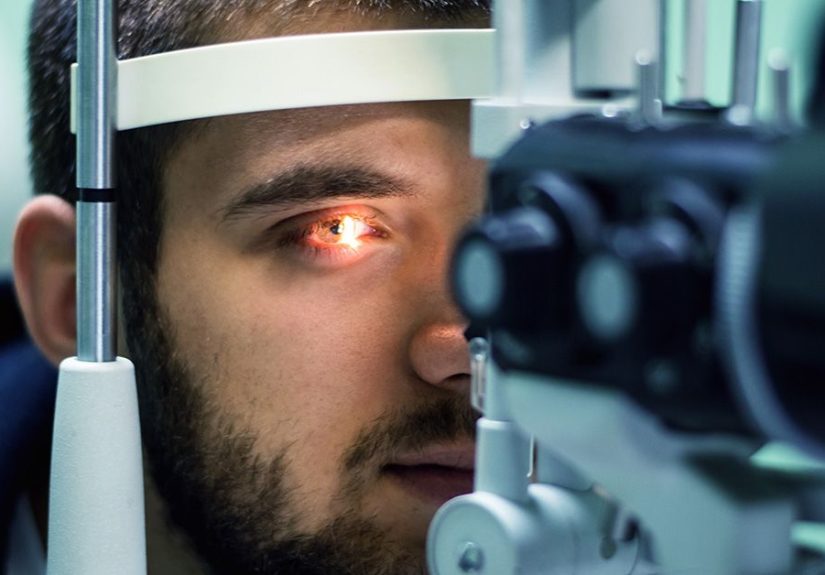
Many inflammatory eye conditions are diagnosed with a careful history and an eye exam, often using a slit lamp microscope.
This helps the clinician see inflammation on the surface, in the front chamber of the eye, or deeper structures. The right
diagnosis matters because treatments differ: the drops used for one condition may be ineffectiveor even riskyfor another.
Common treatment approaches
- Episcleritis: lubricating drops, anti-inflammatory drops, sometimes oral anti-inflammatories, and better Crohn’s control
- Uveitis: steroid eye drops, pupil-dilating drops to reduce pain/spasm, and sometimes systemic therapy
- Scleritis: often requires systemic anti-inflammatory treatment and close follow-up
- Dry eye: artificial tears, ointments at night, lid hygiene, environmental changes, and addressing deficiencies if present
The best outcomes often come from teamwork: gastroenterology managing the Crohn’s inflammation, and ophthalmology managing the
eye inflammation. Think of it as a joint custody arrangementbut for your immune system.
Practical habits that protect your eyes when you have Crohn’s
You can’t “lifestyle” your way out of autoimmune inflammation, but you can stack small habits that reduce avoidable irritation
and help you catch problems early.
- Get baseline eye exams if you’ve had eye symptoms, take steroids repeatedly, or have long-term therapy changes.
- Track eye symptoms like you track gut symptoms: redness, pain level, light sensitivity, and vision changes.
- Use preservative-free artificial tears if you need drops frequently.
- Be screen-smart: blink more than you think you need, and take breaks (dry eye loves endless scrolling).
- Don’t self-start leftover steroid eye drops without guidancewrong use can cause harm.
- Tell your eye doctor your Crohn’s meds, including steroids, biologics, or immunomodulators.
Specific examples (realistic scenarios you can recognize)
Example 1: Red eye during a Crohn’s flare
You’re in the middle of a flaremore bowel movements, fatigue, maybe joint achesand you notice one eye is red and a bit tender.
It feels irritated, but light doesn’t bother you, and your vision is fine. That pattern can fit episcleritis. Treatment may be
supportive, and as your Crohn’s flare improves, the eye redness may fade with it. Still, recurrence is a reason to get evaluated
so you’re not guessing every time.
Example 2: “My gut is calm, but my eye is not”
Your Crohn’s symptoms are stable, but you develop eye pain and strong light sensitivity over a day or two. The eye is red, and
vision seems slightly blurred. That constellation leans more toward anterior uveitis, which needs prompt ophthalmology evaluation
and treatment to reduce the risk of complications. The key lesson: eye inflammation can occur even when your gut isn’t flaring.
Example 3: The slow burn of steroid side effects
You’ve had multiple steroid courses over the years. Nothing dramatic happens overnight, but you start noticing glare at night,
halos around headlights, or your glasses prescription seems to change more often. Those can be signs of cataract development,
and steroids can also raise eye pressure without symptoms. Regular exams help catch these issues before they steal your vision
quietly.
FAQ: quick answers that are actually helpful
Are eye problems common in Crohn’s disease?
They’re not inevitable, but they’re not rare either. Eye issues are a recognized extraintestinal manifestation of IBD, and many
cases are treatableespecially when symptoms are reported early.
Will controlling Crohn’s fix the eye problem?
Sometimes. Episcleritis often improves as intestinal inflammation improves. Uveitis is more unpredictable; it may require
targeted eye treatment even when Crohn’s symptoms are controlled. That’s why coordination between specialists matters.
Should I stop my Crohn’s medication if my eyes act up?
Don’t stop medication on your own. Eye symptoms may be caused by Crohn’s-related inflammation, medication side effects, or
something unrelated (like infection). The right move is to get evaluated and let your clinicians decide whether treatment changes
are needed.
Conclusion
Crohn’s disease can affect vision in more than one way: direct inflammation (episcleritis, uveitis, scleritis), surface problems
like dry eye, and longer-term medication effectsespecially with corticosteroids. The most important skill isn’t memorizing
medical terms; it’s recognizing when symptoms cross into “urgent,” particularly pain, light sensitivity, and vision changes.
With timely care and the right treatment plan, many people protect their eyesight and keep Crohn’s from turning into an unwanted
eye-centered subplot.
Experiences (what it can feel like when Crohn’s targets your eyes)
People who live with Crohn’s often describe eye symptoms as uniquely unsettlingnot necessarily because they’re the worst pain
they’ve ever felt, but because vision feels non-negotiable. A cramp can be brutal, but you can still see your way through your
day. When your eye is inflamed, suddenly everything becomes a negotiation: lights, screens, driving, reading, even walking into
a grocery store that’s apparently lit like a movie set.
One common experience is the “is this serious or just annoying?” loop. A red eye can be mild dryness… or something more.
Crohn’s veterans sometimes get used to powering through symptomsbecause frankly, you’ve had to. But eye inflammation doesn’t
always reward toughness. Many people report learning a new rule: if redness comes with pain or light sensitivity, don’t wait.
It’s not panic; it’s prevention.
Another lived reality is the mismatch between gut symptoms and eye symptoms. Some people feel frustrated when they’re doing
“everything right”their Crohn’s feels controlled, their labs look decent, they’re finally eating without fearand then their
eye flares anyway. That can create a sense of betrayal, like your immune system didn’t get the memo. In those moments, it helps
to remember that uveitis and other inflammatory eye conditions can have their own timeline. It doesn’t mean your treatment is
failing; it may mean your care plan needs a two-specialist approach.
There’s also the emotional layer: anxiety about vision loss, especially if you’ve read the scary words online. Many patients
describe relief after a proper eye examsometimes it’s dry eye, sometimes episcleritis, sometimes something that needs treatment
but has a clear plan. The exam replaces guessing with steps, and that alone can reduce stress (which, as Crohn’s sufferers know,
never helps anything).
Day-to-day coping stories tend to sound practical and oddly specific: carrying preservative-free artificial tears like a tiny
hydration emergency kit; dimming screens and using warm light; wearing sunglasses indoors without caring if people think you’re
being dramatic (you’re notyou’re being functional); and setting reminders to blink during long screen sessions. Some people say
the biggest improvement came from simply telling both doctors everything: the gastroenterologist hears about the eye symptoms
early, and the ophthalmologist hears about Crohn’s history and medications from the start. That shared context can speed up
diagnosis and make treatments safer.
Finally, a gentle truth: Crohn’s already asks for resilience, and eye symptoms can feel like an unfair bonus round. But many
people find that once they’ve had one episode properly evaluated, future episodes become less frightening. You recognize patterns,
you know your red flags, and you have a plan. And if Crohn’s tries to audition for a lead role in your vision again, you’re
ready to send it back to the gut where it belongs.