Table of Contents >> Show >> Hide
- Why This Complaint Exists at All
- South Park’s Political Brand: Equal-Opportunity Offense (Mostly)
- Why Biden Got Fewer Punchlines
- What Conservative Fans Say They Want (And What They Usually Mean)
- What the Creators Have Actually Said About Politics and Burnout
- The Media Business Side: Why This Season Hit Like a Brick
- Satire Isn’t Customer Service
- Will South Park Roast Biden More in the Future?
- What This Whole Debate Reveals About the Culture War
- Conclusion
- Experiences and Lessons From the Great “Roast Biden Too” Debate
Every few years, a long-running comedy hits a weird milestone: it stops being “a show” and becomes a Rorschach test.
South Park has been there for a whileyet Season 27 turned the dial up so hard it practically snapped off in someone’s hand.
Suddenly, a slice of conservative viewers (including plenty who’ve proudly called themselves fans) began asking the show to do something very un-South Park:
stop mocking Trump and “finally” go after Joe Biden.
On paper, the complaint sounds simple. In practice, it’s a full buffet of culture-war anxieties, nostalgia for an older version of the show,
and a misunderstanding of how political satire worksespecially satire that’s engineered to land like a snowball filled with gravel.
Let’s unpack what’s really going on, why the “roast Biden too!” demand keeps surfacing, and why the creators are unlikely to take requests like a wedding DJ.
Why This Complaint Exists at All
The modern argument usually starts with a familiar myth: that South Park is (or was) a perfectly balanced “both sides” referee,
blowing the whistle equally on liberals and conservatives, then skating away in a cloud of cigarette smoke and profanity.
That reputation didn’t come from nowhereolder seasons regularly treated political zeal like a contagious rash.
But Season 27 didn’t feel like a referee. It felt like the show picked a fight, circled the calendar, and scheduled a rematch.
When Trump became a major on-screen target again, some conservative fans didn’t just dislike the jokesthey felt personally audited.
And nothing fuels internet outrage quite like the sensation of being perceived.
The episode that lit the fuse: “Sermon on the ’Mount”
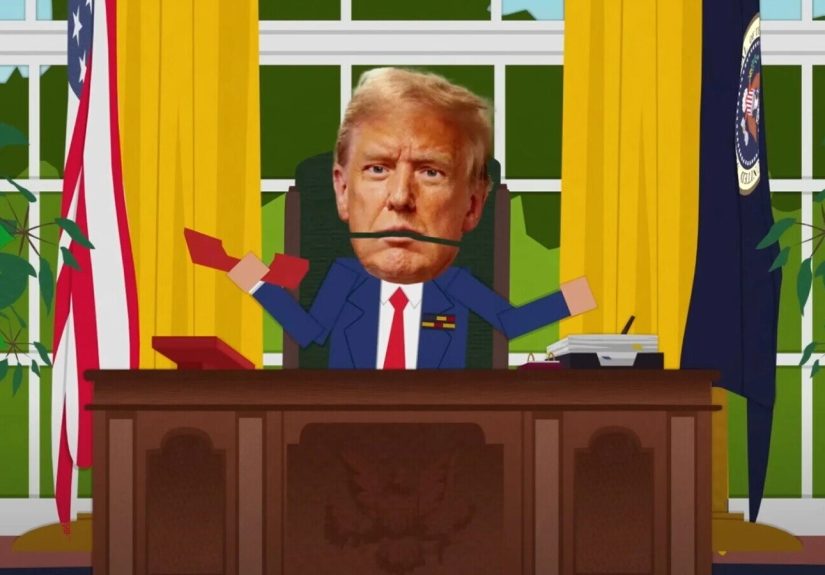
The Season 27 premiere (“Sermon on the ’Mount,” July 23, 2025) came back from a long gap with the subtlety of a marching band in a library.
It took direct swings at Trump, modern political-Christian branding, and even the corporate ecosystem around the showright as headlines swirled about
a huge streaming deal and broader media drama.
The episode’s most-discussed moments were deliberately outrageousexactly the kind of “are we really doing this?” imagery designed to dominate the news cycle.
That worked. The White House responded publicly, which (as any comedy writer can tell you) is like shouting “STOP HAVING FUN” at a birthday party
and being shocked when everyone repeats it for a week.
Then came “Wok is Dead” and the backlash got weirder
By early September 2025, Season 27 was blending headline politics with pop-culture chaos.
“Wok is Dead” (September 3, 2025) mashed together a kid-driven toy frenzy, tariff jokes, and more Trump-related absurdity.
For critics, it was the show doubling down.
For loyalists, it was proof that South Park hadn’t “gone soft”it had simply decided where the biggest comedic target was.
And for a certain conservative corner of the internet, it was the final straw:
“Why are you doing this to Trump, but you didn’t do that to Biden?”
South Park’s Political Brand: Equal-Opportunity Offense (Mostly)
Historically, South Park doesn’t “support” teams so much as it insults the idea of teams.
The show’s early-to-mid-era politics often carried a smug, centrist posture:
everyone’s ridiculous, institutions are clown cars, and the loudest people are usually the least self-aware.
That’s part of why it attracted fans across the spectrumnobody left the party un-roasted.
The “both sides” legacyand why people miss it
A lot of longtime viewers fell in love with the formula: pick a culture-war argument, inflate it until it bursts, and let the kids react like kids.
The satire landed because it felt like a prank played on the entire adult world.
In that era, conservative fans could laugh at Hollywood hypocrisy and progressive sanctimony, while liberal fans could laugh at moral panics and right-wing media melodrama.
Everyone could leave pretending they weren’t the joke.
But satire changes when the “topic” becomes the dominant gravitational force in politics.
If one figure is driving the news cycle, lawsuits, media coverage, and public rhetoric in a way that swallows oxygen,
a show built for topical comedy will naturally orbit that figure.
Not because the writers “joined a side,” but because the side effects are everywhere.
When the show got stuck with “President Storyline” gravity
South Park has openly wrestled with what happens when you build a season around a real election.
In 2016, the show famously found itself scrambling when real-world results didn’t match the expected outcomeforcing last-minute rewrites and a tonal pivot.
That experience became part of the show’s internal cautionary tale: making a sitting president a central character can hijack everything.
Season 27’s return to heavy Trump satire wasn’t just a random creative whimit was also a bet that the show could weaponize its “made fast” production style
and ride the current moment without getting swallowed by it.
Whether you think that’s brave or exhausting probably depends on how often your group chats include the words “did you see what he said today?”
Why Biden Got Fewer Punchlines
Here’s the part the internet skips because it’s not as satisfying as outrage: the Biden era simply had less South Park on the calendar.
Fewer standard episodes means fewer opportunities to do the classic late-night-monologue thingbut with cartoon children and more profanity.
Fewer episodes, more specials, and the streaming-rights mess
During the early 2020s, the franchise leaned heavily into specials and shorter seasons.
At the same time, streaming rights became a full-on corporate cage match.
Warner Bros. Discovery and Paramount ended up in litigation over a big licensing arrangement and where new South Park content could live.
When distribution turns into a boardroom knife fight, a show can end up releasing lessor releasing differentlythan fans expect.
So when conservatives complain, “You didn’t go hard on Biden,” there’s a practical response:
there wasn’t the same volume of weekly episodes to generate a steady supply of Biden-centered storylines.
It’s not “bias math.” It’s just… math.
Satire math: less screen time equals less roasting
Political satire thrives on repetition: recurring bits, evolving caricatures, and the slow, satisfying build of a running joke.
When a show has fewer episodes and more one-off specials, it tends to target broader themespandemic life, tech addiction, culture-war productsrather than
anchoring the entire season to a single politician.
That’s why some fans remember Biden being more “background” than “main character.”
They interpret absence as protection.
Often it’s just a sign the writers found bigger targets in the momentlike institutions, media incentives, and the public’s talent for turning every issue into a team sport.
What Conservative Fans Say They Want (And What They Usually Mean)
The demand“Stop mocking Trump and go after Biden”sounds like a plea for fairness.
Underneath, it often contains one (or more) of these ideas:
- “Return to the old vibe.” Less serialized political doom, more timeless stupidity (preferably in the form of kids being kids).
- “Mock the other team so I can laugh guilt-free.” Because laughing at your own side feels like betrayal in a polarized era.
- “If you’re going to be political, be political my way.” Which is basically: “My worldview should be your baseline.”
- “I miss when the show attacked the institutions I dislike.” Hollywood, media, academiatargets that feel safely ‘other.’
None of this means conservative viewers are uniquely sensitive. Every political tribe has a version of the same complaint:
“Satire is supposed to be balancedwhy does it feel like it’s aimed at me?”
That’s not a conservative problem. That’s a “comedy is a mirror and mirrors are rude” problem.
What the Creators Have Actually Said About Politics and Burnout
For years, the show’s creators have signaled discomfort with letting politics consume the series.
They’ve talked about the fatigue of being locked into Trump-centered storytelling and the way modern politics can swallow creative oxygen.
At points, they’ve also emphasized that they don’t see themselves as partisan warriorsmore like opportunists with microphones, chasing the funniest (or most horrifying) angle.
That context matters because Season 27’s sharper anti-Trump posture didn’t emerge from nowhere.
It landed in a moment when politics felt inseparable from pop culture, media business, and even the platforms where South Park streams.
The show didn’t just roast a politician; it roasted the entire ecosystem that keeps the politician permanently on your screen.
The Media Business Side: Why This Season Hit Like a Brick
It’s hard to separate Season 27’s content from the surrounding media reality:
blockbuster streaming negotiations, corporate mergers, and legal drama involving major entertainment companies.
When a show is both making fun of the news and being part of the news, the satire gets louderbecause the writers are basically trapped inside their own bit.
Season 27 arrived alongside major reporting about South Park’s high-value streaming future, including a big multi-year licensing arrangement tied to Paramount’s platform strategy.
Meanwhile, the broader press landscape was debating what it means when large media companies settle high-profile political lawsuits and face public criticism from journalists and advocacy groups.
That corporate tension is exactly the kind of thing South Park loves: a moral sermon delivered by people counting money backstage.
Satire Isn’t Customer Service
Here’s the uncomfortable truth: comedy doesn’t work like a complaint form.
You can’t submit Ticket #451 (“Please roast my opponent more”) and expect a turnaround email that says,
“Thank you for your feedback. Your requested bias has been added to our sprint backlog.”
Political satire is not a courtroom where each side gets equal time.
It’s closer to a street performer: it goes where the crowd is, where the chaos is, and where the reactions are loudest.
If one figure dominates the national conversation, the jokes will cluster thereespecially on a show that prides itself on being fast, topical, and shameless.
Why “go after Biden” is a creative trap
The demand also ignores a basic writing problem: you can’t force a recurring character into a story that doesn’t need them.
The funniest jokes are rarely the ones that feel obligatory.
And “we need to be fair” is not a punchlineunless the show decides to make that the joke.
Plus, the moment a satire show looks like it’s following audience orders, it loses the thing that makes it dangerous:
unpredictability. Once you can “steer” the clown, the clown becomes a mascot.
South Park has survived by refusing to become anyone’s mascot, even when fans keep trying to print the T-shirts.
Will South Park Roast Biden More in the Future?
Could the show go after Biden more? Sureif the writers see a story there, if Biden becomes central to the political conversation again,
or if the cultural moment shifts toward themes that fit his public image and the media narratives around him.
But the more important point is this: South Park doesn’t typically “hunt” a target the way partisan media does.
It hunts whatever is funniest, most absurd, or most revealing about the momentsometimes that’s a politician, sometimes it’s a platform,
and sometimes it’s a toy craze that turns children into tiny hedge-fund managers.
If you’re waiting for South Park to become a “Biden takedown show,” you’re waiting for a cat to become a vegetarian.
Not because it can’t happen, but because it would require the cat to stop being a cat.
What This Whole Debate Reveals About the Culture War
The funniest part of the “stop mocking Trump” demand is that it proves the show is still doing what it always did:
exposing how badly adults want entertainment to validate their worldview.
In a polarized era, comedy gets treated like a moral referendum. If a joke lands on your side, it’s “truth.”
If it lands on you, it’s “propaganda.” That framing turns every episode into a political litmus test,
and it turns fans into amateur prosecutors arguing over whether a cartoon has violated the Constitution of Vibes.
Season 27 didn’t invent this problem, but it highlighted it:
when politics becomes pop culture, pop culture becomes a battlefield.
Even a comedy that thrives on offending everyone can be accused of “picking a side” the moment one side feels more personally targeted.
Conclusion
Conservative fans demanding that South Park stop mocking Trump and “go after Biden” aren’t just making a content request.
They’re expressing nostalgia for an older era of satireone where the show felt like it mocked “everyone” without making any one group feel exposed.
But South Park isn’t a fairness committee. It’s a chaos detector.
When chaos clusters around a particular figure, the jokes cluster there too.
If that’s uncomfortable, it might be because satire is doing its job: reminding all of us that “my side is immune to ridicule” is the funniest lie in American politics.
Experiences and Lessons From the Great “Roast Biden Too” Debate
If you’ve spent even ten minutes in a comment section after a politically spicy South Park episode, you’ve seen the same emotional cycle play out.
First comes the clip-sharing: someone posts a scene like it’s evidence in a trial. Then come the victory laps:
“See? Even South Park agrees with us.” After that, the counterattack arrives:
“Actually, the joke is on you, and here’s a 17-tweet thread explaining why.”
What’s fascinating (and, honestly, kind of hilarious) is how quickly “I like this show” becomes “this show owes me representation.”
Some conservative viewers talk about earlier seasons the way people talk about a favorite diner that changed the fries.
The nostalgia is real: back then, it felt like nobody was safe. Now, when the show hits Trump hard, it feels personallike the diner hung your photo on the wall under
“DO NOT SERVE.”
On the flip side, plenty of progressive viewers have their own version of selective memory.
They’ll cheer when the show punches right, then suddenly remember the show’s history of mocking liberal sacred cows the moment it touches a topic they care about.
The point is not “both sides are the same.” The point is that fandom is the same:
people want art to be a mirror that flatters, not a mirror that shows spinach in your teeth.
I’ve also noticed a practical truth about political comedy: the more you treat it like news, the less you enjoy it.
When you watch an episode like you’re tracking “fairness points,” you’ll always be disappointedbecause comedy doesn’t keep score the way a partisan brain does.
The minute you start asking, “Did they mock my enemies enough this week?” you’re not watching a sitcom.
You’re conducting a performance review.
A healthier way to experience a show like South Park is to treat it like a stress test.
What idea is it poking? What hypocrisy is it spotlighting? What insecurity is it exploiting?
Sometimes the answer is “Trump.” Sometimes it’s “the media.” Sometimes it’s “all of us turning every trend into a moral crusade.”
When you watch it that way, the jokes don’t have to align with your politics to be usefulor funny.
And here’s the part fans rarely admit out loud: demanding that the show “go after Biden” is usually less about comedy and more about permission.
It’s a request for a cultural hall passan assurance that laughing won’t cost you social points.
But the whole magic of South Park is that it refuses to hand out hall passes.
It hands out uncomfortable laughter instead.
If you’re a conservative viewer who feels burned by Season 27, try this experiment:
replace “They’re mocking Trump” with “They’re mocking the loudest, most consequential energy in the room.”
If you still hate it, fair enough. Not every joke is for everyone.
But if that reframe makes the anger shrink even a little, you’ve discovered something valuable:
satire hurts most when it lands close to homeand “home” isn’t a party. It’s a mindset.
Ultimately, the “mock Biden too” debate is less about who deserves ridicule and more about what people want comedy to do.
Some want it to entertain. Some want it to validate. Some want it to punish their enemies.
South Park will keep doing the fourth thing: poking the bruise until everyone admits it exists.