Table of Contents >> Show >> Hide
- Why a Mother-in-Law Wedding Gown Feels Like a Big Deal (Because It Is)
- Is It Ever Okay for the Mother of the Groom to Wear a Bridal-Style Gown?
- What’s Really Going On? Common Motives Behind the “MIL Wedding Gown” Move
- How to Shut It Down: The Calm, Clear Strategy That Works
- Prevent the Plot Twist: Put Boundaries in Writing
- If She Shows Up in the Wedding Gown Anyway: Damage Control That Keeps You Classy
- What This Moment Really Tests: Your Future Marriage Teamwork
- A Note for Mothers-in-Law: How to Be Memorable in the Best Way
- Conclusion: You Can Shut This Down Without Losing Yourself
- Experiences & Lessons Couples Share About the “MIL Wedding Gown” Situation (Extra Insight)
- Experience #1: “It Looked Champagne Online” (And White in Real Life)
- Experience #2: The “Tradition” Argument That Was Really About Control
- Experience #3: The “I Just Want to Feel Beautiful” Breakdown
- Experience #4: The “She Won’t Listen to Me” Groom Problem
- Experience #5: The “She Showed Up Anyway” Day-Of Rescue Plan
Weddings bring out the best in people: happy tears, heartfelt speeches, and the collective decision to spend way too much money on tiny appetizer squares.
Weddings also bring out the unexpected: surprise plus-ones, surprise opinions, andif you’re really luckysurprise bridalwear purchased by someone who is
not the bride.
If you’ve landed here, you’re likely dealing with a scenario that feels like it was written by a reality TV producer:
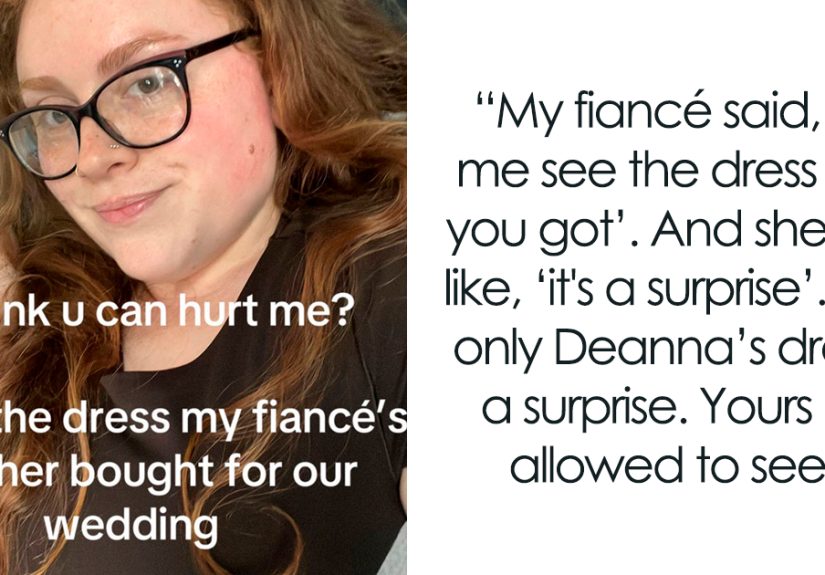
the mother-in-law (or future mother-in-law) bought a wedding gown for her son’s wedding. Not “a formal dress.”
Not “a champagne gown that photographs pale.” An actual wedding gown. As in: train, lace, bridal silhouette, and the audacity.
Online, people might call it “cosplaying marrying her son.” Offline, it’s usually a mix of boundary-testing, attention-seeking,
and misunderstanding (sometimes genuine, sometimes… very much not). Either way, you don’t have to let it hijack your weddingor your peace.
Let’s break down what this means, why it happens, and how to shut it down without turning your planning process into a family feud trilogy.
Why a Mother-in-Law Wedding Gown Feels Like a Big Deal (Because It Is)
In many U.S. wedding traditions, the bride’s look is symbolic: it’s a visual “center of gravity” for the day. When someone else shows up in
something that reads bridalespecially a white or ivory wedding-style gownit can feel like they’re trying to compete for the spotlight.
Even if the intent is “I just liked it,” the impact can be: “Why are we doing this on my wedding day?”
There’s also the photo factor. Colors like ivory, champagne, pale blush, and light neutrals can read white in certain lighting and camera settings,
which means a “close enough” gown can become a “wait… who’s the bride?” moment in pictures you’ll keep forever.
Most importantly, it’s a boundary issue. A wedding isn’t just a party; it’s a public rite-of-passage for a new family unit.
When a parent (or future parent-in-law) pushes into bridal territory, it can signal a bigger theme:
“I don’t recognize your role, your choices, or your place in this new chapter.”
Is It Ever Okay for the Mother of the Groom to Wear a Bridal-Style Gown?
There are rare exceptionsbut they require one key ingredient: the couple’s explicit approval.
Some weddings are themed (all-white dress codes, nontraditional ceremonies, cultural variations, or “everyone wears white” celebrations).
In those cases, a mother-of-the-groom outfit might include white or bridal-adjacent details.
But in a standard Western/U.S. wedding setup, a mother-in-law buying a wedding gown for her son’s wedding is generally considered inappropriate.
If it wasn’t requested by the couple, it’s not “bold.” It’s not “fashion-forward.” It’s a distraction with sequins.
What’s Really Going On? Common Motives Behind the “MIL Wedding Gown” Move
People love a villain edit, but real life is messier. Here are the most common reasons this happensranging from clueless to calculating:
1) “I Didn’t Know” (But Also Didn’t Ask)
Sometimes a mother-in-law truly doesn’t understand modern wedding etiquetteespecially if she’s not online, hasn’t attended many weddings recently,
or comes from a different cultural norm. That said, buying a full wedding gown without checking in is a choice.
2) Spotlight Hunger
Weddings are emotionally loaded. Some parents feel anxious about “losing” their child’s attention and respond by competing for it.
A bridal gown can be a loud, visual way of saying: “Don’t forget who matters here.”
3) Control as a Love Language (Unfortunately)
Certain family dynamics equate control with care. The wedding becomes a stage where the mother-in-law tests:
“Can I still influence decisions? Can I still override preferences? Can I make this about my comfort?”
4) Insecurity and Comparison
Some mothers are triggered by the attention a bride receives because it highlights their own aging, visibility, or relationship shifts.
A gown can become armor: “If I look bridal too, I won’t feel left out.”
5) The “Tradition” Card
Occasionally someone claims it’s “family tradition” for the groom’s mom to wear white. Even if that’s true in her family,
tradition doesn’t get to bulldoze consent. A healthy tradition survives a simple question: “Are the couple okay with it?”
How to Shut It Down: The Calm, Clear Strategy That Works
The goal isn’t to win a debate. The goal is to protect your wedding day and set a tone for your marriage:
your relationship comes first.
Step 1: Get the Facts (Without Spiraling)
- Ask for a photo of the dress. Not a “description,” not a “trust me,” not a “you’ll see.” A photo.
- Clarify if it’s white/ivory/champagne, and whether it’s styled like a bridal gown (train, lace, veil vibes, etc.).
- Confirm the wedding dress code and color palette you’re using.
Step 2: The Groom Should Lead the Conversation
When conflict involves his mother, the groom stepping up is often the fastest way to reduce “you’re controlling my family” narratives.
This isn’t because the bride is powerlessit’s because boundaries land better when they come from the original family member.
Step 3: Use a Simple Script (Short, Kind, Non-Negotiable)
Script A: Direct and Polite
“Mom, that dress reads like a wedding gown. Weddings are the one day where the bride’s look should be unique, so we need you to choose something else.
I’m happy to help you find a dress you’ll feel amazing in.”
Script B: The Photo/Camera Angle
“That color and silhouette will photograph bridal and could cause confusion in pictures. Please pick a non-white color and a non-bridal style.
We want you to look great, just not like you’re walking down the aisle.”
Script C: If She Argues “But I Already Bought It”
“I understand it’s frustrating, but the outfit still isn’t appropriate for our wedding. You can return it, alter it, or wear it to another event.
For the wedding, we need a different dress.”
Script D: If She Says “You’re Being Dramatic”
“We’re not debating this. This is what we need for the day to feel respectful and comfortable. Let’s focus on finding you another option.”
Step 4: Offer Options (So the Boundary Has a Bridge)
- Color guidance: jewel tones, navy, deep green, burgundy, dusty bluewhatever fits your season and palette.
- Style guidance: formal, elegant, flatteringjust not bridal.
- Shopping support: suggest a shopping day, a stylist appointment, or a few vetted online picks.
- Alterations: in some cases, dyeing or shortening can reduce “bridal” energy (but only if it truly changes the vibe).
Prevent the Plot Twist: Put Boundaries in Writing
If you’re worried she’ll ignore the conversation or show up anyway, make your expectations easy to reference:
- Wedding website FAQ: “We ask guests to avoid white/ivory/champagne and overly bridal styles.”
- Dress code line: include examples like “formal,” “garden party,” or “black tie,” plus clear “avoid” notes if needed.
- Family coordination: let key relatives know the plan so you’re not alone if things get weird.
This isn’t about policing guests. It’s about preventing a predictable problem when you already have reasons to believe it might happen.
If She Shows Up in the Wedding Gown Anyway: Damage Control That Keeps You Classy
First: breathe. Second: don’t handle this personally in the moment. You deserve to be present on your wedding day.
If you need a plan, use a “designated handler”a trusted friend, wedding planner, or relative who can intercept drama.
Practical (Non-Mean) Options
- Quiet conversation before the ceremony: “This outfit isn’t acceptable. You’ll need to change.”
- Offer a cover-up: a darker shawl, jacket, or wrap can reduce the bridal look in photos (not perfect, but sometimes a lifesaver).
- Photo boundaries: if she refuses to change, limit posed photos where she stands next to the couple.
- Seat planning: choose seating that doesn’t place her front-and-center in every photo angle.
What you don’t need: petty sabotage. No “oops” drinks. No public shaming. No viral moment you’ll regret.
Calm boundaries are powerfuland they age much better than chaos.
What This Moment Really Tests: Your Future Marriage Teamwork
The wedding gown issue isn’t only about fabric and lace. It’s about whether you and your partner can:
- Communicate as a united front
- Protect each other from unnecessary stress
- Set respectful boundaries with family
- Hold a line without turning cruel
If your partner minimizes it (“That’s just how she is”), pay attention. That pattern doesn’t magically disappear after the honeymoon.
It usually shows up againholidays, kids, finances, and every big milestone you thought would be “simple.”
The healthiest message you can send is also the simplest: “We love you. And we decide together.”
A Note for Mothers-in-Law: How to Be Memorable in the Best Way
If you’re a mother of the groom reading this, here’s the cheat code: you can look stunning without looking bridal.
Your role is important. Your presence matters. You don’t need a wedding gown to prove it.
- Choose a distinctive color that complements the wedding palette but doesn’t match the bridal party exactly.
- Prioritize comfortyou’ll be greeting people, taking photos, and likely dancing.
- Ask for guidance early, and send a photo before buying if you’re unsure.
- Remember the headline rule: you want compliments that start with “You look amazing,” not “Wait… what are you wearing?”
Conclusion: You Can Shut This Down Without Losing Yourself
A mother-in-law buying a wedding gown for her son’s wedding can feel insulting, surreal, and weirdly theatrical.
But you don’t have to match that energy.
Handle it with clarity: get the facts, have the groom lead, set a non-negotiable boundary, and offer alternatives.
If she escalates, protect your day with a plan and let someone else manage the confrontation.
The goal is a wedding that celebrates your partnershipnot a wardrobe battle that becomes family lore.
Because the best “something borrowed” is a little extra patiencenot your future mother-in-law borrowing the entire bridal identity.
Experiences & Lessons Couples Share About the “MIL Wedding Gown” Situation (Extra Insight)
While every family is different, couples and wedding pros often describe a handful of repeat-story patterns when a mother-in-law
buys something bridal for her son’s wedding. The useful part isn’t the dramait’s what actually worked to solve it.
Here are experience-based lessons that show up again and again.
Experience #1: “It Looked Champagne Online” (And White in Real Life)
One common scenario starts with a sincere claim: the mother-of-the-groom orders a “champagne” or “light gold” gown online,
thinking it’s safely neutral. Then it arrives andunder indoor lightingreads like off-white.
The fix that tends to work best is the least confrontational: take a couple quick phone photos in different lighting,
then show her the side-by-side comparison with the bride’s color. Many people change course when they see how it will look in pictures.
Couples who solved it this way emphasized the phrase: “We believe you didn’t mean it, but the camera will.”
Experience #2: The “Tradition” Argument That Was Really About Control
Another pattern is the “It’s tradition in our family” defense. When couples pushed back, the disagreement wasn’t actually about tradition
it was about who had decision-making power. The solutions that worked paired firmness with dignity:
the groom said no clearly, the couple offered alternative colors and shopping help, and the boundary was framed as respect,
not punishment. Couples who kept it calm also avoided personal attacks (no name-calling, no diagnosing),
which made it harder for the mother-in-law to portray herself as the victim.
Experience #3: The “I Just Want to Feel Beautiful” Breakdown
Sometimes the bridal-style gown is tied to insecurity. A mother-in-law may feel invisible during wedding season,
especially if she’s dealing with aging, body changes, or unresolved feelings about her own marriage or milestones.
Couples who handled this successfully did two things at once: they validated the emotion (“We want you to feel beautiful”)
while refusing the outfit (“Not in a bridal gown at our wedding”). Then they helped her find a flattering,
confident look that still felt specialthink structured silhouettes, rich colors, or statement accessories.
The win here is emotional: you meet the need (confidence) without granting the method (bridal cosplay).
Experience #4: The “She Won’t Listen to Me” Groom Problem
Many brides say the hardest part wasn’t the dressit was feeling alone when their partner stayed passive.
Couples who got past it treated the conflict as a teamwork practice. They agreed on one message,
delivered it together (or with the groom leading), and set a consequence that wasn’t cruel but was real
(for example: “If you arrive in that gown, you won’t be included in formal photos until you change.”).
This approach made the boundary about the wedding plan, not the mother-in-law’s character.
Over time, that same teamwork often improved other family interactions too.
Experience #5: The “She Showed Up Anyway” Day-Of Rescue Plan
When a mother-in-law ignored the boundary, couples who stayed happiest later were the ones who planned for it.
They picked a trusted “handler,” kept the bride out of the confrontation, and used short, private language:
“This isn’t acceptable. You need to change.” If she refused, they limited photo access and redirected attention back to the couple.
The lesson couples shared most: the wedding day is not the day to negotiate. It’s the day to execute the plan and protect the moment.
The biggest takeaway from these experiences is hopeful: most of the time, this problem is solvable without scorched earth.
Clear boundaries, calm delivery, and a united couple usually reduce the dramasometimes immediately, sometimes over a few tense conversations.
And even in the rare cases where the mother-in-law doubles down, having a plan means she doesn’t get to steal the day.
Your wedding is about your partnership. Everything else is just… wardrobe noise.