Table of Contents >> Show >> Hide
- What People Mean by “Nicotine Inhaler” (And What They Don’t)
- Reality Check: Is the Nicotine Inhaler Available in the U.S.?
- How a Nicotine Inhaler Works (In Plain English)
- Who Might Have Loved a Nicotine Inhaler (When It Was Available)
- Effectiveness: Can a Nicotine Inhaler Help You Quit?
- Pros and Cons of a Nicotine Inhaler
- Side Effects and Safety: What to Know
- If the Inhaler Isn’t Available, What’s the Closest Substitute?
- How to Decide What’s Best for You
- Quit-Smoking Support That Actually Helps (Even If You’re Not Ready Yet)
- FAQ: Nicotine Inhaler Questions People Ask All the Time
- Bottom Line: Could a Nicotine Inhaler Be the Best Way to Quit?
- Real-World Experiences (): What People Reported About Nicotine Inhalers
If you’ve ever thought, “I don’t just want the nicotineI want the ritual,” you’re not alone. For a lot of smokers,
quitting isn’t only chemical. It’s also the hand-to-mouth habit, the “break” moment, the deep breath after a stressful text,
and the tiny ceremony of stepping outside like you’re starring in your own gritty indie film.
That’s why the nicotine inhaler (often remembered by the brand name Nicotrol) has always sounded like a genius idea:
nicotine replacement therapy (NRT) that looks and feels a bit more like smoking than a patch or lozenge. But here’s the plot twist:
in the United States, the prescription nicotine oral inhaler has been discontinued, so it may not be an option right now.
Still, people ask about it for good reasonsespecially because it highlights an important truth: the “best” quit method is the one that matches
your cravings, triggers, habits, and health needs.
Quick safety note: Nicotine products are intended for adults. If you’re under 21, don’t self-treat nicotine dependence with nicotine products.
Talk with a parent/guardian and a healthcare professional about the safest, most effective support options.
What People Mean by “Nicotine Inhaler” (And What They Don’t)
The nicotine oral inhaler (NRT)
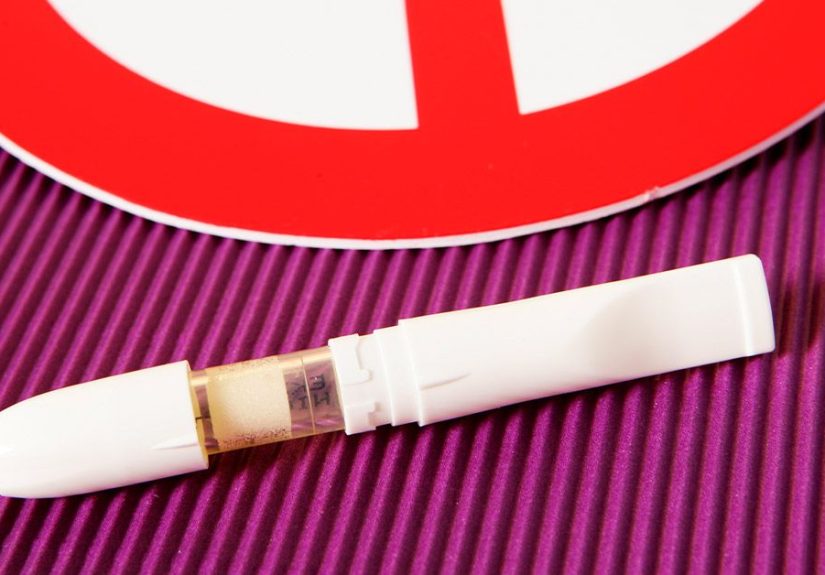
The classic “nicotine inhaler” people mean is a prescription nicotine replacement therapy. Despite the name, it’s not like an asthma inhaler.
It doesn’t deliver medication deep into your lungs. Instead, nicotine is absorbed mostly through the lining of your mouth and throat while you puff.
Think of it as a nicotine delivery device that targets cravings while keeping you away from smoke, tar, and thousands of other chemicals in cigarettes.
Not the same thing as vaping
A nicotine inhaler for quitting is not an e-cigarette or vape. Vapes can vary wildly in nicotine delivery, ingredients, and risks.
The whole point of FDA-approved quit medications is predictable dosing, safety oversight, and a plan to taper off nicotinenot to start a new long-term habit.
Reality Check: Is the Nicotine Inhaler Available in the U.S.?
As of recent updates, nicotine oral inhalation has been discontinued in the United States, and the brand Nicotrol Inhaler was discontinued by its manufacturer.
That means many people can’t actually get a prescription nicotine inhaler right noweven if older guides still describe how it works.
(If you’ve been hunting online and feeling like you’re chasing a discontinued sneaker drop… you kind of are.)
So does that make this whole article useless? Not at all. Here’s what’s still valuable:
- You’ll learn why the inhaler helped certain people quitand what needs it uniquely met.
- You’ll understand who it would fit best if it returns or if you’re reading from a region where it’s available.
- You’ll get smart alternatives that match the same “I miss the ritual” problem.
How a Nicotine Inhaler Works (In Plain English)
A nicotine inhaler is designed to do two big jobs:
(1) reduce withdrawal symptoms and cravings by replacing some nicotine, and
(2) help break the association between cigarettes and reward by delivering nicotine more slowly and without smoke.
Traditional cigarette nicotine hits the brain fast, which is part of why it’s so reinforcing. NRT generally delivers nicotine more slowly and at lower peaks.
That’s not a “downgrade”it’s a feature. Slower delivery helps reduce the reward punch that keeps addiction glued in place.
Why the inhaler felt different from gum or lozenges
Many people liked the inhaler because it did something patches can’t do:
it gave your hands and mouth something to do. If your cravings are partly behavioral (“I need something in my hand when I drive,”
“I always smoke with coffee,” “I smoke to take a break”), this mattersa lot.
Who Might Have Loved a Nicotine Inhaler (When It Was Available)
Not every quit tool fits every quitter. A nicotine inhaler tended to make the most sense for adults who checked several of these boxes:
1) You have a strong hand-to-mouth habit
If you’ve ever lit a cigarette and realized you weren’t even that desperate for nicotineyou just wanted the motionyou’re the target audience.
The inhaler can “replace the ritual” while you retrain your brain.
2) Your cravings spike in specific situations
Some people don’t crave all day; they crave in sharp bursts: after meals, with alcohol, during stress, or while driving.
Faster-acting NRT options (like gum, lozenges, or nasal spray) are often used for these spikes; the inhaler aimed to help with that “moment craving,” too.
3) You struggled with other NRT formats
Some people hate gum. Others forget patches. Some get skin irritation. A quit plan often improves when you choose a method you’ll actually use consistently.
Consistency beats perfection every day of the week.
4) You want structure and medical guidance
The nicotine inhaler was prescription-only, which meant many users got built-in touchpoints with a clinician or pharmacistoften helpful for dose adjustments,
side effect management, and pairing medication with behavioral support.
Effectiveness: Can a Nicotine Inhaler Help You Quit?
In general, nicotine replacement therapy is a proven quitting aid. Major public health resources consistently report that
using quit-smoking medications correctly can significantly improve your odds of quitting.
The strongest outcomes usually come from combining medication with counseling/support.
While the inhaler isn’t widely available in the U.S. now, the broader takeaway still applies:
NRT works best when you treat quitting like a skill-building project, not a character test.
You’re not trying to “win” against cigarettes with willpower. You’re building a system where cigarettes don’t fit anymore.
Pros and Cons of a Nicotine Inhaler
Potential benefits
- Matches the ritual: Helps with the hand-to-mouth habit that patches can’t address.
- Flexible use: Can be used around trigger moments (with clinician guidance).
- No smoke: Delivers nicotine without combustion-related toxins.
- Behavior reset: Helps separate stress relief from smoking itself.
Potential downsides
- Availability: Currently discontinued in the U.S., so it may not be obtainable.
- Irritation: Mouth/throat irritation and cough were common complaints.
- Not “instant” like smoking: Some users miss the rapid hit and feel under-satisfied at first.
- Not for everyone medically: Certain heart conditions and respiratory issues may require extra caution.
Side Effects and Safety: What to Know
All nicotine products deserve respect. Nicotine isn’t the main cause of smoking-related cancer (combustion is the bigger villain there),
but nicotine still affects your bodyheart rate, blood pressure, and dependence pathways included.
Commonly reported side effects
- Mouth or throat irritation
- Cough or runny nose
- Headache
- Hiccups or stomach discomfort
When to be extra cautious
If you have heart disease, arrhythmias, angina, recent heart events, asthma, COPD, or other significant medical conditions, you should get medical advice
before using nicotine medications. The same goes for pregnancy or breastfeedingyour clinician can help weigh risks and choose the safest approach.
Keep nicotine away from kids and pets
Nicotine exposure can be dangerous for children and animals. Any nicotine product should be stored securely and treated like a medicationbecause it is one.
If the Inhaler Isn’t Available, What’s the Closest Substitute?
If you were drawn to the inhaler because you want something that “feels” like smoking, you’re really looking for two things:
rapid craving relief and behavior replacement.
Here are strong substitutes that target those same needs.
Option A: Patch + a short-acting NRT (combo approach)
Many quit programs use a nicotine patch for steady baseline control and add gum or lozenges for breakthrough cravings.
This combo approach can be especially useful for heavier smokers or people with frequent triggers.
(Translation: you get both the “background music” and the “emergency button.”)
Option B: Gum or lozenges for the “busy mouth” problem
If your cravings show up as “I need something in my mouth right now,” gum or lozenges can be surprisingly effective.
They also build a new routine: chew, breathe, ride the urge, move on.
Option C: Nicotine nasal spray (prescription)
Some people need a faster-acting prescription option. A clinician can tell you whether that’s appropriate based on your medical history and dependence level.
Option D: Prescription non-nicotine meds
Medications like varenicline or bupropion can reduce cravings and withdrawal in different ways than NRT.
These can be especially helpful if nicotine-only approaches didn’t work for you before, or if you want a plan that doesn’t rely on nicotine replacement.
Option E: Behavioral “inhaler substitutes” (seriously)
If the ritual is your toughest hurdle, consider building a replacement ritual on purpose:
- Keep a “quit kit” in your car: sugar-free mints, toothpicks, a stress ball, water bottle, and a short breathing script.
- Practice the “3-minute craving surf”: sip water, slow breathing, do something with your hands, and wait it out.
- Swap the smoke break for a real break: sunlight, stretching, a quick walk, or texting a supportive friend.
How to Decide What’s Best for You
The best quitting method is usually the one that matches your pattern. Try answering these questions honestly:
What kind of smoker are you?
- All-day nicotine maintenance smoker: You feel “off” if you go too long without a cigarette.
- Trigger smoker: You mostly smoke in specific situations (coffee, stress, driving, social events).
- Ritual smoker: The hand-to-mouth habit is nearly as strong as the nicotine craving.
What failed last timeand why?
If you tried to quit before (most people do), don’t label that “failure.” Label it “data.” Were you under-medicated for cravings?
Did stress spike? Did you lose your routine? Did you quit alone with no support? Your next plan should solve the real problem you ran into.
How much support do you have?
Counseling, quitlines, text programs, and support groups can dramatically improve outcomes. Quitting is partly chemistry, partly psychology, and partly logistics.
Support helps with all three.
Quit-Smoking Support That Actually Helps (Even If You’re Not Ready Yet)
You don’t have to go full superhero mode by yourself. Many U.S. quit resources offer free coaching and support, including state quitlines.
If you want a starting point, calling a quitline can connect you with counseling and local resources.
Also: slips happen. A slip isn’t permission to give upit’s a signal to adjust your plan. Change the environment. Change the coping tool.
Change the timing. But don’t throw out the whole mission because of one bad scene.
FAQ: Nicotine Inhaler Questions People Ask All the Time
“If it’s discontinued, should I still care?”
Yesbecause the reasons people liked it (ritual + craving control) can guide you toward the best alternative plan.
“Is NRT just swapping one addiction for another?”
Most people can taper off NRT over time. The goal is to step down nicotine dependence while eliminating the most dangerous part of smoking: inhaling smoke from burning tobacco.
A clinician can help you structure a taper so you don’t stay stuck.
“What if I have anxiety and smoking feels like my ‘calm button’?”
That’s commonand also tricky, because nicotine can worsen stress cycles over time by creating withdrawal-driven anxiety.
Pairing quitting medication with coping skills (breathing, movement, therapy, stress tools) often makes the difference.
Bottom Line: Could a Nicotine Inhaler Be the Best Way to Quit?
If the nicotine inhaler were widely available, it could be a great fit for adults who need help with both cravings and the hand-to-mouth ritual.
But in the U.S., it’s currently discontinued, so for most people it isn’t a practical “best option” today.
The good news is you can still solve the exact problem the inhaler was designed to solve. A smart quit plan often combines:
effective medication (NRT and/or prescriptions) + behavior support (coaching, counseling, quit plans) + ritual replacements
(new habits for stress, breaks, driving, and social triggers).
If you want the shortest, truest summary: quitting is easier when you treat cravings like a predictable event, not a personal failure.
Build your plan around your pattern, and get support that makes it sustainable.
Real-World Experiences (): What People Reported About Nicotine Inhalers
Since the prescription nicotine inhaler isn’t broadly available in the U.S. right now, the “experience” stories you’ll hear usually come from people who used it
when it was still on the market, or from communities that discuss older quit attempts. The most consistent theme is surprisingly simple:
the inhaler helped people who missed the ritual more than the nicotine.
One common experience sounded like this: “The patch helped my cravings, but my hands didn’t know what to do.” People described feeling twitchy in the car,
restless after meals, or oddly uncomfortable during stressbecause those moments used to come with a cigarette. The inhaler’s physical routine (holding it, puffing,
taking a “break”) created a bridge habit. In other words, it didn’t just replace nicotine; it replaced behavioral muscle memory.
Another pattern was “craving timing.” Some adults said they didn’t want constant nicotinejust something for sharp trigger moments. They described the inhaler as useful
during high-risk situations: driving home from work, talking on the phone, stepping outside with coworkers, or winding down at night. Even when the nicotine relief felt
“softer” than a cigarette, the act of puffing gave them a pause long enough to let the urge peak and pass. Several people described it as a “craving delay tool”:
not a magic wand, but a way to buy a few minutes so their rational brain could rejoin the conversation.
Side effects came up a lot in user reports. The most frequent complaint was throat or mouth irritation, sometimes paired with a cough. Interestingly, some people said
that irritation was actually helpful because it made them less likely to overuse it. Others found it annoying enough that they switched to lozenges or gum. This is a
good reminder that “best” isn’t universal: a quit tool can be perfect on paper and still not fit your body.
Many people who liked the inhaler also described pairing it with behavioral strategieswhether they planned to or not. They kept it in a specific place (car console,
kitchen drawer), used it after specific triggers (coffee, meals), and slowly built new routines around it. Over time, the inhaler became less about nicotine and more
about breaking the chain reaction: trigger → cigarette → relief. Once that chain weakened, some people transitioned to other supports (patch + lozenges, counseling,
or prescription medications), while others tapered down.
The most useful lesson from these experiences isn’t “you need the inhaler.” It’s this:
people quit more successfully when they address both chemistry and habit. If you’re drawn to the idea of a nicotine inhaler, you’re probably noticing
that your smoking is tied to routines and identity (“my break,” “my reward,” “my stress reset”). That’s not a flaw. It’s a map. And a good quit plan uses that map
by replacing the ritual, not just removing it.