Table of Contents >> Show >> Hide
- What “Iconic” Really Means in the Spirits World
- A Short Origin Story with Big Energy
- The Flavor Blueprint: Why “Four Botanicals” Is a Flex
- London Dry Gin, Explained (Without Putting You to Sleep)
- The Secret Sauce: Why Tanqueray Works So Well in Cocktails
- The Portfolio Effect: How Tanqueray Expanded Without Losing Its Identity
- Why Tanqueray Stays a Global Reference Point
- How to Pick the Right Tanqueray Bottle (Taste-First, Not Hype-First)
- So… Why Is Tanqueray Truly Iconic?
- Experiences That Make Tanqueray Feel Iconic (500+ Words)
Some brands become “iconic” because they’re loud. Some become iconic because they’re old. Tanqueray is iconic because it’s
both and neither: it has a bold, recognizable profile, yet it’s also the kind of quietly dependable bottle that
shows up everywherehome bars, cocktail menus, and bartender stationslike a reliable friend who never texts “k” back.
Before we go any further: this article is about history, craftsmanship, and culture. If you’re of legal drinking age,
enjoy alcohol responsibly and follow local laws. If you’re not, you can still appreciate what Tanqueray represents
a blueprint for a classic style, the logic of botanicals, and a big influence on modern cocktail culture.
What “Iconic” Really Means in the Spirits World
“Iconic” isn’t just “popular.” In spirits, a truly iconic brand usually checks most of these boxes:
- It defines a style: People use it as a reference point (“this tastes like a classic London Dry”).
- It’s consistent: The flavor is steady enough to trust in a cocktail, year after year.
- It’s easy to recognize: Bottle design, aroma, and taste feel unmistakable.
- It’s widely used: Not just collectedactually poured, mixed, and ordered.
- It influences what comes next: Competitors and newcomers react to its standard.
Tanqueray sits comfortably in that “benchmark” lane. It’s frequently described as a defining example of London Dry gin,
and it’s commonly stocked because it behaves well in classic drinks without demanding constant interpretation.
In other words: it’s not a diva. It’s the lead guitarist who also shows up on time.
A Short Origin Story with Big Energy
Tanqueray traces back to Charles Tanqueray, who founded the brand in 1830 in London.
The often-told takeaway isn’t just “old brand is old,” but “old brand was busy.”
Charles Tanqueray reportedly experimented extensively with botanicals, developing hundreds of recipes before landing on the
bold, clean profile that would become the house style.
From London roots to modern production
While Tanqueray began in London, the gin is produced today at Cameronbridge Distillery in Scotland.
This shift matters because it highlights a core truth about legacy spirits: “where it started” is important,
but “how it’s made now” is what keeps it alive on shelves and in glasses.
The still with a nickname straight out of a novel
Distilleries love a good story, but Tanqueray’s is especially memorable: Cameronbridge is associated with large copper pot
stills used for Tanqueray, including one nicknamed “Old Tom”, cited as having been in continuous use for
centuries. It’s the kind of detail that makes spirits history feel less like a timeline and more like a living workshop.
The Flavor Blueprint: Why “Four Botanicals” Is a Flex
In a world where some gins list botanicals the way a restaurant lists “locally sourced vibes,” Tanqueray’s core recipe is
famously focused. The classic Tanqueray London Dry is built around four key botanicals:
juniper, coriander, angelica root, and licorice.
That simplicity isn’t a limitationit’s a strategy. When your goal is clarity, every ingredient has a job, and you don’t
hire five extra employees to do one person’s work. Here’s what those botanicals typically contribute in a London Dry
profile like Tanqueray’s:
Juniper: the “this is gin” signal
In the U.S., gin is legally defined by its juniper-forward characterjuniper must be the main flavor.
That’s not just tradition; it’s part of what makes gin, gin. Tanqueray leans into juniper with a crisp, piney backbone
that stays recognizable even when mixed.
Coriander: citrusy spice without being “citrus gin”
Coriander seed often reads as lemony-peppery. In Tanqueray, it helps create lift and brightness without turning the gin
into a fruit-flavored spirit. Think “sparkle,” not “lemonade.”
Angelica root: structure and dryness
Angelica is a classic gin botanical because it can add earthy depth and a dry, slightly woody tone. It’s the bridge between
sharp juniper and the softer edges of spice and sweetness.
Licorice: a subtle, balancing sweetness
Licorice root can add a gentle sweetness and roundness. Not candy-sweetmore like a quiet bass note that makes the
higher notes feel intentional.
The result is a bold but orderly gin. Reviews often describe Tanqueray as juniper-forward with a long, clean finish and
enough brightness to feel lively in cocktails.
London Dry Gin, Explained (Without Putting You to Sleep)
“London Dry” sounds like a weather report, but it’s a style designation. In U.S. standards, gin is defined as a distilled
spirit with juniper as the main flavor and bottled at a minimum alcohol strength. “Distilled gin” can carry additional
terms like “Dry” and “London.” In practice, “London Dry” typically signals a clean, classic profile where flavors come from
distillation with botanicals rather than being heavily sweetened or flavored afterward.
That’s why Tanqueray is so often used as a reference point: it tastes like what many people expect “classic gin” to taste
likefirm juniper, balanced spice, crisp finishwithout drifting into dessert territory or perfume territory.
The Secret Sauce: Why Tanqueray Works So Well in Cocktails
An iconic spirit isn’t just tasty on its own; it’s useful. Tanqueray’s classic bottling is typically sold in the U.S.
at 47.3% ABV, which is higher than many standard gins. That extra strength matters for two reasons:
-
It holds its shape: In mixed drinks, dilution and strong mixers can flatten delicate spirits. Tanqueray’s
bolder profile still shows up. -
It keeps botanicals vivid: Alcohol carries aroma compounds. More strength can mean more definition in the
nose and mid-palate.
Classic drink compatibility (conceptually, not as a how-to)
If you browse cocktail culture, you’ll see Tanqueray linked to the big classics: gin-and-tonic territory, martini territory,
and spirit-forward, bittersweet classics like the Negroni family.
The brand’s “clean and bold” profile makes it a dependable base when a drink needs to taste like gin rather than like
“whatever was closest to the register.”
Another reason Tanqueray stays iconic is that it doesn’t fight the garnish. Citrus, herbs, and bitter elements can all
complement the juniper-spice core. That flexibility is why it shows up in both casual serves and more formal cocktail
programs.
The Portfolio Effect: How Tanqueray Expanded Without Losing Its Identity
Iconic brands face a tricky challenge: stay classic, but don’t become a museum exhibit. Tanqueray’s modern lineup offers
variations that still feel anchored to a recognizable house style.
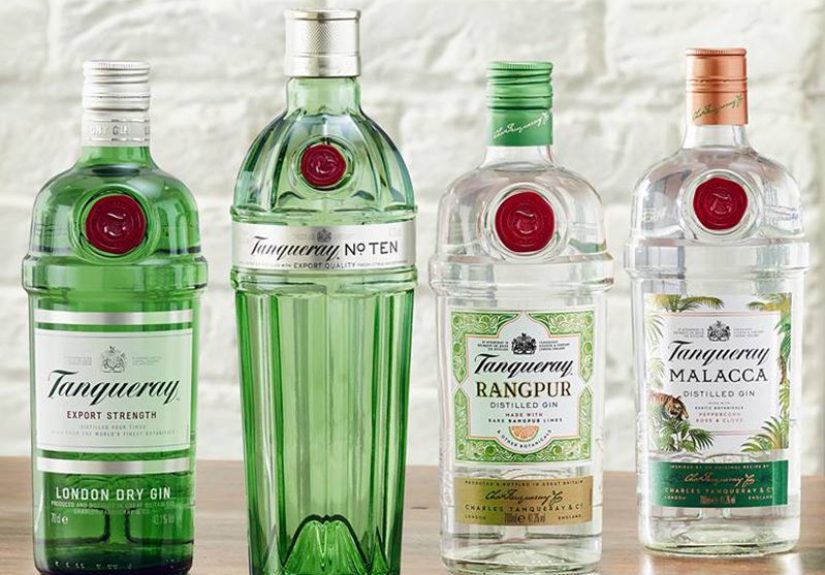
Tanqueray No. TEN: the citrus-heart showpiece
Tanqueray No. TEN is positioned as an ultra-premium expression built around a distinctive citrus character.
It’s described as being distilled from whole citrus fruits, with a profile highlighting grapefruit and citrus notes,
plus botanicals like juniper and chamomile. A key production detail is the “Tiny Ten” copper still (a
smaller still associated with the expression), which reinforces the “crafted in small batches” messaging.
In reviews, No. TEN is often framed as more delicate and nuanced than standard Tanqueraystill clearly gin, but with a
brighter citrus-forward personality that shines in spirit-forward, minimalist serves where the base spirit is doing the
talking.
Tanqueray Rangpur Lime: the “unexpected” twist
Rangpur Lime is a flavored-leaning variation that keeps one foot in tradition and one foot in adventure.
It highlights rangpur limes (often described as a lime/mandarin hybrid in vibe), plus ginger
and bay leaves. In the U.S., it’s commonly listed at 41.3% ABV.
The appeal here is practical: you get a built-in citrus-and-spice accent that can make a refreshing mixed drink feel
“finished” without complicated ingredients.
Tanqueray Sevilla Orange: sunshine with a bittersweet edge
Sevilla Orange leans into orange citrus and orange blossom notes while staying connected to Tanqueray’s botanical backbone.
It’s labeled as a distilled gin with natural flavors and colors and is also commonly listed at 41.3% ABV
in the U.S.
If classic Tanqueray is “crisp and dry,” Sevilla Orange is “bright and bittersweet.” It’s built for people who want a gin
that feels a little more like an aperitivo momentstill gin, but with a sunnier personality.
Tanqueray Blackcurrant Royale: a richer, dessert-leaning direction
Blackcurrant Royale takes a more indulgent route, highlighting blackcurrant with complementary notes like vanilla and floral
elements. It’s designed to feel lush and expressivemore “party-ready” than “juniper lecture.”
Tanqueray 0.0%: the botanical experience without alcohol
Tanqueray also offers a 0.0% alcohol-free option designed to mimic the recognizable “Tanqueray experience”
through botanicals rather than alcohol. Descriptions often emphasize juniper, citrus lift (like lemon), and a smooth,
floral-leaning finish.
This matters culturally: it’s a signal that “iconic” can include inclusion. Some people want the ritual and flavor of a
gin-style serve without alcohol, and brands that understand that are meeting modern expectations.
Why Tanqueray Stays a Global Reference Point
A spirit doesn’t become iconic on taste alone. It also becomes iconic through visibility and trust.
Industry reporting has repeatedly placed Tanqueray at or near the top of global “best-selling” conversations in the gin
category, reinforcing the idea that it’s not just famousit’s widely chosen.
The bottle design is basically brand shorthand
You don’t have to be a gin expert to recognize the green bottle and the red seal.
That visual identity has marketing power, surebut it also works like a promise: “This will taste like gin should taste.”
It’s a “house gin” that doesn’t feel like a compromise
Many bars keep a “house gin” because it’s cost-effective and versatile. Tanqueray’s trick is that it can occupy that role
while still feeling premium to a lot of drinkers. That combinationaccessible but respectedis rare.
How to Pick the Right Tanqueray Bottle (Taste-First, Not Hype-First)
If you’re of legal drinking age and choosing among options, use flavor goals instead of marketing slogans. Here’s a simple
cheat sheet:
-
Want classic, bold, juniper-forward gin? Start with Tanqueray London Dry.
It’s the benchmark profile and a strong base for many classic drinks. -
Want a more refined, citrus-forward profile for minimalist serves? Look at Tanqueray No. TEN.
It’s built around a distinct citrus heart and often praised as a bartender-friendly upgrade. - Want a zesty twist with spice and herbal depth? Try Rangpur Lime (citrus + ginger + bay).
- Want bittersweet orange brightness? Choose Sevilla Orange.
- Want a richer, fruit-and-vanilla vibe? Blackcurrant Royale is the expressive, decadent pick.
- Want the ritual without alcohol? Tanqueray 0.0% aims for the botanical experience at 0.0.
So… Why Is Tanqueray Truly Iconic?
Tanqueray is iconic because it does something rare: it’s both a “serious” spirit and a “useful” spirit. It helped define a
classic style, kept its flavor identity stable, and expanded its lineup without losing the core ideajuniper-forward gin
that plays well with others.
If gin is a conversation, Tanqueray is one of the voices that taught everyone else how to speak clearly. And that’s what
icons do: they don’t just show up in historythey shape the default setting.
Experiences That Make Tanqueray Feel Iconic (500+ Words)
“Iconic” can sound like an abstract labelsomething people say in ads while a slow-motion lime wedge falls into a glass
like it’s auditioning for an action movie. But Tanqueray’s icon status becomes more obvious in everyday moments, because
it tends to create the same kind of experience across different settings: recognizable aroma, confident flavor, and a
sense that the drink in your hand has a point of view.
In a tasting setting, Tanqueray London Dry is often the bottle that helps people understand what “juniper-forward” means
without needing a lecture. The aroma is typically directpiney, bright, and cleanfollowed by spice and a crisp finish.
Even people who aren’t “gin people” can usually tell it’s structured. It doesn’t wander. It doesn’t get lost. It has the
kind of clarity that makes you think, “Oh, this is what a classic gin is supposed to taste like.”
At a casual gathering, Tanqueray’s role is often less about analysis and more about reliability. Someone asks what’s
available, the green bottle appears, and there’s a subtle sigh of reliefbecause most people already know what’s coming.
That familiarity changes the mood. Instead of debating the spirit, people talk about the day, the game, the playlist,
the food. The gin becomes infrastructure: the thing that supports the moment without demanding center stage.
In bartender culture, Tanqueray frequently shows up as a “workhorse” that still earns respect. The experience here isn’t
just “this tastes good,” but “this behaves predictably.” When a gin has a strong identity, it stays present even when a
drink is stirred, diluted, chilled, or paired with bitter elements. That’s why classic cocktail programs tend to like a
bolder London Dry profilebecause it holds the line. There’s also a kind of professional comfort in knowing that a bottle
can take on different roles across the menu without becoming unrecognizable.
Tanqueray No. TEN creates a different experience: it’s often described as brighter and more citrus-led, which can make
minimalist, spirit-forward serves feel more vivid. People who enjoy lighter, more aromatic profiles often describe it as
“cleaner” or “more polished,” especially when the drink format is simple and the spirit’s details matter. It can feel like
the difference between a well-tailored jacket and a perfectly tailored oneboth work, but one feels designed to be noticed.
Then there’s the modern “inclusive ritual” experience: gin-style drinks without alcohol. For people who want the social
rhythm of a cocktail momentsomething cold, aromatic, and grown-up in feelTanqueray 0.0% (and similar botanical options)
can be a bridge. The experience isn’t about “replacing” alcohol; it’s about keeping the sensory cues: juniper, citrus lift,
the sparkle of a mixer, the garnish, the glassware. You still get a ritual. You still get a vibe. You just skip the alcohol.
Put all of that together and you get a real-world definition of iconic: a spirit that shows up in many different moments,
delivers a consistent identity, and feels instantly recognizablewhether you’re analyzing botanicals, building a classic
menu, hosting friends, or choosing an alcohol-free path. Tanqueray isn’t iconic because it’s mysterious. It’s iconic
because it’s dependably itself.