Table of Contents >> Show >> Hide
- At a Glance: What You’re Actually Getting
- Why the Lampe Gras Story Still Matters (Yes, Even If You’re “Not a Lamp Person”)
- What Makes the N°213 Special: The Long-Arm Advantage
- Conic vs Round Shade: Pick Your Personality
- Finishes & Color Options: The Quiet Power Move
- Lighting Performance: Bulb Choice Makes or Breaks the Experience
- Where the N°213 Shines: Real-World Use Cases
- Installation Notes: Measure Twice, Mount Once, Celebrate Forever
- Design Styling: How to Make It Look “Intentional,” Not “I Ran Out of Lamps”
- Buying Checklist: How to Choose the Right N°213 Version
- of Real-Life Experience With the N°213
- Conclusion
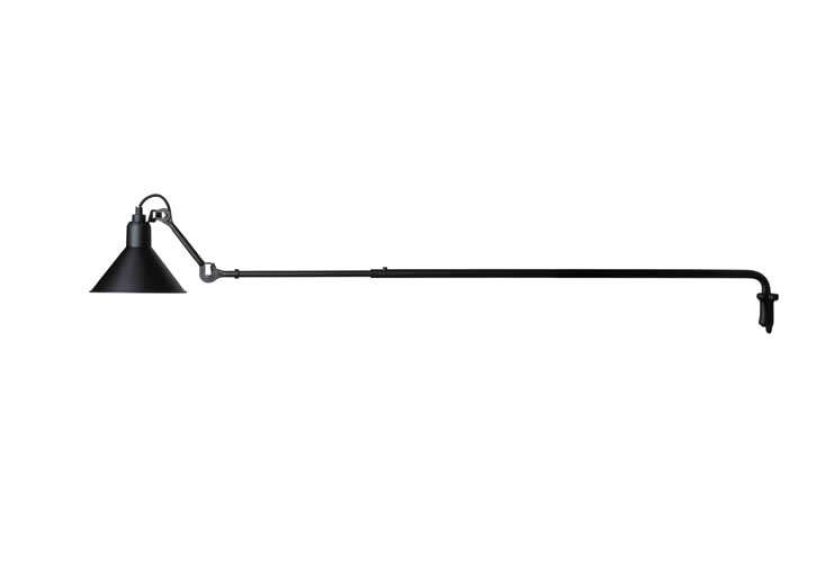
Some wall lamps politely light a corner. The DCW Lampe Gras N°213 wall lamp does something
more dramatic: it reaches. With a telescopic, swing-arm design that can stretch well over three feet,
the N°213 is basically the lighting version of “I can get that from here” (and it’s right more often than you’d think).
Originally conceived as a hard-working, highly adjustable lamp system in the early 1920s, the Lampe Gras family has
since become a design-world celebritywithout ever losing its blue-collar attitude. The N°213 is the model that turns
a wall into a flexible lighting platform: bedside reading light, dining-table spotlight, desk task lamp, piano illuminator,
or “I want a pool of light right there” problem-solver.
At a Glance: What You’re Actually Getting
- Type: swing-arm / telescopic wall lamp (often sold as plug-in; some versions can be hardwired)
- Reach: telescopic arm typically listed around 107–146 cm (about 42–57 inches), depending on configuration
- Shade options: commonly conic or round shades, plus multiple finishes/colors
- Material: primarily steel (with finish options like chrome, copper, brass, color shades)
- Socket: typically E14 (bulb not included)
Why the Lampe Gras Story Still Matters (Yes, Even If You’re “Not a Lamp Person”)
The best design objects don’t just look goodthey solve a problem so cleanly that you wonder why it wasn’t always done that way.
The Lampe Gras concept came from an engineer’s mindset: make the lamp adjustable, stable, and ergonomic in real use.
The result was a system that could pivot and hold position while staying visually simple and mechanically confident.
Born for Work, Adopted by Design
Early Lampe Gras designs were meant for offices and industrial environmentsplaces where lighting isn’t “mood,” it’s “mission.”
That practical DNA is why the N°213 still feels so relevant: it’s not pretending to be sculptural; it becomes sculptural because
it’s doing its job well. And yes, it gained fans among famous architects and artists along the way, which is the design equivalent
of getting promoted while wearing the same boots.
What Makes the N°213 Special: The Long-Arm Advantage
Plenty of swing-arm sconces exist. Very few have the N°213’s combination of reach, stability,
and fine positioning. This is the wall lamp you choose when you want overhead-style utility without committing to
overhead wiringor when you want the light to travel across a space like it owns a subway pass.
Telescopic Reach: Small Footprint, Big Coverage
The arm is commonly listed as extending from roughly 107 cm up to 146 cm. That range matters because it changes how you
use the lamp: pulled in close, it behaves like a focused reading sconce; extended, it can comfortably light a tabletop or work surface
that isn’t directly under the mount point.
Adjustable Head + Practical Beam Control
The shade design isn’t just aesthetic. It helps you aim light where you need iton a book, keyboard, cutting board, or sheet musicwithout
turning your whole room into a stage set. In real life, that means fewer glare battles and fewer “why is the light in my eyes?” complaints.
Conic vs Round Shade: Pick Your Personality
The N°213 is often sold with either a conic shade or a round shade. Both are iconic; they just behave
a little differently.
Conic Shade
- Look: a little more architectural and directional
- Light feel: more focusedgreat for tasks and reading
- Style match: industrial, minimal, modern, Scandinavian, even “I own at least one black turtleneck” interiors
Round Shade
- Look: softer silhouette; classic workshop vibe
- Light feel: still directed, but visually gentler on the wall
- Style match: loft spaces, eclectic rooms, warm modern, and anywhere you want utility without sharp edges
Finishes & Color Options: The Quiet Power Move
Here’s where the N°213 gets sneaky: you can use finish to make it disappear or to make it the room’s best accessory.
Many listings note a steel structure with options ranging from classic black and white to bold colors and metallics like chrome,
copper, or brass. Some shade combinations also play with a contrasting interior (for example, copper inside) to warm up the light’s reflection.
Three Smart Finish Strategies
- “Blend In”: Black-on-black or a neutral shade if your goal is function-first and minimal visual noise.
- “Warm It Up”: Copper or brass accents if your space leans wood-heavy, earthy, or you want the lamp to feel less industrial and more cozy-modern.
- “Make It Pop”: A saturated shade color (blue, red, yellow) if you want a controlled dose of playfulness that still looks grown-up.
Lighting Performance: Bulb Choice Makes or Breaks the Experience
The N°213 is typically listed with an E14 socket. That detail is small but important: in the U.S., E14 bulbs are available,
but they’re not as ubiquitous as E26. So the smart move is to decide your bulb strategy before the lamp arrivesotherwise you’ll be staring at
a beautiful wall lamp that’s about as bright as your intentions.
Recommended Bulb “Profiles”
- For reading: a warm, comfortable LED (often around 2700K) with good color quality (high CRI) so pages don’t look dull or gray.
- For work surfaces: still warm-to-neutral, but prioritize brightness and glare control (the shade helps, but the bulb matters).
- For ambiance: lower-lumen LED filament-style bulbs can look fantastic with the industrial shade geometryjust don’t expect it to replace a ceiling fixture.
If you’re trying to make the N°213 your primary light source for a whole room, you may be asking a wall lamp to do a chandelier’s job.
But as a precision tooltask light, spotlight, reading lightit’s right at home.
Where the N°213 Shines: Real-World Use Cases
1) Bedside Reading (Without the Nightstand Acrobatics)
Mount it beside the bed, keep the arm retracted for everyday use, then extend it when you want the light to float exactly over your book.
The adjustable head helps keep light on the page rather than in your partner’s facebecause love is patient, but sleep deprivation is not.
2) Dining Table Spotlight (Especially When Overhead Wiring Isn’t an Option)
The long reach is a game-changer for rentals or older homes where adding an overhead fixture is complicated. Extended out, the lamp can mimic
a pendant’s “pool of light” over part of a tableperfect for a breakfast nook, a small dining setup, or a corner banquette.
3) Desk/Studio Task Lighting
In a home office, the N°213 can be mounted slightly behind and to the side of your workstation. You get adjustable, directed light without
sacrificing desk space to a table lamp base. It’s the rare upgrade that’s both prettier and more practical.
4) Piano / Art Wall / “Highlight This” Moments
Some retailer imagery even shows the lamp stretched out to light a piano or a wall display. That’s the N°213 in its element: reaching far,
holding steady, and making a specific spot feel intentionally lit.
Installation Notes: Measure Twice, Mount Once, Celebrate Forever
A long-arm wall lamp asks a little more of your wall than a tiny sconce does. That’s not a flawit’s physics.
Between the arm length and the shade, you’ll want a secure mount (and ideally a stud or appropriate anchors) so the lamp stays confident
when fully extended.
Plug-In vs Hardwired
Many N°213 listings describe a cord with an inline switch, which makes it straightforward for bedrooms, offices, and rentals.
Hardwiring can look cleaner, but it’s typically the “call a qualified electrician” choiceespecially if you’re dealing with U.S. junction boxes,
code requirements, and the weight/lever forces of an extended arm.
Cord Length: A Small Detail With Big Consequences
Depending on the listing/market, cord lengths vary. If you’re planning a specific mount location, confirm the cord length and switch position so you don’t end up
with an extension cord doing an unwanted cameo in your minimalist living room.
Design Styling: How to Make It Look “Intentional,” Not “I Ran Out of Lamps”
The N°213 has strong lines, so it pairs best with spaces that appreciate structure: clean furniture profiles, thoughtful negative space,
and materials that can handle a little industrial edge (wood, stone, concrete, leather, matte paint).
Styling Ideas That Actually Work
- Modern minimal: black structure + neutral walls + simple furniture = the lamp reads like a graphic line drawing.
- Warm modern: pair copper/brass accents with wood tones; the lamp becomes a functional “jewel” without going flashy.
- Eclectic: choose a bold shade color to echo artwork or textiles; the lamp becomes a repeatable accent, not a random object.
- Industrial loft: let it be what it issteel, mechanics, and honest functionthen balance it with soft textiles.
Buying Checklist: How to Choose the Right N°213 Version
- Shade shape: conic for more directional light; round for a softer visual profile.
- Finish strategy: do you want it to disappear (black/neutral) or be a feature (metallics/colors)?
- Bulb plan: confirm E14 bulb availability for your preference (brightness and color temperature).
- Mounting reality: confirm you have a good mounting surface; long arms create leverage.
- Cord + switch placement: check cord length and where the inline switch will land in your room layout.
- Compliance details: if you need UL listing or specific electrical compliance for a project, confirm with the retailer/manufacturer documentation.
of Real-Life Experience With the N°213
Living with a long-arm lamp is a little like living with a very polite robot arm: it’s always ready to help, it doesn’t complain,
and it’s oddly satisfying to reposition. The first thing most people notice is how quickly the N°213 becomes a habit. You stop thinking
of it as “that wall sconce” and start thinking of it as “the light that goes where I need it.” Morning coffee? Pull it in closer to the chair
and angle it down so your mug, notebook, and general optimism are illuminated. Evening reading? Extend it out so the light floats over the page,
and you’ll wonder why you ever tolerated a table lamp that forced you to sit in one exact position like a museum exhibit.
The long reach changes how a room functions. In a small space, you can mount it where it won’t eat floor area, then extend the arm to cover a desk
or dining tabletwo spots that usually compete for the same lighting real estate. In a bigger room, it feels almost theatrical: the arm becomes
a graphic line across the wall and air, and the shade lands light exactly where you’re hosting the momentgame night on the coffee table, a late-night
laptop session, or a puzzle that has mysteriously consumed your entire weekend.
There’s also a subtle “design psychology” benefit: adjustable lighting encourages you to use your space more intentionally. Instead of blasting a whole room
with overhead light, you aim a warm pool of illumination at what you’re doing. That makes a room feel calmer and more layered, even if you didn’t change
anything else. It’s the difference between a big fluorescent grocery-store vibe and a space that says, “Yes, I live here on purpose.”
Practical note: the arm teaches you respect for geometry. When fully extended, it can reach far enough to surprise youso you’ll quickly learn where it can swing
without bumping shelves, artwork, or the tall plant that thinks it owns the corner. Once you find the sweet spot, the lamp feels remarkably stable, like it’s
been doing this job for a century (because, conceptually, it has). And because the head is adjustable, you can reduce glare by aiming the beam precisely,
which is a lifesaver if you’re lighting reflective surfaces like glossy desks, framed prints, or a tablet screen.
The best part is the daily ease. You flip the inline switch, move the arm with one hand, and get the light exactly where you want itno dragging a floor lamp,
no balancing a table lamp on a too-small shelf, no “why is this cord everywhere?” drama. Over time, the N°213 doesn’t feel like an object you bought;
it feels like an upgrade to how your home behaves. And if a lamp can quietly make your evenings better without demanding attention, that’s not just good design.
That’s a small, well-lit victory.
Conclusion
The DCW Lampe Gras N°213 wall lamp is a rare combination of icon and utility: a long-reach swing-arm wall light that’s visually bold,
mechanically smart, and genuinely useful in everyday life. Pick the shade, finish, and bulb with intention, mount it securely, and you’ll get a lighting tool
that adapts to your space rather than forcing your space to adapt to it. It’s practical, characterful, andwhen you swing it into place just rightquietly addictive.

![18 Best Types of Charts and Graphs for Data Visualization [+ How to Choose]](https://corkopencoffee.org/wp-content/uploads/2026/05/18-best-types-of-charts-and-graphs-for-data-visualization-how-to-choose-qKM1PBYG-thumb.jpg)