Table of Contents >> Show >> Hide
- What Is a Piano Hinge?
- Why Designers Love Elegant Piano Hinges
- Best Places to Use Piano Hinges at Home
- Material Matters: Brass, Stainless Steel, Aluminum, and Steel
- Finish: The Difference Between “Hardware” and “House Jewelry”
- How to Choose the Right Piano Hinge
- Installation Tips for a Cleaner Result
- Design Examples: Where Elegant Piano Hinges Shine
- Common Mistakes to Avoid
- Experiences From Real Design and DIY Situations
- Conclusion: The Quiet Elegance of Continuous Hardware
- SEO Tags
Some design details shout. Others whisper politely, then quietly make the whole room look better. Piano hinges belong to the second group. Also called continuous hinges, these long, narrow pieces of hardware run along the full edge of a door, lid, flap, or panel. They are not flashy in the way a jewel-like cabinet knob can be flashy. Instead, they are elegant because they are disciplined, useful, and beautifully linear.
If you have ever admired a slim pantry door that opens with perfect calm, a built-in bench lid that does not wobble, or a modern cabinet front with a crisp vertical shadow line, you may have been admiring a piano hinge without knowing it. That is the charm of this hardworking hardware: it does not beg for applause, but it deserves a standing ovation. Preferably one that opens smoothly to 180 degrees.
In this design sleuth guide, we will look at what piano hinges are, why designers like them, where they work best, how to choose materials and finishes, and how to install them without turning your cabinet door into a tiny architectural crime scene.
What Is a Piano Hinge?
A piano hinge is a long hinge made of two continuous leaves joined by a central pin. Traditional butt hinges are short and used in pairs or sets. A piano hinge, by contrast, stretches along most or all of the joint. This full-length support is the reason it is also known as a continuous hinge.
The name comes from one of its classic uses: piano lids. A piano lid is long, relatively heavy, and expected to move smoothly without twisting. A continuous hinge spreads the weight along the entire edge, helping the lid lift cleanly while protecting the instrument. The same logic applies beautifully to modern homes: long cabinet doors, storage lids, fold-down desks, concealed panels, toy boxes, banquettes, and utility access doors all benefit from even support.
Why Designers Love Elegant Piano Hinges
Designers care about proportion, rhythm, and small details that make a space feel resolved. Piano hinges check all three boxes. Their shape creates a slender line instead of several interrupted hinge barrels. On the right door, that line can look architectural, almost like a fine reveal between two surfaces.
They Create a Clean, Continuous Line
Conventional hinges can look visually busy, especially on narrow doors or minimal cabinetry. A row of separate hinge barrels may interrupt the eye. A piano hinge replaces that stop-and-start pattern with a single, continuous element. In modern interiors, where designers often celebrate long seams, shadow gaps, and flush planes, this matters more than people think.
They Support Weight Evenly
The practical advantage is just as important. Because a piano hinge distributes load across a long joint, it reduces stress on any single point. That can help keep doors aligned and prevent sagging, especially on wide or tall panels. If a regular hinge is like two friends carrying a sofa and arguing on the stairs, a piano hinge is the entire moving crew showing up with a plan.
They Work in Both Traditional and Modern Spaces
A brass piano hinge can feel warm and old-world on a painted pantry door. A stainless steel hinge can look crisp and technical on a modern cabinet. A black continuous hinge can disappear into dark millwork or add a subtle graphic edge. The same hardware category can serve Shaker charm, Scandinavian restraint, industrial utility, and high-end custom cabinetry.
Best Places to Use Piano Hinges at Home
Piano hinges are not only for pianos, though they remain very good at being pianos’ best supporting actor. In the home, they are especially helpful wherever a long panel needs stable movement.
Pantry and Closet Doors
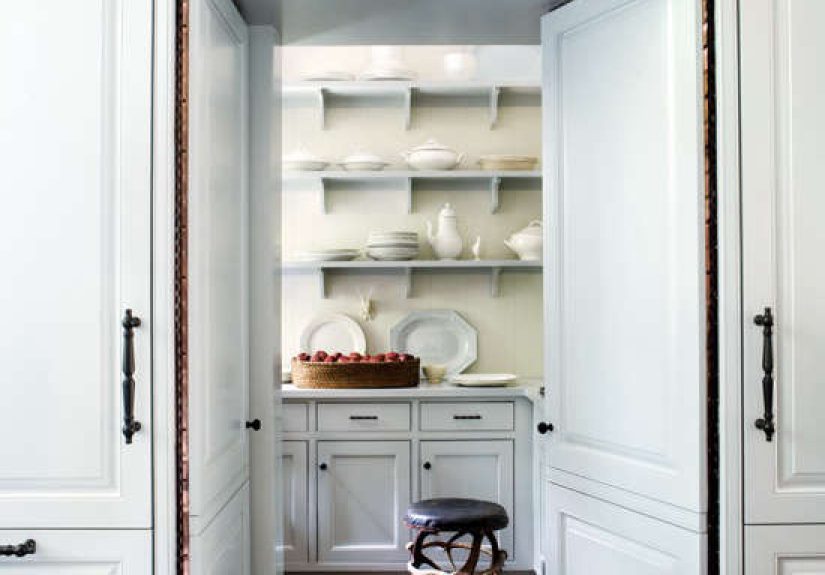
Slim pantry doors are a natural match. A continuous hinge keeps the door aligned from top to bottom, which is useful when the panel is narrow, tall, or made to look nearly flush with surrounding cabinetry. In a kitchen, this can create a cleaner wall of storage without bulky hardware stealing the scene.
Built-In Benches and Window Seats
A storage bench lid needs to open smoothly and withstand repeated use. A piano hinge spreads the load across the back edge, making the lid feel sturdier. For extra safety, especially in homes with children, pair the hinge with lid supports or soft-close stays. The hinge handles rotation; the lid support helps manage speed and prevents surprise finger drama.
Fold-Down Desks and Tables
Wall-mounted fold-down desks, laundry room folding stations, and compact kitchen leaves often need a hinge that can support a wide panel. A piano hinge creates a stable pivot line and helps the surface stay square. In small spaces, this is where hardware becomes magic: one moment, a wall; the next, a workstation.
Toy Boxes, Trunks, and Keepsake Chests
Piano hinges are common on boxes because they give the lid balanced support. For heirloom chests or modern toy storage, they also look tidy when installed carefully. Again, use a lid stay when safety matters. A hinge is not a babysitter, even if it has been quietly holding things together since forever.
Hidden Doors and Concealed Panels
For secret storage, mechanical rooms, utility panels, or hidden bookcase-style doors, a piano hinge can provide strong full-length support. It may remain visible as a slim line, or it can be recessed depending on the construction. When the goal is a smooth architectural reveal, the right continuous hinge can make the panel feel intentional instead of improvised.
Material Matters: Brass, Stainless Steel, Aluminum, and Steel
Choosing the right piano hinge is not only about length. Material affects strength, corrosion resistance, finish, weight, and the overall design mood.
Brass Piano Hinges
Brass is the romantic of the group. It brings warmth, works beautifully with wood, and suits traditional, vintage, cottage, and classic interiors. It can also look surprisingly modern when paired with simple millwork and restrained details. Brass is often chosen where appearance matters and the hinge is meant to be seen.
Stainless Steel Piano Hinges
Stainless steel is the practical perfectionist. It resists corrosion better than plain steel and is a smart choice for humid areas, utility spaces, marine-inspired projects, outdoor-adjacent applications, or sleek modern cabinetry. For harsher conditions, higher-grade stainless options may be worth considering.
Aluminum Piano Hinges
Aluminum is lightweight and useful when reducing load matters. It is often used for equipment panels, enclosures, and projects where weight savings are helpful. In residential design, aluminum can work for lightweight panels, shop-built projects, and contemporary furniture pieces.
Steel Piano Hinges
Steel offers strength and affordability. It is commonly used for residential and workshop projects, especially when the hinge will be painted, plated, or used in a dry interior location. Cold-rolled steel versions can provide excellent strength, but plain steel needs appropriate finishing if moisture is present.
Finish: The Difference Between “Hardware” and “House Jewelry”
Finish is where the piano hinge becomes a design choice rather than just a mechanical answer. Bright brass can feel traditional and cheerful. Satin nickel is quiet and adaptable. Polished stainless adds a clean, professional look. Matte black can read as modern, graphic, or industrial. Antique brass or oil-rubbed finishes can soften the line and make the hardware feel collected rather than newly installed.
The key is to coordinate the hinge with nearby metal elements: cabinet pulls, faucet finish, appliance handles, lighting, door hardware, or even exposed shelving brackets. The hinge does not have to match everything perfectly. In fact, mixed metals can look rich and layered. But the finish should look intentional. Accidental hardware is rarely elegant; it usually looks like someone made a late-night hardware-store run and hoped the lighting would be forgiving.
How to Choose the Right Piano Hinge
Before ordering, look at the project like a designer and a builder at the same time. Beauty gets the hinge invited to the party; measurements keep it from embarrassing itself.
1. Match the Length to the Door or Lid
A piano hinge can run the full length of the panel or be cut to size. Full-length installation gives the cleanest visual line and strongest continuous support. For some boxes and furniture pieces, a slightly shorter hinge may be appropriate, especially if the ends need clearance.
2. Check Open Width and Leaf Width
Open width is the total width of the hinge when laid flat. Leaf width is the width of each side. These dimensions determine how the hinge sits on the door and frame. A hinge that is too wide may look clumsy; one that is too narrow may not provide enough support or screw-holding area.
3. Consider Thickness and Gauge
Thin hinges are discreet and fine for light cabinet doors or small boxes. Heavier doors, benches, and utility panels may need thicker leaves, larger pins, or a heavier gauge. When in doubt, choose hardware based on the load and frequency of use, not only on appearance.
4. Choose Holes or No Holes
Many piano hinges come predrilled with countersunk holes. This is convenient for cabinetry and furniture. Hinges without holes are useful when welding, custom drilling, or aligning with unusual framing. For most home projects, predrilled holes save time and reduce opportunities for creative mistakes.
5. Think About the Range of Motion
Some continuous hinges allow wide opening angles, while installation conditions may limit movement. A pantry door, fold-down desk, or chest lid may require a specific swing. Confirm clearances before committing. Doors are not known for forgiving poor planning.
Installation Tips for a Cleaner Result
A piano hinge is simple, but simple does not mean careless. Because the hinge is long, small alignment errors can become obvious. The goal is a straight reveal, smooth swing, and screws that sit neatly without pulling the hinge out of line.
Mark Carefully Before Drilling
Lay the hinge in place and mark the top, bottom, and center line. Use a sharp pencil or marking knife depending on the material. Dry-fit the door or lid before drilling all holes. If something is off, it is better to discover it while holding a pencil than while holding a drill and regretting your life choices.
Use Pilot Holes
Pilot holes help prevent splitting in wood and keep screws centered. Continuous hinges have thin leaves, so some self-centering hinge bits may not seat as well as they do with thicker butt hinges. Take your time and test on scrap if possible.
Start with a Few Screws
Install a screw near each end and one near the center first. Check movement. Adjust as needed. Once the swing is clean and the reveal is even, add the remaining screws. Slotted holes, when available, are especially helpful because they allow small alignment corrections before final fastening.
Cut Cleanly If Needed
If you need to shorten a hinge, use the right cutting tool for the material and protect the finish. Remove burrs with a file so the end looks intentional. A rough-cut hinge end is the hardware equivalent of wearing a tuxedo with one sneaker.
Design Examples: Where Elegant Piano Hinges Shine
Imagine a kitchen pantry concealed behind a tall painted panel. Instead of bulky hinges interrupting the side, a satin brass piano hinge creates one fine vertical line. The door opens smoothly, and the hinge becomes a subtle accent that looks more architectural than decorative.
In a mudroom, a built-in bench with a lift-up lid can use a black continuous hinge along the back edge. Against dark painted millwork, it nearly disappears. Against white oak or painted white cabinetry, it becomes a crisp graphic detail.
In a home office, a fold-down desk mounted inside a shallow cabinet can use a stainless piano hinge for a clean, functional pivot. Add a stay or chain support, and the surface becomes practical without cluttering the room. Hardware performs the choreography; the room gets the applause.
For a custom bar cabinet, a polished stainless or nickel piano hinge can support a drop-front door that becomes a small mixing surface. For a craft room, a long hinge on a folding worktable keeps the surface aligned. For a laundry room, it can help a wall-mounted folding shelf tuck away when not in use.
Common Mistakes to Avoid
The first mistake is choosing a hinge only because it looks good in the package. Always consider weight, use frequency, environment, and installation surface. A lightweight hinge on a heavy lid will not feel elegant for long.
The second mistake is ignoring finish durability. Bright finishes can scratch during installation if handled roughly. Painted or plated hinges may need extra care when cutting. Stainless steel is often better for moisture, while brass or plated steel may be better for decorative interior use.
The third mistake is installing too quickly. A continuous hinge magnifies alignment. If it starts crooked, the entire door may advertise the error. Measure twice, drill once, and keep the coffee away from the screw tray.
Experiences From Real Design and DIY Situations
One of the most memorable things about piano hinges is how often they solve problems that initially seem unrelated to hinges. In small-space design, for example, the issue is rarely just “I need a hinge.” It is usually, “I need this door to open without sagging, this desk to fold away, this lid to stop rattling, and this whole thing to look like I did not assemble it during a thunderstorm.” That is where a continuous hinge earns its keep.
In a narrow pantry project, a standard pair of hinges can make a tall slim door feel slightly nervous. The top may pull differently from the bottom, and even a small misalignment becomes visible against clean cabinetry. A piano hinge changes the feeling of the door. It opens as one long plane, not as a panel negotiating with two separate hinge points. The result feels calmer and more custom, even when the door itself is simple painted wood.
In storage benches, the experience is more tactile. A lid with two small hinges can twist a bit when lifted from one side. Add a continuous hinge, and the movement feels more controlled. The lid seems to understand its job. For a family entryway where shoes, backpacks, dog leashes, and mystery objects gather daily, that extra stability matters. It is not glamorous, but neither is fishing a mitten out from behind a crooked bench lid.
For DIY furniture, piano hinges are forgiving in one way and demanding in another. They are forgiving because they distribute support across a long edge, which can rescue a wide lid or fold-down surface from feeling flimsy. They are demanding because they require straight layout. The best experience comes from dry-fitting everything, taping the hinge in place, checking the swing, and only then committing to screws. A calm installation produces a calm result.
Another useful lesson is that visible hardware does not have to be hidden to be elegant. Many homeowners assume the best hinge is the one nobody sees. Sometimes that is true. But a well-chosen piano hinge can look deliberate, especially in brass, black, or stainless steel. It can frame a door edge, add a fine vertical accent, or make a cabinet feel more crafted. The trick is to treat the hinge as part of the design language, not as an afterthought.
The most satisfying projects are often the ones where the hinge improves both function and beauty. A fold-down laundry counter that disappears after use. A bar cabinet door that becomes a serving shelf. A window seat lid that opens without wobbling. A concealed access panel that looks like millwork rather than a maintenance hatch. These are not dramatic design moments, but they are the details people notice over time. Elegant hardware makes daily life smoother, and smooth daily life is a luxury that never goes out of style.
Conclusion: The Quiet Elegance of Continuous Hardware
Piano hinges prove that hardware can be humble and handsome at the same time. They offer full-length support, clean lines, reliable movement, and a range of finishes that can suit everything from traditional cabinetry to modern built-ins. Whether you are designing a slim pantry door, a storage bench, a fold-down desk, or a beautifully detailed cabinet, an elegant piano hinge can turn a practical joint into a considered design feature.
The best interiors are often made from details that work so well they almost disappear. Piano hinges are exactly that kind of detail. They are quiet, precise, and surprisingly stylish. Not bad for a strip of metal with a pin down the middle.
Note: This original article is prepared for web publication in clean HTML body format and does not include raw source-reference placeholders.