Table of Contents >> Show >> Hide
- First, a reality check on the headline
- Context: Buchenwald wasn’t a rumorit was a system
- Who Ilse Koch wasand why her name became infamous
- Disturbing factswithout turning history into a horror-movie trailer
- 1) The camp produced “evidence objects” that still haunt historians
- 2) The “lampshade” claim became famousbecause it’s the kind of detail people can’t forget
- 3) Courts wrestled with proofwhile the public wanted certainty
- 4) The commutation sparked a U.S. political stormand even a Senate investigation
- 5) West Germany tried her againand the life sentence returned
- 6) She died in prison, but the story never really ended
- So… did she “make lampshades” or not?
- How sensational “monster narratives” can distort real history
- What responsible research on Ilse Koch actually looks like
- Experiences people have when engaging with this topic
- Conclusion: the most disturbing fact is how easy it is to get this story wrong
Content note: This article discusses Nazi concentration camps, torture, and murder. It aims to be accurate and respectfulno gore for clicks, no excuses for perpetrators.
First, a reality check on the headline
Ilse Koch is often described online as a “concentration camp guard” who “made lampshades out of victims.” That’s the pop-culture shorthandbut history is messier.
Koch was the wife of Buchenwald commandant Karl-Otto Koch, and while she held no official SS command position, multiple witnesses described her as an active participant in abuse and terror.
Meanwhile, the “lampshade” story sits in a tricky space: objects made from human skin were documented at Buchenwald, but courts struggled to prove that Ilse Koch personally ordered, possessed, or produced those specific items.
If you came here expecting a neat “monster biography” with a bow on top, I have bad news: reality refuses to be neatly gift-wrapped. If you came here for the trutheven when it’s inconvenient to a juicy myththen you’re in the right place.
Context: Buchenwald wasn’t a rumorit was a system
The Nazi regime established Buchenwald in 1937 near Weimar, Germany, and imprisoned a wide range of people the Nazis targeted: Jews, political prisoners, Roma, Jehovah’s Witnesses, so-called “asocials,” and others.
It became a major forced-labor hub with brutal conditions and widespread death.
By April 1945, prisonersanticipating liberationtook action inside the camp, and U.S. forces entered Buchenwald on April 11, 1945.
Shortly after, local German civilians were ordered to visit and confront what existed in their backyard, including displays of evidence of camp crimes.
Who Ilse Koch wasand why her name became infamous
She didn’t need an official rank to harm people
Ilse Koch (born 1906) became notorious during her husband’s time connected to Buchenwald.
Contemporary reporting and later historical accounts describe how she moved through the camp environment with the confidence of someone who believed the rules didn’t apply to herbecause, in practice, they often didn’t.
Survivors and witnesses accused her of cruelty, humiliation, and instigating punishments.
Her “nickname” is a clue to how she was perceived
The press dubbed her the “Witch of Buchenwald” (and other names that were even less printable).
That branding mattered: it amplified her story globally, turning her into a symbol of female-perpetrator crueltysometimes with more sensational flair than evidentiary care.
The result is a public image that contains real wrongdoing, real suffering, and also real exaggerations that can blur rather than clarify.
Disturbing factswithout turning history into a horror-movie trailer
1) The camp produced “evidence objects” that still haunt historians
After liberation, investigators and memorial staff documented human remains and objects connected to the camp’s crimes.
Buchenwald’s memorial documentation describes the removal and processing of tattooed skin from corpses into “everyday objects,” including items like lampshadesframed as “gift items” within SS culture.
This is one of the most unsettling truths: the cruelty wasn’t only killingit was the deliberate conversion of human beings into trophies and household conversation pieces.
That’s not a rumor; it’s part of the camp’s documented history and later evidence handling.
2) The “lampshade” claim became famousbecause it’s the kind of detail people can’t forget
The lampshade story functions like historical superglue: it sticks in the mind, spreads fast, and is hard to scrape offeven when a specific claim is unproven.
It also tends to swallow the larger truth: Buchenwald’s horror didn’t require a single outrageous artifact to be historically devastating.
Here’s the careful version: evidence indicates that objects made from human skin existed in the Buchenwald environment, but proving a direct “Ilse Koch personally did X with Y lampshade” chain has been difficultespecially under courtroom standards.
3) Courts wrestled with proofwhile the public wanted certainty
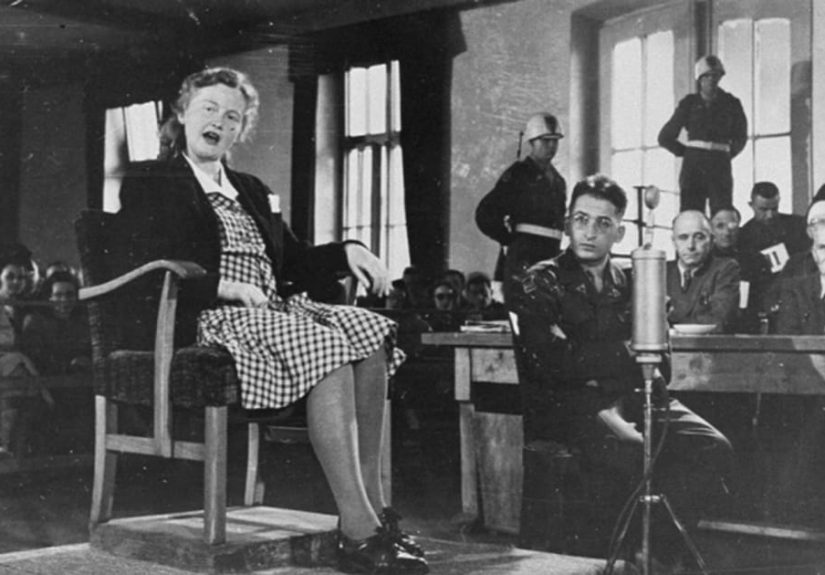
In 1947, an American military tribunal at Dachau tried Buchenwald personnel; Ilse Koch was convicted and sentenced to life imprisonment.
Later, U.S. authorities reduced (commuted) her sentenceciting problems with the evidence supporting the most sensational allegations.
That commutation triggered outrage.
What makes this episode so disturbing isn’t just the legal back-and-forthit’s how quickly a public hunger for a perfect villain can collide with the boring but essential demand of law: proof.
When those two collide, history often loses nuance, and survivors lose the kind of precision they deserve.
4) The commutation sparked a U.S. political stormand even a Senate investigation
Once the reduced sentence became public, it ignited condemnation and led to congressional scrutiny.
Records and reporting from the era describe investigations tied to the commutation and the handling of the case.
In other words: this wasn’t just a courtroom storyit became a public reckoning about justice after mass atrocity.
5) West Germany tried her againand the life sentence returned
After her release and rearrest, West German authorities prosecuted her in Augsburg.
She was convicted and sentenced to life imprisonment in 1951, and she remained incarcerated for years afterward.
Notably, historical accounts describe how some of the most sensational “skin artifact” allegations were difficult to prove to the court’s satisfaction, even when witnesses described horrifying knowledge of such objects.
6) She died in prison, but the story never really ended
Ilse Koch died by suicide in prison in 1967.
By then, her name had already become a cultural shorthand for evilrepeated in books, tabloids, documentaries, and “did-you-know” lists that sometimes blur what’s documented with what’s mythologized.
So… did she “make lampshades” or not?
If you want a responsible answer, it looks like this:
Objects made from human skin were documented in the Buchenwald environment and treated as evidence of SS crimes.
But the specific claim that Ilse Koch personally ordered or produced lampshades from victims was not conclusively proven in court in the way the public often assumes.
That nuance matters for three reasons:
- Accuracy honors victims. Getting details right is part of refusing to let atrocity become entertainment.
- Bad facts are easy targets. Holocaust deniers love shaky claims because it lets them pretend one disputed detail discredits everything (it doesn’t).
- Reality is already damning. Koch’s convictions and the broader Buchenwald record do not require embellishment.
How sensational “monster narratives” can distort real history
Ilse Koch keeps reappearing in pop culturesometimes as a “symbol villain” in stories not really about Buchenwald.
For example, recent entertainment coverage has tied her name to modern true-crime storytelling, blending historical crimes with dramatic framing.
This doesn’t mean media shouldn’t discuss her. It means viewers should remember:
screenwriting rewards clarity and shock; history rewards documentation and context.
If a scene makes you feel certain, that’s often the pointbut certainty is not the same as evidence.
What responsible research on Ilse Koch actually looks like
Start with the camp, not the celebrity-villain
Begin with Buchenwald itself: who was imprisoned, how forced labor worked, how terror operated as routine policy.
When you start there, Koch becomes part of a larger machinerynot a lone “evil unicorn” that makes the whole tragedy feel like a freak incident.
Use primary documentation when possible
Trial transcripts, museum collections, and institutional Holocaust encyclopedias help separate “reported,” “alleged,” and “proven.”
That distinction may sound pickyuntil you realize that sloppy claims get recycled for decades and begin to replace the record.
Be suspicious of anything that sounds like a punchline
Here’s the only “humor” that belongs in this topic: the dark irony that history is often mis-taught because the most clickable version is the least careful version.
If a source reads like it’s trying to entertain you, treat it like entertainmentnot evidence.
Experiences people have when engaging with this topic
The Ilse Koch story tends to produce a very specific set of reactions, especially for readers encountering it for the first time. Many people describe an immediate “how is this real?” disbeliefbecause the details feel too grotesque to belong to the same world as grocery lists and school schedules. That whiplash is part of the horror: these crimes occurred in ordinary geography, under ordinary skies, committed by humans who still ate meals and wrote letters.
Another common experience is anger at the way the story gets told. Readers often come in expecting one clean verdict“she did the lampshade thing” or “she didn’t.” Instead, they find the frustrating middle: documented atrocities, documented artifacts, documented trials, and yet gaps where courtroom proof and public belief don’t align. That frustration can be productive. It pushes you to ask better questions: What did witnesses say, and under what conditions? What did prosecutors charge, and what could they prove? What does a memorial archive preserve, and what does it choose not to display out of respect?
If you visit a Holocaust museum or memorial exhibition (in person or online), people often report a different kind of emotional shift: from shock to gravity. A single infamous detaillike a rumored lampshadestops feeling like “the point.” Instead, the point becomes scale, pattern, and policy: the bureaucracy of imprisonment, the routine beatings, the forced labor, the starvation, the medical abuse, the dehumanizing language that turned people into inventory. It’s also common to feel unsettled by how evidence is presented. Many museum captions use careful wording like “allegedly” or “reported,” which can feel unsatisfying until you realize that this precision is a form of respect.
People who dig deeperreading trial coverage, looking at archival photos, comparing accountsoften describe a quieter, longer-lasting discomfort: the recognition that “evil” is not always theatrical. In Koch’s case, the disturbing part isn’t only the rumors. It’s the repeated allegations that she used proximity to power to intensify suffering; that humiliation could be treated as leisure; that the camp environment normalized cruelty as daily life. Even when a sensational claim is unproven, the broader ecosystem of Buchenwald remains undeniable.
Finally, many readers report needing to pace themselves. This topic can trigger nightmares, nausea, or emotional numbnessthe mind’s way of putting up guardrails. Taking breaks isn’t avoidance; it’s stamina. If you’re researching for learning, teaching, or writing, it helps to balance the perpetrator narrative with victim testimony and camp history. And it helps to end your research sessions with something grounding: a summary of what you learned, a note about what you still don’t know, and a reminder that the goal is not to “consume” horrorit’s to understand it well enough to recognize the conditions that allow it to return.
Conclusion: the most disturbing fact is how easy it is to get this story wrong
Ilse Koch remains infamous because she sits at the intersection of documented cruelty, courtroom complexity, and a public appetite for the most shocking version of a true story.
Buchenwald’s record shows a world where human beings were systematically degraded and murderedand where even the dead could be turned into “objects.”
But the specific claim that Koch personally “made lampshades out of victims” is not as cleanly proven as the internet headline machine suggests.
The responsible takeaway isn’t “maybe it wasn’t that bad.” It’s the opposite:
it was so bad that we don’t need to exaggerate. We need to be precisebecause precision is how truth survives propaganda, denial, and time.