Table of Contents >> Show >> Hide
- What Is the Eames Hang-It-All Coat Hanger?
- The Design Story: Serious Play, Eames Style
- Materials, Dimensions, and Construction
- Why the Eames Hang-It-All Still Feels Modern
- Original vs. Replica: Why Authenticity Matters
- Popular Colorways and Editions
- Where to Use the Eames Hang-It-All
- How to Style the Eames Hang-It-All
- Buying Considerations Before You Purchase
- Installation and Care Tips
- Eames Hang-It-All vs. Ordinary Coat Hooks
- Is the Eames Hang-It-All Worth It?
- Experience: Living With the Eames Hang-It-All Coat Hanger
- Conclusion
The Eames Hang-It-All Coat Hanger is one of those rare home objects that makes people smile before they even use it. It is a coat rack, yes, but calling it “just a coat rack” is a little like calling a classic sports car “a device with wheels.” Designed by Charles and Ray Eames in 1953, the Hang-It-All turns a basic wall hook into a piece of playful modern design. It holds coats, hats, scarves, bags, dog leashes, backpacks, and the occasional “I have no idea where else to put this” item with cheerful confidence.
What makes it special is the balance between function and personality. Its steel-wire frame looks light and almost sketch-like, while the round wooden balls create a colorful, sculptural rhythm. The result is practical enough for a busy entryway and charming enough for a design lover’s living room. In a world full of bland hooks and forgettable hallway furniture, the Eames Hang-It-All walks in wearing colorful socks and somehow makes perfect sense.
What Is the Eames Hang-It-All Coat Hanger?
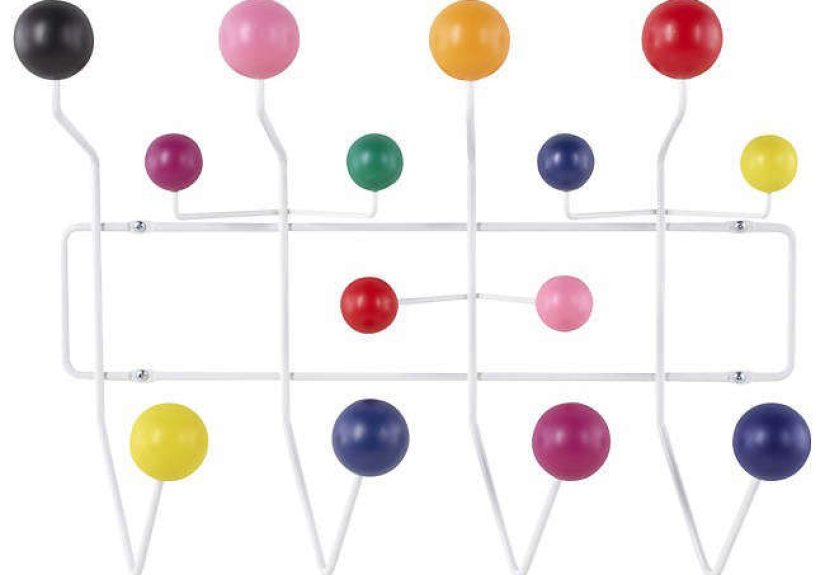
The Eames Hang-It-All is a wall-mounted coat hanger made from a welded steel-wire frame capped with round balls, traditionally in bright colors. The original version used painted wooden balls, while later editions and collaborations introduced additional finishes, neutral tones, walnut options, Pride-inspired colors, and even glass-ball versions through special collaborations.
Although it was originally imagined with children in mind, the design quickly escaped the kids’ room. Adults discovered that the same cheerful object that encouraged children to hang up jackets could also bring warmth, humor, and mid-century modern character to grown-up spaces. Today, it appears in entryways, bedrooms, nurseries, offices, mudrooms, retail interiors, and design-conscious apartments where storage has to work hard and look good doing it.
The Design Story: Serious Play, Eames Style
Charles and Ray Eames believed that good design did not need to be stiff, cold, or overly serious. Their work often blended engineering, experimentation, beauty, and play. The Hang-It-All is a perfect example of that philosophy. It takes the everyday act of hanging a coat and gives it a tiny celebration.
In the mid-20th century, the Eameses were already known for experimenting with molded plywood, fiberglass, wire, and mass-production techniques. The Hang-It-All borrowed from their technical work with welded wire furniture bases. That means the product may look playful, but its structure is not random decoration. The wire frame is part of a broader design language that appears across Eames tables and chairs.
The wooden balls are equally smart. Traditional metal hooks can stretch fabric, leave pointy marks, or punish delicate knits like they owe money. The rounded forms of the Hang-It-All are gentler on coats, sweaters, scarves, and bags. It is whimsical, but it is not silly. There is a difference, and the Eameses understood it beautifully.
Materials, Dimensions, and Construction
The authentic Eames Hang-It-All generally features a powder-coated steel-wire frame and solid wood balls, often maple or painted solid wood depending on the version. It is wall-mounted and typically comes with mounting hardware. Exact dimensions may vary slightly by edition and market, but the classic size is approximately 19.5 inches wide, 14.5 inches high, and around 6.5 inches deep. It is compact enough for a narrow wall but visually strong enough to anchor an entryway.
Why the Wire Frame Matters
The wire frame is more than a support system. It gives the Hang-It-All its airy, architectural look. Instead of a heavy board with hooks, the Eames design feels open and animated. The lines move diagonally and horizontally, creating a sense of motion even when nothing is hanging from it. That visual lightness is one reason it works in small spaces. It adds personality without turning the wall into a storage bunker.
Why the Balls Matter
The wooden balls are the star of the show. They act as hooks, but they also create the design’s instantly recognizable identity. Large and small spheres give the piece depth, color, and rhythm. In the original multicolor version, the effect is joyful and almost toy-like. In neutral versions, the same form becomes more restrained, suitable for minimalist interiors, office settings, or homes where the color palette whispers instead of tap-dancing.
Why the Eames Hang-It-All Still Feels Modern
Some designs age like milk. The Eames Hang-It-All ages like a very stylish relative who still knows the best restaurants. More than 70 years after its debut, it continues to feel fresh because it solves a real problem in a visually memorable way. Homes still need places for coats, bags, and hats. People still want organization that does not make their entryway look like a storage closet having a rough week.
The design also fits modern lifestyle trends surprisingly well. Small-space living demands wall-mounted solutions. Open-plan homes need objects that are useful but attractive. Parents want storage that children can actually use. Renters want statement pieces that do not require a full renovation. The Hang-It-All checks all those boxes while looking like it wandered out of a design museum in a very good mood.
Original vs. Replica: Why Authenticity Matters
Because the Eames Hang-It-All is famous, it has inspired many lookalikes. Some replicas are inexpensive and visually similar from a distance, but authenticity matters for buyers who care about design history, material quality, finish, proportions, and long-term value. Authentic Eames furniture and accessories are produced through authorized partners, with Herman Miller associated with many markets and Vitra serving Europe and the Middle East for Eames furniture designs.
An authentic piece is not only about a logo. It is about preserving the intended design experience: the correct proportions, materials, colors, weight, finish, and manufacturing standards. A replica may hold a jacket, but it may not hold the same design integrity. That may sound dramatic for a coat rack, but design lovers are allowed to be dramatic. This is our theater.
Popular Colorways and Editions
The original multicolor Eames Hang-It-All remains the most iconic. Its bright painted balls and white frame bring a happy, mid-century energy to the wall. This version is especially popular in children’s rooms, playful entryways, creative studios, and homes that embrace color without fear.
Neutral editions, such as black frames with walnut balls or white-on-white combinations, offer a quieter interpretation. These versions are ideal for modern apartments, Scandinavian-inspired interiors, offices, and spaces where the architecture already has strong visual elements. They let the shape do the talking while the colors keep their voices down.
Special editions have also expanded the design’s personality. Pride-inspired colorways, archival color explorations, and the Herman Miller x HAY collaboration show how flexible the original idea can be. The HAY collaboration, in particular, reimagined classic Eames pieces through fresh colors and materials, including versions of the Hang-It-All with cast-glass balls. That update proves the design can evolve without losing its cheerful DNA.
Where to Use the Eames Hang-It-All
Entryway
The entryway is the most obvious place for the Hang-It-All, and for good reason. It creates an immediate first impression and gives guests a friendly place to hang coats or bags. In a narrow hallway, it works better than a freestanding coat rack because it uses vertical wall space. Pair it with a slim bench, a small shoe tray, and a mirror for a practical landing zone that looks intentionally designed.
Kids’ Room
The Hang-It-All was originally connected to children’s spaces, and it still shines there. Install it at a child-friendly height, and it becomes an invitation to hang up backpacks, jackets, costumes, hats, and tiny accessories that somehow multiply overnight. The rounded balls are easier for small hands to use than many traditional hooks, and the playful colors make cleanup feel slightly less like a parental courtroom drama.
Bedroom
In a bedroom, the Hang-It-All can hold robes, tote bags, jewelry, scarves, caps, or tomorrow’s outfit. It works especially well in rooms without large closets. Instead of tossing clothes on a chair, which everyone does and nobody admits proudly, the wall rack gives those items a visible, attractive home.
Home Office
In a home office, the Eames Hang-It-All can hold headphones, laptop bags, camera straps, sample totes, or light outerwear. It adds personality to a work zone without becoming distracting. For creative professionals, it also signals appreciation for design history in a way that feels approachable rather than showy.
How to Style the Eames Hang-It-All
To style the multicolor version, let it be the most playful object in the room. Surround it with clean walls, natural wood, simple flooring, and neutral furniture so the colors feel intentional. If your home already includes bold art, colorful rugs, or patterned wallpaper, use the Hang-It-All as a connecting accent rather than a competing performer.
For neutral editions, lean into texture. A black-and-walnut Hang-It-All looks excellent near oak floors, linen upholstery, leather accessories, or matte black lighting. A white version can blend into a bright wall while still adding sculptural interest. The key is to treat it like functional wall art. Do not overcrowd it with too many heavy items all the time, unless your preferred aesthetic is “coat avalanche with modernist credentials.”
Buying Considerations Before You Purchase
Before buying an Eames Hang-It-All coat hanger, measure your wall. The piece is not huge, but it needs breathing room to look its best. Consider door swing, hallway width, nearby furniture, and the length of coats or bags that will hang from it. If it is installed too low in an adult entryway, long coats may brush the floor. If it is too high in a child’s room, it becomes decorative but useless, which is basically a very fancy wall-mounted guilt trip.
Also think about color. The multicolor version is iconic, but iconic does not always mean right for every space. If your home is calm and neutral, a walnut or monochrome version may integrate more naturally. If your room needs energy, the classic colorful edition can act like a small design espresso shot.
Installation and Care Tips
Mounting matters. Because the Hang-It-All is designed to carry real objects, it should be properly anchored to the wall according to the manufacturer’s instructions. Drywall anchors may be included, but wall types vary, so heavier use may call for extra care. When possible, mounting into studs or using appropriate anchors for your wall material can improve stability.
For cleaning, keep it simple. Dust the frame and balls with a soft cloth. For smudges, use a slightly damp cloth and dry the surface afterward. Avoid harsh cleaners, abrasive pads, or soaking the wood. This is a design classic, not a frying pan. Treat it politely, and it will continue looking sharp for years.
Eames Hang-It-All vs. Ordinary Coat Hooks
Ordinary hooks are usually about utility. They hold things, they disappear visually, and nobody invites friends over to admire them. The Eames Hang-It-All does the same basic job but adds emotion, history, color, and sculptural presence. It turns storage into a design moment.
That does not mean everyone needs one. If you want the cheapest possible solution, basic hooks will do. If you want an object that combines storage, art, and mid-century design heritage, the Hang-It-All earns its place. It is best for people who notice details, enjoy design stories, and believe even a hallway deserves a little charisma.
Is the Eames Hang-It-All Worth It?
The Eames Hang-It-All is worth considering if you value original design, durable materials, and visual character. It is not the cheapest coat rack, but it is also not trying to be. It belongs in the category of functional design objects that bring daily pleasure. Every time you hang a coat, grab a bag, or walk past it, there is a little reminder that practical things do not have to be boring.
Its long-lasting popularity also supports its value. Trends come and go, but the Hang-It-All has stayed relevant across generations. That staying power is rare in home decor, where yesterday’s “must-have” can become tomorrow’s donation box with suspicious speed.
Experience: Living With the Eames Hang-It-All Coat Hanger
The best way to understand the Eames Hang-It-All is to imagine using it every day. At first, it feels almost too pretty for the messy reality of keys, jackets, tote bags, and scarves. Then real life happens. Someone drops a backpack on one ball. A raincoat lands on another. A hat appears. A canvas grocery bag joins the party. Instead of looking ruined by use, the piece starts doing exactly what it was designed to do: turn ordinary clutter into something more visually forgiving.
In an entryway, the experience is immediate. You come home, reach for a rounded ball, and hang your coat without thinking about it. The shape is friendly. There is no sharp hook poking at fabric, and the staggered layout makes it easier to separate items. A scarf can hang near the top, a small bag can sit lower, and a child’s jacket can have its own reachable spot if the rack is installed at the right height.
One of the most pleasant surprises is how the Hang-It-All looks when it is empty. Many coat racks only look good when hidden behind coats, which is not exactly a design compliment. The Eames version remains decorative even with nothing on it. The balls create shadows, the wire frame adds structure, and the whole thing gives the wall a sense of movement. It is useful during winter and still attractive in summer, when fewer jackets are in rotation.
For families, it can become a small behavior changer. Children are more likely to use storage that feels approachable and fun. A low-mounted Hang-It-All near a bedroom door or mudroom can help turn “throw it on the floor” into “hang it on the colorful thing.” Will it magically create perfect organization? No. It is a coat hanger, not a wizard. But it can make tidying feel less like a chore and more like part of the room’s design.
For adults, the experience is more subtle. The Hang-It-All adds personality without demanding a full room makeover. It can make a rental apartment feel more intentional, give a plain hallway a focal point, or soften a very serious office. Guests tend to notice it, especially the multicolor version. It invites comments because it feels familiar and unusual at the same time.
The only real caution is not to overload it visually or physically. Heavy coats, bulky bags, and too many items can hide the design and strain the installation if the wall mounting is poor. It works best when treated as organized storage, not a substitute closet. Give it space, mount it securely, choose the colorway thoughtfully, and the Eames Hang-It-All becomes one of those rare objects that is useful, beautiful, and quietly amusing every single day.
Conclusion
The Eames Hang-It-All Coat Hanger is a small design classic with a big personality. Designed in 1953 by Charles and Ray Eames, it combines welded steel-wire construction, rounded wood balls, playful color, and practical everyday use. It works in entryways, kids’ rooms, bedrooms, offices, and creative spaces because it is both storage and sculpture. Whether you choose the original multicolor version or a more neutral edition, the Hang-It-All proves that even the humble coat hook can have charm, history, and a sense of humor.
Note: This article is an original, publication-ready rewrite based on verified product history, official manufacturer information, museum store descriptions, design retailer details, and respected design references.