Table of Contents >> Show >> Hide
- Eczema vs. Rosacea: The Quick Answer
- What Eczema Usually Looks Like in Pictures
- What Rosacea Usually Looks Like in Pictures
- Eczema vs. Rosacea Chart
- The Biggest Differences, Explained
- Can Eczema Be Mistaken for Rosacea?
- How Doctors Tell the Difference
- Treatment: Why the Difference Matters
- What to Do if You Are Not Sure Which One You Have
- When to See a Dermatologist
- Real-Life Experiences: What This Often Feels Like Day to Day
- Conclusion
If your face has been acting like it signed up for chaos without telling you, you are not alone. Redness, bumps, dryness, flaking, stinging, itching, and the occasional “Why does my skin hate me?” moment can make eczema and rosacea look frustratingly similar at first glance. But they are not the same condition, and knowing the difference matters because the treatments, triggers, and daily skin-care strategies are not identical.
In simple terms, eczema usually behaves like an itchy, dry, irritated skin-barrier problem. Rosacea usually behaves like a facial redness-and-flushing problem that may also bring visible blood vessels, acne-like bumps, and eye symptoms. Of course, skin loves making things complicated, so some cases blur the lines. That is why this guide breaks down what each condition looks like in pictures, how they compare side by side, and what clues can help you tell which one may be more likely.
Eczema vs. Rosacea: The Quick Answer
If the main issue is itchy, dry, scaly skin, eczema is often the stronger suspect. If the main issue is persistent facial redness, flushing, visible veins, burning, and bumps in the middle of the face, rosacea moves to the front of the line.
That said, skin conditions do not always read the textbook. Eczema can affect the face, especially around the eyes and cheeks, and rosacea can make skin feel dry and sensitive. A photo can raise suspicion, but it cannot confirm a diagnosis. Dermatologists usually look at the pattern, symptoms, trigger history, and whether the eyes are involved.
What Eczema Usually Looks Like in Pictures
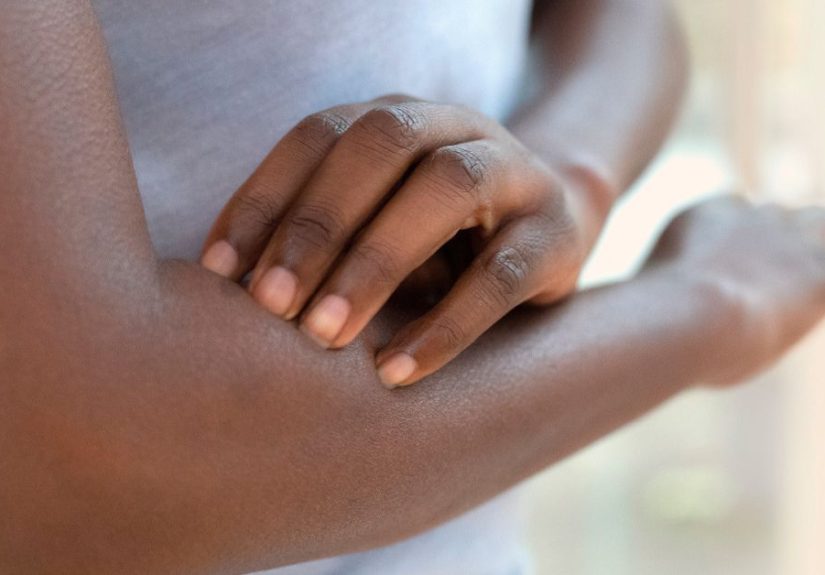
When you look at pictures of eczema, especially atopic dermatitis, the common theme is inflammation plus dryness. The skin often looks rough, flaky, scaly, or cracked. In lighter skin tones, the rash may appear pink or red. In darker skin tones, it may look brown, purple, grayish, or simply darker than the surrounding skin. That color shift matters because eczema does not always show up as bright red on every complexion.
Pictures of eczema often show:
- Dry, scaly patches
- Areas that look thickened from repeated scratching
- Scratch marks or raw spots
- Oozing or crusting during a flare
- Rashes on the cheeks, eyelids, neck, hands, wrists, inside the elbows, or behind the knees
The biggest visual clue is that eczema often looks like skin that is both parched and angry. Imagine your skin barrier waving a tiny white flag while also demanding more moisturizer.
What Rosacea Usually Looks Like in Pictures
Rosacea pictures usually tell a different story. Instead of dry patches being the star of the show, you often see central facial redness. The cheeks, nose, chin, and forehead are the classic hangout spots. In some photos, the skin looks like a lingering blush or sunburn that did not get the memo to leave. In others, you will see tiny visible blood vessels, acne-like bumps, or swelling.
Pictures of rosacea often show:
- Persistent redness across the cheeks and nose
- Easy flushing after heat, sun, stress, or spicy food
- Visible blood vessels
- Small red bumps or pus-filled bumps
- Burning, stinging, or hot-feeling skin
- Eye irritation, watery eyes, or red eyelids in ocular rosacea
On darker skin tones, rosacea may not look obviously red. Instead, it may appear brownish, violet, or simply warmer, more sensitive, and easier to irritate. That is one reason rosacea can be missed or mistaken for something else.
Eczema vs. Rosacea Chart
| Feature | Eczema | Rosacea |
|---|---|---|
| Main feeling | Itching, dryness, irritation | Flushing, burning, stinging, heat |
| Typical look | Dry, scaly, rough patches; may crack, ooze, or crust | Persistent facial redness, visible vessels, bumps, flushing |
| Common location | Can appear almost anywhere; often flexural areas, hands, face, neck | Mainly the center of the face: cheeks, nose, chin, forehead |
| Age pattern | Often starts in childhood but can affect any age | More common in adults, often after age 30 |
| Texture | Dry, flaky, thickened from scratching | Sensitive, inflamed, sometimes swollen or bumpy |
| Triggers | Harsh soaps, fragrances, dry air, sweat, fabrics, stress | Sun, heat, hot drinks, spicy foods, alcohol, stress, irritating products |
| Eye symptoms | Can irritate eyelid skin, but eye disease is not the hallmark | More likely to involve dry, irritated, red, or burning eyes |
| Treatment basics | Moisturizers, anti-inflammatory creams/ointments, trigger control | Trigger avoidance, gentle skin care, sunscreen, topical or oral rosacea meds |
The Biggest Differences, Explained
1. Eczema usually itches first
With eczema, itch is often the headline act, the opening band, and the encore. Many people describe eczema as the “itch that rashes.” Scratching then makes the inflammation worse, which leads to more redness, more scaling, and sometimes thickened skin over time.
2. Rosacea usually flushes first
Rosacea often starts with facial flushing or redness that comes and goes, then hangs around longer over time. Instead of intense itch, many people describe burning, stinging, warmth, or sensitivity. If your face reacts to heat like it just stepped into a tiny sauna, rosacea becomes more likely.
3. Eczema loves dryness
Eczema is closely tied to a damaged skin barrier, so dryness is a huge clue. Skin may feel tight, flaky, rough, or cracked. Moisturizer is not just a nice extra here; it is practically part of the family.
4. Rosacea loves the center of the face
Rosacea typically stays concentrated on the cheeks, nose, chin, and forehead. Eczema can affect the face too, but it often appears in a wider range of body areas and may show up in classic flexural spots such as the inner elbows or behind the knees.
5. Rosacea can affect the eyes
If you have facial redness plus burning eyes, watery eyes, irritated eyelids, or a gritty feeling, ocular rosacea should be on the radar. Eczema can irritate the eyelid skin, but rosacea is the condition better known for true eye involvement.
Can Eczema Be Mistaken for Rosacea?
Absolutely. That is where the confusion party begins. Facial eczema can cause redness, dryness, scaling, and irritation. Rosacea can also make skin feel dry, sting, and react to products. In real life, that overlap can make mirror-based self-diagnosis a dangerous game of dermatology roulette.
Some clues that point more toward eczema include:
- Strong itch
- Very dry or flaky skin
- A history of eczema, allergies, or asthma
- Rash beyond the center of the face
- Crusting, cracking, or oozing during flares
Some clues that point more toward rosacea include:
- Frequent flushing
- Persistent redness across the cheeks and nose
- Visible blood vessels
- Burning or stinging more than itching
- Breakouts that look like acne but are really not acne
- Eye symptoms along with facial redness
How Doctors Tell the Difference
Doctors usually diagnose both conditions by examining your skin, asking about symptoms, and reviewing triggers and medical history. There is no single magic “Yep, that is rosacea” test. Instead, clinicians look for the pattern.
Questions a dermatologist may consider include:
- Does it itch more, or burn more?
- Is it always on the center of the face?
- Do heat, sun, spicy food, or alcohol trigger it?
- Do you also have dry skin, allergies, or a personal history of eczema?
- Are the eyes involved?
- Are there visible blood vessels, oozing, crusting, or thickened skin?
That detective work is important because several conditions can mimic either disorder, including acne, seborrheic dermatitis, contact dermatitis, lupus, and perioral dermatitis.
Treatment: Why the Difference Matters
Eczema treatment basics
Eczema treatment usually focuses on repairing the skin barrier and calming inflammation. That often means thick moisturizers, fragrance-free skin care, topical corticosteroids, or nonsteroid anti-inflammatory creams such as calcineurin inhibitors. For more stubborn or widespread eczema, doctors may recommend phototherapy, prescription pills, or biologic medications.
The daily routine matters too. Short lukewarm baths or showers, gentle cleansers, and immediate moisturizing can make a big difference. Eczema management is often about turning your skin-care routine into a “less drama, more barrier support” operation.
Rosacea treatment basics
Rosacea treatment focuses on reducing inflammation, preventing flares, and calming the redness. Common options include gentle cleansing, daily sunscreen, and prescription topicals such as metronidazole, azelaic acid, brimonidine, or oxymetazoline, depending on the main symptoms. Some people also need oral medications, and laser or light-based treatment may help with visible blood vessels or persistent redness.
Trigger tracking is a huge part of rosacea care. Heat, sun, emotional stress, spicy foods, alcohol, and even intense workouts can spark flares in some people. Rosacea basically acts like your face has opinions about weather, dinner, and your calendar.
What to Do if You Are Not Sure Which One You Have
If you are stuck between eczema and rosacea, go ultra-gentle until you can get a proper diagnosis:
- Use a mild, fragrance-free cleanser
- Skip scrubs, exfoliating acids, and harsh toners for now
- Moisturize with a bland, non-irritating cream
- Wear broad-spectrum sunscreen every day
- Track flares linked to sun, heat, stress, skin products, or foods
- Avoid picking, over-washing, and “testing” twelve random miracle products from social media
If over-the-counter products make your skin more irritated, that is useful information too. Rosacea-prone skin often stings with active ingredients, while eczema-prone skin often protests fragranced or drying products. Either way, your face is filing a formal complaint.
When to See a Dermatologist
Book a visit if your rash is persistent, painful, spreading, affecting your eyes, interfering with sleep, or not improving with gentle skin care. You should also get checked if you see crusting, signs of infection, thickened skin, or worsening redness that keeps coming back.
Eye symptoms deserve special attention. Rosacea can involve the eyes, and blurred vision, eye pain, or significant irritation should not be brushed off as “probably just tired eyes.”
Real-Life Experiences: What This Often Feels Like Day to Day
People dealing with eczema and rosacea often say the hardest part is not just what the skin looks like, but how unpredictable it feels. Eczema can start as a small patch of dryness and turn into a full-scale itch marathon by bedtime. The itch can interrupt sleep, distract you at school or work, and make you hyperaware of every fabric tag, temperature change, and skincare ingredient. A lot of people with eczema describe a loop: the skin gets dry, then itchy, then scratched, then more inflamed, then even more itchy. It is exhausting in a very unglamorous way.
Rosacea creates a different kind of frustration. Many people describe the sensation as heat rising in the face for no obvious reason, or for reasons that feel unfairly normal, like walking outside on a sunny day, drinking coffee, eating spicy tacos, or giving a class presentation. The flushing can feel sudden and visible. Even when it is not dramatic, people often report that their skin feels extra reactive, almost like it has become emotionally invested in every temperature shift and social event.
There is also the emotional side. Eczema can make people self-conscious about flaking, scratching, or dark marks left after a flare. Rosacea can make people feel like they constantly look embarrassed, overheated, or sunburned even when they are perfectly fine. Some people end up avoiding photos, makeup, workouts, or certain social situations because they are trying to prevent a flare or avoid explaining their skin for the thousandth time.
Another shared experience is trial and error. People with eczema often spend months learning which moisturizers actually help and which products turn their face into a cautionary tale. People with rosacea often become accidental detectives, noticing that heat, wine, hot showers, stress, or aggressive skin care can trigger redness. Both conditions reward patience, routine, and restraint, which is a deeply annoying truth when all you want is one heroic product to solve everything by Tuesday.
The good news is that many people improve once they stop treating every red patch the same way. When eczema is treated like a barrier problem, the skin often becomes calmer, softer, and less itchy. When rosacea is treated like a redness-and-trigger condition, flares often become less dramatic and easier to control. That is why getting the diagnosis right matters so much. It is not about winning a skin trivia contest. It is about finally using a plan that matches what your skin is actually doing.
Conclusion
Eczema and rosacea can look similar in pictures, but they usually behave differently in real life. Eczema tends to be itchier, drier, and more scaly, while rosacea usually sticks to the central face and brings flushing, persistent redness, visible vessels, and sometimes eye symptoms. If your skin keeps sending mixed signals, a dermatologist can help sort out the pattern and steer you toward the right treatment. Your skin may still be dramatic, but at least it does not have to be unsupervised.