Table of Contents >> Show >> Hide
- Why English Shows Up on So Many T-Shirts in Asia
- The 7 Most Common Types of English T-Shirt Text You’ll See
- Are These Shirts “Wrong,” or Are We Just Reading Them Too Literally?
- How to Wear (or Photograph) English Graphic Tees Without Regrets
- Gallery: 140 “Pics” (Image Placeholders + Caption Prompts)
- FAQ: English Slogan Shirts, “Broken” English, and Streetwear Culture
- Field Notes: What the “English Tee Hunt” Feels Like ()
- Conclusion
Somewhere between a fashion statement and a typo with confidence, English graphic tees in Asia have become their own
unofficial art form. Walk through a night market in Bangkok, browse a fast-fashion rack in Seoul, or scroll a streetwear
feed from Tokyo, and you’ll spot the same phenomenon: big, bold English words that range from perfectly polished to
delightfully surreal.
This post breaks down why English slogan shirts are everywhere in Asia, what the most common phrase types
reveal about style and globalization, and how to enjoy the humor without being rude about it. Then, because the title
promised the goods, you’ll get a 140-slot “pic” gallery with caption-ready prompts and image placeholders
you can swap with your own photos.
Why English Shows Up on So Many T-Shirts in Asia
1) English is often used as design, not as homework
In many Asian fashion contexts, English functions like a visual texturea vibe, a shape, a sprinkle of “global”
energymore than a literal message. Designers and buyers may value typography, spacing, and the “international” feel
of Roman letters even when the sentence is odd. In other words: the text is there to look cool, not to pass
a grammar test.
2) The global streetwear pipeline moves fast (and proofreading is slow)
Graphic tees are the world’s most democratic billboard: cheap to print, quick to trend, easy to remix. Fast fashion,
small factories, and bootleg supply chains can turn internet culture into cotton overnight. When speed and volume win,
mistakes happenespecially if phrases are copied, machine-translated, or stitched together from multiple sources.
3) English signals “modern,” “premium,” or “worldly” (even when it’s nonsense)
Across advertising and consumer culture, English can work as a symbol of modernity and global connection. That symbolic
power spills into clothing: English can feel like “international style,” the same way people in the U.S. might wear
shirts with Japanese characters or French words because it looks artistic, edgy, or luxe.
The 7 Most Common Types of English T-Shirt Text You’ll See
1) Motivation, but make it random
Think: “NEVER STOP,” “GOOD VIBES,” “BRAVE SOUL,” or “DO IT NOW.” The words are short, punchy, and easy to print big.
They also “work” even if the grammar is imperfect, because the vibe is the message.
2) Word-salad poetry
These are the shirts that read like a dream you had after scrolling online shopping at 2 a.m.: “WINTER MARKET EXPLOSION
DISTRIBUTION PROMOTION…” Weirdly, they’re not always accidentalbootleg and remix culture can produce phrases that feel
like accidental modern poetry.
3) Fake “heritage” and imaginary universities
“BROOKLYN ATHLETIC,” “NEW YORK COLLEGE,” “CALIFORNIA STATE 1987,” “VINTAGE DIVISION.” It’s the aesthetic of varsity
nostalgiafamiliar American place names and numbers that suggest tradition, even if the institution doesn’t exist.
4) Luxury-adjacent typography (without the luxury)
High-fashion fonts and “premium” buzzwords“ATELIER,” “COUTURE,” “ICONIC,” “LIMITED EDITION”show up constantly,
especially on oversize tees. Sometimes it’s a wink. Sometimes it’s aspirational. Sometimes it’s just what was on the
design file that day.
5) Internet-core and meme fragments
Shirts that look like screenshots: “NO SIGNAL,” “LOADING,” “ERROR,” “OFFLINE,” “IYKYK.” These phrases travel well
because they’re globally recognizable, even to people who don’t use English daily.
6) Places-as-personality
Paris. London. Miami. Tokyo. “CITY LIFE.” “URBAN CLUB.” “STREET DEPT.” A location can be a shortcut to a lifestyle.
It’s tourism merch without the actual trip.
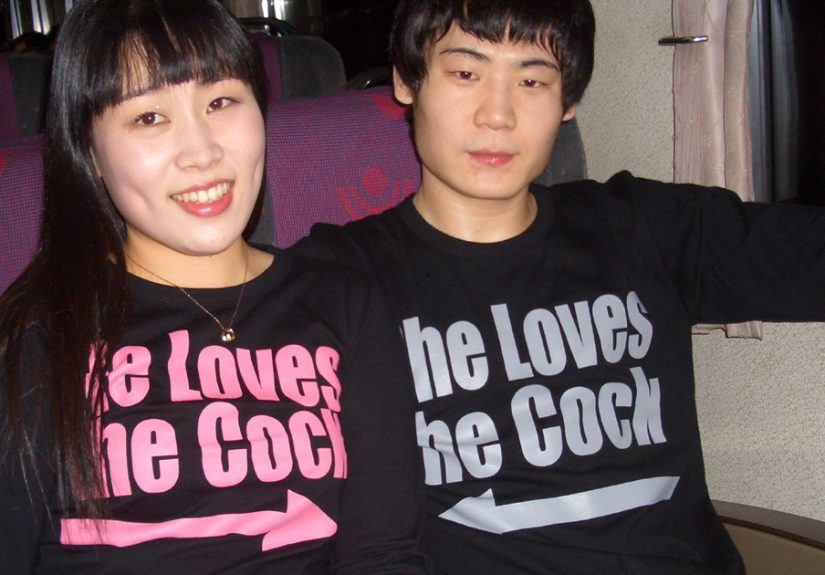
7) The accidental comedy classic
The shirt where a word is misspelled, a phrase is oddly intense, or the sentence has the emotional energy of a robot
trying to flirt. These are the viral onesfunny, memorable, and (sometimes) a reminder to double-check what you’re
wearing before you step outside.
Are These Shirts “Wrong,” or Are We Just Reading Them Too Literally?
Sometimes the English is genuinely mistranslated. Sometimes it’s “decorative” Englishmeant to look international, not
to be read closely. And sometimes the weirdness is the point: remix culture, bootleg design, and street fashion often
use warped language as an aesthetic. Odd text can feel rebellious, ironic, or artfully chaotic.
A quick note on tone: it’s easy for native speakers to laugh at broken English, but the goal here isn’t to dunk on
anyone. Treat this like you’d treat someone wearing kanji they can’t readenjoy the cultural mash-up, appreciate the
design, and keep the humor aimed at the phrase, not at the person.
How to Wear (or Photograph) English Graphic Tees Without Regrets
- Search the phrase if it’s long. If the shirt looks like a paragraph, it might contain surprises.
- Watch for “almost” words: one missing letter can change meaning fast.
- Avoid slogans about sensitive topics (politics, tragedy, identity) unless you’re sure of the message.
- Use the tee as a conversation starter, not a punchline at someone else’s expense.
- When in doubt: choose a shirt with single words (“WANDER,” “SMILE,” “FUTURE”). Minimal risk, maximal style.
Gallery: 140 “Pics” (Image Placeholders + Caption Prompts)
Below are 140 gallery slots you can swap with your own photos (or your own curated screenshots, if you have usage
rights). Each entry includes a filename-friendly placeholder and an SEO-friendly alt line. Keep captions short, honest,
and kind.


FAQ: English Slogan Shirts, “Broken” English, and Streetwear Culture
What makes English slogan tees so popular in Asian streetwear?
English is globally recognizable, visually flexible for typography, and often associated with modern pop culture. Combine
that with the speed of graphic tee trends and you get a steady stream of English phrasessome carefully curated, some
hilariously accidental.
Is it rude to call these shirts “Engrish”?
The slang term exists, but many people consider it dismissive. A better, kinder way to talk about the trend is
“decorative English,” “playful English slogans,” or “mistranslated graphic tees,” especially when talking about real
people wearing them.
How can I avoid wearing a shirt with an embarrassing meaning?
If the phrase is long, search it. If it’s slang, search it twice. And if it’s a paragraph… treat it like a contract:
do not sign (or wear) without reading.
Are weird slogans always translation mistakes?
Not necessarily. Bootleg and remix culture sometimes produces intentionally strange language that feels like accidental
poetry. It can be part of an aesthetic rather than a failed translation.
Field Notes: What the “English Tee Hunt” Feels Like ()
If you’ve never paid attention to English T-shirts in Asia, the first “experience” tends to hit in the most ordinary
place: a rack of tees outside a convenience-store-bright shop, a pop-up stall in a night market, or a mall corridor
where the air-conditioning is doing its absolute best. You flip through hangers and realize the shirts are speaking
not in perfect sentences, but in vibes. The words are big, the fonts are dramatic, and the confidence is unshakable.
The hunt has a rhythm. At first, you notice the clean ones: single words like “FUTURE,” “BALANCE,” “COOL.” They feel
safe, like fashion that nods at English without asking you to translate anything. Then you spot the mid-level chaos:
“URBAN QUALITY ORIGINAL,” “STREET DEPT. CITY UNIT,” “LIMITED EDITION.” They read like a brand pitch written by a
committee that never met. You grin, because the shirt is tryinghardand the result is weirdly charming.
Eventually, you reach the legendary tier: the paragraph tee. It’s a full block of text, sometimes with commas that
appear randomly like confetti. You start reading and it feels like opening a fortune cookie that got its life advice
from a corrupted PDF. The experience is less “haha, mistake” and more “wait, this is accidentally poetic.” You can
almost see the design process: copied lines, stitched phrases, a translation step, a re-translation step, and then a
final decision of “print it anyway, the typography slaps.”
The most interesting part is that the shirts don’t exist in a vacuum. You’ll often see them paired with careful
stylingoversized silhouettes, clean sneakers, layered accessories. The wearer isn’t a joke; the outfit is
intentional. That’s when the whole thing clicks: English on tees can be decoration, status, humor, trend, or simply a
graphic element. It’s like wearing a logo you don’t “read” so much as recognize.
And if you’re photographing these finds (for a blog, a travel album, or a “look what I saw” group chat), the best
experience comes from staying curious instead of mean. The funniest captions are the ones that describe the moment:
the contrast between serious fonts and silly phrases, the confidence of a shirt that doesn’t care what you think, and
the global creativity that turns language into design. If fashion is a conversation, these tees are the part where the
translator shrugs, the designer smiles, and everyone keeps walkingstylishly.