Table of Contents >> Show >> Hide
- Who’s crossing over to where? A quick Fire Country / Sheriff Country refresher
- The tease that started the chatter: Diane Farr’s behind-the-scenes hint
- What a crossover can actually look like (and what it won’t)
- What we know about Sharon’s Sheriff Country involvement so far
- Why this crossover matters for CBS’ Friday-night strategy
- How to watch and catch up without panic-scrolling
- Predictions: 5 smart ways the shows could collide next (purely speculative, but logically spicy)
- Experiences: From the Couch (Why crossovers hit different)
- Conclusion
- SEO Tags
If you’ve ever wondered what it sounds like when two TV shows flirt, this is it: a behind-the-scenes post,
a few well-placed smiles, and suddenly the entire fandom is yelling, “SO… ARE WE DOING THIS OR NOT?”
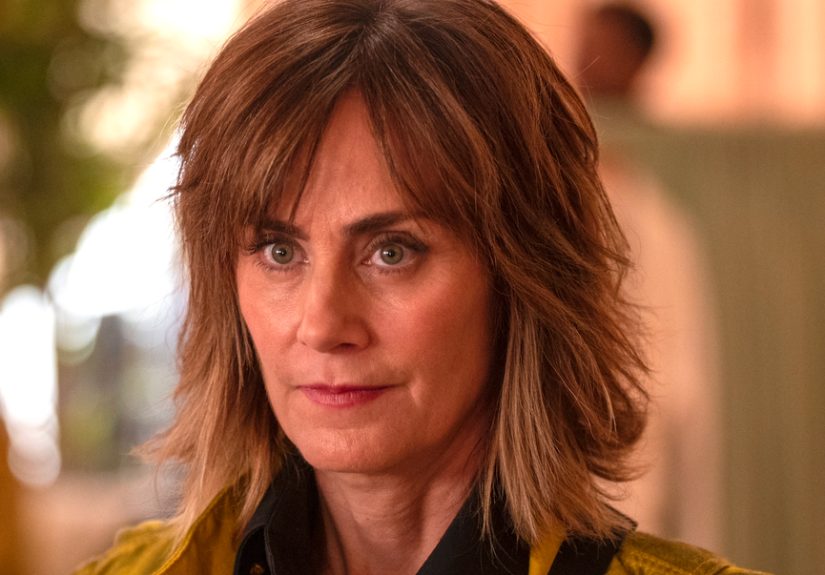
That’s basically what happened when Diane Farr (aka Sharon Leone on Fire Country)
teased a crossover with CBS’ spinoff Sheriff Country. One minute it’s Friday-night comfort TV.
Next minute it’s a full-blown shared-universe situationwith badges, bunker gear, and family drama that refuses
to stay in one time slot.
Let’s break down what Farr teased, why it matters, what we actually know (not just “I saw a blurry screenshot on
social media”), and how a crossover can make both shows feel bigger without turning your viewing schedule into
a part-time job.
Who’s crossing over to where? A quick Fire Country / Sheriff Country refresher
Fire Country: Edgewater’s flames, family, and second chances
Fire Country is built on a simple, high-stakes engine: when disaster hits the Northern California town
of Edgewater, people run toward the firesometimes literally. The show mixes rescue adrenaline with messy,
generational relationships. And Diane Farr’s Sharon Leone has been right at the center of that emotional
scaffolding: a leader in the Cal Fire world, a wife, a mom, and (often) the adult in the room when everyone else
is acting like the room is optional.
Sheriff Country: same town, different emergencies
Sheriff Country expands the franchise by shifting the spotlight from wildfires to law enforcement.
The new series follows Sheriff Mickey Fox as she handles criminal investigations in Edgewater while navigating
complicated family tiesincluding her connection to Sharon Leone. Same small-town ecosystem, different kind of
chaos. And because it’s Edgewater, “different kind of chaos” still means it can go from calm to catastrophic in
the time it takes to say “Who left the evidence in an unlocked car?”
That shared setting is the entire crossover cheat code. These characters don’t have to invent a reason to be in
each other’s orbit. They already live in the same storm system.
The tease that started the chatter: Diane Farr’s behind-the-scenes hint
The Instagram post that did the most with the least
Farr lit the fuse with a behind-the-scenes collaboration post with Morena Baccarin (Mickey Fox),
hinting that Sharon Leone might pop up on the spinoff. It wasn’t a 12-paragraph press release. It didn’t need to be.
Fans understood the subtext immediately: shared universe + two connected characters + Friday night on CBS
equals “Please, television gods, let them interact on-screen.”
This kind of tease works because it’s playful and specific. It’s not “big things coming.” It’s “these two people
are together, on set, and you’re going to want to pay attention.” In other words: the modern TV equivalent of a
little wink across the room, except the room is the internet and everyone has opinions.
Why it landed: Sharon Leone is the perfect bridge character
Sharon is uniquely positioned to cross the street (or the county line) between shows because her character sits
at the intersection of Edgewater’s institutions: the people who respond to emergencies and the people who investigate
what caused them. In small towns, the fire chief, the sheriff, and the local diner owner basically share a group chat.
So when Sharon shows up in Mickey’s world, it doesn’t feel like stunt casting. It feels like Tuesday.
Alsolet’s be honestSharon is the kind of character who can walk into a room, clock the tension in three seconds,
and ask one devastatingly practical question that makes everyone else realize they’ve been arguing in circles.
That energy plays beautifully in a crime-and-consequences format.
What a crossover can actually look like (and what it won’t)
Shared geography = shared problems
Crossovers don’t have to mean a two-hour mega-event where you need a corkboard and red string to follow along.
Sometimes the most satisfying crossover is small: a familiar character appears at exactly the right moment, drops a key
piece of information, or provides emotional support that changes how the lead handles a crisis.
In the Fire Country / Sheriff Country universe, the crossover logic is baked in. A wildfire can trigger
evacuations, looting, missing persons, and investigations. A criminal case can pull first responders into dangerous scenes,
evidence searches, and rescue operations. In Edgewater, emergencies don’t RSVPthey just show up.
Case-of-the-week meets wildfire-of-the-week
A smart crossover uses contrast. Fire Country thrives on physical urgency: heat, smoke, seconds ticking down.
Sheriff Country leans into suspense: motives, secrets, and consequences that don’t always explode immediately
sometimes they just sit there and simmer. Put those together and you get the best of both:
high-stakes action with emotional and investigative weight.
What it probably won’t be: “Homework TV”
CBS tends to build franchises that welcome casual viewers while rewarding loyal ones. That means a crossover should feel like
a bonus, not a requirement. Ideally, you can watch Sheriff Country without feeling punished for not memorizing every
Fire Country arcand vice versa. The crossover becomes flavor, not a final exam.
What we know about Sharon’s Sheriff Country involvement so far
Sharon shows up because family doesn’t stay in one show
The clearest through-line is that Sharon Leone is directly tied to Mickey Fox’s world through family. That matters because it
gives the crossover emotional stakes right away: if Mickey is dealing with a personal crisis, Sharon’s presence isn’t random
it’s expected. And when Sharon steps into sheriff business, it can reveal new sides of her: protective, strategic, and maybe a
little “I will absolutely drive to your house to make sure you’re eating actual food.”
A crossover like this works best when it does two things at once:
(1) it pushes the spinoff’s story forward, and
(2) it reframes a character you already know. Sharon isn’t just “the Cal Fire boss.” She’s also someone’s sister, someone’s anchor,
and sometimes someone’s reality check.
The crossover effect: deeper relationships, higher stakes
When a character crosses over, the world feels more real. The town feels populated. Actions have ripple effects.
A decision made on Fire Country doesn’t vanish into the smokeit can show up later as a legal complication, a political mess,
or a personal consequence that lands on Mickey’s desk.
That’s why Farr’s tease hit so hard: it wasn’t just “fun cameo energy.” It was “this universe is expanding, and the characters
aren’t trapped in separate boxes.”
Why this crossover matters for CBS’ Friday-night strategy
Franchise storytelling without breaking the vibe
Friday-night TV is all about momentum. Viewers want a lineup that feels cohesivelike one long, satisfying ride.
A shared universe makes that easier: if you’re already invested in Edgewater’s people, you’re more likely to stick around for
the next hour and see how the town’s problems look from a different angle.
It’s also a character buffet (and everyone wins)
Crossovers let a show introduce new characters without forcing awkward exposition. Instead of “Hello, I am Sheriff Mickey Fox and
here are my life details,” the franchise can reveal Mickey through how Sharon reacts to her. Or reveal Sharon through how Mickey
leans on her. It’s more naturaland it’s more fun to watch.
How to watch and catch up without panic-scrolling
Start with the episodes that introduce the connection
If you want maximum context with minimum effort, focus on episodes where Mickey Fox and Sharon Leone’s relationship is foregrounded.
Those are the moments that set up why Sharon showing up in Mickey’s story makes emotional sense.
Then follow the Friday-night flow
The lineup design encourages back-to-back viewing: Sheriff Country and Fire Country are built to complement each other.
Even if you only watch one regularly, crossover weeks are the perfect excuse to try the other. Consider it a “no-pressure pilot,”
except the pilot is your remote control and a snack.
Predictions: 5 smart ways the shows could collide next (purely speculative, but logically spicy)
-
The arson-to-arrest pipeline: A suspicious fire starts as a rescue story and ends as a criminal investigation,
forcing Mickey and Sharon to coordinate timelines, evidence, andinevitablyfamily boundaries. -
A missing person during a wildfire: Evacuations create chaos, and someone doesn’t make it out. The firefighters handle
the immediate danger while the sheriff’s department untangles the “why” behind the disappearance. -
Political pressure hits both departments: Budget cuts, leadership conflicts, or public scrutiny force Sharon and Mickey
to navigate town politics togetherbecause nothing bonds people like a tense meeting and bad coffee. -
Wes Fox’s orbit creates complications: When family members operate outside the system, it can trigger dilemmas for both
law enforcement and first responders. Sharon’s perspective could add nuance to Mickey’s choices. -
A “two calls, one crisis” episode: Fire and sheriff dispatches respond to different parts of the same eventlike parallel
storytelling that converges at the worst possible moment (for the characters) and the best possible moment (for viewers).
Experiences: From the Couch (Why crossovers hit different)
There’s a specific kind of joy that only TV crossovers can deliverespecially when you’re watching live, phone in hand, group chat
already open like it’s a second screen. It starts with the tiniest hint: a familiar name in the opening credits, a quick shot of a
character you recognize, or a line of dialogue that feels suspiciously like it’s teeing up an entrance. You sit up straighter. You
rewind (or you would, if live TV let you). And you text something profoundly eloquent like: “WAIT. IS THAT”
For a lot of fans, the fun isn’t just the cameoit’s the feeling that the town is real enough to have overlap. If you’ve been watching
Fire Country, you already know Edgewater has a way of turning ordinary days into headline-level disasters. So when Sheriff Country
moves into the same neighborhood, it feels less like a corporate “universe expansion” and more like the natural outcome of living in a place
where the sirens are basically background music.
One of the most common “crossover experiences” is realizing you’ve been emotionally preparing for it without noticing. You watch Sharon Leone
handle pressure with that steady, practiced calm, and you think, “She’d be incredible in an interrogation room.” Or you watch Mickey Fox navigate
small-town politics and family tension and think, “She’d understand the impossible choices first responders make.” Crossovers pay off those
mental what-ifs. They turn idle fandom theories into on-screen realityat least for an episode.
Crossovers also create the best kind of low-stakes ritual. People rewatch older episodes to “catch the setup.” They trade reminders like,
“Don’t skip the one where Mickey first shows up,” like they’re passing along a family recipe. And when the crossover finally happens, it becomes
an event: snacks, tweets, recaps, and the shared satisfaction of seeing two worlds snap together like puzzle pieces.
And yes, it’s also fun in the simplest way: watching characters meet who feel like they were built to challenge each other. If Sharon arrives in
Mickey’s story, you don’t just get plotyou get personality chemistry. You get the kind of scene where one look says, “I’m here because I love you,”
and a second look says, “But I will absolutely call you out if you’re being reckless.” That mix of support and friction is where great franchise
storytelling lives.
Ultimately, the best crossovers make you feel rewarded, not recruited. You don’t watch because you “have to.” You watch because it’s satisfying to
see the bigger pictureand because, let’s be real, it’s kind of thrilling when your favorite show’s universe casually reminds you it has multiple
emergency departments and all of them are overwhelmed.
Conclusion
Diane Farr’s teasing of a Sheriff Country crossover landed because it promised something fans genuinely want:
more Edgewater, more interconnected storytelling, and more chances to see Sharon Leone operate outside her usual lane.
In a shared universe built on crisis response, crossovers don’t have to feel like gimmicksthey can feel like the town is finally being honest about
how everything connects.
So if you’re a Fire Country loyalist, consider the crossover your invitation to expand your Friday-night neighborhood.
And if you’re stepping into Sheriff Country first, just know this: when Sharon Leone shows up, it’s rarely for small talk.
It’s for family, for stakes, and for the kind of grounded intensity that makes a shared universe worth sharing.