Table of Contents >> Show >> Hide
- 1. The whole business looked like a police department that forgot to get certified
- 2. Investigators said the road behavior was not subtle at all
- 3. The gear list sounded like someone checked every box on the “official enough to scare people” form
- 4. Some of the most damaging evidence reportedly came from his own cameras
- 5. His legal history made the story darker than a typical “Florida Man” punchline
- 6. He even turned the whole thing into a media spectacle, then the legal trouble kept going
- What this Florida Man story actually says about power, performance, and public trust
- Extra perspective: the real-world experiences connected to a police impersonator case
- Conclusion
Note: This article is a publication-ready rewrite based on publicly reported facts and official records connected to the Jeremy Dewitte case in Central Florida.
Florida has produced many strange headlines, but this one feels like it was written by a screenwriter who had too much coffee and not enough adult supervision. The story behind “Florida Man: 6 Crazy Details Of A Serial Police Impersonator” centers on Jeremy Dewitte, a Central Florida funeral-procession escort operator whose repeated police impersonation cases turned him into a local legend for all the wrong reasons. And to be clear, this was never just goofy “Florida Man” chaos. It was the kind of alleged behavior that could confuse drivers, rattle communities, and blur the line between lawful authority and pure costume-shop delusion.
What makes the case so gripping is not just that a man allegedly kept acting like a cop. It is that the whole operation looked weirdly polished: marked vehicles, police-style gear, flashing lights, helmet cameras, radios, aggressive commands, and a business model that lived in the gray zone between private escort work and full-on traffic-control theater. The result was a saga that mixed danger, ego, legal trouble, and enough bizarre detail to make people ask the same question again and again: how did this keep happening?
Here are six of the wildest details from one of Florida’s most infamous police impersonation stories, plus why the case still matters long after the first headline stopped being fresh.
1. The whole business looked like a police department that forgot to get certified
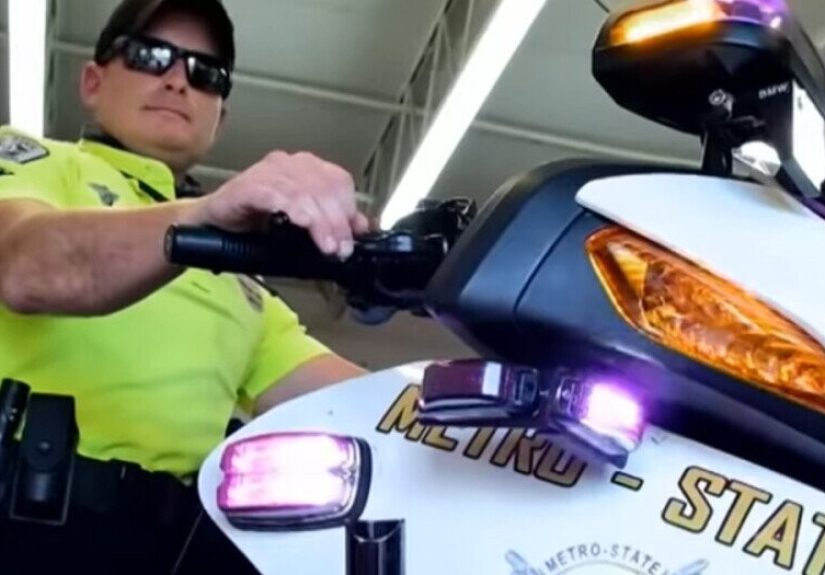
At the center of the story was Metro State Special Services, a funeral-procession escort company operated by Dewitte. On paper, that sounds fairly ordinary. Funeral escorts exist, and their job can be useful. In practice, though, this company reportedly gave off a much different vibe. Public reporting described police-style motorcycles, marked vehicles, uniforms, radios, badges, LED light packages, sirens, and “motor unit” language that sounded a lot less like a private service and a lot more like someone trying very hard to cosplay public authority with a corporate logo slapped on top.
That detail matters because police impersonation cases are not always about a fake badge pulled from a Halloween aisle. Sometimes the impersonation works because it looks close enough to the real thing in a stressful moment. Most drivers are not forensic uniform analysts. If something with flashing lights rolls up fast, someone barks commands, and the gear looks official, people often react first and question later. That is exactly why this case drew so much attention. It suggested not a random one-off stunt, but a sustained attempt to operate right at the edge of credibility.
Why this detail is so unsettling
The danger was not just the costume. It was the context. A private funeral escort can occupy a strange slice of road culture where drivers are already confused, traffic is emotional, and people assume someone in charge is there for a reason. Put a police-style appearance into that environment and the confusion multiplies fast. That is how a business can become a stage set, and a stage set can become a public-safety problem.
2. Investigators said the road behavior was not subtle at all
If this had been limited to standing around in vaguely official-looking clothes, the story would still be odd. But the road behavior pushed it into another category entirely. Reports described incidents in which Dewitte allegedly used lights and sirens, sped during funeral details, crossed lanes, and behaved in a way that looked far more like law enforcement activity than private escort work. In one reported account, officers said he was using lights and sirens while traveling roughly 70 to 80 miles per hour on Park Avenue. That is not “helping traffic flow.” That is “someone is absolutely going to tell this story at dinner tonight.”
Authorities also said investigators found evidence of conduct across several counties, not just one awkward misunderstanding in one town on one bad day. That broader pattern helped turn the case from a strange local arrest into the story of an alleged serial impersonator. The public-facing version of the business was supposedly one thing. The law-enforcement version looked very different.
And that is what made the headlines so sticky. Americans are used to seeing stories about fake celebrity assistants, fake doctors, fake landlords, and fake rich guys on social media. A fake police identity lands differently. It taps directly into public trust, fear, and compliance. People obey police because ignoring a legitimate officer can make a situation worse in a hurry. That built-in public reflex is exactly what makes impersonation cases so serious.
3. The gear list sounded like someone checked every box on the “official enough to scare people” form
One of the craziest details in the Dewitte case is how complete the visual package reportedly was. Coverage described badges, law-enforcement-style shirts, bulletproof-style gear, radios, pepper spray, batons, a body camera, and a weapon that deputies said looked like a handgun but was later identified as a chemical-launching device. In 2021, deputies said he was again found dressed in a way that mirrored law enforcement while riding with other motorcyclists and carrying gear that made the entire scene look even more official.
That level of detail is why this case kept grabbing attention. A lot of impersonation stories fall apart because the person looks ridiculous. This one was unnerving precisely because it did not sound ridiculous from a distance. A driver catching only a few seconds of motion, color, and flashing lights could easily think the situation involved real officers. Dewitte reportedly admitted in one case that he carried the weapon to gain compliance from citizens he approached. That single detail explains a lot. The point was not just appearance. The point was authority.
There is also a lesson here for readers: people often imagine impersonation as a bad fake mustache problem. In real life, it is usually a confidence problem. If the person acts like they belong, gives loud commands, and shows enough symbols of power, many people will freeze, obey, or second-guess themselves. That is how an illusion lasts longer than it should.
4. Some of the most damaging evidence reportedly came from his own cameras
Now we get to the part that would be hilarious if it were not so alarming: investigators reportedly found helmet-camera video showing conduct that helped build the case. In other words, this was not just a story of alleged impersonation. It was, at least in part, a story of a man seemingly documenting his own problems in high definition.
According to local reporting, police said the seized video showed incidents in multiple counties, including him blocking traffic and pulling vehicles over while working funeral escorts. If true, that makes the case feel less like a mystery and more like an accidental self-produced documentary titled Please Exhibit This in Court.
Why does that detail matter so much? Because video can flatten arguments that rely on “you had to be there” ambiguity. In a police impersonation case, context is everything. What did the uniform resemble? How were commands given? Were lights or sirens used? Did the person behave like private security, or like someone asserting police power? Video can answer those questions far more brutally than a polished explanation ever could.
It also helps explain why the case took on a kind of public fascination. People were not just reacting to allegations on paper. They were reacting to reported visuals that made the conduct easier to imagine. The weirder the behavior looked on camera, the harder it became to dismiss the entire thing as a misunderstanding.
5. His legal history made the story darker than a typical “Florida Man” punchline
It is tempting to treat a case like this as a bizarre roadside farce. But the broader legal record makes that impossible. Reporting and official records show Dewitte had prior legal trouble related to impersonation and was also listed by FDLE as a sexual offender. That background changed the public tone of the story completely. Instead of a guy with an authority obsession and a siren habit, the picture became much more serious and much more troubling.
That history also helps explain why later arrests and probation issues drew so much attention. When authorities or news outlets described him as a repeat or habitual impersonator, they were not talking about one viral clip and a dramatic nickname. They were talking about a long-running pattern that intersected with other criminal issues, including sex-offender registration violations, fraud-related allegations, and later tax trouble.
In 2024, reporting said an Osceola County jury found him guilty of failing to register vehicle information as required under sex-offender rules, and he was sentenced to nearly seven years because of prior convictions. In 2025, the U.S. Department of Justice announced he was sentenced to federal prison for filing false tax returns tied to revenue from his funeral-escort business. Put bluntly, the fake-cop narrative may have made him famous, but the legal fallout expanded far beyond that original image.
Why readers keep returning to this case
The answer is simple: the story keeps mutating. Just when it seems like a tale about uniforms and traffic stops, another layer appears. Then another. Then another. It becomes less about one crime category and more about a recurring pattern of performance, escalation, and apparent refusal to stop.
6. He even turned the whole thing into a media spectacle, then the legal trouble kept going
As if the story were not already surreal enough, Dewitte appeared on Dr. Phil in 2021 and denied impersonating police. That television detour gave the saga an almost reality-show flavor, which somehow made it both more absurd and more revealing. Most people facing major criminal allegations do not jump into daytime TV unless they either crave the spotlight, believe they can outtalk the facts, or both. The appearance helped cement the story as a full-blown public spectacle rather than just a courthouse oddity.
But the most jaw-dropping part was what happened next. Not long after that TV appearance, he was arrested again in a case where deputies said he was dressed like law enforcement while riding with a group of similarly outfitted motorcyclists. Later reporting described probation violations, more arrests, insurance-fraud allegations linked to the business, registration-related issues, and eventually federal tax consequences. At that point, the case had gone from “strange local man pretends to be a cop” to “this timeline needs a whiteboard, three legal pads, and maybe an aspirin.”
That recurring cycle is one reason the story is so memorable. Many criminal stories spike once and disappear. This one kept resurfacing because the behavior allegedly continued, evolved, or bled into new forms of legal trouble. It became a saga, not just an incident.
What this Florida Man story actually says about power, performance, and public trust
The wildest thing about the Dewitte case is not just that one man allegedly spent years pushing a fake-authority image into public spaces. It is that the image worked often enough to become dangerous. That should bother anyone, regardless of how they feel about sensational crime stories.
Police authority depends heavily on public recognition. The uniform, the vehicle, the lights, the commands, the tone, the symbols, the gear, the urgency, the assumption that this person can legally tell you what to do; all of that adds up fast. When a civilian mimics those signals, people can be manipulated before they even realize what is happening. That puts drivers, mourners, bystanders, and real officers in a bad position.
There is also a cultural lesson in this mess. America has a long-running fascination with power costumes. Some people collect badges. Some collect uniforms. Some collect titles. In the worst cases, people collect the feeling of control those things create. The Dewitte story feels so uniquely American because it sits right at the intersection of image, ego, legality, and performance. It is authority as branding, and branding as risk.
So yes, the case delivers the kind of “you cannot make this up” detail that fuels endless internet fascination. But under the headlines, it is also a cautionary story about how easily official-looking symbols can be weaponized, how hard it can be for the public to tell the difference in real time, and how bizarre behavior stops being funny once it starts endangering people.
Extra perspective: the real-world experiences connected to a police impersonator case
To make sense of why this story resonated so strongly, it helps to think less like a headline writer and more like the people around the case. Imagine being a driver in Central Florida who suddenly sees flashing lights and a motorcycle racing up behind your car. You do what most people do: your stomach drops, your brain starts scanning for what you did wrong, and your hands tighten on the steering wheel. In those first few seconds, you are not analyzing insignia. You are reacting to authority.
Now imagine learning later that the person barking orders may not have been a real police officer at all. That experience would not feel funny. It would feel violating, confusing, and deeply unsettling. It would make you question your instincts the next time someone signals you to pull over. That is one of the hidden harms in a police impersonation case. It can teach ordinary people the wrong lesson at exactly the wrong time: hesitate when you should comply, or comply when you should be cautious.
There is another group affected too: real law-enforcement officers. For them, an impersonator is not just a nuisance. He is a multiplier of confusion. He muddies witness descriptions, creates extra danger during traffic incidents, and can trigger confrontations that legitimate officers later have to clean up. If the impersonator is armed or pretending to have legal power, the risk level climbs fast. A traffic stop is already tense. Add a fake officer into the mix and the situation becomes combustible.
Then there are the families in the funeral processions, which is perhaps the strangest and saddest backdrop in the whole saga. Funeral escorts are supposed to help create order during an emotional event. Families are grieving. They are not there to decode whether a motorcycle formation is lawful, borderline, or theatrical. If an escort operation starts looking too much like police authority while behaving aggressively on public roads, the line between ceremony and chaos gets very thin.
The media experience is its own category. Local reporters kept returning to this story because it had all the elements of a public obsession: unusual visuals, repeated arrests, official statements, courtroom developments, and behavior that seemed to escalate rather than fade. But for the public, repeated exposure can create a strange numbness. The story starts to sound like dark comedy even when the underlying facts remain serious. That is the trap of viral crime coverage. The absurdity is memorable, but the risk is real.
And finally, there is the broader civic experience. Cases like this chip away at trust. They remind people that uniforms and lights are symbols, not guarantees. They force communities to think about how authority is recognized, how it can be copied, and how vulnerable people can be when someone abuses that visual language. In that sense, the Jeremy Dewitte story is not just about one Florida man doing bizarre Florida-man things. It is about how power can be staged, sold, and performed in public until the performance crashes into the law.
If that sounds dramatic, well, welcome to Florida. But also welcome to a very real problem. Beneath the memes, the helmets, the sirens, and the wild courtroom timeline is a simple truth: pretending to be the law is not just strange. It is dangerous. And that is why this case keeps sticking in people’s minds long after the flashing lights disappear.
Conclusion
The Jeremy Dewitte saga is one of those true-crime-adjacent stories that seems too bizarre to be real until you start reading the reports and realize the details are somehow even stranger than the headline. A funeral escort company that looked police-adjacent. Road behavior that reportedly crossed the line from traffic assistance into imitation authority. Gear that projected compliance. Helmet-camera footage that allegedly captured the act. A legal history that made the whole narrative far darker. And a media tour that somehow did not stop the cycle.
That is what makes “Florida Man: 6 Crazy Details Of A Serial Police Impersonator” more than a clicky title. It is a case study in performance, obsession, and the misuse of symbols people are trained to trust. The humor is there, sure, because some of the details are objectively jaw-dropping. But the deeper takeaway is serious: when fake authority looks convincing enough, everybody on the road pays the price.