Table of Contents >> Show >> Hide
- Why flossing matters more than people think
- How often should you floss?
- Step-by-step: how to floss the right way
- The most common flossing mistakes
- What if your gums bleed when you floss?
- Which type of floss is best?
- How to floss with braces, bridges, or dental work
- Flossing tips for kids, teens, and adults who hate flossing
- How long should flossing take?
- Signs your flossing routine is working
- Conclusion: floss like you mean it
- Real-life flossing experiences and lessons learned
- SEO Tags
Flossing has a weird reputation. People know they should do it, dentists keep bringing it up, and yet floss somehow ends up living a quiet, lonely life in the back of the bathroom drawer. It is the gym membership of oral care: excellent in theory, suspiciously ignored in practice. But here is the truth: flossing is not busywork. It is one of the simplest ways to clean the places your toothbrush cannot reach, break up plaque before it causes trouble, and keep your gums from sending passive-aggressive warning signals every time you spit into the sink.
The good news is that flossing is not hard. The slightly less good news is that a lot of people do it the wrong way. They snap the floss into the gums, saw around like they are cutting firewood, or floss three front teeth and call it a full-mouth success story. This guide breaks down how to floss the right way, how often to do it, which tools make sense, and how to stop treating floss like a tiny roll of guilt.
Why flossing matters more than people think
Brushing is essential, but brushing alone does not fully clean the tight spaces between your teeth. Those little gaps are prime real estate for plaque, food debris, and bacteria. When that buildup sits there long enough, it can irritate the gums, contribute to bad breath, and raise your risk of cavities between the teeth and gum problems over time.
Think of your mouth like a house you are trying to keep tidy. Brushing is vacuuming the visible floor. Flossing is cleaning the corners where crumbs mysteriously multiply. Skip the corners long enough, and suddenly the whole place feels less charming.
The biggest payoff of flossing is not drama. It is prevention. Done consistently, flossing helps remove plaque before it hardens into tartar, and tartar is not something you can scrub away at home with determination and a heroic soundtrack. Once it hardens, you need a dental professional to remove it.
How often should you floss?
The practical answer is simple: floss once a day. Morning, lunch break, bedtime, after dinner while pretending you are definitely going to read that book on your nightstand, it all works. The best time to floss is the time you will actually do it consistently.
Some people prefer flossing before brushing because it loosens plaque and debris so brushing can sweep it away. Others floss after brushing because it fits their routine better. Either approach is fine if you are thorough. In oral care, consistency beats perfection almost every time.
Step-by-step: how to floss the right way
This is where flossing stops being a vague life goal and becomes a real skill. The right technique is gentle, methodical, and much less dramatic than most people imagine.
1. Start with enough floss
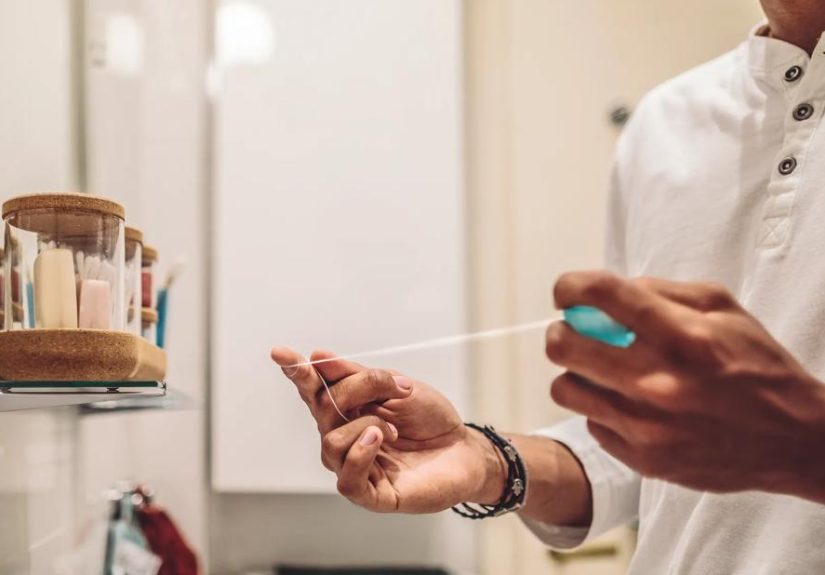
Use a piece that is long enough to give you control, usually around 18 to 24 inches. Wrap most of it around the middle finger of one hand and the rest around the middle finger of the other. Leave a small section stretched between your thumbs and index fingers to guide the floss.
2. Guide, do not snap
Ease the floss gently between two teeth. This is not a zipline stunt. Avoid popping the floss straight into the gums. If the space is tight, use a soft back-and-forth motion to work it down carefully.
3. Make the famous C-shape
Once the floss reaches the gumline, curve it around one tooth so it hugs the side of the tooth in a C-shape. This is the move that separates proper flossing from random string behavior. The goal is to clean the tooth surface, not just the open space between teeth.
4. Slide under the gumline gently
Move the floss up and down against the side of the tooth, going slightly below the gumline without forcing it. Then repeat on the neighboring tooth. Both tooth surfaces matter. Flossing one side only is like washing one sock and declaring laundry complete.
5. Use a clean section as you go
Shift to a fresh section of floss for the next pair of teeth. This keeps you from redistributing the stuff you just removed. Work your way around the entire mouth, including the back teeth, which are often the first to be ignored and the first to complain later.
6. Be gentle and complete
Proper flossing should feel controlled, not violent. It may feel awkward at first, but within a week or two it usually becomes much easier. The real goal is not speed. It is coverage.
The most common flossing mistakes
Plenty of people say they floss, but their gums would like a second opinion. Here are the classic mistakes that make flossing less effective:
- Snapping the floss into the gums: This can irritate or injure gum tissue.
- Only flossing where food gets stuck: You need to clean every contact area, not just the “problem children.”
- Sawing aggressively: Floss should rub the tooth surface, not wage war on it.
- Skipping the back teeth: Molars collect plaque too, even if they are harder to reach.
- Using the same dirty section the whole time: Fresh sections matter.
- Giving up because the gums bleed: Mild bleeding can be a sign of inflammation, not always a sign to quit.
What if your gums bleed when you floss?
This is one of the most common reasons people abandon flossing. The first time they see pink in the sink, they assume flossing is the villain. Usually, it is more like the messenger.
If you have not been flossing regularly, your gums may be inflamed from plaque buildup and may bleed easily at first. With gentle daily flossing and brushing, that mild bleeding often improves as the gums get healthier. The key word here is gentle. Do not try to attack the bleeding into submission.
That said, persistent bleeding, pain, swelling, bad breath that lingers, gum recession, or loose teeth deserve a dental visit. Those symptoms can point to gingivitis or more advanced gum disease, and the sooner you deal with it, the better.
Which type of floss is best?
The best floss is the one you will use properly every day. There is no trophy for buying the fanciest mint-scented, space-age ribbon if it spends its entire life unopened.
Waxed floss
A solid choice for many people, especially if your teeth are tight together. It tends to slide more easily and may fray less.
Unwaxed floss
Some people like the slightly “grabby” feel, but it may shred more easily in tight contacts.
Dental tape
Broader and flatter than standard floss, which some people find more comfortable, especially if they have wider spaces between teeth.
Floss picks
Convenient and travel-friendly. They can be helpful for beginners or anyone with limited dexterity, though reaching the back teeth well can be trickier than with regular floss.
Water flossers
A useful option for people with braces, dental work, sensitive gums, or anyone who struggles with string floss. They are especially handy when there are more “obstacles” in the mouth than in a home renovation project. A water flosser can be a great tool, though many people still benefit from traditional floss or another interdental cleaner depending on their needs.
Interdental brushes
These tiny brushes are excellent for wider spaces, around bridges, implants, and some orthodontic appliances. Your dentist or hygienist can help you choose the right size.
How to floss with braces, bridges, or dental work
Flossing gets more complicated when your teeth come with bonus hardware, but it is still important.
With braces
A floss threader can help guide floss under the wire. Yes, it feels fiddly at first. Yes, it gets easier. Water flossers are also popular for braces because they help blast out trapped debris around brackets and along the gumline.
With bridges or implants
Standard floss may not be enough on its own. Special floss, threaders, or interdental brushes can help clean around dental work more effectively. This is one of those times when asking your hygienist for a quick demonstration can save you months of guesswork.
With very tight teeth
Try waxed floss or a thinner floss product. Forcing thick floss into tight spaces is a fast way to annoy your gums and your mood.
Flossing tips for kids, teens, and adults who hate flossing
Some people do not dislike flossing because they are lazy. They dislike it because it feels awkward, tedious, or impossible to remember. Fair enough. Here are a few ways to make it less annoying:
- Keep floss where you will actually see it, not hidden in a cabinet like a forgotten tax document.
- Pair it with an existing habit, such as brushing at night.
- Use floss picks or a water flosser if standard floss makes you want to negotiate with fate.
- Set a small goal: one full week of daily flossing to build momentum.
- Focus on progress, not perfection. Missing one night is not a reason to ghost floss forever.
For children, flossing should begin when teeth start touching. For teens, convenience matters, so easy tools and a quick routine often work better than lectures. For adults, honesty helps: if a method is not realistic, switch methods instead of abandoning the habit.
How long should flossing take?
Usually just a couple of minutes. Not long enough to deserve dramatic background music, but long enough to make a real difference. Once you build the habit, flossing becomes one of those low-effort routines that pays you back quietly over time.
Signs your flossing routine is working
You may notice less bleeding, fresher breath, less food getting trapped, and a generally cleaner feeling between your teeth. Over time, your dentist or hygienist may also see healthier gums and less plaque buildup in the spots people usually miss.
In other words, the reward is not fireworks. The reward is fewer problems. And in dental care, that is a huge win.
Conclusion: floss like you mean it
Flossing the right way is less about buying the perfect product and more about using a consistent, gentle technique every day. Clean between every tooth. Hug each tooth with the floss. Slide under the gumline carefully. Do not snap. Do not rush. Do not floss three teeth and act like the mission is done.
If regular string floss works for you, great. If floss picks, interdental brushes, or a water flosser make you more consistent, that is great too. The real goal is not to win a purity contest. The goal is to remove plaque where your toothbrush cannot reach and keep your teeth and gums healthier over the long haul.
So tonight, give floss another shot. Your gums may not write you a thank-you note, but they might stop protesting. And honestly, that is close enough.
Real-life flossing experiences and lessons learned
Let’s add the human side of flossing, because oral hygiene advice can sometimes sound like it was written by a robot wearing a white coat. In real life, people do not fail at flossing because they cannot understand the concept of string. They fail because life is busy, habits are weird, and bathrooms have a remarkable ability to make five minutes vanish.
One common experience goes like this: someone goes to the dentist, gets told they need to floss more, nods very seriously, then becomes the world’s most committed flosser for exactly four days. After that, the enthusiasm fades, the floss disappears into the drawer again, and the next dental appointment turns into a reunion tour of the same conversation. The lesson here is not that people are hopeless. It is that motivation is unreliable. Systems work better than guilt.
Another familiar story comes from people who believed flossing was supposed to hurt. They pushed the floss hard, cut into the gums, sawed quickly, and concluded that flossing was basically a tiny punishment for having teeth. Once they learned to slow down, guide the floss gently, and wrap it around the tooth instead of attacking the gum tissue, the whole experience changed. What felt impossible became manageable. That is a useful reminder that technique often matters more than effort.
Then there are the “I thought brushing was enough” people. These are often very responsible brushers. Twice a day, two minutes, electric toothbrush, the whole production. But when they finally start flossing daily, they realize how much cleaner their mouth feels. Food gets stuck less often. Breath feels fresher. Their gums stop bleeding after a while. Nothing dramatic happens, but a lot of little annoyances quietly improve. That is usually how good health habits work. They do not always transform your life overnight; they make your daily life slightly better and your future life much easier.
People with braces often have their own chapter in the flossing memoir. At first, flossing with wires and brackets can feel like threading a needle while mildly annoyed. But once the right tools show up, such as floss threaders or a water flosser, the routine becomes far less intimidating. The biggest lesson from that group is simple: the right tool can rescue a habit that the wrong tool made miserable.
Many adults also discover that bedtime is the best flossing time, not because science sent them a personal memo, but because it fits real life. Morning routines are rushed. Midday routines are chaotic. Nighttime offers a better chance to slow down and finish the day with a clean mouth. That kind of practical self-awareness matters. The best flossing routine is the one that survives contact with your actual schedule.
The most encouraging experience, though, is what happens when flossing stops feeling like a special event. It becomes automatic. You stop debating it. You stop bargaining with yourself. You stop treating oral care like a moral referendum. It becomes a normal part of the day, like washing your face or charging your phone. And once you reach that point, flossing is no longer a chore you keep failing at. It is just something you do, which is exactly where a healthy habit should end up.






