Table of Contents >> Show >> Hide
- What Is a Furnace Pilot Light?
- How to Tell If Your Furnace Has a Pilot Light
- What Happens When the Furnace Pilot Light Goes Out?
- Safety First Before You Relight a Pilot Light
- How to Relight a Furnace Pilot Light Safely
- What you may need
- Step 1: Turn the thermostat down
- Step 2: Shut off power if your manual instructs it
- Step 3: Remove the access panel
- Step 4: Find the gas control knob
- Step 5: Turn the knob to Off
- Step 6: Turn the knob to Pilot
- Step 7: Light the pilot
- Step 8: Keep holding the button briefly
- Step 9: Release slowly and watch the flame
- Step 10: Turn the knob to On
- What a Healthy Pilot Light Should Look Like
- Why the Pilot Light Keeps Going Out
- When to Call an HVAC Professional
- Simple Tips to Prevent Pilot Light Problems
- Common Homeowner Experiences With Furnace Pilot Lights
- Conclusion
Note: Source links intentionally omitted for publishing. Unnecessary citation artifacts removed.
When your furnace stops heating on a cold day, your brain usually jumps straight to expensive thoughts: broken furnace, huge repair bill, emotional support blanket. But sometimes the issue is much smaller than that. On older gas furnaces, the culprit may simply be the furnace pilot light.
This little flame has one very important job: helping your furnace start the heating process. If it goes out, the burners may not ignite, and your home can go from cozy to “why am I wearing socks to bed?” pretty fast. The good news is that in some cases, you can relight a pilot light safely on your own. The less-good news is that not every furnace even has one, and a pilot light that keeps going out is often a sign that something else needs attention.
In this guide, you’ll learn what a gas furnace pilot light actually does, how to tell whether your furnace uses one, how to relight it safely, and when it’s smarter to back away slowly and call an HVAC professional.
What Is a Furnace Pilot Light?
A pilot light is a small flame that stays lit in some older gas furnaces. It ignites the gas released to the main burners when your thermostat calls for heat. Think of it as the tiny opening act before the furnace’s main performance begins.
Older furnaces often use what’s called a standing pilot light, which burns continuously. Newer furnaces usually do not. Most modern systems use electronic ignition instead, which is more efficient because it does not keep a flame burning 24/7.
So if you have a newer furnace and you’re searching for the pilot light like it’s hidden treasure, stop for a second. You may not have one at all. Many systems made in more recent decades rely on an igniter and flame sensor rather than a standing pilot.
How to Tell If Your Furnace Has a Pilot Light
Before you try to relight anything, figure out what kind of furnace you have. A lot of homeowners skip this step and end up trying to manually light a system that was never meant to be lit by hand. That is not a fun surprise.
Signs your furnace may have a standing pilot light
- It is an older gas furnace, often installed many years ago.
- You see a gas valve with positions such as On, Off, and Pilot.
- There is a small access panel near the burner area.
- You can spot a small flame near the burner assembly when the unit is operating normally.
Signs your furnace probably does not have one
- It uses an electronic ignition system.
- There is no Pilot setting on the gas valve.
- The unit label warns not to light the burner by hand.
- The system is a newer high-efficiency model.
If your furnace has electronic ignition, do not try to force a pilot-light solution onto it. That is like trying to fix Wi-Fi with a butter knife. Different problem, different tool.
What Happens When the Furnace Pilot Light Goes Out?
If the furnace pilot light goes out, the furnace may not be able to ignite the main burners. That means no heat, even if the thermostat is set correctly. You might notice:
- The furnace is running but not producing heat.
- The system tries to start, then stops.
- You hear the blower, but the air feels cool or room temperature.
- The furnace does not respond the way it normally does when you raise the thermostat.
A pilot light can go out for a few reasons. Sometimes it is a one-time issue caused by a draft or temporary interruption. Other times, it is a clue that something is wrong with the thermocouple, pilot assembly, gas flow, combustion air, or another safety component.
Safety First Before You Relight a Pilot Light
This is the section where we keep eyebrows attached to faces.
Before you attempt to relight a gas furnace pilot light, keep these safety rules in mind:
- If you smell gas, do not try to relight the furnace.
- Do not flip electrical switches on or off if you suspect a gas leak.
- Leave the house and call your gas utility or emergency services from outside.
- Use only your hand to turn the gas control knob. Do not use tools.
- If the furnace or gas control has been under water, do not use it.
- Read the lighting instructions on the furnace label or owner’s manual first.
Also, wait several minutes after turning the gas to Off before trying to relight the pilot. This gives lingering gas time to dissipate. Rushing this step is a bad idea and a great way to turn a minor problem into a dramatic one.
How to Relight a Furnace Pilot Light Safely
If your furnace uses a standing pilot and there is no smell of gas, you can generally follow these steps. Keep in mind that the exact process varies by model, so the instructions printed on your furnace should always come first.
What you may need
- A flashlight
- A long fireplace match or long-reach lighter
- Your furnace manual, if you still have it
Step 1: Turn the thermostat down
Set your thermostat to its lowest setting or turn it off. This helps prevent the furnace from trying to start while you are working on it.
Step 2: Shut off power if your manual instructs it
Some systems call for shutting off electrical power to the furnace before opening access panels. Follow the label on your unit.
Step 3: Remove the access panel
Open or remove the furnace access panel so you can reach the burner area and gas valve. Some panels lift off; others may need a screwdriver.
Step 4: Find the gas control knob
Look for a knob or switch marked Off, Pilot, and On. If you do not see a Pilot setting, stop there. Your furnace may not use a standing pilot.
Step 5: Turn the knob to Off
Turn the gas control to Off and wait at least five minutes. This allows any leftover gas to clear. If you smell gas after waiting, do not continue.
Step 6: Turn the knob to Pilot
Move the control knob to Pilot. On some furnaces, you will also need to press and hold a reset button or push the knob inward to start gas flow to the pilot assembly.
Step 7: Light the pilot
While pressing and holding the reset button or control knob, place the flame from your long lighter or match near the pilot opening. The pilot should ignite with a small blue flame.
Step 8: Keep holding the button briefly
Hold the reset button or knob for about 30 to 60 seconds after the flame lights. This gives the thermocouple time to warm up and signal that it is safe to keep the gas flowing.
Step 9: Release slowly and watch the flame
Let go carefully. If the flame stays lit, that is a good sign. If it goes out immediately, do not keep trying forever. Repeated failure usually means there is another issue.
Step 10: Turn the knob to On
Once the pilot is stable, turn the gas control back to On. Replace the access panel, restore power if needed, and set the thermostat to your desired temperature.
If all goes well, your furnace should kick back into heating mode. If it does not, the pilot light might not be the only problem in town.
What a Healthy Pilot Light Should Look Like
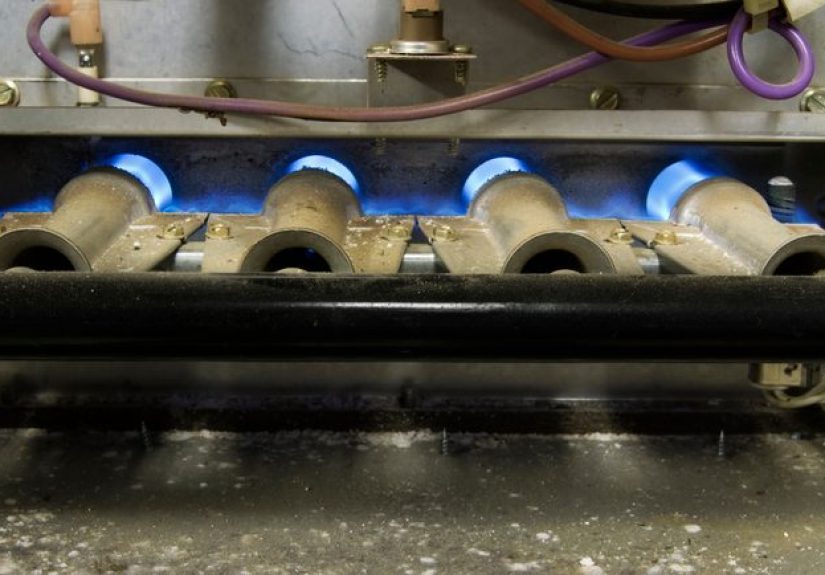
A healthy pilot light flame is usually small, steady, and mostly blue. If it is weak, flickering wildly, or yellow at the base, that can signal trouble.
Common warning signs
- Yellow or orange flame: May indicate dirt, poor combustion, or airflow issues.
- Pilot will not stay lit: Often points to a bad thermocouple or pilot assembly problem.
- Flame looks weak: Could mean a clogged pilot opening or gas supply issue.
- Pilot keeps going out: May be caused by drafts, low gas pressure, a dirty component, or a failing gas valve.
In short, a pilot light should not look tired, confused, or like it is auditioning for a campfire scene.
Why the Pilot Light Keeps Going Out
If you relight the pilot and it goes out again, the furnace is telling you something. Here are the most common reasons:
1. Faulty thermocouple
The thermocouple is a safety device that senses the pilot flame. If it does not detect heat properly, it shuts off the gas. That is good for safety, but bad for warmth. If the thermocouple is worn out, dirty, or misaligned, the pilot may not stay lit.
2. Dirty or clogged pilot assembly
Dust, lint, or soot can interfere with the flame. A dirty pilot opening can make the flame too weak to heat the thermocouple properly.
3. Drafts or airflow problems
A sudden draft can blow out a pilot light, especially on older systems. Combustion air issues can also affect how the flame burns.
4. Gas supply issues
If the gas valve is partially closed, gas pressure is low, or there is a supply problem, the pilot may not stay stable.
5. Bad gas valve or other control problem
When the pilot refuses to behave and the obvious causes are ruled out, the gas valve or another control component may be at fault. That is professional territory.
When to Call an HVAC Professional
Some furnace issues are reasonable DIY checks. Others deserve a technician with training, tools, and a much better flashlight.
Call a pro if:
- You smell gas at any point.
- The pilot light will not stay lit after one or two careful attempts.
- The flame is yellow, unstable, or oddly shaped.
- You suspect a bad thermocouple, flame sensor, gas valve, or ignition problem.
- Your furnace has electronic ignition instead of a standing pilot.
- The system short-cycles, locks out, or makes loud ignition noises.
- Your carbon monoxide detector goes off.
A furnace that keeps quitting is not being “moody.” It is asking for service.
Simple Tips to Prevent Pilot Light Problems
- Schedule annual furnace maintenance before heating season.
- Change the air filter on schedule to support proper airflow.
- Keep the area around the furnace clean and clear.
- Make sure access panels are secured properly after inspection.
- Pay attention to unusual flame color, startup behavior, or repeated shutdowns.
Regular maintenance matters because pilot-light problems are often symptoms, not the disease itself. A yearly inspection can catch wear, dirt buildup, vent issues, and safety concerns before they leave you shivering in your hallway at 6 a.m.
Common Homeowner Experiences With Furnace Pilot Lights
One of the most common real-world experiences is simple confusion. A homeowner notices the house feels cold, checks the thermostat, and assumes the furnace has died. After a little investigation, they discover the problem is not a dead furnace at all, but a pilot light that went out. That moment tends to come with two emotions: relief that the fix may be small, and irritation that a flame the size of a birthday candle just hijacked the entire heating system.
Another common experience happens with older homes. People move in, hear “gas furnace,” and assume it works like modern equipment. Then winter arrives, the heat disappears, and they learn their furnace still uses a standing pilot light. Many say the hardest part is not the actual relighting process. It is figuring out whether the furnace even has a pilot, where the access panel is, and whether the knob says Pilot or something far less obvious.
Homeowners also often describe the pilot-light problem as intermittent. The furnace works fine for weeks, then one windy day the heat stops. After relighting the pilot, everything seems normal again. That can make the issue easy to ignore. But when the pilot goes out a second or third time, people usually realize it is not random luck. Repeated outages often point to a draft, a dirty pilot assembly, or a thermocouple that is starting to fail.
There is also the “I relit it, and it still won’t stay on” experience, which is incredibly common. Someone follows the steps carefully, gets the flame going, releases the reset button, and the pilot dies instantly like it has lost interest in the whole project. In many of those cases, the underlying issue is the thermocouple not sensing enough heat, or a weak pilot flame that is not reaching it correctly.
Another very real homeowner experience is discovering that what looked like a pilot-light problem was actually an electronic ignition issue. This happens a lot with newer furnaces. The unit has no standing pilot, but the owner searches for one anyway because “furnace not heating” sounds like a pilot-light problem in every home-maintenance article ever written. That is why identifying your furnace type first can save time, frustration, and unnecessary poking around inside the unit.
Many people also report that the most stressful part is the gas smell question. Even a faint odor can make homeowners nervous, and honestly, that caution is a good thing. The safest experiences are usually the ones where the person stops immediately, leaves the area, and calls for help instead of trying to be heroic. Furnaces reward caution far more than confidence.
Finally, there is the post-repair experience: the furnace runs, the house warms up, and suddenly that little blue flame becomes the most respected employee in the building. People tend to remember that moment. It teaches them where the shutoff is, how the control knob works, and why annual furnace maintenance is worth it. In that sense, a pilot-light problem is annoying, yes, but it can also turn a homeowner into someone who understands their heating system a whole lot better.
Conclusion
A furnace pilot light is small, but its role is huge on older gas furnaces. If it goes out, your system may stop heating entirely. In many cases, you can relight it safely by following the unit’s instructions, waiting for gas to clear, and using a long lighter or match while holding the control in the Pilot position.
But here is the key takeaway: relighting the pilot is only the right move if your furnace actually uses a standing pilot and there is no sign of a gas leak. If the flame will not stay lit, looks yellow, or goes out repeatedly, that usually means the problem is bigger than a one-time relight. At that point, the smart move is to call an HVAC technician.
Warm house, safe furnace, intact eyebrows. That is the goal.