Table of Contents >> Show >> Hide
- What Is MUJI Manufactured by Thonet?
- Why the Collaboration Mattered
- The Bentwood Story: Why Thonet Still Matters
- James Irvine and the Reinvention of the No. 14
- Konstantin Grcic and the Tubular Steel Collection
- Why the Collection Still Feels Relevant
- What Brands Can Learn From MUJI Manufactured by Thonet
- Experience: Living With the Idea of MUJI Manufactured by Thonet
- Final Thoughts
If you ever wanted proof that great furniture does not need to shout, wear a gold chain, or arrive with an instruction manual thicker than a paperback, MUJI Manufactured by Thonet is it. This collaboration brought together two design languages that seem, at first glance, to come from different planets: MUJI’s calm, no-drama minimalism and Thonet’s historic mastery of bentwood and tubular steel. The result was not a gimmick, not a costume party for old chairs, and not another “limited edition” object designed mainly to look expensive in photographs. It was a smart, disciplined rethink of furniture history.
That is what makes this collection so fascinating. It did not try to erase the past. It also did not treat the past like a museum relic under glass. Instead, it asked a sharper question: What happens when you strip an icon down to its most useful, honest form and then build it with the skill of the manufacturer that made the original famous in the first place? The answer is furniture that feels both familiar and freshly edited, like a design classic that finally cleaned out its closet.
What Is MUJI Manufactured by Thonet?
MUJI Manufactured by Thonet was a furniture collaboration that reinterpreted two major chapters in design history. The first chapter came from Michael Thonet’s bentwood tradition, especially the legendary No. 14 café chair, a 19th-century design celebrated for its efficiency, elegance, and mass-producible construction. The second chapter came from the tubular steel experiments associated with Bauhaus modernism, a world of cantilevered frames, visual lightness, and industrial clarity.
MUJI approached these histories the way a good editor approaches a messy manuscript: cut the excess, keep the point, and resist the temptation to show off. Rather than making flashy tribute pieces, the collection distilled iconic forms into quieter, more contemporary furniture for everyday living. That is the key. These were not historical reenactments. They were usable objects meant for homes, dining areas, and workspaces, which is exactly where good design should earn its paycheck.
The line included bentwood seating and tables as well as tubular-steel pieces such as a chair, desk, and shelf. The products carried the unmistakable DNA of Thonet, yet they were filtered through MUJI’s famously restrained philosophy. You could see the ancestry immediately, but you could also see the editing. This was heritage without the heavy breathing.
Why the Collaboration Mattered
It was a rare moment of full transparency
MUJI built its global reputation on useful, simple objects that often place the product ahead of the personality behind it. That makes the Thonet collaboration especially interesting. Here, the manufacturer was not hidden in the background. It was right there in the title. That naming choice mattered because it told consumers something unusual and refreshing: the factory, the process, and the production history were part of the design story.
It respected originals instead of copying them badly
Furniture history is crowded with weak imitations. Some borrow the silhouette of a classic and leave behind everything that made it intelligent. MUJI Manufactured by Thonet took a better route. By working with the rightful manufacturer and rethinking the originals through contemporary design minds, the collection avoided the usual trap of nostalgia-for-sale. It honored the source material while admitting that people in the 21st century live, sit, work, and decorate differently.
It turned minimalism into something warmer
Minimalism can sometimes feel like a room where nobody is allowed to spill coffee. MUJI’s best work avoids that problem, and this collection is a perfect example. The forms were reduced, yes, but not to the point of sterility. The furniture still had visual character, tactile appeal, and a sense of invitation. It looked clean, but not cold. It looked edited, not erased.
The Bentwood Story: Why Thonet Still Matters
To understand the emotional and technical power of this collaboration, you have to start with Thonet. Michael Thonet transformed furniture production by developing bentwood techniques that allowed solid wood to be shaped into durable, elegant curves. The innovation was not just aesthetic. It was industrial, logistical, and democratic. Bentwood furniture could be produced efficiently, shipped more practically, and sold more widely than many heavier handmade alternatives.
The star of that revolution was the No. 14 café chair. It became iconic not because it was loud, but because it was smart. Its fame rests on a design logic that still feels modern: fewer parts, lower production complexity, lower shipping burden, and a form light enough for everyday use yet distinctive enough to shape the visual culture of cafés and public interiors. When people talk about timeless furniture, this is the kind of thing they mean. Not “timeless” as in dusty, but timeless as in still completely sensible.
Architectural history and museum collections have long treated Thonet’s work as a turning point. The bentwood chair was not merely pretty. It altered the economics and aesthetics of seating. It also proved that efficiency and beauty were not enemies. That idea sits at the heart of MUJI’s identity too, which is why the pairing feels less random collaboration and more design destiny.
James Irvine and the Reinvention of the No. 14
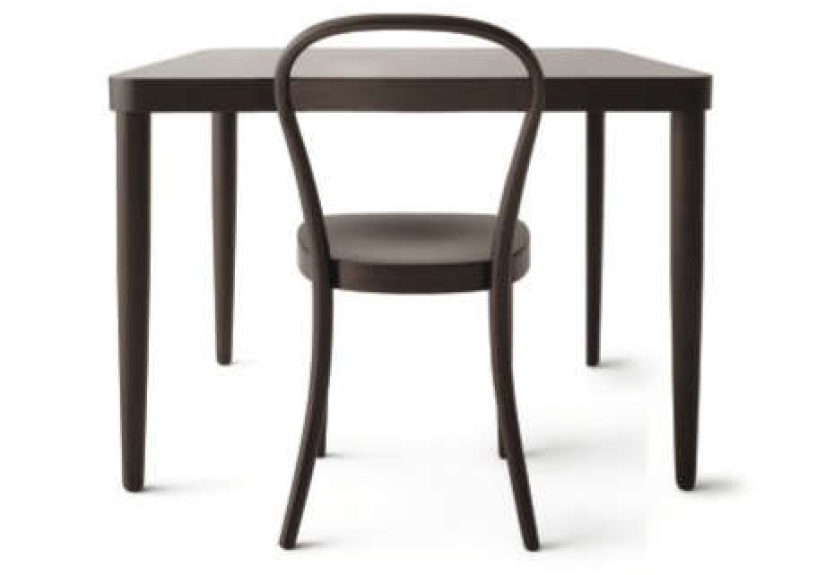
One of the most compelling aspects of MUJI Manufactured by Thonet was the bentwood reinterpretation shaped by James Irvine. Instead of treating the No. 14 as sacred and untouchable, Irvine approached it as a living form. That is a risky move, because changing a classic chair is a little like remaking a beloved movie: everyone suddenly becomes a critic, and at least one person will act personally offended.
But Irvine’s redesign worked because it did not chase novelty for its own sake. He simplified the silhouette, adjusted structural details, and created a straighter, calmer expression that aligned more closely with MUJI’s visual language. One of the clever moves was replacing the traditional arched back gesture with a more restrained horizontal treatment that visually connected the chair to matching tables. That sounds subtle, and it is, but subtle changes are often the ones that make furniture feel truly contemporary.
The effect was striking. The chair still read as Thonet, but it no longer performed historical theater. It looked leaner, cleaner, and more architectural. It also made a larger point: the best redesigns do not shout, “Look what I changed.” They quietly convince you that the object always wanted to look this way.
There is also something deeply MUJI about the bentwood version’s refusal to overdecorate. Bentwood can be ornate. Café furniture can drift into nostalgia. Irvine steered the chair away from that sentimental pull. He kept the warmth of wood and the grace of the curve, but cut back anything that felt ornamental rather than essential. That is not disrespect. That is discipline.
Konstantin Grcic and the Tubular Steel Collection
If Irvine’s work handled the wood side of the collaboration with delicacy, Konstantin Grcic handled the steel side with analytical precision. His contribution drew on the tubular-steel language associated with Marcel Breuer and the modernist experiments of the 1920s, but it did not simply replay Bauhaus greatest hits. Instead, it asked what those forms might become if translated for contemporary use and MUJI’s aesthetic economy.
The tubular-steel pieces are especially interesting because they preserve the visual lightness that made early modern steel furniture so radical. Cantilevering, slim lines, and exposed structural logic all remain central. Yet the details shift. Proportions are adjusted. Surfaces become quieter. Bright chrome bravado gives way to a more grounded finish. The result feels less like a showroom manifesto and more like something a real person could use every day without feeling like they live inside a design lecture.
That is a compliment, by the way.
The desk, chair, and shelf pieces show how the collection merged utility with historical awareness. There is an almost essay-like quality to Grcic’s work here: these objects know where they come from, but they are not trapped there. They reference Breuer and the Thonet manufacturing tradition while still behaving like MUJI productspractical, disciplined, and free from unnecessary flourish.
Why the Collection Still Feels Relevant
One reason this collaboration still attracts attention is that it anticipated several ideas that now dominate furniture conversations: honest materials, reduced waste, lighter visual footprint, and durable design that resists trend fatigue. MUJI has long favored process efficiency and material restraint. Thonet’s historical breakthroughs were also rooted in production intelligence. Put those together and you get a collection that feels strangely current even years after launch.
It also helps that the originals were already built on rational design logic. The No. 14 was famous for doing more with less. Bauhaus tubular-steel furniture changed the visual and structural language of seating by embracing industrial materials directly. MUJI did not need to invent a sustainability story from thin air; it inherited one from designs that were already obsessed with economy, repeatability, and structural clarity.
That does not mean the collection was rustic, preachy, or anti-pleasure. Quite the opposite. One of the most charming things about MUJI Manufactured by Thonet is that it makes restraint feel desirable. The furniture has presence, but it earns that presence through proportion and intelligence rather than decoration. It says, “I know exactly what I am doing,” which is honestly more attractive than half the furniture that tries too hard.
What Brands Can Learn From MUJI Manufactured by Thonet
1. Heritage works best when it is edited
Brands love to talk about heritage. Fewer know what to do with it. This collaboration offers a useful lesson: do not just reproduce history and call it a day. Study what made the original work, then reinterpret it for the present with enough respect to preserve its logic and enough courage to remove what no longer serves the object.
2. Manufacturing is part of the design story
Too often, furniture marketing treats production as a footnote. Here, manufacturing was central. Thonet’s technical knowledge was not a backstage detail; it was the backbone. Consumers increasingly care about where things come from, how they are made, and whether craftsmanship is real or just mood-board theater. This project understood that early.
3. Simplicity should never mean emptiness
MUJI’s best design is not simplistic. It is distilled. There is a difference. The collaboration proves that reduced forms can still carry emotional warmth, historical intelligence, and practical pleasure. Good simplicity does not leave you with less meaning. It leaves you with less clutter around the meaning.
Experience: Living With the Idea of MUJI Manufactured by Thonet
To really appreciate this collection, imagine it not in a museum or on a design blog, but in ordinary life. Picture a bentwood chair pulled up to a small dining table in an apartment where space matters and every object has to earn its place. It does not dominate the room. It does not beg for compliments. But over time, it becomes the chair people choose first. That is the sneaky magic of great furniture. It wins by being lived with.
The first experience that stands out is visual calm. A lot of furniture wants to become the main character. This line behaves more like a confident supporting actor who somehow steals every scene anyway. The bentwood pieces soften a room without making it precious. The tubular-steel pieces add structure without feeling severe. In both cases, the furniture helps the room breathe. You notice the difference after a long day, when clutter feels louder than it should and the simple act of sitting down starts to feel almost philosophical.
Then there is the tactile experience. Wood with visible honesty has a different emotional effect than glossy surfaces pretending to be luxurious. Powder-coated steel carries a quiet seriousness too. Together, these materials create a nice tension: warm and cool, familiar and industrial, classic and current. You can imagine a bentwood chair near a window catching morning light, or a tubular desk giving a compact workspace just enough backbone to keep your laptop from looking like it wandered into chaos by accident.
There is also a psychological pleasure in using furniture that clearly understands restraint. You feel it in the proportions. You feel it in the lack of visual noise. You feel it in the way the pieces seem less interested in impressing guests than in making daily routines smoother. Breakfast feels tidier. Working feels clearer. Even the room itself seems to stop fidgeting.
That, to me, is the most memorable quality of MUJI Manufactured by Thonet: it creates an atmosphere of competence. The furniture feels as if somebody made a long series of smart decisions on your behalf and then wisely stopped before adding one decision too many. In a culture full of overselling, that modest confidence is refreshing. It is furniture with manners.
And yes, there is also joy in the history. Sitting in a piece that echoes the No. 14 or nods toward Breuer’s tubular experiments connects daily life to a bigger design timeline. You are not just using a chair. You are participating in an ongoing conversation about industry, comfort, simplicity, and modern living. That sounds dramatic for a dining chair, but good furniture has always done more than hold the human body. It also holds ideas.
Most importantly, the collection suggests a way of living that feels sustainable not only in environmental terms, but in emotional ones. These are not fast-furniture objects built to be replaced when the algorithm changes its mind. They are the kind of pieces that age by becoming more understandable. The longer you live with them, the more their restraint starts to look like generosity. They leave room for your habits, your books, your mugs, your mess, and your life. That is a rare quality, and one worth admiring.
Final Thoughts
MUJI Manufactured by Thonet remains a brilliant case study in how to update design history without flattening it into nostalgia or turning it into luxury cosplay. By combining MUJI’s disciplined minimalism with Thonet’s historic manufacturing intelligence, the collection produced furniture that feels deeply informed yet remarkably unpretentious.
It is easy to call furniture “timeless.” It is much harder to make something that actually deserves the word. This collaboration came close because it understood a simple truth: the future of furniture often begins with looking backward carefully, cutting bravely, and keeping only what still matters. In other words, less drama, better chairs.