Table of Contents >> Show >> Hide
- Why Good Housekeeping’s 2025 Kids’ Book Awards Deserve Attention
- The Biggest Trends Hidden Inside the 2025 Winners
- 1. Interactive books are no longer a bonus feature; they are part of the storytelling
- 2. Graphic novels have officially stopped being “a trend” and started being infrastructure
- 3. Nonfiction wins when it behaves a little badly
- 4. Representation is strongest when it comes with plot, humor, and emotional truth
- Standout Books That Capture the Spirit of the Awards
- What the Awards Reveal About Children’s Reading in 2025
- How Parents, Caregivers, and Librarians Can Use This List Well
- The Real-Life Experience of Using Good Housekeeping’s 2025 Kids’ Book Awards
- Conclusion
If you have ever tried to buy a child a book and accidentally discovered that children have stronger opinions than literary critics, congratulations: You already understand why Good Housekeeping’s 2025 Kids’ Book Awards matter. These awards do not come from a dusty room full of adults saying things like “luminous” and “transportive” while sipping tea near a tasteful lamp. They come from real families and real kids, including eager bookworms and delightfully stubborn reluctant readers, which is exactly what makes the list useful.
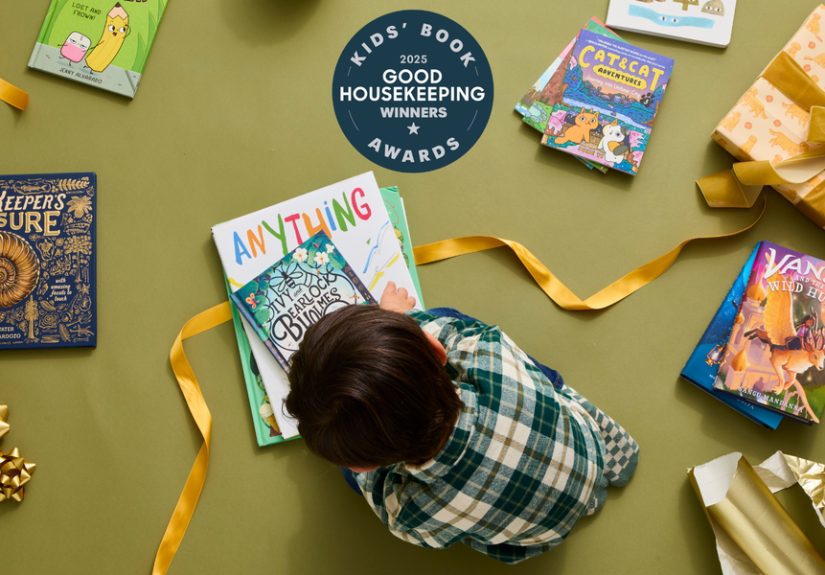
Good Housekeeping’s 2025 edition feels especially sharp. The brand’s fourth annual kids’ book roundup selected 56 winning titles after testing more than 200 books with 125 children ages 0 to 12 and their families. The result is not just a “best books” list. It is a snapshot of what young readers actually responded to in 2025: interactive books that beg to be touched, graphic novels that pull in kids who might otherwise drift toward screens, funny nonfiction that sneaks facts in through the side door, and heartfelt stories that reflect a wider range of identities, feelings, and family experiences.
In other words, this list understands modern childhood. It knows that kids want to laugh, poke, slide, flap, trace, solve, doodle, and occasionally declare a book “the best ever” before abandoning it for a snack. The winners meet children where they are, then gently nudge them somewhere better: toward curiosity, empathy, confidence, and, yes, maybe even one more chapter before lights-out.
Why Good Housekeeping’s 2025 Kids’ Book Awards Deserve Attention
Plenty of year-end book lists are smart. Fewer are practical. What sets the 2025 Kids’ Book Awards apart is that Good Housekeeping blends editorial judgment with real-world testing. Librarians, literacy experts, publishers, and editors help surface contenders, but children still have the loudest vote that matters: the “read it again” vote.
That approach is more meaningful than it sounds. Kids do not respond to books because a panel said the prose sings. They respond because the story is funny, the pages feel alive, the art helps them decode emotion, or the plot makes them forget they were supposedly “too tired” to read five minutes earlier. Good Housekeeping appears to understand that the best children’s books are not merely admirable. They are magnetic.
And in 2025, magnetism matters. Families are navigating a world of shorter attention spans, heavier screen competition, and legitimate concerns about reading engagement. So when an awards list manages to spotlight books that are playful without being flimsy, educational without becoming homework, and emotionally rich without becoming preachy, that is worth paying attention to.
The Biggest Trends Hidden Inside the 2025 Winners
1. Interactive books are no longer a bonus feature; they are part of the storytelling
One of the clearest themes in Good Housekeeping’s list is interactivity. For babies and toddlers, books like What’s That Noise? Meow!, Look, Baby, Look! At Home, and Slide and Peek Santa show how physical engagement helps hold attention. These are not books that sit politely in a lap. They demand pressing, peeking, pointing, guessing, and giggling.
That same spirit carries into older age groups. Ivy and Bearlock Holmes: The Case of the Missing Flower turns reading into puzzle-solving. Fold-Out + Play: House blurs the line between book and toy without feeling gimmicky. The Wizard’s Guide to Magical Experiments makes science feel theatrical, which is exactly how children prefer their learning: with a little sparkle, a little mess, and a strong chance that someone says, “Wait, can we do that again?”
This trend makes sense. Reading experts have long emphasized the value of interactive read-alouds, and the strongest books on this list seem designed for exactly that kind of back-and-forth energy. Good Housekeeping did not reward passive reading experiences. It rewarded books that create participation.
2. Graphic novels have officially stopped being “a trend” and started being infrastructure
If there is a royal family in children’s publishing right now, graphic novels are wearing the crowns, the capes, and probably the sparkly boots. Good Housekeeping reported that graphic novels were the category older kid testers requested more than any other. That tracks with what parents, teachers, librarians, and every kid clutching a full-color paperback in a school hallway have been saying for years.
The 2025 winners prove how wide the format has become. The Cartoonists Club turns comics into a celebration of creativity and self-expression. Creaky Acres delivers a layered story about belonging, race, class, and horses, which is a combination no one should pretend is ordinary. Dream On brings emotional depth to middle-grade readers. One Crazy Summer: The Graphic Novel makes an award-winning historical story newly accessible. Mallory and the Trouble with Twins shows how classic series can find new life in graphic form.
This matters because graphic novels are not “lesser” reading. They demand visual literacy, inferencing, pacing, and attention to emotional cues. The best 2025 winners understand that pictures are not replacing reading. They are expanding it.
3. Nonfiction wins when it behaves a little badly
Children love facts, but only if the facts do not arrive wearing a necktie. One of the smartest patterns in the awards is the way nonfiction and informational books are wrapped in humor, design, or sensory delight. Don’t Trust Fish is a perfect example. It sounds like a conspiracy theory developed by a raccoon, and that is precisely why kids lean in. Underneath the jokes is a smart, fact-rich reading experience.
The same goes for The Fossil Keeper’s Treasure, which uses tactile elements to turn prehistoric life into something children can literally feel their way into, and The Stuff That Stuff Is Made Of: The Things We Make With Plants, which invites kids to look at the everyday world with fresh eyes. Discover Dinosaurs keeps the dinosaur obsession alive, but with substance behind the roar.
The lesson here is simple: kids do want to learn. They just prefer not to feel ambushed by educational virtue. Good Housekeeping’s best nonfiction picks understand that curiosity is easier to ignite when wonder gets there first.
4. Representation is strongest when it comes with plot, humor, and emotional truth
Another strength of the 2025 awards is that inclusive storytelling is woven naturally into books kids genuinely want to read. Amina Banana and the Formula for Friendship introduces a Syrian third grader adjusting to life in the United States, but it does so through humor, science, school nerves, and the universal chaos of trying to make friends. Creaky Acres addresses outsider feelings and microaggressions without losing its warmth or sense of fun. Dream On zeroes in on big emotions and the ache of wanting to be seen.
That balance matters. Children do not need books that lecture them from a moral podium. They need books that tell a good story first and trust the empathy to follow. The winners that feel most lasting are the ones where representation is not decorative. It is integral to character, conflict, and connection.
Standout Books That Capture the Spirit of the Awards
What’s That Noise? Meow! is the kind of board book that reminds adults babies are tiny critics with no patience for boredom. Its sound-and-flap structure taps directly into sensory curiosity and makes it a natural baby-shower gift that will actually get used.
The Pigeon WON’T Count to 10! proves Mo Willems still knows how to turn stubbornness into comedy gold. Counting books often suffer from being, well, counting books. This one escapes that fate by letting personality drive the lesson.
Don’t Trust Fish may be the funniest title on the entire list. Its mock-serious paranoia gives kids the joy of being in on a joke while still feeding them intriguing information about aquatic life. It is equal parts absurd and clever, which is a strong place for any picture book to live.
The Cartoonists Club feels especially important because it does not just entertain; it invites creation. In a year when families are trying to reduce passive screen time without becoming joyless anti-fun dictators, a book that inspires kids to make their own comics feels like a small miracle.
Creaky Acres is one of the most interesting middle-grade picks because it combines a familiar “new kid” framework with a more textured social reality. It has humor, heart, horse-girl appeal, and enough emotional intelligence to satisfy readers who want more than surface-level sweetness.
Amina Banana and the Formula for Friendship stands out as a chapter-book winner that respects younger readers. It offers jokes, momentum, and relatability, but it also gives its heroine a meaningful interior life. That combination is catnip for kids beginning to move into more independent reading.
What the Awards Reveal About Children’s Reading in 2025
The deeper story behind Good Housekeeping’s 2025 Kids’ Book Awards is not just that these books are good. It is that they are strategically good for this moment. Families want books that create connection. Parents want stories that open conversation. Kids want books that feel alive enough to compete with everything else glowing in the room.
That is why the strongest winners share a few traits. They invite participation. They reward rereading. They understand humor is not fluff but a gateway. They respect children’s intelligence. They offer mirrors and windows. And crucially, they meet kids at different reading stages without sounding like they were assembled in an educational factory.
There is also something reassuring about the range here. Babies get sensory-rich board books. Preschoolers get playful language and hide-and-seek formats. Early readers get stories that support decoding without draining the fun from the page. Big kids get graphic novels, historical stories, STEM-heavy adventures, and emotionally resonant narratives. The list says, very clearly, that there is no single “right” way to build a young reader. There are many doors in, and Good Housekeeping has handed families a pretty useful key ring.
How Parents, Caregivers, and Librarians Can Use This List Well
The smartest way to use the 2025 awards is not to march into a bookstore and buy whatever looks most educational. That is how you end up spending money on a worthy book your child treats like tax paperwork. Instead, use the list as a matchmaking tool.
If your child loves tactile play, start with the interactive winners. If they think traditional prose is suspicious, hand them a graphic novel and do not apologize for it. If they ask a million questions about dinosaurs, plants, fish, or fossils, lean into the nonfiction winners. If they are navigating friendship, school changes, or identity, choose the stories with emotional depth. The awards are most helpful when you treat them not as a ranking, but as a menu.
And once a child connects with one title, do the obvious but often forgotten thing: follow the spark. Reread it. Find read-alikes. Ask what they liked. Let them talk too long about a side character. Children become readers not because adults assign books, but because someone helps them build a reading identity around pleasure, ownership, and curiosity.
The Real-Life Experience of Using Good Housekeeping’s 2025 Kids’ Book Awards
Here is what the experience of this awards list feels like in real life: less like consulting a prestige document, and more like finally getting a smart recommendation from the one friend who actually knows your kid. You open the list expecting a few “nice” books, and instead you start mentally assigning winners to the children in your life. The toddler who cannot sit still for more than 40 seconds? There is a book with flaps, sounds, or hidden objects for that. The six-year-old who claims to hate reading but will happily memorize every joke in a comic? There is a graphic novel waiting to make a liar out of that sentence. The tween who wants emotional stakes but still wants fun? Also covered.
That is the sneaky pleasure of Good Housekeeping’s 2025 Kids’ Book Awards. The list feels tested in the way a good casserole recipe feels tested: not by theory, but by actual people in actual homes making actual messes. You can imagine the books being read on sofas, in back seats, on library rugs, at bedtime, during snack breaks, or in those odd in-between moments when a kid says they are bored and an adult silently prays for literature to save the day. Some winners are clearly built for lap reading and pointing fingers. Others are made for the proud moment when a child starts reading aloud and suddenly insists on doing every character voice.
There is also a kind of relief in a list that does not confuse seriousness with quality. Parents and caregivers often feel pressure to choose books that are enriching, improving, broadening, instructive, and maybe capable of preparing a child for Harvard by third grade. This list offers a healthier message: joy counts. Laughter counts. Curiosity counts. So does a kid wanting to reread the same page because the illustration is hilarious, or because they want one more chance to solve a puzzle before turning the page. Those moments are not side effects of reading. They are the engine.
For librarians and teachers, the experience is a little different but just as useful. The awards function like a fast, kid-tested calibration tool. They help adults spot the books most likely to circulate, spark discussion, and build confidence across reading levels. A title like The Cartoonists Club can inspire art and writing. A title like Amina Banana and the Formula for Friendship can open classroom conversations about adjustment, belonging, and identity. A title like Don’t Trust Fish can rescue storytime from politeness and replace it with real laughter, which frankly improves everyone’s odds.
Most of all, the experience of this list is hopeful. It suggests that even in a noisy, distracted, hyper-digital culture, children still respond powerfully to books that are funny, imaginative, beautifully designed, emotionally honest, and genuinely kid-centered. Good Housekeeping’s 2025 Kids’ Book Awards do not just celebrate books. They celebrate the ongoing possibility that the right story, handed to the right child at the right moment, can still work a little everyday magic. And really, that is the kind of award-winning behavior we can all get behind.
Conclusion
Good Housekeeping’s 2025 Kids’ Book Awards succeed because they do something refreshingly simple: they trust kids. The winners show that today’s best children’s books are interactive, funny, visually rich, emotionally aware, and smart enough not to underestimate their audience. Whether you are shopping for a baby gift, building a classroom library, helping a reluctant reader warm up to books, or trying to keep bedtime from turning into a hostage negotiation, this awards list offers unusually practical guidance. In a crowded publishing landscape, that makes it more than useful. It makes it one of the best family reading roadmaps of the year.






