Table of Contents >> Show >> Hide
- Meet Jess Wheeler: The Maker Who Turns Leaves Into “Everlasting Sculptures”
- Why Bronze, Brass, and Plaster Feel So Different (and Why That Matters)
- From Kitchen Garden to Wall Light: The “Grown From Seed” Approach
- How These Pieces Perform in Real Rooms
- How to Style Botanical Sculptural Lighting Without Making Your Home Feel Like a Gift Shop
- Buying Handmade: What to Expect (and What You’re Really Paying For)
- Care and Maintenance: Keep the Magic, Skip the Panic
- Design Analysis: Why Botanical Metalwork Lighting Is Having a Moment
- Experiences and Real-World Scenarios: Living With Leaf-Cast Lighting (500+ Words)
- Conclusion
There are two kinds of people in this world: those who look at a cabbage leaf and think “salad,” and those who look at it and think
“obviously… a wall light.” Jess Wheeler is proudly in the second campand once you see her work, you may never grocery shop the same way again.
Featured in a Remodelista web story, Wheeler’s handmade lighting and wall sculptures take botanical formsivy, oak, rhubarb, savoy cabbage, chard
and turn them into functional, sculptural pieces cast in bronze, brass, and plaster.
The result is lighting that feels less like a fixture and more like a tiny, poetic fossil: proof that nature happened… and you remembered to pay the electric bill.
Meet Jess Wheeler: The Maker Who Turns Leaves Into “Everlasting Sculptures”
Wheeler’s story reads like a modern craft fable: trained as an illustrator, later working in London as a set designer and art director, she was already fluent
in creating atmosphere. But the real plot twist came when she relocated from London to rural Wales and started paying close attention to what was outside her workshop window:
a giant oak treepart muse, part leafy supervisor.
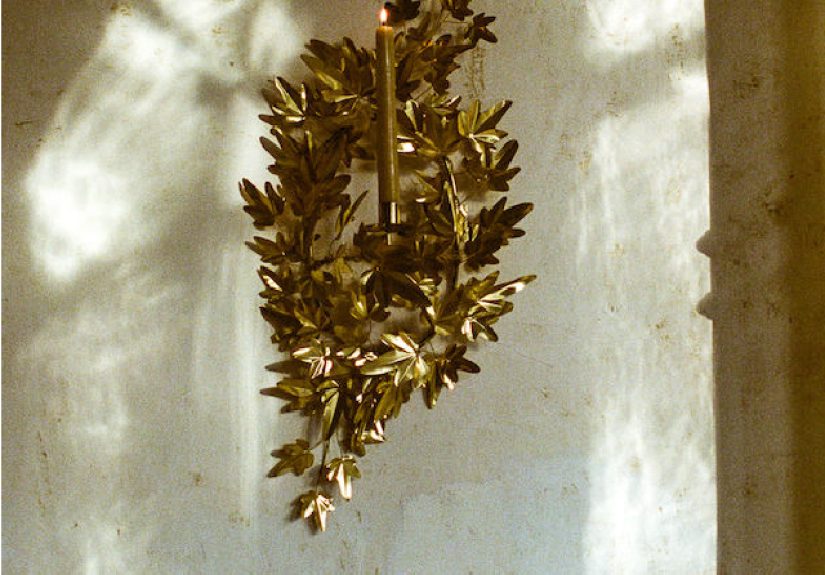
Her first candle sconce was covered in brass oak leaves, shaped from that very tree. The goal wasn’t “make a product,” it was “make a moment.”
Candlelight in a dark countryside home became a kind of ritualsoft, ambient, and a little dramatic (in the best way).
From there, an introduction to a retired engineer-turned-metalworker turned into an unofficial apprenticeship in metalwork, and the craft took hold.
Fast-forward: the brass candle sconces, candelabras, and chandeliers gained serious attentionselling out quickly when launched through a specialty shop
and the practice expanded into a studio that now includes a small team and an apprentice.
The through-line is consistent: real plants, real forms, translated into objects that keep their wildnessveins, crinkles, edges and all.
Why Bronze, Brass, and Plaster Feel So Different (and Why That Matters)
If lighting were a personality test, these three materials would give you a surprisingly honest read. Each one carries its own mood, maintenance reality,
and design superpower. Wheeler uses that range like a chef uses salt, acid, and heatdifferent tools, same goal: make you feel something.
Brass: Warm, Reflective, and Unapologetically Alive
Brass in handmade lighting is like butter in cooking: it makes everything richer. In Wheeler’s candle sconces, the metal’s brightness catches flame and throws it back,
while the leaf silhouettes cast animated shadowsbasically a wall-based performance piece that starts at dusk.
Many of her brass pieces are made with unlacquered, recycled brass, which means they are designed to change over time. Unlacquered brass doesn’t “stay perfect.”
It develops patinadarker in some spots, brighter in others, and occasionally a little moody if your home is humid. The point is character.
If you want a finish that looks identical forever, you may be happier with a smartphone screen protector. If you want charm, brass is your friend.
Bronze: Heirloom Weight, Captured Detail
Bronze has a gravity to itliterally and aesthetically. In Wheeler’s bronze wall lights (think rhubarb leaf, fig leaf, savoy cabbage),
the surface detail is the star: crisp veining, torn edges, and the subtle topography you only notice when you actually slow down and look.
Much of this precision comes from the traditional lost-wax casting method, an “age-old” approach that begins with a model and ends with molten metal,
preserving minute texture that would get blurred in mass production. Bronze also takes patina beautifully, allowing finishes that range from deep, earthy darkness
to rubbed highlights that reveal the form’s high points.
Plaster: Soft Light, Sculptural Calm
Plaster brings a different kind of magic. It’s matte and chalky, and it absorbs light rather than shouting it back. In the Remodelista feature,
a plaster wall light is described as “a stand-alone artwork which happens to light a room”and that’s the right energy.
Plaster casts can capture delicate forms, but they also ask for gentler living: dusting instead of scrubbing, dry hands instead of “I just moisturized, it’s fine.”
Plaster is porous, and prolonged moisture is not its love language. Think of it as the linen shirt of materials: gorgeous, breathable, and not meant for a mud fight.
From Kitchen Garden to Wall Light: The “Grown From Seed” Approach
One of the most distinctive ideas in Wheeler’s work is that the form isn’t “inspired by” natureit is nature, translated.
In her leaf-based collections, the process begins with growing and harvesting: brassicas cultivated, leaves selected, molds taken from the best shapes,
then transformed into plaster or cast into bronze.
The cast list reads like a poetic farmers market haul: rhubarb, fig leaf, savoy cabbage, hispi, chard, cavolo nero.
It’s also a clever design reversal. We’re used to hiding vegetables in smoothies (don’t pretend you aren’t).
Wheeler puts them on displayelevating the “humble” everyday leaf into something you’d mount like art.
That’s the core concept: re-seeing the mundane. A savoy cabbage leaf is intricate, architectural, and frankly more interesting than half the “statement” decor on the internet.
Wheeler’s work invites the viewer to observe, slow down, and notice what’s already around themthen imagine it glowing gently on a wall.
How These Pieces Perform in Real Rooms
Botanical lighting can sound like a niche idea until you see it in a spacethen it suddenly makes sense. The forms are recognizable but unexpected,
and that tension is what gives the pieces presence without feeling theme-y.
Candle Sconces: Shadow Theater for Grown-Ups
Brass candle sconces are the original “smart lighting”except the app is called “a match.” The leaf shapes create moving shadows that shift as the flame flickers.
It’s ambient, flattering, and instantly makes a dinner feel like an occasion (even if you’re eating something that came in a cardboard box).
Wall Lights: Soft Glow, Sculptural Depth
The wall lights (especially leaf forms) often use discreet fittings that sit behind the sculptural element, throwing light onto the wall for a halo effect.
This style is ideal when you want illumination without glarehallways, bedrooms, reading nooks, and dining rooms that deserve better than overhead interrogation lighting.
Plaster Works: Minimalism With a Pulse
In many interiors, plaster reads as modern and calmespecially on textured walls, limewash finishes, or spaces leaning quiet-luxury.
The sculptural leaf form keeps it from becoming sterile. It’s minimalism that remembered to be human.
How to Style Botanical Sculptural Lighting Without Making Your Home Feel Like a Gift Shop
A nature-cast wall light is a statement, yesbut it doesn’t need to be the only thing happening. The best rooms let it be special without turning the whole space into a woodland costume party.
- Pair with honest materials: wood, linen, stone, plaster walls, and aged metals play well with leaf-cast pieces.
- Use contrast intentionally: a bronze leaf against a crisp painted wall is dramatic; against limewash, it’s quietly dimensional.
- Let it breathe: give the piece negative space so the silhouette and shadow can do their job.
- Repeat, don’t match: echo the organic vibe with one other element (a ceramic vessel, a botanical print, a branchy arrangement)then stop.
Buying Handmade: What to Expect (and What You’re Really Paying For)
Handmade lighting is not fast fashion. A cast bronze wall light isn’t churned out by the thousand; it’s made through labor, skill, and steps that take time.
That’s why the work can sell out quickly and why lead times, small variations, and limited runs are normal.
You’re also paying for something less obvious: legibility. In a world of vague, mass-produced “leaf-inspired” decor,
Wheeler’s pieces are specific. You can see the actual veins, the edges, the irregularity that proves something real was there first.
That specificity is what makes the piece feel like art rather than a theme.
Pricing in the Remodelista feature spans from smaller decorative pieces to higher-ticket sculptural lights (with examples including plaster wall lights and bronze leaf wall lights).
Think of it like commissioning a functional sculpture. It’s an investment, yesbut one that often replaces the need for additional “art for the wall,” because the light is the artwork.
Care and Maintenance: Keep the Magic, Skip the Panic
The good news: you don’t need a PhD in patina. The better news: caring for these materials is mostly about gentle habits and resisting the urge to “make it like new.”
The whole point is that it lives with you.
Brass Care (Especially Unlacquered Brass)
- Dust regularly with a soft, dry cloth.
- For grime, use mild soap and water, then dry completely.
- If you love patina, avoid aggressive polishingspot-clean instead.
- If you want more shine, use a gentle brass polish sparingly, then accept that patina will return (because time always wins).
Bronze Care
- Dust with a soft cloth; avoid abrasive pads.
- Keep moisture minimal, especially in high-humidity zones.
- For preservation, some owners use microcrystalline wax on bronze objectsask the maker or installer what’s appropriate for your finish.
Plaster Care
- Dust with a soft brush or microfiber cloth; avoid water-heavy cleaning.
- Handle with clean, dry hands (oil can stain matte surfaces).
- Keep away from direct splashes, steamy showers, or the kind of enthusiastic cleaning that involves a spray bottle and confidence.
Design Analysis: Why Botanical Metalwork Lighting Is Having a Moment
The rise of sculptural, nature-driven lighting isn’t randomit’s a response. People are tired of spaces that look like they were assembled by an algorithm
(no offense to algorithms… okay, a little offense). Botanical casting is tactile, imperfect, and deeply anti-copy-paste.
It also taps into biophilic design in a smarter way. Instead of adding more plants you might forget to water,
the work embeds nature’s forms into the architecture of the home. It’s “green living” for people who love the idea of a greenhouse
but live like they’re perpetually one forgotten weekend away from plant guilt.
And finally: these pieces slow a room down. Shadows move. Surfaces catch light at different angles. You notice the object.
In a culture that scrolls past everything, lighting that makes you look is surprisingly radical.
Experiences and Real-World Scenarios: Living With Leaf-Cast Lighting (500+ Words)
Here’s what people often discover after bringing handmade, nature-cast lighting into a home: the experience is less “I bought a fixture”
and more “I adopted a tiny, glowing sculpture with opinions.” Not loud opinionsmore like quiet, persistent ones that gently change the way you use a room.
Scenario 1: The dinner that suddenly feels like a scene from a movie.
A brass candle sconce goes up in the dining room, and the first night you light it, you realize your overhead fixture has been bullying you for years.
The leaf shapes throw shadows that flicker across the wall, and everyone at the table looks bettersoftened edges, warmer tones, fewer “why do I look tired?”
questions. Even a simple meal feels intentional. The funny part is that nothing else changed. Same table, same chairs, same slightly chaotic life.
But the light creates a pauselike the room is reminding you that you’re allowed to enjoy the moment you’re already in.
Scenario 2: The patina lesson (a.k.a. learning to stop “fixing” everything).
Unlacquered brass is not the friend who stays exactly the same year after year. It darkens in spots, brightens where it’s touched, and develops a lived-in gradient.
The first time someone notices it, the instinct is often: “Should I clean this?” Then you live with it a little longer and realize the finish is doing what it’s meant to do:
recording time. It becomes a small practice in letting beautiful things age naturallylike leather, wood, or your favorite jeans.
Some owners gently clean fingerprints and leave the rest alone, treating patina as part of the design rather than a problem to solve.
Scenario 3: The hallway glow that changes daily routines.
A leaf-cast wall light in a hallway is technically practicalno one wants to navigate corners in the darkbut it also creates a “threshold” feeling.
Morning light hits the texture differently than evening light. At night, when the wall light turns on, it becomes a signal: you’re home, you’re transitioning,
you can exhale. People underestimate how much lighting affects mood until a space starts behaving like it cares about you.
Scenario 4: The bedroom becomes calmer without adding a single extra “wellness” product.
Swap a harsh bedside lamp for a sculptural wall light that bounces illumination off the wall, and the whole room becomes less visually noisy.
Reading feels easier on the eyes. The light doesn’t glare. The object itself becomes part of the room’s compositionart, light, and texture in one.
For many, this is the moment they understand why handcrafted lighting costs more: it’s not just a bulb holder, it’s a daily experience.
Scenario 5: Designers specifying one piece instead of five.
Interior designers often talk about “editing.” A strong sculptural light can replace the need for multiple decorative add-ons because it brings form, material,
and story in one move. Instead of buying extra wall art, extra decor, extra “something” to make the room feel finished, the lighting does the heavy lifting
quietly, from the wall, while making everything else look more considered.
The shared theme across these experiences is that Wheeler’s approach turns lighting into a relationship with material, time, and nature.
It’s functionalyesbut it also nudges people to notice shapes, shadows, and seasons. The object doesn’t just sit there.
It participates.
Conclusion
The Remodelista web story on Jess Wheeler captures a rare combination: deep craft, genuine inspiration, and objects that feel alive in a room.
Whether cast in bronze through lost-wax technique, formed in warm recycled brass, or rendered in quiet plaster, her lighting and wall sculptures
transform familiar leaves into functional artinviting you to slow down and see the natural world with fresh eyes.