Table of Contents >> Show >> Hide
- Who Harriet Maxwell Macdonald and Andrew Corrie Are
- Why This NYC House Call Still Works
- The Details That Make the Home Sing
- Ochre’s Aesthetic, Distilled in One Home
- Andrew Corrie’s Influence: The Canvas Counterpoint
- What Homeowners and Designers Can Learn From This Loft
- Extra Experience: What the Ochre World Feels Like in Real Life
- Final Thoughts
- SEO Tags
Some homes announce themselves with a brass band. Others do something much smarter: they lower their voice, dim the lights just enough, and let the materials do the flirting. That is the feeling behind House Call: Harriet Maxwell and Andrew Corrie of Ochre in NYC, a home story that still feels striking because it is not obsessed with trends, tricks, or theatrical excess. Instead, it is a master class in restraint, texture, and the kind of confidence that says, “Yes, this pink chair belongs here, and no, it does not need to explain itself.”
Harriet Maxwell Macdonald and Andrew Corrie are not accidental tastemakers. Their world has long revolved around Ochre, the design brand known for its understated luxury, luminous lighting, and rich but never overcooked material palette. In their New York loft, that sensibility comes into sharp focus. The apartment is not just beautiful. It is deeply instructive. It shows how a family home can be elegant without turning into a museum, and how a design-forward interior can still feel lived in, loved, and occasionally interrupted by children, coffee cups, and real life.
That is what makes this NYC house call so memorable. It is not merely a tour of a stylish loft. It is a portrait of a design philosophy in action: soften the hard edges, honor the architecture, use color like seasoning, and never underestimate the power of a great light fixture to steal the scene without becoming a diva.
Who Harriet Maxwell Macdonald and Andrew Corrie Are
To understand the apartment, you have to understand the people behind it. Harriet Maxwell Macdonald is a cofounder of OCHRE, a design company established in the 1990s and known for furniture, lighting, and accessories that blend craftsmanship, elegant materials, and quiet drama. Andrew Corrie became closely associated with the New York side of that world and later founded Canvas Home, a more accessible line rooted in practical, beautifully made household pieces. Together, they represent a rare design pairing: one eye tuned to refined glamour, the other to useful, everyday objects that still know how to behave beautifully in a room.
That duality matters. It explains why their home never tips too far in one direction. It is polished, but not precious. It is luxurious, but not loud. It mixes antiques with contemporary design, statement lighting with humble shelving, soft linens with metal, slate, tin, bronze, and glass. In lesser hands, that cocktail could turn into chaos. Here, it becomes harmony.
And frankly, that is the dream. Anyone can buy expensive pieces. Not everyone can make a room feel layered, intelligent, and calm at the same time. Maxwell Macdonald and Corrie understand that good interiors are not about stacking “nice things” in a corner and hoping for emotional chemistry. They are about proportion, contrast, editing, and mood.
Why This NYC House Call Still Works
The original draw of this home is its location and structure: a SoHo loft with the bones many city dwellers fantasize about and the renovation challenges many of them fear. The space required a serious rethinking, and that rethinking is part of what makes the story so compelling. Rather than simply decorating around the existing plan, the couple reshaped the apartment to improve how it lived day to day. The kitchen was moved to the front of the loft to capture more light. Toward the darker interior, glass-walled rooms were created for the children. It was not just an aesthetic decision. It was a smart urban-family decision.
That move alone says a lot about the project. This is not design as fantasy. It is design as problem-solving. In New York, light is currency, and these two spent it wisely. By relocating the kitchen and using glass rather than opaque partitions, they kept the loft open, airy, and visually connected. The result is a layout that feels generous rather than chopped up, even though it had to work hard for a family.
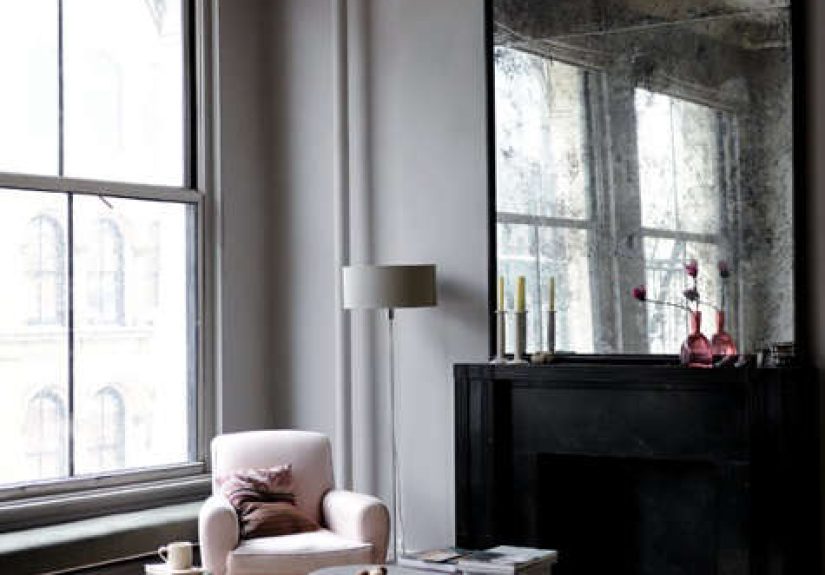
And then there is the mood. Oh, the mood. The palette is classic Ochre: moody grays, pale pinks, and robin’s egg blue. That combination could have gone terribly wrong in another home and ended up looking like an overenthusiastic bakery box. Here it reads as soft, dusty, and atmospheric. The colors do not shout. They hum. They create warmth without heaviness and elegance without stiffness.
The space also avoids the common loft trap of becoming too industrial, too cold, or too “look at my exposed everything.” Yes, there are raw elements. Yes, there are metal shelves, slate surfaces, and an original tin ceiling. But those tougher materials are balanced with linen upholstery, antique mirrors, vintage pieces, delicate glass, and the kind of gentle, chalky color that takes the edge off urban severity. It is the design equivalent of wearing a velvet jacket with old jeans: polished, yes, but not uptight.
The Details That Make the Home Sing
1. Lighting That Acts Like Jewelry
If Ochre has a signature superpower, it is lighting, and this home knows it. A large Arctic Pear chandelier hangs against the loft’s original tin ceiling, creating a perfect tension between ornament and architecture. It is a glamorous gesture, but not a gaudy one. That distinction matters. In many interiors, a chandelier arrives like an attention-seeking guest who tells the same story too loudly at dinner. In this loft, the lighting is dramatic, but it still belongs to the room.
That approach helps explain Ochre’s wider appeal. The brand’s best-known fixtures, including pieces like the Seed Cloud, are beloved because they feel sculptural and atmospheric at once. They are not just lamps. They are mood machines. They soften space, catch light, and create a sense of movement without visual chaos. Maxwell Macdonald clearly understands that a home does not need fifty accessories if one beautiful light can do the emotional heavy lifting.
2. A Kitchen That Understands Real Life
The kitchen deserves its own applause. It features a Valcucine steel island, open shelving, and a handsome balance of sleek function and rustic texture. It looks composed, but not over-rehearsed. You can imagine someone making coffee there, stacking plates, answering emails, arguing kindly about where the scissors went, and still living in a room worthy of a design magazine.
This is one of the home’s strongest lessons: practical does not have to mean boring. Open shelves, if handled with discipline, can look airy and personal rather than messy. Metal and slate can feel grounded rather than cold. And a family kitchen can still be deeply stylish if the materials are honest and the visual clutter is under control.
3. A Mix of Old and New That Feels Collected
Another reason the loft holds up so well is its refusal to look bought in one weekend. There are antiques, vintage finds, Canvas pieces, Ochre designs, and art woven throughout the rooms. An antique mirror over the tub. A vintage linen cupboard. Murano glass chandeliers in the hallway. A fumed oak table with a cast bronze base. A pink vase on the mantel. Nothing feels random, but nothing feels too matched either.
That is a harder balance than Instagram would have you believe. Many interiors are either too coordinated or too chaotic. This one lands in the sweet spot: collected, edited, and slightly bohemian, but still disciplined. It has soul without messiness and polish without sterility.
Ochre’s Aesthetic, Distilled in One Home
OCHRE has long been associated with a kind of understated elegance built on luxurious materials, strong proportions, and craftsmanship. That philosophy appears all over this apartment. You see it in the soft but not sugary colors. You see it in the metal, glass, bronze, and linen working together like old friends. You see it in the refusal to overfill the rooms. The home is decorative, but never overloaded.
There is also a distinctly New York flavor to the way the brand translates here. Ochre began in Britain, and its roots in understatement are clear, but the New York loft gives the look a sharper urban edge. The SoHo setting adds grit, scale, and a little swagger. The result is not country-house prettiness dropped into a city shell. It is a true fusion of London restraint and downtown Manhattan confidence.
That combination also explains why Ochre’s Broome Street showroom became such a natural fit for the neighborhood. The brand’s world is full of subdued color, sumptuous surfaces, unusual but not eccentric forms, and pieces that reward a second glance. It is luxury for people who would rather be admired quietly than photographed screaming on a velvet sofa.
Andrew Corrie’s Influence: The Canvas Counterpoint
Andrew Corrie’s design perspective adds another layer to the story. While Ochre brings the higher note of refinement, Canvas Home introduces a more grounded, useful, and approachable sensibility. Corrie has described his work in terms of simple, sustainable style, and that idea helps the loft feel real. Canvas pieces soften the overall composition and keep it from drifting into untouchable luxury.
That is one of the smartest aspects of the interior. It acknowledges that a home needs both aspiration and utility. You want the chandelier, yes, but you also want the chair that invites you to sit down with a book. You want the dreamy color palette, but you also want shelves that hold the plates you actually use. Good design lives in that tension.
In a broader sense, Corrie’s influence makes the home feel hospitable. There is a generosity to the rooms. They are beautiful, but they are not intimidating. They do not dare you to keep your shoes off and your personality hidden. They suggest that real life is welcome here, provided it has decent taste.
What Homeowners and Designers Can Learn From This Loft
Start With Light, Not Decoration
The smartest decision in the home may be the most architectural one: moving the kitchen to the brighter front of the loft. Before buying art, pillows, or statement chairs, solve the big problem first. If the space flows better and light lands where people actually live, the decorating becomes easier and more meaningful.
Use Color Like a Whisper
This home proves that muted color can be more memorable than bright color. Pale pink, blue-gray, and softened neutrals are far more difficult to execute well than one giant red sofa yelling for attention. When color is subtle, materials and forms get room to breathe.
Mix Refined and Rustic
Steel, slate, bronze, antique wood, linen, tin, and glass all appear here, and that variety is what gives the loft depth. A room made entirely of polished surfaces can feel flat. A room with only rustic elements can feel heavy. The magic happens in the conversation between the two.
Let One Hero Piece Lead the Room
Whether it is the Arctic Pear chandelier, a strong table, or a beautifully shaped pendant, the loft understands that every room benefits from one visual anchor. Once that piece is in place, everything else can relax a little. Think of it as casting the lead before hiring the supporting actors.
Extra Experience: What the Ochre World Feels Like in Real Life
Now for the part that makes this story linger beyond the floor plan and product names: the experience of it. Not just what the home looks like in photographs, but what a place like this feels like when you imagine stepping into it after a long New York day.
You leave the noise of the street behind first. That matters. SoHo can be glamorous, charming, chaotic, expensive, and slightly absurd before lunch, sometimes all at once. Then you enter a space shaped by people who understand atmosphere, and the city seems to lower its volume. The light is softer inside. The metal and glass do not feel cold; they feel deliberate. The pinks are dusty, not sugary. The blues are faded in the best way, like old silk or sky right before evening. Even the air in a home like this seems to carry a sense of editing, as if every object has passed through several rounds of “Do you deserve to be here?” and thankfully most clutter has failed the audition.
What stands out most is not luxury in the flashy sense. It is calm. That is rarer, harder, and frankly more impressive. A room can be expensive and still feel nervous. This one feels settled. The chandelier glows instead of performs. The shelves look used but not overstuffed. The dining table suggests conversation, not staging. The antique mirror in the bath does not read as “vintage moment”; it reads as something chosen because it adds softness, reflection, and history to the routine of daily life.
You can also feel the family reality beneath the beauty, and that is part of the charm. The glass-walled rooms for the children are not just clever design moves. They are proof that style and parenthood can coexist without one apologizing to the other. The apartment is elegant, but it still understands crayons, noise, breakfast, bedtime, and the general domestic chaos that no scented candle can fully erase.
There is another layer to the experience too: the confidence of people who know their taste. That kind of confidence changes a home. It means a linen chair can sit next to a metal table without looking like a compromise. It means old and new can share a room without competing for status. It means you do not decorate to prove you are interesting; you decorate because you know what feels right. That is why the home feels so persuasive. It is not trying to impress strangers on the internet. It is expressing a worldview.
And maybe that is the real reason this house call still resonates. It offers something deeper than inspiration photos. It offers permission. Permission to mix refinement with practicality. Permission to keep a palette soft. Permission to choose fewer things, but better ones. Permission to make a family home beautiful without stripping it of personality. In a culture that often mistakes more for better, Maxwell Macdonald and Corrie make a stronger argument: beauty lives in proportion, atmosphere, and the quiet conviction that a home should support life, not perform over it.
Final Thoughts
House Call: Harriet Maxwell and Andrew Corrie of Ochre in NYC endures because it is more than a design feature. It is a lesson in how to live stylishly without becoming a hostage to style. The loft is thoughtful in plan, disciplined in palette, generous in mood, and rich in detail. It reflects the Ochre brand beautifully, but it also stands on its own as a model for modern city living: family-friendly, emotionally warm, visually refined, and blessedly free of empty trend-chasing.
If you are looking for a home that explains the lasting appeal of Ochre in one sweep, this is it. The lighting glows. The materials matter. The layout solves real problems. The colors soothe. And the whole place feels like what many interiors aim for but never quite reach: a home with taste, intelligence, and soul. In other words, the rare kind of interior that does not just photograph well. It actually stays with you.