Table of Contents >> Show >> Hide
- Why Bathroom Exhaust Fans Are So Easy to Ignore
- How Bathroom Exhaust Fans Become a Fire Hazard
- 1. Dust and lint buildup can choke the fan
- 2. Aging motors and worn bearings can overheat
- 3. Thermal protection can fail under abnormal conditions
- 4. Running the fan too long adds wear and heat
- 5. Poor duct design can make the fan work harder
- 6. Fan/light and over-shower installations need extra attention
- Warning Signs Your Bathroom Fan May Be Unsafe
- How to Reduce the Risk
- Why This Risk Is Not Just Theoretical
- Common Real-World Experiences Homeowners Report
- Conclusion
Bathroom exhaust fans have a squeaky-clean reputation. They whisk away steam, help prevent mold, and keep your mirror from turning into a fog machine after every shower. In the world of home maintenance, they seem almost wholesome. Harmless, even. The little fan in the ceiling is basically the librarian of your bathroom: quiet, helpful, and rarely dramatic.
And yet, that same fan can become a genuine fire hazard when it is old, dirty, poorly installed, or simply forgotten for years. That is the sneaky part. Bathroom fans do not usually announce trouble with fireworks and a villain speech. They collect dust, strain their motors, overheat in silence, and sometimes fail in places you cannot see, like the ceiling cavity, attic, or duct run. By the time the problem becomes obvious, the situation may already be serious.
If you want a one-sentence takeaway, here it is: a bathroom exhaust fan becomes dangerous when airflow is restricted, electrical components degrade, and nobody notices the warning signs. The good news is that this is one of those home risks that is often preventable with basic maintenance, smarter operation, and replacing tired old equipment before it turns your bathroom into an accidental science experiment.
Why Bathroom Exhaust Fans Are So Easy to Ignore
Part of the problem is psychological. People pay attention to stoves, space heaters, and overloaded extension cords because those hazards feel obvious. Bathroom exhaust fans do not. They sit overhead, hum politely, and ask for almost nothing. Many homeowners do not clean them for years. Some do not realize they should clean them at all.
That neglect matters because these fans live in a rough environment. They pull in humid air, lint, hair, dust, skin particles, aerosol residue, and whatever else happens to be floating around after a hot shower and a rushed morning routine. Over time, all that debris builds up on the grille, blower wheel, motor housing, and duct path. Once airflow drops, the fan has to work harder. When a motor works harder inside a dusty enclosure, heat becomes the star of the show, and that is when trouble starts.
How Bathroom Exhaust Fans Become a Fire Hazard
1. Dust and lint buildup can choke the fan
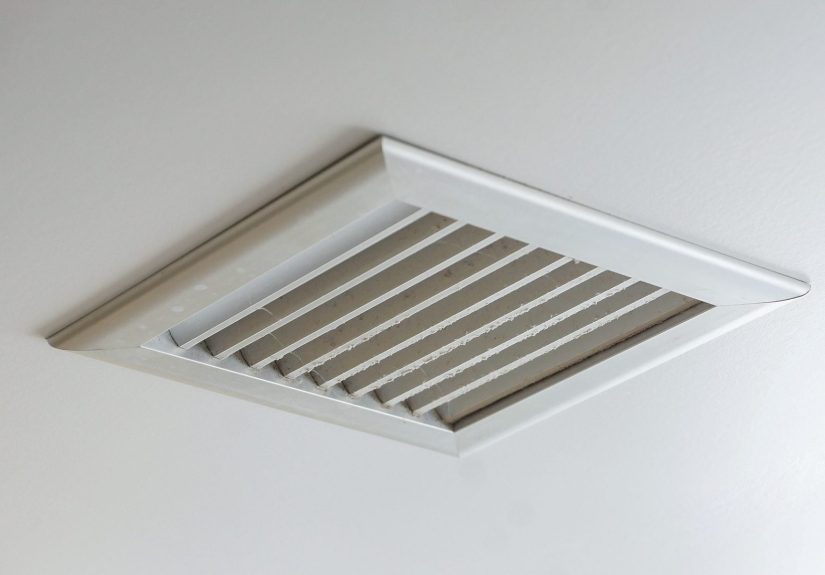
The most common problem is also the most boring-looking one: dust. Unfortunately, boring things start plenty of expensive fires. The narrow slats on a fan cover trap lint fast, and the internal components can become coated with debris. That buildup restricts airflow, which makes the motor run hotter. It also places combustible material right where heat is being generated.
Think of it like making your fan breathe through a sweater. It can still try, but it is going to be miserable about it. Municipal fire departments across the United States regularly warn that lint and dust inside bathroom fans can overheat the motor and ignite nearby material, including plastic fan parts and surrounding wood framing.
2. Aging motors and worn bearings can overheat
Bathroom fans are not immortal, even if they act like they plan to haunt your ceiling forever. Older units often become noisy because bearings wear out, blower wheels become unbalanced, or motors begin struggling to start. A fan that scrapes, grinds, hums loudly, or starts slowly is not merely annoying. It may be telling you that internal friction, drag, or electrical stress is building up.
That matters because overheating does not always happen in one dramatic event. Sometimes it is a slow decline. An aging motor may run hotter for months before anyone realizes the fan is failing. If dust has also accumulated around the motor, the risk increases. And if the unit is decades old, it may lack the safety features found in newer thermally protected models.
3. Thermal protection can fail under abnormal conditions
This is the part where the story gets less “dusty bathroom chore” and more “actual engineering problem.” Some exhaust fan motors include thermal cutoffs designed to shut the motor down when things get too hot. That is good in theory. In practice, testing and incident analysis have shown that under certain abnormal conditions, such as a lock-rotor event, motors can reach temperatures high enough to ignite if protection does not activate as intended.
In other words, a safety feature is helpful, but it is not a magical force field. If a fan is old, damaged, or defective, overheating can still become dangerous. That is one reason fire officials and manufacturers alike stress maintenance and replacement, not blind faith in the fact that the fan still technically turns on.
4. Running the fan too long adds wear and heat
Bathroom fans are supposed to run when they are needed, not all day because someone forgot to flip the switch. Several fire-safety advisories warn that people often leave these fans running for hours at a time, especially older noisy models that blend into the background after a while. Extended run time increases motor wear and heat exposure, especially when the fan is dirty or aging.
That does not mean fans should never run after a shower. In fact, they should run long enough to remove moisture effectively. The smarter approach is controlled run time. A timer switch or humidity sensor can do the job without turning your fan into a full-time ceiling employee working double shifts without a lunch break.
5. Poor duct design can make the fan work harder
A bathroom fan is only as good as the ductwork attached to it. If the duct is crushed, kinked, too small, too long, or full of sharp bends, airflow drops. When airflow drops, the fan’s performance drops with it, and the system may run longer and under more strain. That extra strain can contribute to heat buildup and shorter equipment life.
Good installation matters. The duct should be sized properly, kept as short and straight as practical, and vented all the way outside. If you dump humid air into the attic or crawl space, you trade one problem for another: moisture damage, mold, rot, and a fan system that is not doing its job properly. It is less “ventilation solution” and more “ceiling-mounted bad decision.”
6. Fan/light and over-shower installations need extra attention
Some bathroom units combine a fan with a light, heater, or both. These combos are convenient, but they also add complexity. More components mean more opportunities for heat, wiring trouble, or neglected maintenance. If a unit is installed over a tub or shower, it should be specifically listed for that use and connected on the proper protected circuit. Sloppy wiring and the wrong replacement practices are not the place to get creative.
Warning Signs Your Bathroom Fan May Be Unsafe
Most failing bathroom fans leave clues before they become a bigger problem. The issue is that people tend to ignore them because the clues seem minor. A little noise. A faint smell. A cover that looks dusty. A fan that feels weak. None of those sounds urgent until you connect the dots.
- The fan is much louder than it used to be.
- It starts slowly, buzzes, or makes scraping or grinding sounds.
- You notice a faint burning smell, melting odor, or ozone-like scent.
- The grille is packed with dust or stained brown.
- The fan does not clear steam effectively anymore.
- The housing or surrounding area shows discoloration or signs of heat damage.
- The unit is very old and appears to be original to the house.
If you notice any smell of burning, visible melting, damaged wires, or signs of scorching, stop using the fan and have it inspected by a licensed electrician. That is not a “maybe this weekend” task. That is a “today would be nice” task.
How to Reduce the Risk
Clean it regularly
The simplest safety upgrade is boring but effective: clean the fan. Turn off power first. Then remove the cover, wash it, and gently vacuum dust from the interior, motor area, and blower components according to the manufacturer’s instructions. Many fire-safety pages recommend cleaning bathroom exhaust fans twice a year. If your household creates lots of dust, uses hair products heavily, or runs the fan often, more frequent checks are even better.
Replace very old or failing fans
If the fan is ancient, noisy, sluggish, or visibly damaged, replacement is often smarter than trying to squeeze a few more years out of it. Newer models are typically quieter, more efficient, and better protected. If the unit is not easy to access, shows heat damage, or has wiring issues, call a licensed electrician or qualified contractor.
Use a timer or humidity sensor
A fan should run long enough to remove shower moisture, but it should not run forever because someone got distracted by a phone, a toddler, or life in general. Timer switches are practical because they keep the fan from being forgotten. Humidity-sensing fans are even better for some homes because they turn on when moisture rises and shut off when the job is done.
Make sure it is properly sized
An undersized fan struggles to clear moisture, so people may run it longer. A common guideline is at least 50 CFM for small bathrooms, with roughly 1 CFM per square foot for many typical spaces. Bigger bathrooms or rooms with multiple fixtures may need more capacity. If your fan sounds busy but leaves the room humid, it may be undersized, dirty, poorly ducted, or all three.
Check the duct path
Your fan should vent outdoors, not into an attic, wall cavity, or crawl space. The duct should be the correct size, as straight as practical, and free of kinks, crushing, or obstructions. A blocked damper or clogged exterior termination can also reduce airflow and make the fan work harder than it should.
Why This Risk Is Not Just Theoretical
This is not one of those safety topics invented by an overly dramatic relative on social media. There is real history behind the warnings. The CPSC has published both recall information and technical analysis related to exhaust fans. In one public recall, consumers were told to turn off and unplug recalled Broan-NuTone ventilation fans because of a fire hazard. Separate CPSC staff analysis found that under lock-rotor conditions, some exhaust fan motors could reach temperatures high enough to ignite.
Local fire departments have also reported actual residential fires tied to bathroom exhaust fans. In one district, officials reported multiple structure fires and more than $100,000 in smoke and property damage from bathroom fan incidents in a single year. Other departments say dirty fans left running too long are among the more common causes they encounter. So yes, the humble bathroom fan deserves more respect than most homeowners give it.
Common Real-World Experiences Homeowners Report
One of the most common experiences is the “suddenly louder fan” story. A homeowner notices that the bathroom fan sounds rougher than usual, maybe with a scraping or grinding noise at startup. Because the fan still works, they ignore it. Weeks or months later, the sound gets worse, steam stops clearing quickly, and the grille looks like it is wearing a fuzzy gray sweater. That pattern matters because it often points to the exact combination experts worry about: dust buildup, worn bearings, reduced airflow, and a motor that is working harder than it should.
Another familiar experience is the “we always leave it on” habit. In some homes, the fan gets switched on during a morning shower and stays on for hours. Nobody means to do it. Life happens. People get dressed, rush to work, answer messages, feed pets, and the fan keeps humming away like it has signed a lifetime contract. Fire departments repeatedly warn that extended run times can raise the risk when the unit is dirty, aging, or already struggling. Homeowners often do not realize this until an electrician or inspector points out that the fan is caked in dust and running hot.
There is also the “mystery smell” experience. Someone catches a faint hot-plastic smell or a weird ozone scent in the bathroom but cannot find the source. It comes and goes, so it gets brushed off as nothing. Later, the cover is removed and the inside reveals scorched dust, browned plastic, or damaged wire nuts. That is a recurring lesson in home safety: if something electrical smells odd, it is trying to communicate, and it is not sending a love letter.
Then there is the renovation surprise. A homeowner replaces flooring, paint, vanity lights, and maybe half the budget for their sanity, only to discover that the old fan above them is original to the house. It may be decades old, weak, noisy, and venting through a duct path that looks like it lost a fight with gravity. This is incredibly common in older homes. The fan may technically run, but that does not mean it is safe or effective. Many homeowners only realize the issue when they see how much dust is inside or learn the fan was never vented properly outdoors in the first place.
Finally, many people experience the “we never thought to clean it” moment. They clean the toilet, wipe the mirror, scrub the tub, and never once look up. When they finally do, the grille is clogged, the airflow is weak, and the fan seems more like a decorative ceiling relic than a ventilation device. That is why this topic matters so much. Bathroom exhaust fan hazards are often built out of ordinary neglect, not dramatic misuse. The good news is that the solution is also ordinary: inspect it, clean it, control the run time, and replace it when age or warning signs say it is time.
Conclusion
Bathroom exhaust fans are supposed to protect your home from moisture, odors, and mildew. Ironically, when they are neglected long enough, they can become a hazard of their own. Dust and lint buildup, aging motors, poor airflow, worn parts, bad duct routing, and overlong run times can all push a once-helpful fan toward overheating and possible fire.
The smartest response is not fear. It is maintenance. Clean the fan regularly. Pay attention to noise, odor, and performance changes. Make sure the duct vents outdoors. Use a timer or humidity sensor. And when a fan is old, damaged, or suspiciously dramatic, replace it before it auditions for the role of “hidden fire starter in your ceiling.”
A bathroom fan is small, but the consequences of ignoring it are not. A few minutes of inspection now can save you from expensive repairs, smoke damage, or worse later.