Table of Contents >> Show >> Hide
- What Is a Nuclear Stress Test, Exactly?
- So… How Long Does a Nuclear Stress Test Actually Take?
- Step-by-Step Timeline of a Typical Nuclear Stress Test
- One-Day vs. Two-Day Nuclear Stress Tests
- What Actually Takes the Longest?
- Factors That Can Make Your Nuclear Stress Test Longer or Shorter
- How Long Until You’re “Back to Normal” After the Test?
- How to Prepare So Your Visit Goes as Smoothly (and Quickly) as Possible
- When Will You Get the Results?
- Real-Life Experiences: What It’s Like to Spend a Morning in Nuclear Cardiology
- The Bottom Line
If your cardiologist just ordered a nuclear stress test, you might be picturing
a sci-fi movie, a giant whirring machine, and an entire day trapped in the hospital.
The good news: it’s much less dramatic than that. The slightly annoying news:
it does take a bit of time.
A nuclear stress test is one of the most common ways doctors check how well blood
flows to your heart muscle at rest and under “stress,” usually exercise or a
medicine that makes your heart work harder. The test is very useful for spotting
blocked or narrowed arteries, evaluating chest pain, and helping plan treatment
for coronary artery disease.
So let’s tackle the big question up front: how long does a nuclear stress test take?
Most people should plan to be at the imaging center for about 2–4 hours,
and sometimes, the test is split over two shorter visits.
But that doesn’t mean you’re on a treadmill for four hours straightfar from it.
A lot of that time is waiting while a special tracer circulates through your bloodstream.
What Is a Nuclear Stress Test, Exactly?
A nuclear stress test is a type of myocardial perfusion imaging (MPI).
It uses a tiny amount of radioactive material (a tracer) and a special camera
to create pictures that show how well blood flows to the heart muscle.
You’ll have images taken:
- At rest – how your heart looks and works when you’re relaxed.
- Under stress – either while you exercise on a treadmill/bike or while
a medication simulates exercise for you (a pharmacologic stress test).
A cardiologist then compares the images. Areas of the heart that don’t get enough
blood flow during stress, but look better at rest, may point to narrowed or blocked
coronary arteries.
So… How Long Does a Nuclear Stress Test Actually Take?
Typical total appointment time
Here’s the headline number most people want:
the average nuclear stress test appointment lasts about 2–4 hours
from check-in to “you’re free to go.”
Why the range? Different centers use slightly different protocols, and some people
need a one-day test (both rest and stress on the same day), while others
do a two-day protocol with shorter visits on separate days.
Why does it take that long?
It’s not that the heart pictures themselves take hoursthose usually take
20–40 minutes per scan depending on the machine and tracer.
Instead, time adds up because of:
- Check-in and prep (vitals, IV, instructions).
- Tracer circulation time so the radiotracer can reach your heart
before pictures are takenoften 15–60 minutes for each set of images. - The stress portion (7–15 minutes of exercise or several minutes
of medication-induced stress plus monitoring). - Imaging time at rest and again after stress.
- Potential extra delays if the schedule is backed up or if more
monitoring is needed.
Some hospitals and cardiology practices explicitly tell patients,
“Plan for 3–4 hours, and bring something to read,” just to set expectations.
Step-by-Step Timeline of a Typical Nuclear Stress Test
Every center is a bit different, but a common one-day schedule looks like this:
-
Check-in and prep (15–30 minutes)
You’ll sign forms, answer questions about your medical history,
have your blood pressure and heart rate checked, and get an IV line
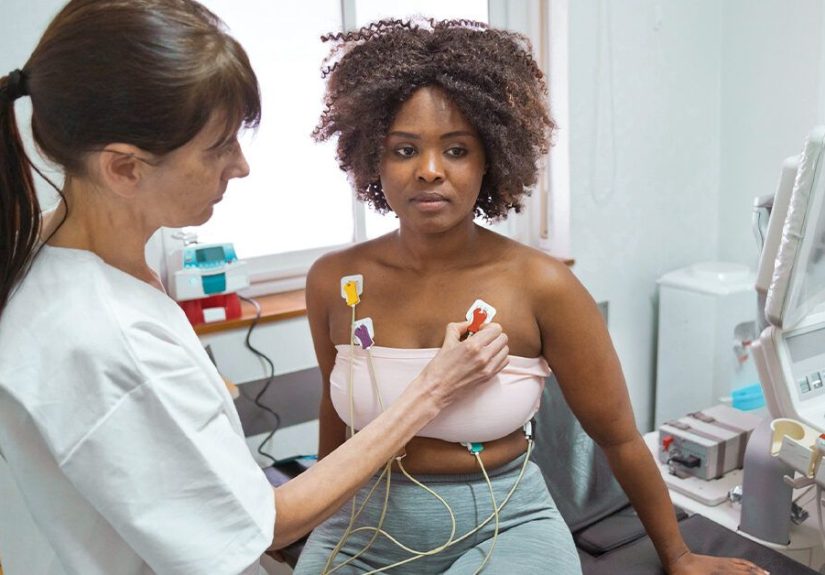
placed in your arm. Techs will also apply small sticky electrodes
to your chest so they can monitor your heart rhythm. -
Resting tracer injection (5 minutes)
The nuclear medicine technologist injects a small amount of tracer
through your IV. -
Resting wait time (15–60 minutes)
You wait while the tracer circulates and is taken up by the heart muscle.
How long you wait depends on the type of tracer and the exact protocol. -
Resting images (20–40 minutes)
You lie still on a narrow table while a gamma camera rotates around
your chest (for SPECT) or you go through a PET scanner. This part
is painless but does require staying still. -
Stress phase prep (10–20 minutes)
You move to the stress lab area. Staff explain the treadmill or
medication stress, check your vitals again, and make sure you’re ready. -
Exercise or medication “stress” (7–15 minutes)
- Exercise stress: You walk on a treadmill that gradually speeds up
and gets steeper for several stages, aiming for a target heart rate. - Pharmacologic stress: If you can’t exercise well enough, you may
receive a medication through the IV that temporarily increases blood flow
to the heart, mimicking exercise.
Partway through this stress period, you get another tracer injection.
- Exercise stress: You walk on a treadmill that gradually speeds up
-
Post-stress wait time (15–60 minutes)
After stress, you’ll sit or lie down while the tracer moves through
your bloodstream so clear stress images can be taken. -
Stress images (20–40 minutes)
Back on the imaging table again for the second set of scans. -
Wrap-up (5–10 minutes)
The staff removes your IV and electrodes, reviews any immediate
instructions, and lets you know when and how you’ll get your results.
Add everything up, and it’s easy to see why a full visit usually lands in
the 2–4 hour window, even though you’re only actively exercising
for less than 15 minutes.
One-Day vs. Two-Day Nuclear Stress Tests
Some people have both the rest and stress scans done in a single long visit.
Others are scheduled for a two-day protocol, where the rest images
are done on one day and the stress portion on another. Two-day protocols
are particularly common when higher tracer doses are used, with each visit
typically lasting 1–2 hours.
Your cardiology team will choose the protocol based on:
- Your body size and weight.
- How much tracer is needed for image quality.
- Your ability to lie still and tolerate longer visits.
- The type of equipment available (PET vs. SPECT).
What Actually Takes the Longest?
From the patient’s perspective, the biggest time sink is usually not the exercise,
but the waiting:
- Waiting for the tracer to circulate.
- Waiting for the camera to capture images.
- Occasional waiting for rooms or equipment to open up.
If you like to read, play phone games, or listen to podcasts, this is your time
to shine. Many centers encourage patients to bring something to pass the time,
as long as it doesn’t interfere with instructions or monitoring.
Factors That Can Make Your Nuclear Stress Test Longer or Shorter
1. Exercise vs. medication stress
If you’re able to walk on a treadmill, the stress portion is usually fairly quick:
about 7–12 minutes of increasing effort plus warm-up and cool-down.
Medication-induced stress can be just as fast or even faster, but your team may
give you more recovery time afterward if you feel flushed, short of breath, or
nauseated.
2. Imaging equipment and tracer type
Different tracers and cameras have slightly different timing:
-
SPECT scans commonly involve 20–40 minutes of imaging per set,
sometimes longer if extra views are needed. -
PET scans can often be faster, with shorter imaging times but
more complex equipment.
3. One-day vs. two-day protocol
One long visit (3–4 hours) versus two shorter visits (1–2 hours each) may fit
differently into your schedule. Ask when you’re booked which protocol you’re on,
so you’re not surprised.
4. Your health and monitoring needs
If you have trouble walking, have complex heart rhythm issues, or feel unwell
during the test, staff may adjust the pace, add rest time, or monitor you a bit
longerso your appointment time nudges toward the longer end of the range.
How Long Until You’re “Back to Normal” After the Test?
Most people feel ready to resume normal activities soon after leaving the lab.
The tracer dose used in nuclear stress tests is small, and the radiation naturally
clears from your body over the next hours to days.
You may be told to:
- Drink extra water to help flush the tracer through your kidneys.
- Avoid close, prolonged contact with infants or pregnant people for a short time
(your team will tell you if this applies in your case).
Mild, temporary effects like slight fatigue, a headache, or short-lived
flushingespecially with medication-induced stressare fairly common and usually
pass quickly. Serious complications like a heart attack or dangerous heart rhythm
are possible but rare, and you’ll be closely monitored throughout
the test.
How to Prepare So Your Visit Goes as Smoothly (and Quickly) as Possible
Good prep can keep the schedule on track and improve the quality of your images.
Follow the instructions your cardiology team gives you, which may include:
- No caffeine (including “decaf,” some teas, chocolate, and energy drinks)
for 12–24 hours before the test, especially for medication stress tests. - Fasting for several hours beforehand (often no solid food 4–6 hours
before the test). - Medication adjustments – Your doctor may tell you to hold certain
heart, diabetes, or asthma medications before the test. Never change your meds
without personalized instructions. - Comfortable clothing and shoes if you’ll be walking on a treadmill.
- Arriving on time (or a bit early) so check-in doesn’t push everything back.
If anything in the prep instructions is confusingcaffeine rules, insulin doses,
inhaler usecall the office ahead of time. It’s much easier to clarify
before the day of the test than to reschedule on the spot.
When Will You Get the Results?
Reading a nuclear stress test is more than glancing at a single picture.
A cardiologist evaluates:
- Blood flow at rest vs. stress.
- Heart wall motion.
- Areas of possible scarring or prior heart attack.
- Overall pumping function.
Many centers send results to your ordering doctor within a few days, sometimes
faster if there’s something urgent. Ask your team when and how you’ll hear back
(patient portal, phone call, follow-up visit), so you’re not anxiously refreshing
your inbox every five minutes.
Real-Life Experiences: What It’s Like to Spend a Morning in Nuclear Cardiology
Clinical descriptions are helpful, but they don’t always capture what the
appointment feels like. Here’s what the timeline might look like from a
patient’s perspective, based on common experiences.
You show up slightly early, because the appointment reminder email mentioned
“plan for three hours and bring a book.” At check-in, you sign a few forms and
confirm your medication list. A nurse calls your name, walks you to a prep room,
checks your blood pressure, and places an IV. The sticky ECG patches go on next.
It’s not glamorous, but it’s quick.
The first injection of tracer is almost anticlimacticno burning, no big
sensation, just a small poke in the IV. You’re told to sit in the waiting area
for about half an hour while the tracer circulates. This is when seasoned
patients pull out their phones, crossword puzzles, or a podcast playlist.
Some clinics have TVs; others are more “bring your own entertainment.”
When it’s time for the resting images, you lie on a padded table that slides
under or between camera heads. The tech positions your arms and reminds you
gently, “Try not to move. If you feel uncomfortable, tell mewe can pause.”
The most common complaint at this stage isn’t pain; it’s boredom and stiff
shoulders after staying still. If you’re prone to back or neck discomfort,
asking for an extra pillow or small adjustment can make a big difference.
After the resting pictures, you’re escorted to the stress lab. If you’re doing
an exercise test, the treadmill looks more like something from a gym than a
hospital. The staff walk you through what will happen: low speed at first,
then a gradual increase until your heart rate reaches the target zone.
They keep an eye on your ECG and blood pressure the entire time.
For people doing a medication stress test, the experience is different. You’re
still wired to the ECG, but instead of walking, you get a drug through your IV
that briefly makes your heart and blood vessels react as if you’re exercising.
Some people describe warmth in the chest, shortness of breath, or a “weird”
feeling that peaks quickly and then fades. The staff usually warn you about this
in advance and stay close throughout, which reassures a lot of patients.
The stress phase itself goes by faster than expectedoften under 15 minutes
of actual stress time. Right when you’re huffing on the treadmill or feeling
the medication kick in, the tech says, “Tracer going in now,” and pushes the
second dose through the IV. That’s the key moment for capturing how your heart
behaves under stress.
Afterward, you cool down while they monitor you for a bit, then you’re back in
the waiting area. People often say this is the most mentally relaxed part:
the hard work is over, and what’s left is more sitting, scrolling, or reading
while the tracer circulates for the stress images.
During the second imaging session, you know the drill. You may feel a bit tired
or hungry, especially if you were fasting, but there’s relief in knowing you’re
nearly done. Once the pictures are finished, the tech removes the IV and ECG
leads, gives you any final instructions, and sends you on your wayusually with
a reminder to drink fluids to help clear the tracer.
Most people walk out saying something like, “That was long, but not as scary as
I imagined.” The main challenges are the length of the visit, staying still on
the imaging table, and dealing with the “unknowns” if it’s your first time.
Knowing in advance that the total test often runs 2–4 hours and that the
exercise portion is pretty short can make the entire experience feel much more
manageable.
If you’re anxious, it can help to tell the staff right away. They work with
nervous patients every day and can offer simple strategiesexplaining each step
before it happens, checking in frequently, and helping you adjust your position
between image sets. In many cases, just understanding the timeline takes some
of the fear out of the word “nuclear.”
The Bottom Line
A nuclear stress test is a powerful tool for understanding how well blood flows
to your heartand for most people, it’s a half-day commitment, not an
all-day ordeal. Expect to spend about 2–4 hours at the imaging center,
with two main sets of images and a relatively short stress portion in between.
By going in preparedknowing the timeline, following the instructions on
caffeine, food, and medications, and bringing something to pass the timeyou’ll
be better equipped to handle the waiting and focus on what really matters:
getting clear, accurate information about your heart health.