Table of Contents >> Show >> Hide
- Why Breeding Feeder Roaches Makes Sense
- What You Need Before You Start
- How to Set Up a Feeder Roach Colony
- How Long It Takes to Start Producing Feeders
- How to Harvest Without Crashing the Colony
- Common Problems and How to Fix Them
- How to Make Your Feeder Roaches More Nutritious
- Conclusion
- Real-World Experiences Breeding Feeder Roaches
If you have ever bought feeder insects one tiny deli cup at a time, you already know the feeling: your reptile is hungry, the store is far away, and your wallet is quietly filing a complaint. That is exactly why many keepers eventually ask the same question: can I just breed my own feeder roaches? The answer is yes, and once your colony is established, it can become one of the most practical, low-drama food sources you will ever maintain.
Feeder roaches, especially dubia roaches, are popular because they are hardy, easy to gut-load, quieter than crickets, and generally less chaotic than the insect equivalent of a marching band. A healthy colony can provide a steady stream of appropriately sized prey for bearded dragons, geckos, monitors, amphibians, and other insect-eating pets. The trick is not magic. It is warmth, food, hydration, space, and patience. Mostly patience. Roaches are productive, but they are not popcorn.
Why Breeding Feeder Roaches Makes Sense
Breeding your own feeder roaches gives you three big advantages. First, it can save money over time, especially if you have one or more hungry insectivores. Second, it gives you control over feeder quality. Instead of buying insects with an unknown recent diet, you can gut-load your colony with better foods before feeding them off. Third, it gives you consistency. When your pet wants dinner, you do not need to make an emergency feeder run like a panicked parent before a school bake sale.
For most keepers, dubia roaches are the best species to start with. They are widely used as a staple feeder, easy to gut-load, and well suited for colony production. If dubia roaches are restricted where you live, discoid roaches are often the next species people consider. The general principles are similar either way: choose a feeder species that is legal in your area, easy to contain, and practical for the animals you keep.
What You Need Before You Start
1. A Smooth-Sided Plastic Bin
A large plastic tote works well because smooth sides help keep roaches contained. The exact size depends on the size of your colony, but bigger is usually better than overcrowded. Roaches need usable surface area, airflow, and room to breed. A cramped colony is like rush-hour traffic with antennae.
2. Egg Flats or Egg Cartons
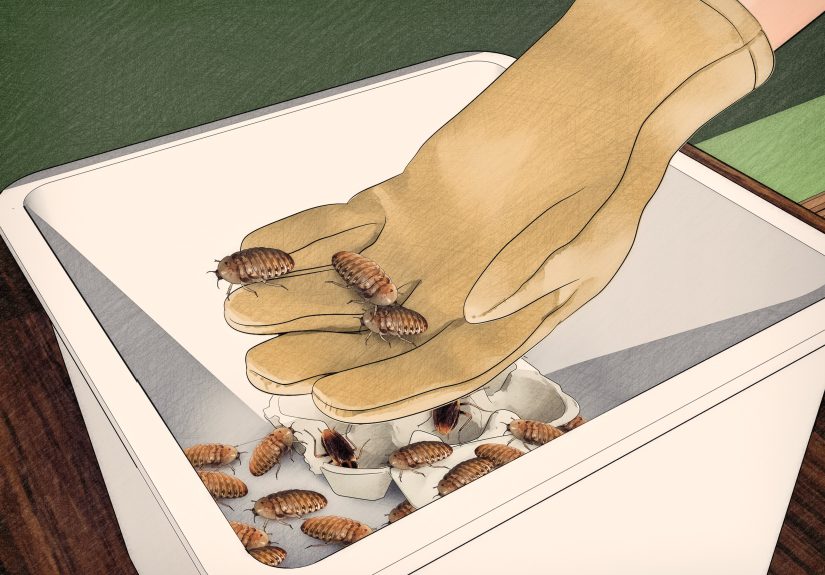
Roaches love vertical structure. Stack egg flats upright to create hiding space and extra surface area. This also helps droppings fall to the bottom instead of building up where the colony lives. Vertical flats make harvesting easier too, which matters when it is time to feed your reptiles and not accidentally redecorate the room with sprinting nymphs.
3. Heat
This is where many starter colonies fail. Roaches may survive at ordinary room temperature, but breeding usually improves dramatically when the colony is kept warm. For dubia roaches, productive breeding is typically tied to temperatures in the low 90s Fahrenheit. If the colony is too cool, you may keep insects alive without getting the steady reproduction you wanted in the first place.
4. Food and Gut-Load
A breeding colony should be fed for nutrition, not just survival. A quality commercial insect gut-load plus fresh vegetables works well. Roaches commonly do well with leafy greens, carrots, squash, and pieces of fruit in moderation. The better the roaches eat, the better they become as feeders. In other words, your reptile is eating the menu before it eats the roach.
5. Hydration
Roaches need moisture, but a deep open water dish is often a bad idea. Many keepers use hydration crystals, moisture gel, or water-rich produce instead. This helps reduce drowning risk and keeps the enclosure from becoming a swampy science project. Hydration matters not only for colony health but also for the quality of the feeder insects you eventually offer to your pet.
6. Thermometer and Hygrometer
Guessing does not count as husbandry. A basic digital thermometer and hygrometer help you track whether your breeding bin is actually warm enough and humid enough to support production. If the colony is not multiplying, your first suspects should be temperature, hydration, or breeder age.
How to Set Up a Feeder Roach Colony
Step 1: Pick the Right Location
Choose a place that stays warm, dry around the outside of the bin, and out of direct sun. A closet, reptile room, utility room, or shelf system can work well. Roaches prefer darkness and stability. They are not trying to live a flashy lifestyle. They want warm, dim, predictable real estate.
Step 2: Prepare the Bin
Add ventilation, but do not overdo it. Too much airflow can dry the colony; too little can trap stale air and encourage mold. Then place your egg flats vertically. Many keepers use a bare-bottom setup because it is easier to clean and monitor. Others use a small amount of substrate or even a semi-bioactive approach with cleanup organisms. For beginners, simple is usually smarter.
Step 3: Bring in the Heat
Use a safe heat source and regulate it. The warm side or overall ambient temperature should support breeding, not just survival. For dubia roaches, the sweet spot is generally around 90 to 95 degrees Fahrenheit for the best breeding response. If you are keeping them in the 70s, you may be raising retirees rather than parents.
Step 4: Add the Starter Colony
Start with healthy adult breeders and a female-heavy ratio. A common guideline is about one male for every four to five females. Too many males can create unnecessary competition and wasted space. Too few adults, on the other hand, can leave you waiting forever for meaningful production. Start with enough breeders to build momentum.
Step 5: Feed for Reproduction
Offer a dry staple or gut-load food at all times, and rotate in fresh vegetables several times a week. Remove old produce before it molds. Good choices include carrots, squash, dark leafy greens, and some fruit in smaller amounts. Think “fresh buffet,” not “forgotten leftovers from the back of the fridge.” The colony should be consistently fed, not occasionally surprised by nutrition.
Step 6: Hydrate Smartly
Use hydration crystals, gel, or moist gut-load products if you prefer a cleaner system. Fresh vegetables also contribute moisture. If your room is especially dry, you may need to lightly mist or manage humidity more actively. A breeding colony usually does best with moderate humidity, often around 60 percent for dubia roaches, plus enough ventilation to avoid mold.
Step 7: Leave the Colony Alone
This step sounds lazy, but it is actually wise. Roaches breed better when they are warm, well fed, and not constantly disturbed. Do not shake the bin every day to “see what is happening.” What is happening is that they are trying to ignore you and make more roaches. Let them focus.
How Long It Takes to Start Producing Feeders
Adult breeders can begin producing babies fairly quickly if the setup is correct, but a truly dependable feeder colony takes time to snowball. That is why many keepers continue buying supplemental feeders for the first few months. The colony may look unimpressive at first, and then one day you lift an egg flat and discover the bin has turned into a small crunchy civilization.
The timeline depends on species, temperature, nutrition, hydration, and how many adult females you started with. Warmth is one of the biggest levers. If the colony is well fed but too cool, reproduction usually drags. If the colony is warm but poorly nourished, production may be weak and the feeders themselves may be lower quality.
How to Harvest Without Crashing the Colony
One of the biggest beginner mistakes is feeding off too many breeders too soon. The goal is to harvest mostly nymphs while protecting the adult female base that keeps the colony reproducing. If you raid the adults because they are large and easy to grab, your colony can stall out fast.
A better approach is to establish separate roles inside the colony. Keep breeders producing in the main bin, then remove younger roaches as they reach feeder size. Some keepers even run a second grow-out bin. That makes feeding easier, keeps the breeder bin more stable, and prevents the classic “Oops, I ate the future” problem.
Common Problems and How to Fix Them
No Babies Showing Up
Check heat first. Then check breeder ratio and breeder age. If the colony is cool, crowded with males, or composed of older females past peak production, output can slow down a lot.
Mold or Funky Smells
Usually this points to too much moisture, poor ventilation, or fresh food being left in too long. Offer smaller portions of produce and remove leftovers sooner. A feeder roach colony should smell earthy at worst, not like a forgotten lunchbox in July.
Slow Growth
Slow growth often comes down to temperature and nutrition. Warmer temperatures within the safe breeding range and a better gut-load usually improve both growth and productivity.
Messy Bin
Frass, shed skins, and food particles build up over time. Clean strategically, not obsessively. Replace dirty egg flats as needed, remove spoiled food quickly, and avoid resetting the entire colony unless absolutely necessary. Roaches breed best in stable conditions, not after a full-scale home renovation every weekend.
How to Make Your Feeder Roaches More Nutritious
Breeding roaches is only half the job. The other half is making them worth feeding. Gut-loading matters because feeder insects reflect what they have been eating. Keep the colony on a solid base diet, then offer a richer gut-load for at least 24 hours before feeding roaches to your reptile or amphibian. Many keepers aim for a 24-to-48-hour window before feed-off.
It also helps to match roach size to the animal you are feeding. A feeder that is too large can create feeding issues, while a feeder that is too small may not be efficient for bigger lizards. Good breeding is not just about quantity. It is about producing the right sizes on a reliable schedule.
Conclusion
If you want a feeder insect colony that is practical, productive, and less noisy than a cricket uprising at midnight, roaches are hard to beat. A good colony is built on simple rules: use a smooth-sided bin, provide lots of vertical structure, keep temperatures high enough for breeding, offer steady nutrition and hydration, and do not panic if the colony takes time to ramp up. Roaches are efficient, but they still run on biology, not caffeine.
Once the colony is established, the payoff is enormous. You get a renewable feeder source, better control over nutrition, and fewer last-minute trips to buy bugs. Breed them well, harvest them wisely, and your pets get better meals while you get a much smoother routine. That is the kind of win-win even a roach could appreciate.
Real-World Experiences Breeding Feeder Roaches
Anyone who starts breeding feeder roaches usually goes through the same emotional stages. First comes optimism. You buy the bin, stack the egg flats, add the breeders, and imagine that in two weeks you will be running a thriving insect empire. Then comes stage two: confusion. You peek into the colony every day, see a bunch of adults hiding like introverts at a party, and wonder whether anything is actually happening. Then, somewhere down the line, you finally lift an egg flat and realize the colony has quietly been doing exactly what it was supposed to do all along.
One of the most common practical lessons is that heat matters more than beginners expect. A colony kept merely comfortable may stay alive for a long time without becoming particularly productive. Once the temperature is consistently in the breeding range, the whole system often changes. Growth improves, babies start appearing more regularly, and the colony feels less like a decorative bin of disappointment.
Another real-life lesson is that feeding roaches is not the same as feeding a reptile. With reptiles, owners often focus on variety and portion control. With roaches, the daily work is simpler but more repetitive: dry food available, fresh produce rotated in, old produce removed before it turns into a microbial side hustle. People who do well with colonies usually become very good at tiny acts of maintenance. They stop tossing in giant wet chunks of produce and start using smaller portions that get eaten quickly.
There is also the cleanliness lesson. A healthy roach colony is rarely pristine. There will be frass, shed skins, and a general look that says, “No, Martha Stewart did not design this.” That is normal. The key is learning the difference between normal colony mess and a problem. Dry waste on the bottom is expected. Moldy food, heavy condensation, or sour odor is not. Experienced keepers become calm about the first kind of mess and fast about fixing the second.
Perhaps the biggest experience-based truth is that patience pays. The most successful keepers are not always the people with the fanciest setup. They are usually the ones who resist overcleaning, avoid raiding too many adults, keep records in a simple way, and let the colony stabilize before demanding performance. Over time, the colony teaches rhythm. You learn when to add food, when to pull feeders, when to replace egg flats, and when to leave everything alone. Once you reach that point, breeding feeder roaches stops feeling weird and starts feeling efficient. Still weird, perhaps, but efficient in a very satisfying way.