Table of Contents >> Show >> Hide
- What Makes a Mudroom Bench the “Perfect Landing Zone”?
- Step 1: Plan Like a Pro (Measure First, Cry Never)
- Step 2: Choose Materials That Can Handle Mud, Moisture, and Mayhem
- Step 3: Tools and Safety (Especially If You’re New)
- Step 4: Build the Bench Base (Strong, Square, and Not Wobbly)
- Step 5: Prevent Sagging (Because Gravity Is Unapologetic)
- Step 6: Add the Bench Top (The Part Everyone Actually Touches)
- Step 7: Make It Look Built-In With Trim and Details
- Step 8: Add Storage Features That Match Your Life
- Step 9: Sand, Prime, Paint (Or Stain) for a Finish That Lasts
- Step 10: Install and Anchor (Built-Ins Need to Behave Like Built-Ins)
- Common Mistakes to Avoid (So You Don’t Rebuild It Twice)
- Practical Example: A Simple 5-Cubby Landing Zone
- Maintenance: Keep Your Landing Zone Landing (Not Exploding)
- Final Thoughts: Build Once, Enjoy Daily
- Real-World Experiences: What DIYers Learn After Building a Mudroom Bench (Extra )
- 1) Measuring the space is easymeasuring the “chaos” is harder
- 2) The bench top becomes a “temporary shelf” unless you design against it
- 3) Baskets are the “mess budget” that keeps everyone sane
- 4) Paint durability matters more than paint color (but both can be fun)
- 5) The bench changes routines more than expected
Every house needs a “landing zone”that magical place where keys, backpacks, muddy boots, and the dog’s leash stop
migrating across your countertops like they pay rent. A well-built mudroom bench turns chaos into
“Oh wow, look at us… we’re functioning adults.”
This guide walks you through planning, building, and finishing a sturdy bench with shoe storage
(cubbies, baskets, or drawersyour choice). You’ll also get sizing rules of thumb, smart material picks for
real-life mess, and a few “learn-from-other-people’s-oops” tips so your project ends with high fives instead of
creative swearing.
What Makes a Mudroom Bench the “Perfect Landing Zone”?
A mudroom bench works best when it does three jobs at once:
- Seating: A comfortable spot to put on/take off shoes without hopping like a flamingo.
- Storage: A home for shoes, bags, sports gear, and the “mystery items” that appear every day.
- Flow control: Keeps the entry path clear so you’re not doing an obstacle course in winter boots.
Step 1: Plan Like a Pro (Measure First, Cry Never)
Pick your bench type: freestanding vs. built-in
- Freestanding bench: Easier, faster, movable. Great for renters or commitment-phobes.
- Built-in bench: Looks custom, maximizes space, can integrate lockers, hooks, and shelves.
Start with comfortable dimensions
Most mudroom benches land in a comfort sweet spot:
- Seat height: About 17–19 inches is comfy for most adults and older kids.
- Seat depth: Typically 15–20 inches. Shallow = less comfy, too deep = boots don’t fit nicely and knees feel weird.
- Minimum width: Many benches start around 36–40 inches, but your space decides.
Decide on storage style (and be honest about your habits)
Choose the storage that matches how your household actually behaves:
- Open cubbies: Fast, family-friendly, and forgiving. Also displays your shoe collection like modern art.
- Baskets: Same speed as cubbies, but hides clutter. Great if you love “clean” more than “perfect.”
- Drawers: Cleanest look, best for small items. Slightly more work and hardware.
- Flip-top storage: One big compartment for sports gear, scarves, or the “I’ll organize this later” pile.
Plan for real-life traffic
If your mudroom is basically a mini-truck stop, build for durability:
- Leave enough walkway clearance so doors swing and people pass without hip-checking the bench.
- Consider a toe-kick (a recessed base) so you can stand close without stubbing your toes.
- If you’re adding hooks above, keep them reachable for kids or add a lower row just for them.
Step 2: Choose Materials That Can Handle Mud, Moisture, and Mayhem
Best wood choices for a mudroom bench
- 3/4-inch plywood: Strong, stable, and the MVP for cabinet-style benches. Paint-grade plywood is budget-friendly.
- MDF: Super smooth for paint, but hates water. Use only in dry areas or seal it extremely well.
- Solid wood top: Great for a stained finish and can be sanded/refinished later (helpful if life is… life).
Fasteners and helpful extras
- Wood glue for stronger joints (glue + screws is the power couple).
- Wood screws or pocket-hole screws for clean assembly.
- Trim boards (1×2, 1×3, etc.) for face frames and a built-in look.
- Primer + durable paint (cabinet or trim enamel) for a tough finish.
- Edge banding (or trim) to cover plywood edges for a clean, finished look.
Step 3: Tools and Safety (Especially If You’re New)
Typical tool list:
- Measuring tape, pencil, square
- Level
- Circular saw or table saw (for straight cuts)
- Drill/driver
- Clamps (optional, but they make you feel like a woodworking wizard)
- Sander or sanding block
- Stud finder (for built-ins you’ll anchor)
Safety note: Cutting tools and power tools can be dangerous. Wear eye protection, keep your work
supported, follow the tool’s manual, and if you’re a teen or brand-new to power tools, work with a supervising adult.
Your future self would like all ten fingers, please.
Step 4: Build the Bench Base (Strong, Square, and Not Wobbly)
Option A: Cabinet-style cubby base (most popular)
This is the classic mudroom bench base: a rectangular carcass with vertical dividers that create shoe cubbies.
It’s sturdy, looks custom, and scales easily.
-
Measure your opening and pick your final size.
If you’re building into a nook, measure the width at the floor, mid-wall, and near the topwalls are often not perfectly straight. -
Choose your seat height.
A common target is around 18 inches. If you’re using a 3/4-inch top and a base/platform underneath, subtract those thicknesses
so your finished seat lands in the comfort zone. -
Cut your plywood panels.
You’ll typically need: two sides, a bottom, internal dividers, and (optional) a back panel. -
Assemble the carcass square.
Use glue and screws (or pocket holes). Check for square as you goif it’s out of square now, it won’t magically become square later. -
Add dividers.
Space them evenly, or customize widths for real-life shoes (kids, adults, boots). This is where “measure twice” earns its paycheck.
Option B: Framed base with a face frame (great for built-ins)
Some builds use wall cleats/ledgers and a framed base for extra support, especially when the bench spans a longer wall.
The idea: the wall supports the back edge, the frame supports the front, and the top ties it together.
If you choose this method for a built-in, anchor supports into studs and keep everything level. A bench that slopes
even slightly will feel “off” every time someone sits down. (And they will comment. People always comment.)
Step 5: Prevent Sagging (Because Gravity Is Unapologetic)
If your bench top spans a long distance without support, it can sag over timeespecially with adults plopping down like
they’ve been carrying groceries since 1997.
- Use dividers: Cubbies act like internal legs.
- Limit long spans: Add a divider if you have an extra-wide open section.
- Choose a sturdy top: 3/4-inch plywood is common; a thicker solid-wood top adds rigidity.
Step 6: Add the Bench Top (The Part Everyone Actually Touches)
Painted top vs. stained top
- Painted top: Seamless look with built-ins, easy to match trim. Use durable enamel so it doesn’t chip instantly.
- Stained wood top: Warm, classic, and more forgivingcan be sanded and refinished after years of abuse.
Attach the top with screws from underneath when possible (cleanest look). If you must attach from above, plan for wood filler,
sanding, and paint touch-ups.
Step 7: Make It Look Built-In With Trim and Details
Face frame and trim ideas
- Face frame: Covers plywood edges and gives the bench a furniture finish.
- Baseboard integration: If the bench sits against a wall with baseboard, you may need to notch the back
or remove and reinstall baseboard for a flush fit. - Side panels: For built-ins, a finished side panel makes the project look intentional, not “temporary.”
Back wall upgrades
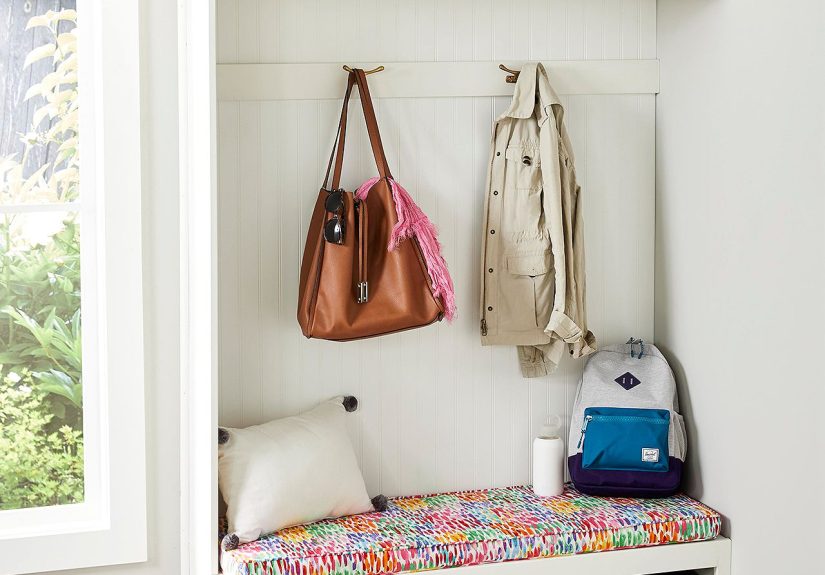
A simple painted wall works fine. If you want extra “mudroom energy,” consider a beadboard or shiplap-style backer,
then add hooks or a rail.
Step 8: Add Storage Features That Match Your Life
Hooks (the unsung heroes)
Hooks above the bench turn it into a true landing zone. For family setups:
- Give each person 2–3 hooks (coats + backpack + random hoodie that is apparently essential).
- Mount hooks into studs or a sturdy backer boardnot just drywall.
- Consider a lower row for kids so they can actually use it without climbing like tiny mountaineers.
Cubbies, baskets, and boot strategy
- Baskets: Great for gloves, hats, dog leashes, and “I swear this was organized yesterday” items.
- Boot tray area: Leave one section open for tall boots or add a washable tray underneath.
- Labels: Not glamorous, but wildly effective if you share the space with other humans.
Optional: drawers for the tidy-at-heart
Drawers are perfect for small items that love to disappear. If you add drawers, use quality slides and make sure the opening is square.
(Drawers are basically a test of your patience and your measuring tape.)
Step 9: Sand, Prime, Paint (Or Stain) for a Finish That Lasts
Paint tips that save sanity
- Fill and sand: Smooth joints and nail holes before primer.
- Prime: Especially if using MDF or raw plywood.
- Use durable paint: Cabinet/trim enamel is made for high-touch surfaces.
- Let it cure: Paint can feel dry fast but still needs time to fully harden.
If staining a wood top
Sand carefully, wipe off dust, stain evenly, then protect with a durable clear coat. A top that can be refreshed later is a practical win
in a high-traffic entry.
Step 10: Install and Anchor (Built-Ins Need to Behave Like Built-Ins)
If your bench is built-in or tall (especially with lockers or a shelf above), anchor it to the wall for stability.
Use a stud finder, locate studs, and secure through a backer strip or cleat. This keeps the whole unit solid when someone
sits down with enthusiasm.
Common Mistakes to Avoid (So You Don’t Rebuild It Twice)
- Bench is too high or too low: Aim for that 17–19 inch comfort zone.
- Seat depth is awkward: Too deep makes it uncomfortable; too shallow feels like you’re perching.
- Ignoring baseboards: They can prevent a flush fit against the wall.
- Long span with no support: Add dividers so the top doesn’t sag.
- Weak paint choice: Mudrooms need tough finishesthink “kitchen durability,” not “delicate craft paint.”
Practical Example: A Simple 5-Cubby Landing Zone
Let’s say you want a bench that fits a 72-inch wall section. A family-friendly approach might be:
- Width: 72 inches
- Height: ~18 inches finished seat height
- Depth: 16–18 inches (roomy enough for shoes, not so deep it blocks the walkway)
- Storage: 5 cubbies with baskets (quick cleanup; each person gets a basket)
- Above: A row of hooks + a narrow shelf for hats or a small bin
This setup works because it creates “zones” without needing perfection. Shoes go down low, grab-and-go items go in baskets,
and coats hang up. Your future self will feel personally supported.
Maintenance: Keep Your Landing Zone Landing (Not Exploding)
- Keep a small hand broom or mini vacuum nearby for grit and salt.
- Use washable baskets/liners for wet gloves and hats.
- Touch up paint annually if neededmudrooms earn their scuffs.
- Consider a runner or mat to protect flooring and reduce tracked-in mess.
Final Thoughts: Build Once, Enjoy Daily
A mudroom bench isn’t just a DIY projectit’s a lifestyle upgrade. When the bench is sized right, built strong, and finished
for real-world use, your entry stops being a clutter magnet and starts being a calm “reset button” for the whole house.
Build it thoughtfully, customize it for your people, and enjoy the feeling of walking in the door and immediately knowing
where everything goes. (It’s basically the opposite of stepping on a rogue LEGO.)
Real-World Experiences: What DIYers Learn After Building a Mudroom Bench (Extra )
The funny thing about building a mudroom bench is that the woodworking is only half the story. The other half is what happens
after the bench moves in and immediately becomes the busiest employee in your household. Based on what DIYers commonly report,
here are the experiences that tend to show up once the “perfect landing zone” meets actual life.
1) Measuring the space is easymeasuring the “chaos” is harder
Many people plan a bench around the wall width and forget the human factor: winter coats puff out, backpacks are wider than you
remember, and someone will absolutely try to sit down while someone else is tying a shoe. The best builds leave breathing room.
If your hallway is narrow, a slightly shallower bench (paired with smart hook placement) often feels better day-to-day than a deep,
luxurious seat that turns your entry into a squeeze-through situation.
2) The bench top becomes a “temporary shelf” unless you design against it
Even with the best intentions, flat surfaces attract piles like magnets. DIYers often notice that a wide bench top becomes a drop
spot for mail, water bottles, and the items that don’t have a home yet. One simple trick is to add a narrow shelf above with a small
tray or bin for keys and walletsthis gives hands a target and keeps the bench seat clear for sitting (which is the whole point).
Another strategy: keep the bench top visually “special” by using a stained wood top or a cushion, so it feels less like a countertop
and more like a seat.
3) Baskets are the “mess budget” that keeps everyone sane
Open cubbies look amazing in photos… right up until the third day of real living. A common experience is realizing that baskets are
the fastest way to make the space feel tidy without forcing everyone to be perfectly organized. People who build cubbies sized for
standard baskets often say it’s the best decision they made: gloves, hats, dog gear, and random little items stay contained. The
landing zone still works even when you’re rushing out the door. That’s the dream.
4) Paint durability matters more than paint color (but both can be fun)
Mudrooms take hits: shoe scuffs, wet sleeves, sports equipment, and the occasional accidental kick when someone misses the cubby.
DIYers frequently mention that using a tougher cabinet/trim paint (and letting it cure properly) makes a huge difference. Those who
rush the finish sometimes end up with chips early, while those who prime well and give the paint time tend to get a bench that holds
up for years. Color-wise, darker tones can hide scuffs better, while bright whites look crisp but may need touch-ups. Either way,
keeping a small jar of leftover paint for quick repairs is a low-effort win.
5) The bench changes routines more than expected
Once a mudroom bench is in place, people often notice smoother mornings. Shoes are easier to find, putting them on is faster, and
coats stop traveling to the backs of chairs like they’re staging a takeover. Families sometimes assign “stations” (one cubby and two
hooks per person), and suddenly the entry feels less like a dumping ground and more like a system. The best part is that this isn’t
about being perfectit’s about making the easy choice the default choice. When the landing zone is built for your habits, it quietly
supports your day, every day.
In other words: a mudroom bench isn’t just a bench. It’s a small piece of furniture that can make your whole house feel more in control.
And if that’s not worth a weekend of DIY, what is?