Table of Contents >> Show >> Hide
- Why Windows Get Streaky in the First Place
- What You Need for Streak-Free Windows
- The Best Time to Clean Windows
- How to Clean Windows Without Streaks: Step by Step
- Best Homemade Window Cleaner Options
- Mistakes That Cause Streaks
- How to Clean Outside Windows Without Streaks
- How Often Should You Clean Your Windows?
- Extra Tips for Truly Clear Glass
- Real-World Experiences With Cleaning Windows Without Streaks
- Conclusion
Clean windows sound simple until you step back, admire your work, and realize the glass now looks like it was polished with a jelly sandwich. If you have ever wondered how to clean windows without streaks, the good news is that the answer is not some mysterious secret known only to professional cleaners with superhero forearms. It comes down to using the right tools, the right timing, and a method that does not accidentally spread grime around like gossip at a family barbecue.
Streak-free windows make a room look brighter, cleaner, and somehow more expensive, even if your couch still has a suspicious blanket lump hiding last week’s laundry. Whether you are cleaning one stubborn kitchen window or every pane in the house, this guide will walk you through exactly how to get clear, shiny results without turning the job into an all-day drama.
Why Windows Get Streaky in the First Place
Before fixing the problem, it helps to know what causes it. In most cases, streaks are not a sign that your windows are doomed. They are usually the result of one or more very common mistakes.
The biggest culprit is too much cleaner. It feels productive to soak the glass until it glistens, but excess liquid often dries unevenly and leaves residue behind. Dirty tools are another major issue. If your cloth is already holding dust, grease, or yesterday’s mystery smudge, it is not cleaning your window. It is just redecorating it.
Sunlight also works against you. When glass gets hot, your cleaner can dry before you finish wiping, which leaves behind lines and haze. Hard water can create mineral marks. And if you skip dusting the frame, sill, or screen first, all that loose dirt can end up smeared across the glass like a bad abstract painting.
What You Need for Streak-Free Windows
You do not need a janitor’s cart the size of a compact SUV. A short list of reliable supplies is usually enough:
- Microfiber cloths, preferably several clean ones
- A spray bottle
- A small bucket
- Warm water
- A few drops of dish soap
- White vinegar, optional but helpful
- A rubber-bladed squeegee
- A vacuum, dry cloth, or duster for tracks and sills
- An extension pole for hard-to-reach exterior windows
If you only remember one thing from this section, let it be this: microfiber cloths are your best friends. Paper towels tend to leave lint, and old rags often leave fibers or move dirt around. Microfiber actually grabs dust and moisture instead of just pushing them in circles.
The Best Time to Clean Windows
Pick a cloudy day or clean when the windows are shaded. This is one of the easiest ways to prevent streaks. When the glass is cool, your cleaner stays wet long enough for you to wipe it away properly. Early morning and late afternoon can also work well, especially on the side of the house that is out of direct sunlight.
In other words, high noon on a blazing summer day is not your friend. That is a good time for iced tea, not window cleaning.
How to Clean Windows Without Streaks: Step by Step
1. Start with the frame, sill, and tracks
Always begin by removing loose dust and dirt. Use a vacuum attachment, dry microfiber cloth, or duster to clean the frame, sill, and tracks. This step matters more than people think. If you spray cleaner on a dusty window first, you can end up making muddy streaks before the real cleaning even begins.
If the tracks are especially grimy, wipe them with a damp cloth after vacuuming. Let the area dry or blot away the moisture so you do not drag dirt back onto the glass.
2. Clean the screens separately
If your windows have screens, remove them if possible. A dusty screen can undo all your hard work by dropping debris back onto freshly cleaned glass. Vacuum loose dirt first, then gently wash the screen with mild soapy water. Rinse it lightly and let it air-dry completely before reinstalling it.
3. Mix a simple cleaning solution
You have a few good options. For everyday window cleaning, a bucket of warm water with just a few drops of dish soap works beautifully. If you want a homemade spray cleaner, mix water with white vinegar and a tiny amount of dish soap. The key word here is tiny. This is window cleaner, not bubble bath.
For greasy kitchen windows or fingerprints that refuse to leave politely, a formula with a little rubbing alcohol can help because it evaporates quickly and cuts through oily residue.
4. Apply cleaner lightly
Less is more. Spray a light mist onto the glass or dampen your cloth with solution instead of soaking the entire window. The goal is to loosen dirt, not flood the pane. Too much liquid usually means more wiping, more drips, and more chances for streaks to form.
5. Work from top to bottom
Always clean from the top down. Gravity is going to do its thing no matter how optimistic you feel, so let it help you instead of sabotage you. If you start at the bottom, drips from above can land on areas you already cleaned.
You can wipe in long straight strokes, an S-pattern, or use a squeegee in overlapping passes. The important part is to be consistent and controlled rather than scrubbing in frantic circles like you are erasing bad life choices.
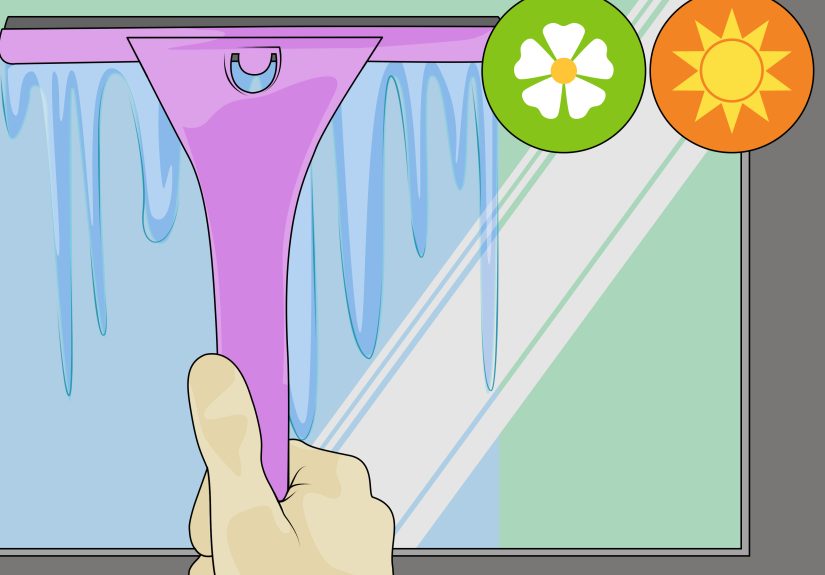
6. Use a squeegee for the clearest finish
If you want the most professional-looking result, use a rubber-bladed squeegee. Start at the top corner and pull downward or across in smooth, overlapping strokes. Wipe the blade with a clean cloth after every pass. That little step makes a huge difference. A dirty blade can leave lines so fast it feels almost personal.
Once the glass looks clear, follow up with a dry microfiber cloth to buff the edges and catch any remaining moisture.
7. Dry the edges and corners
Even if the main pane looks perfect, moisture hiding along the edges can creep back and leave drips. Use a dry microfiber cloth to wipe the perimeter of the glass, the corners, and the windowsill. This final touch is often what separates “pretty good” from “wow, I can actually see outside.”
Best Homemade Window Cleaner Options
Dish Soap and Warm Water
This is the simplest and often the most reliable option. A few drops of dish soap in warm water can cut through everyday grime without leaving heavy residue. It is great for both inside and outside windows, especially when paired with a squeegee.
Vinegar and Water
A vinegar-based cleaner is useful for removing light mineral haze and fingerprints. The smell disappears as it dries, so your house will not smell like salad forever. Use it sparingly and wipe thoroughly with microfiber.
Rubbing Alcohol Mix
If you are dealing with greasy buildup, a solution with rubbing alcohol can dry faster and leave less residue. This can be especially helpful on bathroom mirrors, kitchen windows, or glass doors that collect handprints all day.
No matter which cleaner you choose, test it on a small section first if your windows have special coatings, tint, or manufacturer care instructions.
Mistakes That Cause Streaks
If your windows still look streaky after cleaning, one of these habits may be to blame:
- Using paper towels that leave lint or film
- Cleaning in direct sunlight
- Using too much soap or cleaner
- Skipping the dusting step
- Using dirty cloths or a dirty squeegee blade
- Letting the cleaner air-dry on the glass
- Cleaning only the inside while the outside stays dusty
One more common issue is blaming the wrong side of the window. A handy trick is to wipe one side horizontally and the other vertically. If you spot a streak later, the direction will tell you which side needs attention. That little move can save you from standing there squinting like a detective in a low-budget crime show.
How to Clean Outside Windows Without Streaks
Exterior windows usually need a bit more prep because they collect pollen, dust, rain spots, and the occasional artistic contribution from birds. Start by rinsing the glass lightly with water if it is very dirty. Then wash with a microfiber mop or sponge using your cleaning solution. Rinse if needed, then remove the water with a squeegee or dry microfiber mop.
For higher windows, use an extension pole instead of climbing onto something that was never meant to be a ladder. Yes, that includes the patio chair. Safety matters more than spotless glass.
If a window has stuck-on debris like tree sap, bug marks, or bird droppings, let the cleaner sit for a few minutes before wiping. Give it time to loosen the mess instead of attacking the glass with abrasive force.
How Often Should You Clean Your Windows?
For most homes, a deep window cleaning twice a year is a sensible routine. Spring and fall are the classic choices because they help remove seasonal dirt, pollen, storm residue, and general grime. In between, light touch-ups once a month can keep fingerprints, smudges, and streaks under control.
If you live near a busy road, have kids and pets, or deal with lots of pollen, you may need more frequent cleaning. Kitchen windows, glass doors, and bathroom mirrors also tend to demand extra attention because life happens there in full fingerprint.
Extra Tips for Truly Clear Glass
- Use distilled water in DIY cleaners if your tap water leaves mineral spots
- Keep several microfiber cloths on hand so you can switch to a dry one often
- Buff the glass after squeegeeing for a polished look
- Replace old squeegee blades when they start leaving lines
- Wash microfiber cloths without fabric softener so they stay absorbent
- Do both sides of the glass whenever possible for the clearest result
Real-World Experiences With Cleaning Windows Without Streaks
There is a big difference between reading tips and actually standing in your kitchen with a spray bottle, a cloth, and a window that somehow looks worse halfway through the process. Real-life experience teaches a few things that instruction lists do not always capture.
For example, many people start out thinking more cleaner must equal cleaner windows. Then they spray so much product that the glass is practically taking a bath. A few swipes later, the window is wet, smeary, and somehow decorated with lint. The lesson usually arrives quickly: a little cleaner goes a long way, and dry microfiber is worth its weight in gold.
Another common experience happens with sunlight. Plenty of people pick a bright Saturday afternoon because it feels productive and cheerful. Then the cleaner dries at lightning speed, leaving ghostly streaks everywhere. The same window often comes out much better on a cloudy morning with the exact same supplies. That is the kind of frustrating but useful lesson you only need once.
Kitchen windows are their own special category of mischief. They may look dusty, but the real issue is often a thin layer of grease from cooking. In that situation, plain water usually does not cut it. A tiny bit of dish soap or an alcohol-based solution tends to work much better. Once people figure that out, they stop scrubbing in confusion and start getting actual results.
Families with kids usually have another window-related truth to accept: fingerprints reproduce overnight. You clean the glass, admire your effort, and then a small handprint appears at eye level thirty minutes later. In homes like that, perfection is less realistic than a smart routine. A deep clean every so often, plus quick touch-ups with a microfiber cloth, makes life a lot easier than constantly chasing flawless glass.
People cleaning exterior windows for the first time are also often surprised by how much dirt sits in the screens and frames. You can clean the glass beautifully, but if the screen is dusty, the whole window still looks dull. Removing and rinsing the screen can make a dramatic difference. It is one of those behind-the-scenes steps that suddenly makes the final result look more professional.
Then there is the squeegee learning curve. The first attempt can feel awkward. The angle is weird, the blade squeaks, and the motion may look less “professional cleaner” and more “person fighting a windshield at a gas station.” But once you get the hang of overlapping passes and wiping the blade after each stroke, the payoff is huge. It becomes one of those tools that makes you wonder why you ever tried to do everything with paper towels.
What most real-world experiences have in common is this: streak-free windows are less about expensive products and more about technique. Clean tools, light solution, cool glass, and a dry finish consistently beat random sprays and hopeful wiping. Once you find a routine that works in your home, window cleaning stops being a chore full of disappointment and becomes a quick win that instantly makes the whole place feel fresher.
Conclusion
If you want to know how to clean windows without streaks, the formula is wonderfully simple. Dust first, use a small amount of the right cleaner, wipe from top to bottom, and finish with a clean microfiber cloth or squeegee. Skip the paper towels, avoid direct sun, and do not let dirty tools sabotage your effort.
The result is brighter rooms, clearer views, and glass that does not look like it lost an argument with a spray bottle. Not bad for a chore that usually gets treated like a household punishment. With the right method, cleaning windows becomes faster, easier, and a lot less streaky.

![18 Best Types of Charts and Graphs for Data Visualization [+ How to Choose]](https://corkopencoffee.org/wp-content/uploads/2026/05/18-best-types-of-charts-and-graphs-for-data-visualization-how-to-choose-qKM1PBYG-thumb.jpg)