Table of Contents >> Show >> Hide
- Why Homeowners Convert a Salt Water Pool to Chlorine
- Before You Convert, Understand What Actually Changes
- Step 1: Turn Off the Salt System Safely
- Step 2: Test the Water Before You Touch Anything Else
- Step 3: Decide Which Type of Chlorine You Want to Use
- Step 4: Lower the Salt Level If Needed
- Step 5: Rebalance the Water for Traditional Chlorine Care
- Step 6: Start Your New Chlorine Routine
- Mistakes to Avoid During a Salt Water Pool Conversion
- Is It Better to Convert, or Just Replace the Salt Cell?
- Real-World Experiences After Making the Switch
- Final Thoughts
- SEO Tags
If you are thinking about converting a salt water pool to chlorine, here is the first truth bomb: your pool already uses chlorine. A salt system does not magically sanitize water with fairy dust and good vibes. It makes chlorine from dissolved salt using a salt chlorine generator. So the real switch is not from “no chlorine” to “chlorine.” It is from generator-made chlorine to manually managed chlorine.
That distinction matters, because it makes the whole project a lot less mysterious. You are not reinventing your pool. You are simply changing how chlorine gets into the water, how the equipment is set up, and how you manage routine water balance. In many cases, the conversion is straightforward. The tricky part is not the idea itself. The tricky part is doing it without turning your backyard into a chemistry-themed reality show.
Some pool owners make the change because the salt cell is failing. Others are tired of replacing expensive parts, dealing with scale buildup on the cell, or worrying about corrosion around metal fixtures, heaters, handrails, and nearby surfaces. Some just want a simpler routine and prefer the control that comes with liquid chlorine or a traditional chlorinator. Whatever your reason, the good news is that a well-planned salt water pool conversion can absolutely work.
Why Homeowners Convert a Salt Water Pool to Chlorine
Salt systems are popular for a reason. They can automate chlorine production, keep levels steadier, and make the water feel softer. But they are not maintenance-free, despite what the glossy marketing photos of smiling pool owners might suggest.
Many homeowners decide to convert when one or more of these issues show up:
- The salt cell needs replacement and the cost feels painful.
- The control box or flow switch is acting up.
- Scale keeps forming on the cell plates.
- There are concerns about corrosion on metal parts or nearby surfaces.
- The owner wants a simpler, lower-tech sanitation setup.
- The pool is being sold, renovated, or placed on a different maintenance plan.
In other words, the conversion is usually about convenience, repair costs, or equipment strategy, not because chlorine is somehow brand-new to the pool. Your pool has been living a chlorine life this whole time. It just had a fancy personal assistant.
Before You Convert, Understand What Actually Changes
When you remove or disable a salt system, three things change.
1. The chlorine source changes
Instead of generating chlorine from salt, you will add chlorine directly. Most traditional chlorine pool owners use liquid chlorine, chlorine tablets, or cal-hypo products depending on their water chemistry, climate, and maintenance style.
2. The equipment setup changes
The salt cell and control unit are no longer needed for sanitation. In some cases they are removed entirely. In others, they are bypassed or left in place but powered down until a future repair or replacement decision is made.
3. Your water chemistry targets may shift a bit
A salt pool and a manually chlorinated pool both need proper free chlorine, pH, total alkalinity, calcium hardness, and cyanuric acid. But once you move away from a salt generator, you may not want the same salinity level, and you may choose different chlorine products that influence stabilizer or calcium in different ways.
Step 1: Turn Off the Salt System Safely
The first practical step is to stop the generator from producing chlorine. Shut the system down completely before making any equipment changes. If the unit is wired into your pump system, automation panel, or timer, this is the part where confidence should not outrun common sense. Electrical disconnection and plumbing modifications are best handled by a licensed pool professional or qualified electrician.
If you plan to remove the salt cell entirely, the return plumbing usually needs to be reconnected with a straight section of pipe or a manufacturer-approved bypass/spacer. If you are not ready to remove the equipment yet, many owners simply leave the cell in place while the power stays off. That gives you time to test the pool on manual chlorine before committing to a full equipment change.
Think of it as a soft launch for your chlorine era.
Step 2: Test the Water Before You Touch Anything Else
Do not guess. Do not squint at the water and announce, “Looks pretty balanced to me.” Start with a full water test. At minimum, check:
- Free chlorine
- Combined chlorine
- pH
- Total alkalinity
- Calcium hardness
- Cyanuric acid (stabilizer)
- Salt level
This baseline tells you whether your pool needs a true reset or just a simple transition. For a traditional chlorine pool, many owners aim for a pH in the mid-7s, free chlorine in the normal residential range, total alkalinity in a reasonable buffer zone, calcium hardness appropriate for the pool surface, and cyanuric acid at a moderate level rather than a sky-high “my chlorine disappeared again” level.
If you are using a basic strip test, confirm the results with a better drop-based kit or a reputable pool store test. One sloppy reading can send you down the wrong road fast.
Step 3: Decide Which Type of Chlorine You Want to Use
This is the part many pool owners skip, and then later wonder why their water chemistry develops a personality disorder.
Liquid chlorine
For many conversions, liquid chlorine is the cleanest choice. It adds chlorine directly without adding cyanuric acid, and it does not add calcium. That makes it especially appealing when you are trying to simplify water balance after leaving a salt system. It is also easy to dose, easy to understand, and popular with owners who want precise control.
Chlorine tablets
Tablets are convenient, especially for feeders and vacation coverage, but they usually add stabilizer as they dissolve. That can be useful if your cyanuric acid is low. It can also become a slow-motion headache if your CYA is already high. Many pool owners do fine with tablets for short periods, but relying on them full-time can push stabilizer upward until chlorine becomes less effective.
Cal-hypo products
Calcium hypochlorite can work well in some pools, especially when calcium hardness is low. But it adds calcium, so it is not the best long-term choice for every setup. If your water already tends toward scaling or your hardness is on the high side, cal-hypo may not be your best friend.
If you want the simplest path after a salt water pool conversion, liquid chlorine is often the easiest starting point. Not glamorous. Not trendy. Just effective.
Step 4: Lower the Salt Level If Needed
This is where people often get confused. Once the salt generator is off, do you have to remove the salt from the pool right away? Not necessarily. The water will not stage a rebellion just because salt is still present.
However, if your salinity is still in the typical salt-system range, many owners choose to lower it over time. The main reasons are practical:
- To reduce corrosion concerns around metal equipment and nearby materials
- To move the pool closer to a standard chlorine setup
- To start fresh with more predictable chemistry
- To eliminate the need to think about the old system at all
The usual way to lower salt is a partial drain and refill with fresh water. The same general idea is used to reduce cyanuric acid and, in some cases, calcium hardness. There is no need to drain the entire pool unless a professional specifically recommends it for your situation. A partial dilution is often enough to move the numbers in the right direction.
If your pool is vinyl, fiberglass, plaster, or in an area with high groundwater, use extra caution and follow local professional guidance before draining. The phrase “I watched one video and now I am an engineer” has ended badly for many backyards.
Step 5: Rebalance the Water for Traditional Chlorine Care
Once the salt system is off and you have decided whether to dilute the water, rebalance the pool for manual chlorination.
Target a healthy pH
A good working range is generally 7.2 to 7.8, with many pool owners aiming around 7.4 to 7.6. If pH drifts too high, chlorine becomes less effective. If it swings too low, the water can become aggressive to equipment and surfaces.
Keep free chlorine consistent
For most residential chlorine pools, staying in the normal sanitizer range is the goal, not shocking the water every time a leaf lands in it. Consistency beats panic. Frequent testing matters far more than heroic overcorrecting.
Watch total alkalinity
Total alkalinity helps buffer pH. If it is too low, pH may bounce around. If it is too high, pH may keep drifting upward and make you feel like you are in a never-ending argument with your water.
Check calcium hardness
Calcium is especially important for plaster and concrete pools, but every pool benefits from balanced hardness. Too little can be corrosive in some situations. Too much can encourage scale, especially when paired with high pH and warm water.
Reset cyanuric acid to a sensible level
After switching away from a salt generator, many pool owners prefer a moderate stabilizer level rather than the higher numbers sometimes associated with certain salt-pool programs. If CYA is too high, the most effective fix is usually dilution with fresh water. If it is too low, stabilizer can be added carefully according to the product label.
The big idea is balance, not perfection. Your goal is a pool that holds chlorine reliably, feels comfortable, and does not eat equipment for breakfast.
Step 6: Start Your New Chlorine Routine
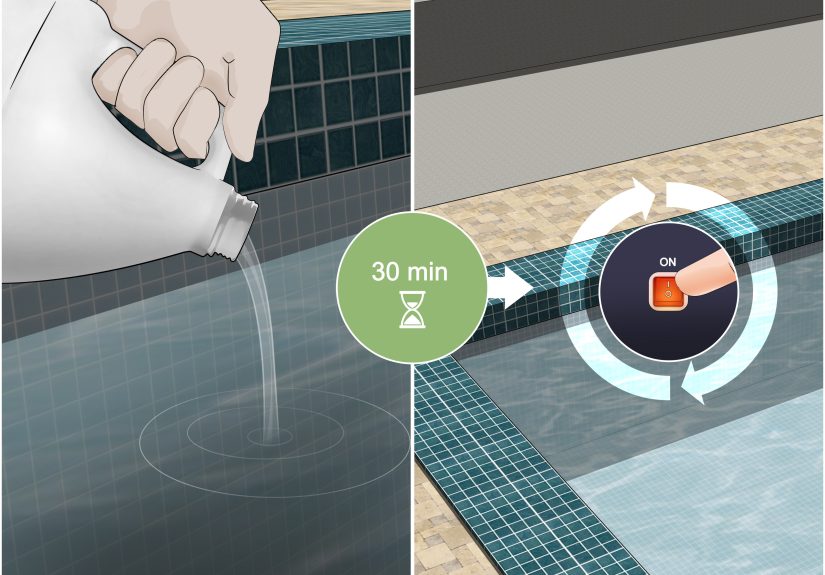
Once the water is balanced, begin your chosen chlorine routine. For many owners, that means using liquid chlorine as the primary sanitizer and testing often enough to keep levels steady.
A solid weekly routine usually includes:
- Testing free chlorine and pH several times per week, or daily in hot weather
- Checking total alkalinity, calcium hardness, and cyanuric acid on a regular schedule
- Keeping the pump and filter clean and running well
- Brushing, skimming, and vacuuming on schedule
- Using tablets only strategically, not blindly
If your old salt system kept chlorine very steady, the biggest adjustment after conversion may simply be habit. A chlorine pool asks you to show up more often. Not dramatically more. Just enough that the water remembers who is in charge.
Mistakes to Avoid During a Salt Water Pool Conversion
Leaving the old chemistry unchecked
Some owners turn off the salt system and immediately start adding chlorine without checking stabilizer, hardness, or salt. That is like switching cars without checking whether the brakes work.
Using the wrong chlorine product for the pool’s needs
If CYA is already high, leaning hard on tablets can make the problem worse. If calcium is already high, routine cal-hypo use can push the water toward scale. Match the sanitizer to the chemistry, not to whatever was on sale next to the pool noodles.
Ignoring corrosion risks
If the reason for converting is corrosion or salt-related wear, leaving salinity elevated forever may not solve the underlying concern. A partial drain and refill may still be worth it even after the generator is gone.
Trying to do electrical work casually
Pool equipment is not the place for “close enough.” If wiring, bonding, automation, or plumbing changes are involved, use a qualified professional.
Assuming the pool is now “low maintenance”
A traditional chlorine pool can be simple, but it is not self-managing. The generator is gone, which means you become the generator. Congratulations on the promotion.
Is It Better to Convert, or Just Replace the Salt Cell?
This depends on the pool, the equipment age, and your tolerance for maintenance.
Replacing the salt cell may make sense if the rest of the system is in good shape, you like automated chlorine production, and the repair cost is reasonable. Converting to chlorine may make more sense if the system has multiple aging parts, corrosion is a concern, or you want a simpler setup with fewer specialized components.
There is no universal winner. A salt system can be excellent. A chlorine pool can also be excellent. The better choice is the one you can realistically maintain, afford, and trust over time.
Real-World Experiences After Making the Switch
One of the most common experiences owners describe after converting a salt water pool to chlorine is a strange sense of relief. Not because the pool suddenly looks dramatically different, but because the maintenance style becomes easier to understand. Instead of wondering whether the cell is scaled, whether the flow switch is reading correctly, or whether the control panel is lying with a cheerful blinking light, they know exactly what they are adding and why.
Another common experience is that the water may feel a little less “silky” than it did before. That is normal. Salt pools often have that softer feel because of the salinity level, not because they are chlorine-free unicorn lagoons. Some swimmers notice the difference right away. Others do not notice anything except that the pool is still clean and still swimmable, which is really the main event.
Owners who switch to liquid chlorine often say they appreciate the direct control. If the weather gets hotter, if the pool gets heavy use, or if a storm blows in half the neighborhood, they can respond quickly. There is less waiting around for a generator to catch up. That makes the pool feel more predictable, especially during peak summer months.
There is also a learning curve. People who were used to letting the salt system quietly do its job sometimes realize that a chlorine pool rewards attention. Ignore it for too long and it will absolutely send feedback, usually in the form of cloudy water, rising pH frustration, or algae trying to audition for a starring role. But once the routine clicks, many owners find the process surprisingly manageable.
Some pool owners report that their biggest win after converting is not even the water. It is the equipment pad. Fewer specialty parts. Fewer salt-related worries. Fewer conversations that begin with, “Why is this thing blinking red at me?” That alone can make the change feel worth it.
Others miss the automation and eventually go back to salt. That happens too. A conversion is not a moral statement. It is just a practical choice. The best stories usually come from owners who made the switch for a clear reason, tested carefully, adjusted expectations, and matched their chlorine product to their actual water chemistry.
In short, most real-world experiences after converting are less dramatic than people expect. The pool does not become unrecognizable. It just becomes a different kind of responsibility. And when the water is balanced, the sanitizer is consistent, and the maintenance routine fits your life, that responsibility feels a lot less like a burden and a lot more like, “Hey, my pool is behaving today.” In pool ownership, that is practically a love letter.
Final Thoughts
Converting a salt water pool to chlorine is not about abandoning chlorine. It is about changing the delivery system, simplifying equipment, and resetting your maintenance strategy. The smartest approach is to shut down the salt system safely, test the water fully, choose the right chlorine type for your chemistry, lower salt if needed, and rebalance the pool before settling into a new routine.
Done thoughtfully, the conversion can save money on equipment, reduce frustration, and give you more direct control over sanitation. Done carelessly, it can create the kind of chemistry confusion that inspires frantic internet searches at 9:47 p.m. while holding a test strip in one hand and regret in the other.
Take the careful route. Your pool, your equipment, and your future self will appreciate it.