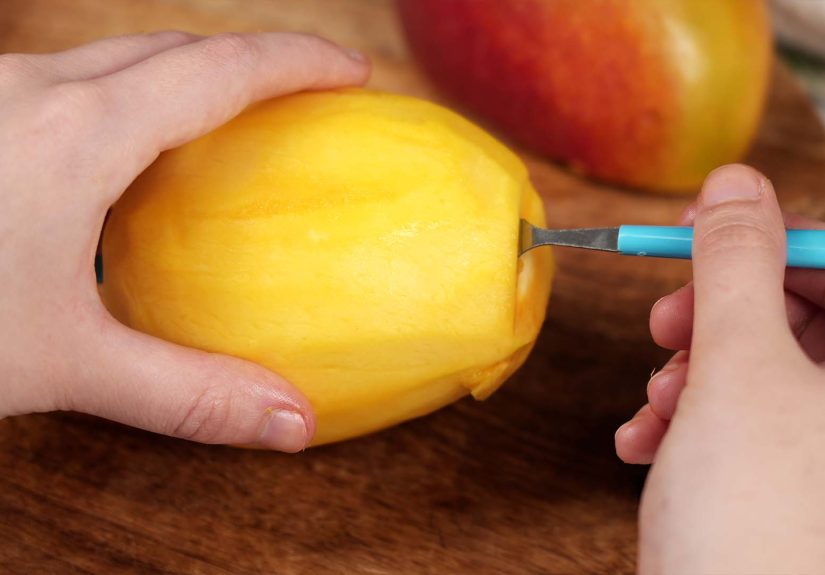
Table of Contents >> Show >> Hide
Mangoes look innocent in the produce aisle, but the first time you try to cut one,
it feels like wrestling a slippery football with a giant seed in the middle. The good
news? Once you understand where that flat pit is hiding and learn a few simple knife
tricks, cutting a mango becomes quick, safe, and oddly satisfying.
In this step-by-step guide, you will learn exactly how to cut a mango into neat slices
and cubes using the classic “hedgehog” method, plus pro tips to keep your fingers safe,
minimize fruit waste, and get Instagram-ready pieces every time. Imagine this article
as the text-only version of a wikiHow tutorial: clear steps, practical tips, and a few
jokes to keep you company in the kitchen.
Meet Your Mango: Anatomy, Ripeness, and Tools
Understand the mango’s shape
A mango isn’t round like an orange; it has two wide, fleshy sides and a thin, flat pit
running through the center from top to bottom. Those wide sides are often called
“cheeks.” Your main goal is to remove the cheeks cleanly from the pit, then turn them
into slices or cubes.
How to tell if a mango is ripe
Color is not the most reliable way to judge a mango. Some varieties stay mostly green
even when perfectly ripe. Instead:
- Give it a gentle squeeze. It should yield slightly, like a ripe peach.
- Check the stem end. A ripe mango often smells sweet and fruity near the stem.
- Avoid very hard or very squishy fruit. Rock-hard mangoes are underripe and starchy.
Super soft ones may be mushy or stringy inside.
If your mango is underripe but you’re impatient (relatable), place it in a paper bag
at room temperature for a day or two. Adding an apple or banana to the bag speeds up
ripening by boosting natural ethylene gas.
Tools you’ll need
- A sharp chef’s knife (8-inch is ideal) or a sharp paring knife
- A sturdy cutting board that doesn’t slip
- An optional small paring knife or spoon for scooping cubes
- A clean kitchen towel to stabilize the board if needed
Yes, there are special mango splitters that slice around the pit for you, and they do
work. But learning the basic knife method means you can cut a mango anywhere, anytime,
even in a tiny rental kitchen with one sad knife and a lot of hopes and dreams.
How to Cut a Mango: 14 Simple Steps
The 14 steps below walk you through washing, stabilizing, cutting off the cheeks, and
turning them into tidy cubes or slices using the famous hedgehog method. If we had
pictures, each step would be a clear visual frame. For now, imagine them like a flipbook
of mango magic.
Phase 1: Prep and Position (Steps 1–4)
- Wash the mango.
Rinse the mango under cool running water and gently rub the skin with your hands.
Pat it dry with a clean towel. Even though you don’t eat the peel, washing removes
dirt and bacteria that could transfer to the flesh when you cut. - Find the “tall” side.
Hold the mango upright. You’ll notice two wide, flat sides and two narrower edges.
The wide sides are the cheeks; the long, flat pit runs between them. - Create a stable base.
Lay the mango on its side and slice a thin piece off the bottom end. This creates a
flat “foot” so the mango can stand securely on the cutting board without wobbling. - Stand the mango upright.
Place the mango on the newly flattened end. The stem end should now be on top, and
the cheeks should face left and right. Keep your non-dominant hand on the mango,
fingers curled safely away from the blade.
Phase 2: Remove the Mango Cheeks (Steps 5–8)
- Slice off the first cheek.
Position your knife about 1/4–1/2 inch to the right of the stem’s center. Cut
straight down, following the curve of the pit. If you feel resistance (that’s the
pit), nudge the knife slightly outward and keep slicing. You’ll end up with a large,
oval piece of mango flesh with the peel still attached. - Slice off the second cheek.
Rotate the mango and repeat the same motion on the opposite side. Now you have two
large cheeks and a center section containing the pit. - Trim the sides around the pit.
Lay the pit piece on its side and carefully slice off any remaining strips of mango
flesh along the narrow edges. These pieces might not be pretty, but they’re delicious
and perfect for snacking or blending into smoothies. - Set the cheeks cut-side up.
Place both cheeks on the cutting board with the flesh facing up and the peel against
the board. This is your starting point for turning them into slices or cubes.
Phase 3: Score the Flesh (Steps 9–11)
The next steps create the iconic “mango hedgehog,” which looks like a little tropical
porcupine and makes it easy to pop out bite-sized pieces.
- Cut vertical lines.
Working with one cheek at a time, use the tip of your knife to cut lengthwise lines
through the flesh, from top to bottom, being careful not to pierce the peel. Space
the lines evenlyabout 1/2 to 3/4 inch apart for snack-sized cubes. - Cut horizontal lines.
Turn the cheek 90 degrees and cut crosswise lines to form a grid. Again, don’t cut
through the peel. If you do accidentally cut through, don’t panicyour mango is just
a little overachiever. - Repeat with the second cheek.
Score the other cheek in the same crosshatch pattern. You’ve now created a grid of
cubes inside the mango skin.
Phase 4: Flip, Scoop, and Serve (Steps 12–14)
- Flip the mango “inside out.”
Hold a cheek in both hands, thumbs on the peel side. Gently push up from the center
of the peel while pulling the edges downward. The cubes will pop outward, forming a
bumpy “hedgehog” shape. This moment is extremely satisfyingenjoy it. - Remove the cubes.
You can:- Slice the cubes off with the knife, cutting just above the peel; or
- Use a spoon to scoop them into a bowl.
If you’re serving kids, scooping with a spoon is often safer and easier.
- Clean up and enjoy.
Check the peel and pit for any leftover bits of fruit. Trim off any extra pieces and
eat them right away (chef’s tax), or save them for smoothies, yogurt bowls, or
mango salsa. Wipe down your cutting boardmango juice can be stickyand enjoy your
perfectly cut mango.
Variations: Other Ways to Cut a Mango
Method 1: Simple slices
If cubes aren’t what you need, you can turn your cheeks into long slices instead:
- Score the mango in vertical lines only, no crosshatch.
- Flip the cheek inside out and slice the long strips away from the peel.
- Use these slices for fruit platters, salads, or layering onto desserts.
Method 2: Peel-then-slice method
For very firm mangoes or recipes that call for long, smooth slices (like mango roses
on top of cake), you can peel first:
- Use a vegetable peeler or paring knife to remove the skin from the whole mango.
- Stand it upright and slice off the cheeks just as before.
- Lay each cheek flat-side down and slice into strips or thin wedges.
This method is a bit more slippery, so it’s best if you’re comfortable handling a
knife and working slowly.
Method 3: Using a mango splitter
A mango splitter is a U-shaped gadget that cuts around the pit. To use it:
- Stand the mango stem-side up on your cutting board.
- Align the splitter over the mango so the center hole lines up with the pit.
- Press down firmly. The splitter pops off two cheeks and leaves the pit in the middle.
- Score and flip the cheeks into cubes or slices as usual.
It’s not mandatory, but if you cut a lot of mangoes (looking at you, smoothie addicts),
the splitter can save time.
Safety, Storage, and Serving Tips
Knife safety with slippery fruit
- Always start with a stable base. That small slice off the bottom
keeps the mango from rolling away mid-cut. - Use a sharp knife. A dull blade slips more easily and actually
increases the risk of cuts. - Keep fingers tucked. Curl your fingertips under and use your
knuckles as a guide whenever possible.
How to store cut mango
If you’re not eating the mango right away:
- Place the cubes or slices in an airtight container.
- Refrigerate for up to 3–4 days.
- For longer storage, freeze the pieces in a single layer on a baking sheet, then
transfer to a freezer bag. Frozen mango is great for smoothies, sorbet, and baking.
Tasty ways to use cut mango
- Toss it with lime juice and chili powder for a sweet–spicy snack.
- Add to fruit salads, yogurt parfaits, or oatmeal.
- Blend into smoothies with pineapple, orange juice, or coconut milk.
- Use in mango salsa with red onion, cilantro, and jalapeño for topping tacos or grilled fish.
Real-Life Mango Cutting Experiences and Extra Tips
Once you’ve cut a few mangoes, you’ll notice that every fruit has its own personality.
Some are silky and almost buttery; others are a little fibrous and cling to the pit.
Your technique stays the same, but a few real-world lessons can make the process even
smoother.
First, don’t stress about getting every last microscopic scrap of fruit off the pit.
Professional chefs and food stylists definitely care about yield, but at home, it’s
perfectly fine to accept that the pit keeps a small “tip” for itself. Many people
treat that pit piece as the cook’s snack: they bite around it over the sink like
you would with a popsicle that fights back.
Second, pay attention to ripeness and variety. A very ripe mango practically melts as
you cut it, which is wonderful for smoothies but messy for ultra-neat cubes. Slightly
firm, ripe mangoes hold their shape better and are easier to hedgehog. If you’re
prepping a big fruit platter for guests, grab mangoes that yield just a bit when
pressed and avoid the ultra-soft ones. You can always save softer fruit for sauce or
jam.
You’ll also discover how important your cutting board setup is. Mango juice is
sticky, and once it hits a smooth countertop, things get slippery fast. Laying a damp
towel under the cutting board keeps it from sliding, and keeping a second towel nearby
for your hands helps you maintain a good grip on both knife and fruit. Think of it as
your “mango cutting station”: board, towel, knife, bowl for cubes, and maybe a little
trash bowl for peels.
Many home cooks also find that changing knife size helps them feel more confident.
If an 8-inch chef’s knife feels intimidating, try a smaller 6-inch chef’s knife or a
sturdy paring knife. The key is sharpness and control, not blade drama. As long as you
can cut cleanly through the flesh without forcing the knife, you’re good.
Another common beginner moment: accidentally cutting through the peel while scoring.
This happens a lot and is not a failureit usually just means your knife is very
sharp or you pressed a bit too hard. If you slice through, simply hold the cheek a
little more gently and let the knife barely glide across the flesh for shallower cuts.
Over time, you’ll develop a feel for how much pressure creates a deep score without
piercing the skin.
There’s also a social side to mango cutting. Kids almost always love the hedgehog
shape, and it’s a fun way to introduce them to new fruit. Let older kids help with
safe tasks like flipping the scored cheeks inside out or scooping cubes with a spoon
into a bowl. Just keep the knife work strictly for adults or teens who already have
good knife skills. Mango hedgehogs are also a surprising hit at brunch: a platter of
bright yellow cubes, berries, and mint leaves looks far fancier than the effort
required.
If you cook a lot, you’ll start to plug cut mango into all kinds of recipes:
blended into salad dressings for a tropical twist, folded into rice dishes with
cilantro and lime, or layered over grilled chicken or shrimp for a sweet contrast.
The more you use mango, the more natural it will feel to grab one from the store and
think, “No problem, I know exactly how to cut this.”
Finally, remember that practice matters more than perfection. The first time you
follow these 14 steps, your cubes might be a little uneven or your hedgehog might
look more like a confused turtle. That’s completely fine. Each mango is a mini
lesson in fruit anatomy, knife skills, and patience. By your third or fourth try,
you’ll be able to slice and cube a mango in under a minuteand you’ll wonder why it
ever seemed difficult.
So the next time you pass the produce section and see a pile of golden-red mangoes,
don’t walk by because you’re unsure how to handle them. Pick one up, bring it home,
and run through these steps. With a little practice, cutting a mango becomes one of
the easiest (and tastiest) kitchen skills you’ll ever master.
Conclusion
Cutting a mango doesn’t have to be a sticky, slippery mystery. Once you know where
the flat pit sits, how to slice off the cheeks, and how to use the hedgehog method,
you can turn any mango into tidy cubes or slices in just a few minutes. From fruit
salads to salsas and smoothies, this simple skill opens up a whole world of tropical
flavor in your everyday cooking.