Table of Contents >> Show >> Hide
- What Does It Mean to Divide a Fraction by a Fraction?
- Quick Expert Steps to Divide a Fraction by a Fraction
- Why Do You Flip the Second Fraction?
- How to Divide Fractions Step by Step Without Panic
- Examples That Make the Method Stick
- Can You Cross-Cancel Before Multiplying?
- Common Mistakes When Dividing Fractions
- How to Check Whether Your Answer Makes Sense
- Real-World Examples of Dividing a Fraction by a Fraction
- Best Strategy for Students Who Keep Forgetting the Rule
- Frequently Asked Questions About Dividing Fractions
- Experience and Practical Insight: What Real Learning Looks Like With Fraction Division
- Final Takeaway
Fractions have a special talent for making smart people feel like they accidentally walked into a pop quiz. The good news? Dividing a fraction by a fraction is much easier than its reputation suggests. Once you understand one core ideadivide by a fraction by multiplying by its reciprocalthe whole process becomes far less dramatic.
In this guide, you’ll learn exactly how to divide a fraction by a fraction, why the method works, how to handle mixed numbers, and how to avoid the classic mistakes that make math teachers sigh into their coffee. We’ll keep it practical, clear, and just fun enough that your calculator won’t feel replaced.
What Does It Mean to Divide a Fraction by a Fraction?
When you divide one fraction by another, you are really asking: How many groups of the second fraction fit inside the first fraction?
For example:
3/4 ÷ 1/2
This asks, “How many one-halves are in three-fourths?” The answer is 1 1/2, because one full half fits inside 3/4, and there is still another half of a half left over. That is exactly why fraction division can produce answers greater than the number you started with. Sneaky, but mathematically legal.
Quick Expert Steps to Divide a Fraction by a Fraction
Here is the fast method people usually learn:
- Keep the first fraction exactly the same.
- Change the division sign to multiplication.
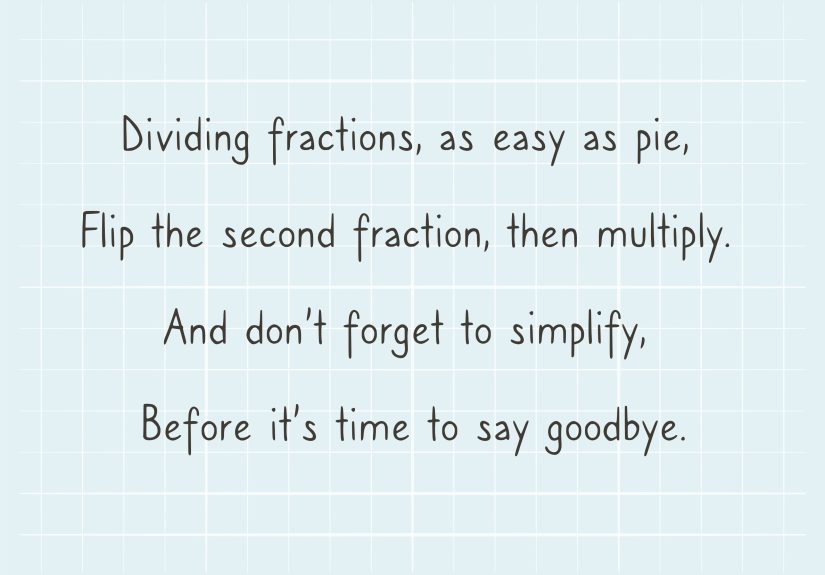
- Flip the second fraction to its reciprocal.
- Multiply the numerators.
- Multiply the denominators.
- Simplify the final answer.
That’s the famous “keep, change, flip” rule. It sounds a little like dance choreography, but it works beautifully.
Example 1: A Basic Fraction-by-Fraction Problem
2/3 ÷ 4/5
Step 1: Keep the first fraction.
2/3
Step 2: Change division to multiplication.
2/3 × 4/5 becomes 2/3 × ?
Step 3: Flip the second fraction.
2/3 × 5/4
Step 4: Multiply across.
(2 × 5) / (3 × 4) = 10/12
Step 5: Simplify.
10/12 = 5/6
Answer: 5/6
Why Do You Flip the Second Fraction?
This is the part many students memorize without fully understanding. The shortcut works because dividing by a number is the same as multiplying by its multiplicative inverse, which is just a fancy name for reciprocal.
Take 1/2. Its reciprocal is 2/1, or just 2.
So if you have:
3/4 ÷ 1/2
you can rewrite it as:
3/4 × 2/1 = 6/4 = 3/2 = 1 1/2
In plain English: dividing by one-half asks how many halves fit into the amount you have. Since halves are smaller than wholes, more of them can fit. That’s why the answer can get bigger instead of smaller. Fraction division loves plot twists.
How to Divide Fractions Step by Step Without Panic
Step 1: Make Sure Both Numbers Are Fractions
If you see a whole number, write it as a fraction over 1.
Example:
3 = 3/1
Step 2: Convert Mixed Numbers to Improper Fractions
If the problem includes mixed numbers, convert them first.
Example:
2 1/3 = 7/3
This step matters because fraction division is cleaner when everything is written the same way.
Step 3: Take the Reciprocal of the Divisor
The divisor is the second fractionthe one you are dividing by. Flip only that fraction.
If the second fraction is 7/8, its reciprocal is 8/7.
Step 4: Multiply
Multiply top by top and bottom by bottom.
Step 5: Simplify
Reduce the answer to lowest terms. If the answer is an improper fraction and your teacher or assignment wants a mixed number, convert it at the end.
Examples That Make the Method Stick
Example 2: Dividing Fractions With Easy Simplification
5/6 ÷ 10/9
Keep the first fraction, change the sign, flip the second:
5/6 × 9/10
Now multiply:
(5 × 9) / (6 × 10) = 45/60
Simplify:
45/60 = 3/4
Answer: 3/4
Example 3: Dividing Mixed Numbers
2 1/3 ÷ 7/8
Convert the mixed number:
2 1/3 = 7/3
Now divide:
7/3 ÷ 7/8 = 7/3 × 8/7
Multiply:
56/21
Simplify:
56/21 = 8/3 = 2 2/3
Answer: 2 2/3
Example 4: A Fraction Divided by a Fraction With a Bigger Answer
1/4 ÷ 1/8
Rewrite:
1/4 × 8/1 = 8/4 = 2
Answer: 2
This makes sense because there are two eighths in one fourth.
Can You Cross-Cancel Before Multiplying?
Yes, and it often makes life easier.
Suppose you have:
3/10 ÷ 9/20
Rewrite it:
3/10 × 20/9
Before multiplying, cross-cancel common factors:
- 3 and 9 can both be divided by 3
- 20 and 10 can both be divided by 10
That gives:
1/1 × 2/3 = 2/3
Much nicer than multiplying first and wrestling with 60/90.
Common Mistakes When Dividing Fractions
1. Flipping the Wrong Fraction
Only the second fraction gets flipped. The first fraction stays put like a responsible adult.
2. Forgetting to Change Mixed Numbers
You should convert mixed numbers into improper fractions before dividing. Skipping that step can turn a simple problem into numerical soup.
3. Multiplying Correctly but Not Simplifying
If you stop at 12/16 when the answer is really 3/4, the math police will not arrest you, but your teacher may look disappointed.
4. Dividing Straight Across
Students sometimes try this:
2/3 ÷ 4/5 = (2 ÷ 4) / (3 ÷ 5)
Nope. That is not how fraction division works. Use the reciprocal method instead.
5. Dividing by Zero
You cannot divide by zero. If the second fraction is 0, the problem is undefined. Math draws a very firm line there.
How to Check Whether Your Answer Makes Sense
Here are a few quick logic checks:
- If you divide by a fraction less than 1, your answer often gets bigger.
- If you divide by a fraction greater than 1, your answer often gets smaller.
- If both fractions are close in value, the answer should be close to 1.
Example:
7/8 ÷ 1/2
Because one-half is smaller than 1, the answer should be larger than 7/8. And it is:
7/8 × 2 = 14/8 = 1 3/4
Reasonableness checks are underrated. They catch a lot of preventable mistakes.
Real-World Examples of Dividing a Fraction by a Fraction
Recipe Example
You have 3/4 cup of yogurt. A recipe needs 1/8 cup per serving. How many servings can you make?
3/4 ÷ 1/8 = 3/4 × 8/1 = 24/4 = 6
Answer: 6 servings
Craft Example
You have 5/6 yard of ribbon. Each bow needs 1/12 yard. How many bows can you make?
5/6 ÷ 1/12 = 5/6 × 12/1 = 60/6 = 10
Answer: 10 bows
Construction Example
A board measures 2/3 of a foot. Each small cut must be 1/6 of a foot. How many pieces can you cut?
2/3 ÷ 1/6 = 2/3 × 6/1 = 12/3 = 4
Answer: 4 pieces
So yes, fraction division absolutely leaves the classroom and wanders into kitchens, workshops, and craft drawers.
Best Strategy for Students Who Keep Forgetting the Rule
Use this mini checklist every time:
- Convert mixed numbers.
- Keep the first fraction.
- Flip the second fraction.
- Multiply.
- Simplify.
- Check whether the answer seems reasonable.
If you practice that pattern enough times, the process starts to feel automatic. Not “I dream in fractions now” automatic, but close.
Frequently Asked Questions About Dividing Fractions
Do I always flip a fraction when dividing?
You flip only the second number, the one you are dividing by.
What if I divide by a whole number?
Write the whole number as a fraction over 1, then flip it and multiply.
Example: 3/5 ÷ 2 = 3/5 ÷ 2/1 = 3/5 × 1/2 = 3/10
Do denominators need to match first?
No. Unlike adding and subtracting fractions, you do not need common denominators before dividing fractions.
Should I simplify before or after multiplying?
Either can work, but cross-canceling before multiplying often keeps the numbers smaller and easier to manage.
Experience and Practical Insight: What Real Learning Looks Like With Fraction Division
One of the most common experiences students have with fraction division is this: they understand fraction multiplication, feel reasonably confident, and then suddenly meet a problem like 3/5 ÷ 1/2 and stare at it as if the page has betrayed them. That reaction is normal. In real classrooms and tutoring sessions, the struggle usually is not the arithmetic itself. It is the meaning behind the operation.
Many learners do much better when the problem is connected to something tangible. A student who freezes during abstract drills may instantly understand the idea when the question becomes, “You have 3/4 of a pizza, and each person gets 1/8 of a pizza. How many people can eat?” Suddenly the math is no longer mysterious. It becomes a counting question in disguise. That momentwhen the student realizes fraction division is really about groups and sizeis usually the turning point.
Another common experience is over-relying on the shortcut without understanding it. Students memorize “keep, change, flip,” then apply it correctly one day and incorrectly the next because they cannot remember which number gets flipped. What helps most is not more chanting, but more reasoning. When students hear, “We are dividing by the second fraction, so that is the one we replace with its reciprocal,” the rule stops sounding random and starts sounding logical.
Adults relearning math often have an equally interesting experience: they are relieved to discover they were not “bad at fractions,” they were just taught to memorize without context. Once they see visual models, recipe examples, and simple number sense checks, the process becomes much less intimidating. In fact, many say fraction division finally clicks when they notice that dividing by a small fraction should create a larger answer. That one idea clears up a surprising number of mistakes.
There is also a practical side to all this. In cooking, woodworking, sewing, budgeting, and home projects, people regularly divide partial amounts into smaller fractional parts. Someone doubling or shrinking a recipe, cutting boards into equal pieces, or portioning fabric can run into fraction division without calling it that. Real-world experience teaches the same lesson math class does: understanding the size of the parts matters just as much as following the steps.
The best long-term experience with this topic usually comes from practicing a mix of methods: quick symbolic problems, visual models, and word problems. Students who do all three tend to become faster, more accurate, and more confident. They stop treating fraction division like a trap and start treating it like a tool. And honestly, that is the goalnot just getting the answer, but knowing why the answer makes sense.
Final Takeaway
If you want to know how to divide a fraction by a fraction, the essential method is simple: keep the first fraction, change the operation to multiplication, flip the second fraction, multiply, and simplify. Add in a little number sense, a few real-world examples, and regular practice, and the skill becomes much less scary.
Fractions may never become everyone’s favorite dinner guest, but once you know the rule and understand why it works, they lose a lot of their power to cause panic.