Table of Contents >> Show >> Hide
- What Is an Instagram Shadowban Test, Really?
- Does Instagram Actually Shadowban People?
- Signs You Might Need to Run a Shadowban Test
- How to Do an Instagram Shadowban Test Step by Step
- Common Mistakes That Ruin a Shadowban Test
- What to Do If Your Shadowban Test Looks Positive
- Expert Tips to Avoid Future Shadowban Scares
- Final Thoughts
- Common Creator Experiences With Instagram Shadowban Tests
One day your Instagram post is cruising along like it owns the highway. The next day, it is crawling through digital molasses, getting fewer likes, fewer views, and about as much non-follower reach as a snow shovel in Miami. Naturally, your first thought is: Am I shadowbanned?
Here is the tricky part: Instagram does not officially treat “shadowban” as a neat little in-app label. What creators usually mean by the term is reduced visibility, limited discoverability, or content that suddenly stops showing up where it normally should. Sometimes that drop is caused by policy issues. Sometimes it is weak content performance. Sometimes it is a bad hashtag strategy. And sometimes the algorithm simply decides your post is not the life of the party.
That is why learning how to do an Instagram shadowban test matters. A good test helps you stop guessing, stop spiraling, and start diagnosing the real problem. In this guide, you will learn what a shadowban test actually checks, how to run one step by step, how to interpret the results without panicking, and what to do next if your reach really is being limited.
What Is an Instagram Shadowban Test, Really?
An Instagram shadowban test is a practical way to check whether your account or content is being quietly restricted in reach. Most tests focus on three core areas: whether your content appears in hashtag results, whether your account is eligible for recommendations, and whether your non-follower reach has suddenly collapsed.
Think of it like checking a car dashboard. One warning light does not automatically mean the engine is dead. But if several lights turn on at once, you probably have a real issue. The same goes for Instagram. One underperforming post does not prove anything. A pattern across search, hashtags, Explore visibility, and Insights is much more useful.
Does Instagram Actually Shadowban People?
This is where things get a little spicy. Instagram does not officially say, “Congratulations, you have been shadowbanned.” What it does acknowledge is that some content or accounts may become ineligible for recommendations, harder to find in search, or less visible to non-followers if they violate rules or trigger platform concerns.
So while the word “shadowban” is internet slang, the underlying problem is real enough: reduced distribution. In plain English, your content may still exist, but Instagram may show it to fewer people, especially outside your current audience.
That means a smart Instagram shadowban test should not just ask, “Did my likes drop?” It should ask, “Did my discoverability change in a measurable way?” That is a much better question, and frankly, a lot less dramatic.
Signs You Might Need to Run a Shadowban Test
Before you start doing detective work in your profile, it helps to know what usually triggers suspicion. Here are some common warning signs:
- Your reach drops sharply even though your posting style and quality have stayed consistent.
- Your posts stop appearing in hashtag searches for people who do not follow you.
- Your non-follower reach falls off a cliff in Instagram Insights.
- Your account becomes harder to find in search.
- You receive notices in Account Status about removed content or recommendation issues.
- You used spammy tactics, repetitive hashtags, or questionable third-party automation tools recently.
Now, none of these signs alone is proof. Instagram reach can drop for plenty of boring reasons, including weak hooks, stale creative, poor timing, or audience fatigue. But if several signs show up together, it is time to test.
How to Do an Instagram Shadowban Test Step by Step
1. Check Your Instagram Account Status First
If you skip this step, you are basically trying to diagnose a headache without noticing the anvil on your head. Account Status is Instagram’s most direct signal about content problems, recommendation eligibility, and enforcement issues.
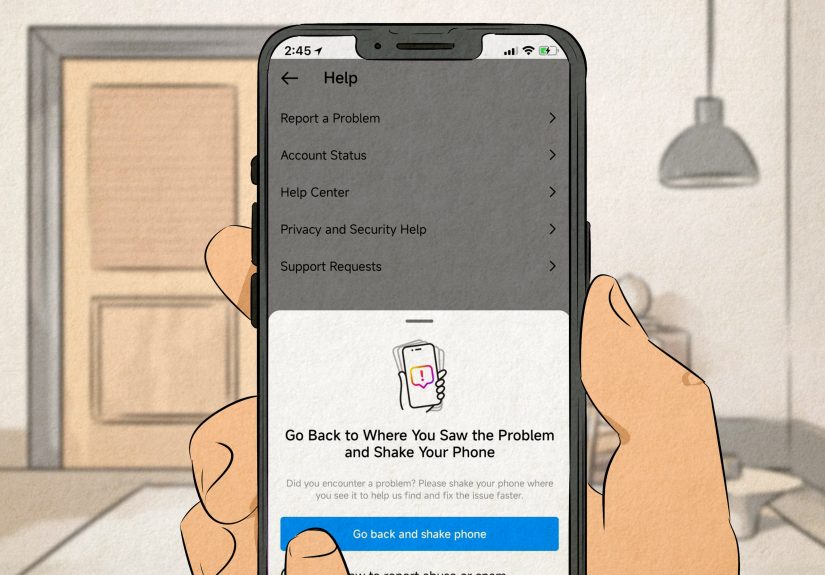
Open your profile, go to your settings, and find Account Status. Review whether your content has been removed, whether features are limited, and whether your content can still be recommended to non-followers.
If Instagram says your content cannot be recommended, that is your biggest clue. At that point, you are no longer dealing with vague theories from social media folklore. You are looking at an official platform-level restriction or limitation.
2. Review Your Instagram Insights for a Pattern, Not a Mood Swing
Open Insights and compare your recent posts against your normal baseline. Focus on:
- Reach from non-followers
- Impressions from hashtags
- Profile visits
- Reels views from non-followers
- Overall engagement rate
If one post tanks, that could just be a flop. We have all posted one of those. Sometimes the algorithm did not betray you; sometimes your audience simply was not in the mood for your inspirational coffee mug quote.
But if several posts in a row show a steep decline in non-follower discovery while follower engagement stays relatively normal, that is more suspicious. A true Instagram shadowban test depends on patterns, not feelings.
3. Run a Controlled Hashtag Visibility Test
This is the classic method, but it needs to be done carefully. Otherwise, it becomes the social media version of reading tea leaves.
Here is how to do it:
- Post a fresh piece of content from a public account.
- Use a small set of relevant hashtags, including at least one niche, low-competition hashtag.
- Ask a few people who do not follow you to search that hashtag after the post has indexed.
- Have them check whether your post appears in the hashtag results.
Do not rely on your own account to run the search. Instagram already knows who you are, and personalization can muddy the result. Also, do not use giant hashtags with millions of posts if you want a clean test. That is like dropping a grain of rice into the ocean and then acting surprised when nobody finds it.
If multiple non-followers cannot find your post under a relevant niche hashtag, that is a warning sign. If they can find it, your account is probably not shadowbanned in the dramatic, all-content-hidden sense people fear.
4. Test Search Visibility
Next, check whether your account appears normally in Instagram search. Ask a few users who do not regularly interact with your content to search your exact handle and your brand name.
If your public account becomes unusually hard to find, especially after being easy to find before, that may suggest reduced discoverability. This is not always a shadowban issue. It can also happen because your username is too common, your engagement is weak, or your account relevance has shifted. Still, it belongs in the test.
5. Compare Reach From Followers vs. Non-Followers
One of the most useful expert tricks is to separate distribution problems from content problems. If your followers are still seeing and engaging with your posts, but your non-follower reach suddenly collapses, that points more strongly toward recommendation limits or discoverability issues.
If both follower and non-follower reach are down, the problem may be broader. Your content might be missing the mark, your audience might be less active, or your posting schedule may have become inconsistent. In other words, your content may not be shadowbanned; it may just be having a rough week.
6. Review Recent Activity That Could Trigger Restrictions
A proper Instagram shadowban test does not stop at symptoms. It also checks potential causes. Ask yourself:
- Did you use repetitive or irrelevant hashtags?
- Did you connect unapproved automation tools?
- Did you mass follow, mass unfollow, or over-comment in a short period?
- Did you post content that could be flagged as misleading, sexually suggestive, violent, or borderline inappropriate?
- Did you recycle engagement bait or obviously spammy captions?
If the answer is yes to any of those, the reach drop may have a cause more concrete than “the algorithm hates me.” The algorithm rarely hates you personally. It is more like a grumpy librarian: if you break the rules, it gets very quiet.
Common Mistakes That Ruin a Shadowban Test
A lot of people run a sloppy test and end up diagnosing a ghost. Avoid these mistakes:
Testing with a Private Account
Private accounts are naturally limited in discoverability. That is not a shadowban. That is just how privacy works.
Using Huge Hashtags
If you use broad hashtags with millions of posts, your content may disappear fast simply because of competition.
Checking Too Soon
Sometimes content takes a little time to fully distribute. Give it a reasonable window before concluding that your post has vanished into the digital Bermuda Triangle.
Judging by One Bad Post
One weak post is not proof of anything except, possibly, that your audience did not love that post.
Ignoring Content Quality
If your hook is weak, your visual is forgettable, and your caption reads like it was written during a power outage, lower reach may have nothing to do with a shadowban.
What to Do If Your Shadowban Test Looks Positive
If several signs line up and your Account Status or visibility checks suggest reduced reach, do not panic-post your way into a deeper hole. Take a calm, systematic approach.
Audit and Remove Problematic Content
Look through recent posts, captions, hashtags, and comments. Remove anything that may violate community rules or recommendation guidelines. If something was flagged unfairly, request a review through Instagram.
Disconnect Questionable Third-Party Tools
If you have been using aggressive auto-engagement software or anything that acts like a bot, unplug it. Fast. Scheduling tools that follow platform rules are one thing. Automation that imitates human engagement in bulk is another.
Stop Spammy Behavior
Slow down on mass interactions. Stop copying the same comment across multiple posts. Stop dumping irrelevant hashtags under every Reel like confetti at a parade nobody asked for.
Clean Up Your Hashtag Strategy
Use fewer, more relevant hashtags. Mix niche, medium, and branded tags. Avoid broken, misleading, or unrelated ones. A hashtag strategy should help the platform understand your content, not confuse it.
Focus on Original, Useful Content
Instagram continues to prioritize content that is engaging, original, and worth sharing. If your account is in a rough patch, your comeback plan should not be “post louder.” It should be “post better.”
Give It Time
There is no universal public timeline for how long reduced reach lasts. Some creators see recovery in days. Others report a few weeks. The important thing is to stop the behavior that may be causing the problem and monitor whether discoverability gradually returns.
Expert Tips to Avoid Future Shadowban Scares
- Check Account Status regularly, not only when your views panic you.
- Use hashtags that are tightly connected to your content.
- Avoid engagement pods, fake followers, and suspicious automation.
- Build posts around saves, shares, watch time, and genuine interaction.
- Keep your account public if discoverability is your goal.
- Test new content formats before assuming the algorithm buried you.
- Track non-follower reach weekly so you notice patterns early.
Final Thoughts
Learning how to do an Instagram shadowban test is less about chasing internet myths and more about reading the signals Instagram actually gives you. The best test is never just one trick. It is a combination of Account Status, Insights, hashtag visibility, search behavior, and honest self-auditing.
If your account is fine, great. You just saved yourself a week of unnecessary doom-scrolling. If your reach really is being limited, you now have a much clearer path forward. Clean up your account, improve your content, stay inside platform rules, and give the system time to trust you again.
And remember: not every reach drop is a shadowban. Sometimes your post just did not slap. Annoying, yes. Terminal, no.
Common Creator Experiences With Instagram Shadowban Tests
Many creators describe the same strange moment before they ever run an Instagram shadowban test: something feels off, but nothing looks obviously broken. Their posts are still live. Followers can still like and comment. Stories still get some views. Yet discovery dries up. The content that used to reach new people suddenly stays stuck inside the existing audience, like a party where nobody new is allowed through the door.
A common experience is the “healthy likes, weak growth” pattern. A small business posts consistently, gets decent support from loyal followers, but sees almost no movement in profile visits, Explore exposure, or non-follower reach. That often pushes them to test hashtags first. They ask two or three people who do not follow the account to search a niche hashtag from the latest post. If the content is missing, alarm bells start ringing.
Another frequent experience happens after creators use shortcuts that seemed harmless at the time. Maybe they connected an automation tool that promised faster growth. Maybe they pasted the same hashtag block under every post for months. Maybe they got a little too enthusiastic with rapid-fire commenting, following, and unfollowing. Then, seemingly overnight, reach falls. The test often reveals that the issue is not total invisibility, but reduced discoverability to non-followers. That distinction matters because it changes the recovery strategy.
There is also the “false shadowban panic” experience, which is more common than people admit. A creator sees one Reel underperform and immediately assumes Instagram has thrown them into algorithm jail. But once they check Account Status and compare Insights across several posts, the real story is less dramatic. Their audience may have responded poorly to the topic, the opening hook may have been weak, or the post format may not have matched current viewer behavior. In those cases, the test is still valuable because it replaces a guess with evidence.
Some creators report the most useful part of the entire process is simply checking Account Status for the first time. They discover a post is not eligible for recommendation, or they find a content warning they missed earlier. Others find nothing there, which is also useful. When Account Status is clean, hashtags are working, and search visibility looks normal, the focus can shift back to strategy, creative quality, and audience fit.
In real-world use, the biggest lesson creators learn is that a shadowban test is not magic. It is a filter for reality. It helps separate platform restrictions from normal content volatility. And that alone can save hours of stress, bad advice, and random internet superstition.