Table of Contents >> Show >> Hide
- Why Finding a Cell Phone Number Can Be Hard (and That’s a Good Thing)
- Trick #1: Start With Your Own Digital Trail (You May Already Have the Number)
- Trick #2: Use Google (or Bing) Like a Pro, Not Like a Panicked Person
- Trick #3: Check Professional and Social Profiles (The “Public but Hidden in Plain Sight” Method)
- Trick #4: Use Business Listings and Local Directories for Legitimate Contacts
- Trick #5: Use Reverse Lookup and Caller ID Tools for Unknown Numbers
- Trick #6: Ask Directly (or Through a Mutual Contact) Still Underrated, Still Effective
- Common Mistakes to Avoid When Looking for a Cell Phone Number
- How to Protect Your Own Cell Number While You’re Here
- Conclusion
- Experience-Based Lessons (Extra 500+ Words)
Let’s be honest: sometimes finding a cell phone number feels like trying to locate one sock from a freshly washed pair. You know it exists. You know it was here five minutes ago. And yet… gone.
The good news is that there are smart, legal, and surprisingly easy ways to find a cell phone number (or verify one) without crossing privacy lines or turning into a low-budget detective. In this guide, we’ll walk through six practical tricks that work for everyday situationsreconnecting with someone, finding a business contact, identifying an unknown caller, or recovering a number you lost when your old phone did its dramatic “I refuse to turn on” routine.
Important note: This article focuses on ethical and lawful methods. If someone has chosen to keep their number private, respect that. A missing phone number is sometimes a boundary, not a puzzle.
Why Finding a Cell Phone Number Can Be Hard (and That’s a Good Thing)
Before we jump into the tricks, here’s a quick reality check: cell phone numbers are more private than landlines used to be. Many people don’t publicly list them, and platforms increasingly let users control whether they can be discovered by phone number, email, or public profile searches.
So if you can’t find a number in 30 seconds, it doesn’t mean you’re bad at searching. It usually means privacy settings are doing their job. Your goal is to use legitimate sources, verify what you find, and avoid risky shortcuts like random paid databases, shady “instant lookup” sites, or sketchy browser extensions that want access to your entire life.
Trick #1: Start With Your Own Digital Trail (You May Already Have the Number)
Check synced contacts on Google, Apple, and old backups
This is the most overlooked trick, and it’s often the fastest. If you’re trying to find a number for someone you already knew, the number may still exist in:
- Your Google Contacts account
- iCloud Contacts
- An old phone backup
- A SIM card export (.vcf)
- Email signatures in your inbox
- Messaging apps where the contact was saved but renamed
People change phones, not necessarily numbers. If you once saved “Mike Plumber” and now need “Michael from roof leak emergency,” search your contacts by company, city, or even partial notes.
Quick example
Let’s say you’re trying to find your dog sitter’s number. Search your contacts for:
- Her first name
- Your dog’s name
- Neighborhood name
- “Pet,” “sitter,” or “boarding”
You’d be amazed how often the contact is there under a weird label from two years ago.
Trick #2: Use Google (or Bing) Like a Pro, Not Like a Panicked Person
Use search operators to narrow the results
If you’re searching for a business owner, freelancer, or publicly listed professional, plain searches are okaybut targeted searches are better. Try combinations like:
"Full Name" "phone""Business Name" "contact""Person Name" "mobile"site:companywebsite.com "phone""Person Name" City State -facebook(to reduce noise)
Search operators help you filter clutter and focus on pages where the number might actually appearlike a business bio, an event listing, a speaker page, or a local directory.
What works best
- Quotation marks for exact names or phrases
- site: to search a specific website only
- Minus sign (-) to exclude junk results or duplicate names
Pro tip: If the person has a common name (like John Smith, Chris Lee, or every third guy in your fantasy football group), add a city, job title, or employer to your search.
Trick #3: Check Professional and Social Profiles (The “Public but Hidden in Plain Sight” Method)
Look at bios, contact buttons, and profile settings clues
Many people won’t post their cell number directly in a public biobut businesses, creators, agents, and service providers often do publish contact options through profile tools. Check:
- LinkedIn (especially for recruiters, consultants, and sales professionals)
- Instagram professional accounts (contact buttons or business info)
- Facebook business pages
- X/Twitter bios
- Portfolio sites linked from social bios
Even when a number isn’t shown, these profiles often lead you to a contact page, booking form, or website where the number is listed. In other words, don’t just search the profilefollow the breadcrumbs.
Important privacy reminder
Some platforms let users control whether others can discover them using a phone number. If a person has disabled that feature or hidden their number, respect it. Use a public business channel or message them directly and ask.
Trick #4: Use Business Listings and Local Directories for Legitimate Contacts
Great for businesses, contractors, and local services
If you’re trying to find the number for a restaurant, dentist, electrician, realtor, tutor, or small business, skip the random “people finder” site and start with trusted business listings.
Best places to check include:
- Google Business Profile listings (Search and Maps)
- Yellow Pages / YP
- Official company websites (contact page, footer, about page)
- Chamber of commerce directories
- Professional licensing boards (for regulated professions)
Why this trick works
Businesses want to be found. Many profiles include a primary phone number and sometimes additional contact numbers. If you’re trying to reach a service provider, this is usually the cleanest and most accurate method.
Extra verification step (worth the 15 seconds)
When you find a number in a directory, cross-check it against the company’s official website or Google listing before calling. This helps you avoid outdated listings or scam copycat numbers.
Trick #5: Use Reverse Lookup and Caller ID Tools for Unknown Numbers
Best for: “Who keeps calling me?”
If you already have a number and want to identify who it belongs to, reverse lookup tools and caller-ID apps can be usefulespecially for unknown callers, robocalls, or spammy repeats.
Options include:
- Your carrier’s spam/caller ID tools (AT&T, Verizon, T-Mobile, etc.)
- Caller ID and spam-blocking apps (such as Hiya and similar services)
- Built-in phone features that label suspicious calls
These tools are especially helpful for screening unknown numbers, not for magically revealing every private person’s personal cell phone. Think of them as “identify or flag” tools rather than a secret phone-number vending machine.
Use this trick safely
- Check the app’s privacy policy before uploading contacts
- Use reputable apps with clear ratings and support
- Don’t call back suspicious numbers immediately
- If a call looks urgent, verify through an official website first
If a number is spoofed (fake caller ID), the name shown may be misleading. That’s why scam-awareness matters just as much as lookup tools.
Trick #6: Ask Directly (or Through a Mutual Contact) Still Underrated, Still Effective
The easiest trick nobody wants to use
Yes, this is the least “spy movie” option. It is also the most accurate.
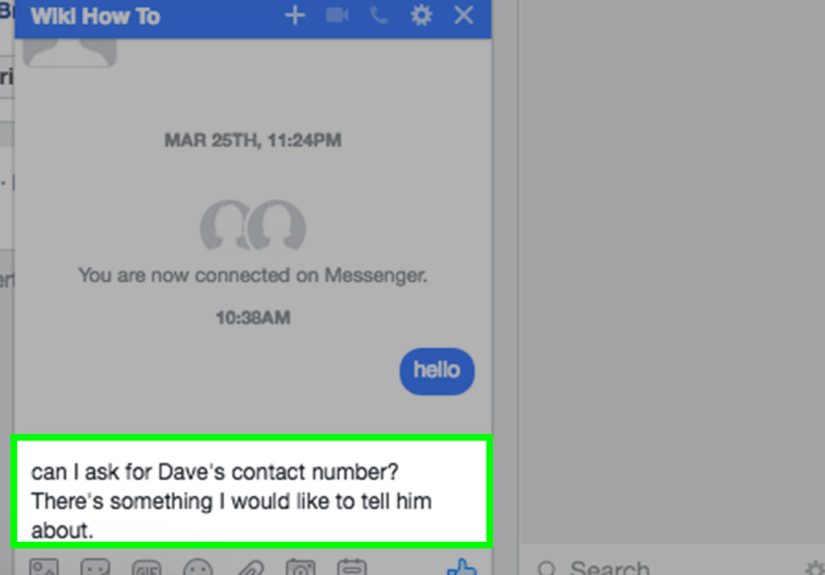
If you know the person through email, social media, work, school, or a mutual friend, send a short, respectful message:
“Hey, I’m trying to reach you about [reason]. Is this still the best number, or would you prefer email?”
That message does two important things:
- It gives context (so you don’t sound like a mystery caller)
- It gives the person control over how they want to be contacted
When to use a mutual contact
If you don’t have a direct channel, ask a shared contact to forward your message instead of asking them to hand over someone’s number without permission. Example:
“Can you pass along my contact info and ask them to text me if they’re interested?”
That keeps things polite, private, and drama-free. Everyone wins.
Common Mistakes to Avoid When Looking for a Cell Phone Number
1) Trusting the first result you see
Some search results look official but are outdated, paywalled, or inaccurate. Always cross-check.
2) Using shady lookup sites
If a site screams “FREE INSTANT RESULTS!!!” and then asks for your card before revealing anything, back away slowly. Bonus points if you also clear the tab and pretend that never happened.
3) Ignoring privacy and consent
Even if a number is technically searchable, that doesn’t mean it should be used for spam, harassment, or repeated unwanted contact.
4) Calling back unknown numbers without verification
Scam calls and spoofed numbers are common. If the caller claims to be from your bank, doctor’s office, or delivery company, use the official number from the company websitenot the number that called you.
How to Protect Your Own Cell Number While You’re Here
Searching for numbers is useful. Protecting your own number is smarter. A few quick habits can make a big difference:
- Review privacy settings on LinkedIn and social platforms
- Avoid posting your personal number publicly unless necessary
- Use a business line or separate number for listings and ads
- Turn on call blocking/call labeling through your carrier or device
- Register your number on the National Do Not Call Registry (helps with legitimate telemarketing, not scammers)
- Report scam calls/texts instead of engaging
In short: make your real contacts easy, and your scam contacts miserable.
Conclusion
Finding a cell phone number doesn’t have to feel creepy, complicated, or time-consuming. In most cases, the best path is a mix of common sense and the right tools: check your backups, search smart, follow public profiles, use trusted directories, verify unknown callers, and ask directly when appropriate.
The biggest takeaway? Accuracy and ethics matter more than speed. A number found through a legitimate source is more useful than a random number found in 12 seconds on a sketchy site. Use these six easy tricks, verify what you find, and respect privacy along the way.
Experience-Based Lessons (Extra 500+ Words)
Over time, the most useful lesson about finding cell phone numbers is that the “best” method depends on the situation. People usually imagine there’s one master tricksome magical website where you type a name and instantly get the right number with fireworks and dramatic music. Real life is much less cinematic and much more about context.
For example, when people try to reconnect with an old friend, they often start with a general search and get overwhelmed. They see duplicate names, outdated profiles, and random directory pages. The smarter move is usually to begin with what they already know: an old city, employer, school, or even a nickname. Once they add that extra detail, the search becomes much cleaner. In practice, the “easy trick” isn’t a hidden toolit’s adding one useful clue.
Another common experience happens with small business contacts. Someone needs a plumber, landscaper, tutor, or caterer and finds three different numbers across review sites, an old Facebook page, and a marketplace listing. Which one is correct? The fastest way to avoid a wrong call is to verify the number on the business’s official website or current Google Business Profile. That tiny extra step saves time and prevents the awkward “Hi, is this Mike’s Plumbing?” “No, this is a confused grandmother.”
Unknown callers are a different story. Many people want to identify a mystery number immediately, especially if the call repeats. The key experience here is learning that not every number can be confidently identifiedand that’s okay. Carrier tools and caller-ID apps are great for labeling likely spam, but they’re not perfect. A healthy habit is to treat unknown numbers as unverified until you confirm them through an official source. This mindset prevents panic and blocks a lot of scams before they start.
There’s also a people-skills side to this topic that gets ignored. Sometimes the easiest route really is a polite message. A short note explaining who you are and why you’re reaching out often works better than an hour of searching. People are more likely to share contact information when the request is clear and respectful. In professional settings, asking a mutual contact to pass along your information (instead of requesting someone’s private number directly) is usually the most trusted approach.
One more practical lesson: keep your own contacts organized if you don’t want future-you to suffer. Save numbers with enough detail to make sense laterfull name, business name, city, and a quick note. “Sam” may seem sufficient today, but six months from now you might have “Sam dentist,” “Sam roof,” “Sam dog trainer,” and “Sam maybe from volleyball?” A little organization turns your contact list into a real resource.
In the end, the best experiences come from using a layered approach: start with your own records, verify with public sources, use caller-ID tools for unknown numbers, and communicate directly when possible. It’s simple, effective, and much less stressful than chasing every flashy “instant lookup” ad on the internet.