Table of Contents >> Show >> Hide
- Before You Start: The “Don’t Be a Headline” Safety Checklist
- Step 1: Learn to Fall First (Ukemi)
- Step 2: Build the Foundations (Posture, Balance, and Control)
- Step 3: Drill the Entry and Positioning (With Supervision)
- Step 4: Add the Throw Gradually (Rules, Mats, and a Safety-First Mindset)
- If Someone Gets Hurt: A Practical, Calm Response Plan
- “Is This Self-Defense?” The Legal-and-Ethical Reality
- FAQ: Shoulder Throws, Training, and Safety
- Real-World Training Experiences (An Extra )
- Conclusion
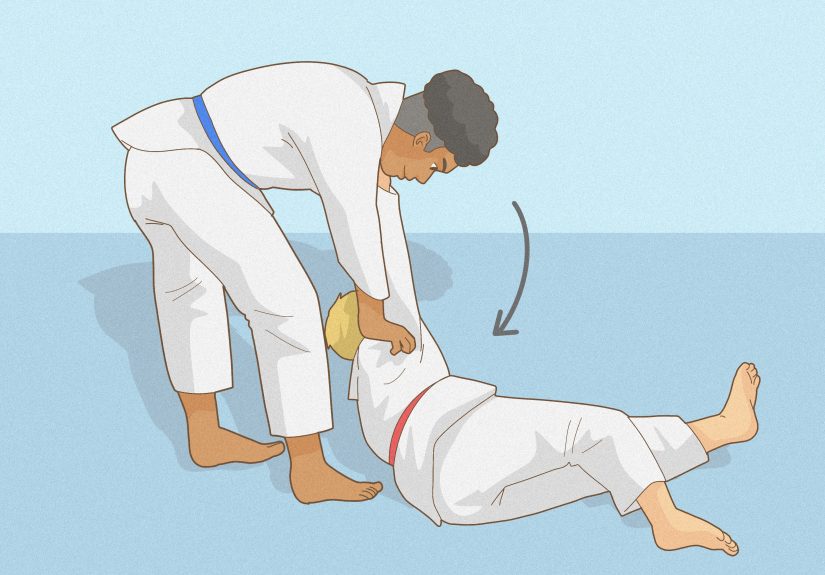
A shoulder “flip” looks like movie magic: one smooth turn, a clean arc, andwhooshyour partner lands safely.
In real life, though, that “whoosh” can become “whoops” fast. Shoulder throws are legitimate techniques in
grappling sports like judo, but they’re also one of the easiest ways to accidentally injure someone if you try them
without training, mats, and consent.
So here’s the deal: this guide is written for safe, supervised practicethink dojo, certified coach,
proper mats, and a partner who agreed to train. If your goal is to win an argument, impress friends on pavement,
or “see if it works,” please choose literally anything else. Your future self (and your partner’s collarbone) will thank you.
Before You Start: The “Don’t Be a Headline” Safety Checklist
1) Consent and context come first
Throws belong in structured training environments. That means:
mutual consent, clear rules, and someone qualified watching. If a person didn’t sign up to practice with you,
don’t practice on themever.
2) The floor matters more than your confidence
A shoulder throw on proper mats is a sport. A shoulder throw on concrete is an emergency-room speedrun.
Training spaces use mat systems designed to absorb shock and reduce injury risk. If you don’t have a safe surface,
you don’t have a safe throw.
3) Size differences, health issues, and “bad vibes” are real factors
Even in a dojo, certain matchups require extra caution: big size gaps, knee/back injuries, neck issues, or a partner who
can’t breakfall confidently. If either person feels unsure, that’s not a challengeit’s a stop sign.
Step 1: Learn to Fall First (Ukemi)
If you take nothing else from this article, take this: breakfalls aren’t a warm-upthey’re the safety system.
In grappling sports, the person being thrown (often called the “receiver”) needs skills to protect their head, neck, and shoulders
during impact. Coaches typically teach falling skills before they allow full throws, because a great throw with a bad fall is still a bad outcome.
What safe falling practice usually includes
- Head protection habits: learning to keep the head from snapping back and making contact with the floor.
- Impact spreading: using the body to distribute force rather than concentrating it on one joint.
- Timing and breathing: staying relaxed enough to move with the fall instead of stiffening up.
A simple “beginner-friendly” way to start
Most classes begin with controlled drills: sitting or kneeling breakfalls, then gradually increasing height and movement.
If you’re self-teaching from videos, you’re skipping the most important featurereal-time correction.
The safest “hack” is boring: learn from a coach.
Step 2: Build the Foundations (Posture, Balance, and Control)
Shoulder throws aren’t about brute strength. They’re about positioning, timing, and balance. In judo terms, you’ll often hear ideas like:
posture, base, and off-balancing. You don’t need to memorize Japanese vocabulary to learn the concept:
if you’re trying to “lift and launch,” you’re doing it the hard way (and usually the unsafe way).
Core skills you’ll practice before the throw
- Stance and movement: staying stable while stepping and turning without crossing feet or collapsing posture.
- Grip etiquette: controlled grips that don’t crank wrists, yank shoulders, or turn training into a tug-of-war.
- Partner communication: a quick “Ready?” and a real “Stop” culture. If your partner says stop, you stopno debate.
Example: the difference between “training” and “messing around”
In a dojo, two beginners might spend a whole class learning how to move together safelyhow to step, turn, and keep balancewithout completing a single throw.
That’s not slow progress. That’s how you keep your shoulders inside your shoulders.
Step 3: Drill the Entry and Positioning (With Supervision)
Here’s where most people get tempted to jump to the “cool part.” Don’t. In structured training, coaches usually separate
the setup from the finish. You learn the motions and spacing first, then you add the throw later, and only after
your partner can fall safely.
What “entry drills” often look like
- Slow-motion reps where you practice turning and aligning your body without loading or dropping your partner.
- Partner-assisted positioning where your coach corrects angles, distance, and posture.
- Stop points: you pause at key moments so your partner stays comfortable and you learn control.
Common beginner mistakes (and what coaches usually say instead)
- Mistake: bending at the waist.
Coach version: “Keep postureuse your legs, not your back.” - Mistake: yanking the arms.
Coach version: “Guide, don’t jerk. Control the movement.” - Mistake: rushing speed.
Coach version: “Slow is smooth, smooth is safe.”
If you’re practicing with friends, the safest “rule” is: don’t invent drills. Join a class where the progression is designed to reduce risk.
USA-based judo organizations and reputable clubs often have structured curricula and safety expectations.
Step 4: Add the Throw Gradually (Rules, Mats, and a Safety-First Mindset)
In proper training, “doing the throw” is the last step, not the first. Your coach will typically have you build up through stages:
cooperative practice, then light resistance, then controlled sparring (often called randori) once both people can protect themselves.
How safe progression is usually managed
- Start cooperative: your partner helps you learn timing and balance rather than fighting every movement.
- Use appropriate surfaces: thick mats, clear space, and no obstacles at the edge.
- Limit repetitions: fatigue makes form sloppy, and sloppy form makes injuries.
- Match skill levels: beginners work with beginners (or with experienced partners who can keep things safe).
When to stop immediately
Stop training and get help if anyone has head impact, neck pain, confusion, dizziness, nausea, severe headache, or “something feels off.”
Those can be signs of a concussion or other serious injury. In organized sports, suspected concussion is a “remove from play” situation,
and returning too soon can make outcomes worse.
If Someone Gets Hurt: A Practical, Calm Response Plan
Accidents can happen even in good gyms. If someone gets injured during training:
- Stop immediately and create space so nobody trips or lands on them.
- Check responsiveness and ask what hurts.
- Don’t move them if there’s any chance of neck/back injuryunless there’s immediate danger (like fire).
- Get a qualified adult/coach and call emergency services if symptoms are severe or worsening.
This is one reason supervised training matters: a good gym has safety protocols, emergency contacts, and people who know what to do.
“Is This Self-Defense?” The Legal-and-Ethical Reality
Shoulder throws are not “safe” because they’re a sport technique. Outside a gym, a throw can cause serious injury and legal consequences.
Self-defense laws vary by state, but the basic concept in many places is that force must be necessary and reasonable in the situation.
Even if you feel threatened, the smartest move is often to create distance, leave, and get help.
This article isn’t legal advice. It’s a reminder that “I saw it online” is not a defense anyone wants to test in court.
FAQ: Shoulder Throws, Training, and Safety
How long does it take to learn a shoulder throw?
Most people can learn the basic movement pattern fairly quickly, but doing it safely and reliably under pressure takes time.
The biggest factor is usually how well you learn breakfalls and controlnot how strong you are.
Can a smaller person throw a bigger person?
In sport grappling, yes, it can happenbecause timing and balance matter a lot. But beginners should be cautious with large size differences.
Safety and control come first.
Is a shoulder throw the same as a hip throw?
They’re cousins, not twins. Both involve turning in and using your body position to move an opponent’s balance, but the mechanics and contact points differ.
A coach can teach the differences safely and help you choose techniques that fit your body type.
What’s the safest way to start?
Join a reputable judo or grappling program that emphasizes fundamentals, breakfalls, and supervised progression.
If a gym skips safety basics or encourages “try it full-speed,” that’s your cue to leave politely and keep your joints intact.
Real-World Training Experiences (An Extra )
If you’ve never trained grappling before, the first surprise is how much of it feels like learning a new languageexcept the alphabet is “feet,”
the grammar is “balance,” and the punctuation is “tap early.” Many beginners walk in thinking they’re there to learn the dramatic shoulder flip,
and walk out realizing the real superpower is falling without panic.
In early classes, people often describe a weird mix of excitement and awkwardness. You’ll practice breakfalls and think,
“I’m basically a human pancake,” and thensomehowyou start to notice tiny improvements. Your head stops snapping back.
You stop holding your breath. You learn that relaxing at the right moment is safer than tensing up like a statue.
That’s when training starts to feel less like chaos and more like a skill.
Another common experience: the moment you realize throws are built on cooperation before they’re built on competition.
A good partner will give you honest movement without trying to “win” practice reps. They’ll help you find the right distance
and timing, and they’ll tell you (nicely) when your grips feel like you’re trying to remove their sleeves with pure anger.
You learn quickly that being a safe training partner is a badge of honor. In many gyms, the most respected person isn’t the one who throws hardest
it’s the one everyone trusts.
People also tend to hit a funny plateau: you can do the motion slowly, but it falls apart when you speed up. That’s normal.
Most coaches respond with the same advice: go back to basics, fix posture, and rebuild the movement smoothly.
It’s a humbling lesson that applies outside the dojo tooprogress often looks like taking a step back so you can move forward without getting hurt.
The best “aha” moment many students report is realizing that a shoulder throw is less about “flipping someone” and more about controlling a
shared center of balance. When your coach demonstrates, it doesn’t look forceful. It looks inevitable. That’s the goal:
not aggression, but precision. And the day you first do a clean, controlled throwwhere your partner lands safely, you stay balanced,
and nobody’s neck makes a sound effectfeels like leveling up in a video game. Except the prize is not a trophy. The prize is that you can keep training tomorrow.
Finally, experienced students often say the biggest benefit isn’t the technique itselfit’s the confidence that comes from structured practice.
You become more aware of space, movement, and risk. You learn to stay calm when things get physical. You also learn boundaries: what’s appropriate,
what’s not, and why martial arts are best used as sports, discipline, and self-controlnot as party tricks or shortcuts in real-world conflicts.
In other words, the “throw” is just one chapter. The real story is learning to be safe, respectful, and skilled.
Conclusion
A shoulder “flip” can be a beautiful techniquewhen it’s learned the right way. The safest path is simple:
learn breakfalls first, build posture and balance, drill the movement under supervision, and only then add controlled throws on proper mats.
If you want the skill, earn it the safe way: with a coach, a structured program, and a partner who trusts you.