Table of Contents >> Show >> Hide
- Why Your Vet Wants a Fecal Sample
- What You Need Before You Start
- How to Get a Fecal Sample from Your Dog in 7 Steps
- Step 1: Call Your Vet if You Need Specific Instructions
- Step 2: Wait for a Fresh Bowel Movement
- Step 3: Put on Gloves and Choose the Cleanest Part of the Stool
- Step 4: Place the Sample in a Clean, Dry, Leak-Proof Container
- Step 5: Label It Clearly
- Step 6: Refrigerate It if You Cannot Leave Right Away
- Step 7: Deliver It Promptly and Share Symptoms with Your Vet
- How Much Stool Do You Need?
- Common Mistakes to Avoid
- When a Stool Sample Is Especially Important
- When to Call the Vet Right Away Instead of Just Dropping Off Poop
- What If You Cannot Get a Sample?
- Final Thoughts
- Real-World Experiences and Practical Lessons from Dog Owners
If there were awards for jobs dog owners never dreamed they would master, collecting a poop sample would be a strong contender. Yet here you are, probably holding a leash in one hand and questioning your life choices with the other. The good news is that getting a fecal sample from your dog is simple, fast, and genuinely useful.
Veterinarians use fecal samples to check for intestinal parasites, blood, bacteria, and other clues that can explain diarrhea, vomiting, weight loss, gas, tummy trouble, or changes in stool. A good sample can help your vet catch problems early and choose the right treatment without turning your appointment into a guessing game. A bad sample, on the other hand, can be contaminated, too old, or too tiny to tell your vet much of anything.
This guide breaks the process down into seven practical steps so you can collect a usable sample without panic, drama, or unnecessary contact with the main ingredient. You will also learn how fresh the sample should be, how to store it, what mistakes to avoid, and when your dog’s stool is waving a bright red veterinary flag.
Why Your Vet Wants a Fecal Sample
A fecal sample is one of the easiest diagnostic tools in veterinary medicine. Your vet may ask for one during a routine wellness exam, a puppy visit, a parasite screening, or an appointment for digestive symptoms. Even dogs that look perfectly healthy can carry intestinal parasites, which is one reason stool testing is often part of preventive care.
Depending on the test, your veterinary team may look for parasite eggs, protozoa such as Giardia, hidden blood, mucus, worms, and other signs of intestinal irritation or disease. Some tests are traditional microscope-based exams, while others use antigen or PCR testing for better detection. That is why a fresh, clean, correctly stored sample matters so much. The quality of the sample affects the quality of the answer.
What You Need Before You Start
- Disposable gloves
- A plastic spoon, scoop, or poop bag
- A clean, dry container with a tight-fitting lid
- A permanent marker for labeling
- A sealable outer bag for transport
Your vet may provide a specimen cup, but if not, a small clean plastic container with a secure lid usually works well. The goal is simple: keep the sample clean, sealed, and easy to identify. This is not the time for improvising with a leaky glove or a mystery container that once held last week’s noodles.
How to Get a Fecal Sample from Your Dog in 7 Steps
Step 1: Call Your Vet if You Need Specific Instructions
Before collecting anything, confirm what your veterinarian wants. Some clinics only need a small amount of stool for a routine parasite check. Others may want a larger sample, especially if your dog has diarrhea or is being tested for more than one condition. If your clinic gave you a collection cup, use that one. When in doubt, ask what size sample they prefer and how soon they want it delivered.
Step 2: Wait for a Fresh Bowel Movement
Fresh is best. A sample collected right after your dog defecates is far more useful than a dried-out surprise discovered hours later in the yard. Most clinics prefer a sample that is less than 24 hours old, and some want it brought in within a few hours when possible. If your dog has an appointment tomorrow, collecting the night before is usually fine as long as you store it properly.
Try taking your dog on a normal walk and let nature do the heavy lifting. That is easier on everyone than trying to engineer the moment like a film director with a very niche project.
Step 3: Put on Gloves and Choose the Cleanest Part of the Stool
Wear disposable gloves. Then use a plastic spoon, scoop, or poop bag to pick up the stool. Aim for a piece that is not touching much grass, dirt, gravel, mulch, or kitty litter. Contamination can interfere with testing and make the sample less helpful.
If the stool is formed, taking a piece from the middle is often the cleanest option. If it is soft or loose, scoop up enough material to give your vet something workable. You do not need a heroic amount. For most routine testing, about a one-inch piece or a few grams is enough, though watery stool may require more.
Step 4: Place the Sample in a Clean, Dry, Leak-Proof Container
Transfer the stool into a clean container with a snug lid. A veterinary specimen cup is ideal, but another clean, dry plastic container can work in a pinch. The key words are clean, dry, and tightly sealed. A sample slumped into a loose bag or wrapped in tissue is much more likely to leak, dry out, or become contaminated.
If you are using a poop bag first, that is fine for pickup, but place the actual sample into a sturdier sealed container for transport whenever possible. Your future self, your car, and your vet’s receptionist will all appreciate this decision.
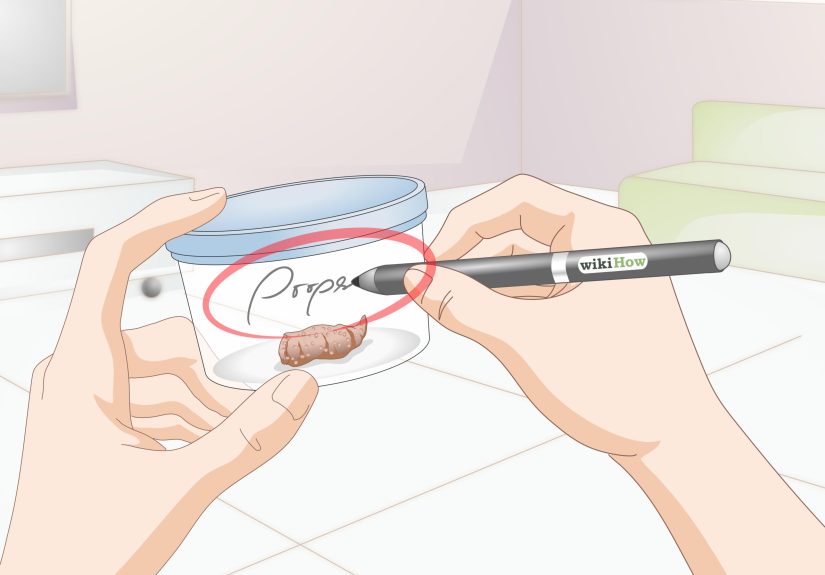
Step 5: Label It Clearly
Write your dog’s name, your name, and the date and time collected on the lid or container. This step sounds boring, but veterinary clinics handle many samples. A clearly labeled container prevents mix-ups and saves time when your appointment starts.
If you have more than one dog, labeling becomes especially important. “Brown dog, maybe Max, probably this morning” is not the gold standard of specimen identification.
Step 6: Refrigerate It if You Cannot Leave Right Away
If you cannot bring the sample to the clinic immediately, refrigerate it. Do not freeze it unless your vet specifically tells you to do so. Refrigeration helps keep the sample fresh and slows changes that can affect test results. Many clinics accept samples that have been refrigerated for up to 24 hours, but sooner is better.
Place the sealed container inside another bag before putting it in the refrigerator, and keep it away from food. Yes, that sentence has the power to humble even the most confident dog owner. Once the sample is delivered, clean and disinfect the storage area.
Step 7: Deliver It Promptly and Share Symptoms with Your Vet
Bring the sample to your veterinarian as soon as you can. When you drop it off, mention why the sample was collected. Has your dog had diarrhea, mucus, worms, vomiting, weight loss, scooting, poor appetite, or a sudden change in stool color or consistency? Those details matter. A fecal sample is most useful when paired with the story behind it.
If your dog has symptoms but you cannot collect a sample, do not cancel the visit. Your veterinary team may be able to collect one directly during the appointment.
How Much Stool Do You Need?
For many routine fecal tests, a small sample is enough. A one-inch piece of formed stool is commonly acceptable. In practical terms, think “small but useful,” not “entire backyard evidence archive.” If the stool is soft, liquid, or mixed with mucus, your vet may want a bit more material so the lab has enough to work with.
When clinics or diagnostic labs give more exact measurements, they often ask for a few grams of feces. Unless your vet says otherwise, collecting a modest sample from the freshest, cleanest part of the stool is the safest approach.
Common Mistakes to Avoid
- Using an old sample: A sample that has been sitting outside too long may not give accurate results.
- Collecting contaminated stool: Grass, gravel, soil, litter, or debris can interfere with testing.
- Bringing too little: Tiny traces may not be enough, especially for loose stool.
- Using a poorly sealed container: Leaks are messy and can ruin the sample.
- Skipping refrigeration: If there is a delay, room-temperature storage is not ideal.
- Forgetting to label it: Especially risky in multi-dog households.
- Touching stool with bare hands: Some parasites can affect people too.
The big idea is simple: fresh, clean, sealed, labeled, and delivered promptly. That is the winning formula.
When a Stool Sample Is Especially Important
You should make an extra effort to bring in a sample if your dog has diarrhea, visible worms, blood in the stool, mucus, vomiting, weight loss, decreased appetite, scooting, or repeated digestive upset. Puppies also need regular fecal checks because they are more likely to pick up intestinal parasites and may not always look obviously sick at first.
Routine testing matters even for adult dogs that seem fine. Dogs can carry parasites without dramatic symptoms, and some intestinal parasites can spread to people. That is one more reason your veterinarian may ask for stool checks during wellness care, not just when your dog has a rough day in the digestive department.
When to Call the Vet Right Away Instead of Just Dropping Off Poop
A fecal sample is helpful, but it is not a substitute for urgent care when your dog is seriously ill. Contact your veterinarian promptly if your dog has repeated vomiting, severe lethargy, a swollen belly, black or tarry stool, large amounts of blood, dehydration, refusal to eat, signs of pain, or diarrhea that is frequent and persistent. The same goes for very young puppies, seniors, and dogs with chronic medical problems.
In those cases, your dog may need a physical exam, fluids, bloodwork, imaging, or additional testing beyond a stool check. In other words, bring the poop, yes, but bring the dog too.
What If You Cannot Get a Sample?
Sometimes your dog decides this is the exact day they will become a private artist who refuses to perform on command. If that happens, still go to the appointment. Veterinary teams can sometimes collect a sample directly from the rectum or recommend a return plan. Do not delay care just because the sample collection failed.
If your dog has diarrhea and you can only collect a messy sample, bring what you can in a sealed container. Even imperfect stool can still offer useful clues when paired with your dog’s symptoms and exam findings.
Final Thoughts
Collecting a fecal sample from your dog is not glamorous, but it is one of the easiest ways to help your veterinarian get useful information fast. The process boils down to timing, cleanliness, and storage. Get a fresh sample, avoid contamination, seal it well, refrigerate it if needed, and deliver it promptly.
Once you know the routine, the whole thing becomes far less intimidating. It turns from “I cannot believe I am doing this” into “I am a responsible pet owner with a bag, a plan, and unexpectedly strong opinions about specimen containers.” That, frankly, is growth.
Real-World Experiences and Practical Lessons from Dog Owners
One of the most common experiences dog owners describe is realizing too late that “I’ll grab it later” is not a great stool collection strategy. A sample that seems fine at first can dry out, get contaminated with yard debris, or become less useful by the time it reaches the clinic. Owners who have gone through this once usually become fast converts to the fresh-sample method. The next time their dog squats, they are suddenly more organized than a lab technician on coffee.
Another common situation happens with dogs that only poop on walks. Owners often discover that the easiest routine is to leave the house prepared. Gloves, a poop bag, and a small sealed container can live near the leash so there is no scramble when the moment arrives. This simple habit turns a mildly chaotic task into a smooth one. It also prevents the classic mistake of collecting the sample in a poop bag and then realizing there is nowhere secure to put it afterward.
Multi-dog households learn their own memorable lesson: label everything immediately. Without labels, people can become strangely optimistic about their ability to remember which dog produced which sample. That confidence usually disappears the moment two containers are sitting on the same counter. Owners with more than one dog often say labeling right away saves confusion and gives the vet more reliable information.
Owners of puppies often report that fecal testing becomes part of normal life much faster than expected. Puppies explore the world with their noses and mouths, which is a polite way of saying they make questionable decisions outdoors. Because of that, routine stool checks feel less like overreacting and more like practical puppy management. People are often surprised to learn that a puppy can have parasites even when acting playful, hungry, and otherwise normal.
Then there is the diarrhea scenario, which has its own special level of difficulty. Many owners assume a loose sample is not worth bringing in because it looks messy or hard to handle. In reality, that is often exactly the kind of sample your veterinarian wants evaluated. People who have dealt with this usually recommend using a plastic spoon or scoop and focusing on getting enough material into a sealed container, rather than trying to make the sample look tidy. Stool does not need to win a beauty contest to be diagnostically useful.
Some owners also share that the biggest improvement came from calling the clinic first. That quick conversation answers practical questions like how much stool to bring, whether refrigeration is okay overnight, and whether the dog still needs an exam if no sample can be collected. A 30-second phone call often prevents wasted time and a second trip.
The overall lesson from real-life experience is reassuring: most people feel awkward the first time, but it gets easier almost immediately. Once you know the rhythm, it becomes another normal part of caring for your dog, right up there with flea prevention, nail trims, and pretending not to notice when your dog is choosing the muddiest possible patch of grass for important business.