Table of Contents >> Show >> Hide
- What Bagworms Are (and Why They’re a Big Deal)
- How to Spot Bagworms Before They Spot You
- Bagworm Life Cycle: Timing Is Everything
- Step-by-Step Action Plan: Get Rid of Bagworms (Without Losing Your Mind)
- Spray Options: From “Soft” to “Stronger” (Pick What Fits Your Situation)
- Option A: Bt (Bacillus thuringiensis kurstaki) for young larvae
- Option B: Spinosad for a slightly wider timing window
- Option C: Neem/azadirachtin and other “softer” products (mixed results)
- Option D: Broad-spectrum insecticides (when timing is late or pressure is high)
- Option E: Systemic options (special case, not always necessary)
- A Simple Bagworm Calendar (So You Don’t Have to Guess)
- How to Prevent Bagworms Next Year
- FAQ: Quick Answers to Common Bagworm Questions
- Field Notes: Real-World Experiences & Lessons (About )
- 1) The most successful bagworm plan is boringand that’s a compliment
- 2) Bagworms are masters of camouflage when they’re small
- 3) Hand-picking feels slow until you compare it to “doing nothing”
- 4) Spray timing matters more than brand loyalty
- 5) Coverage is the hidden difference between “worked” and “didn’t work”
- 6) Bagworms love stressed plantsand stressed owners
- Conclusion
Bagworms are the ultimate tiny-house enthusiasts: they build a portable condo out of your plant, live in it,
snack on the neighborhood, and then leave the mess for you to explain to your once-proud arborvitae.
The good news? You can absolutely beat themwithout turning your yard into a chemistry lab or a full-time job.
This guide walks you through identification, perfect timing, and proven control options (from hand-picking to
targeted sprays), plus prevention tips so bagworms don’t RSVP again next season.
What Bagworms Are (and Why They’re a Big Deal)
Bagworms are caterpillars (the larval stage of a moth) that protect themselves by building a “bag” made of silk
and bits of the plant they’re eating. Think of it as camouflage plus armor… plus a lunchbox made from your hedge.
They’re common on evergreensespecially arborvitae (Thuja), juniper, cedar, pine, and sprucebut they can also
show up on many deciduous trees and shrubs.
Why the drama? Because on evergreens, bagworms can cause permanent damage. A heavy infestation can thin the canopy,
brown out branches, and sometimes kill the plant outrightespecially if the plant is already stressed by drought,
transplant shock, or other pests.
The sneaky part is that early damage is easy to miss. By the time you notice big, hanging bags in late summer,
bagworms may have already done their best work (which is… not a compliment).
How to Spot Bagworms Before They Spot You
What the “bags” look like
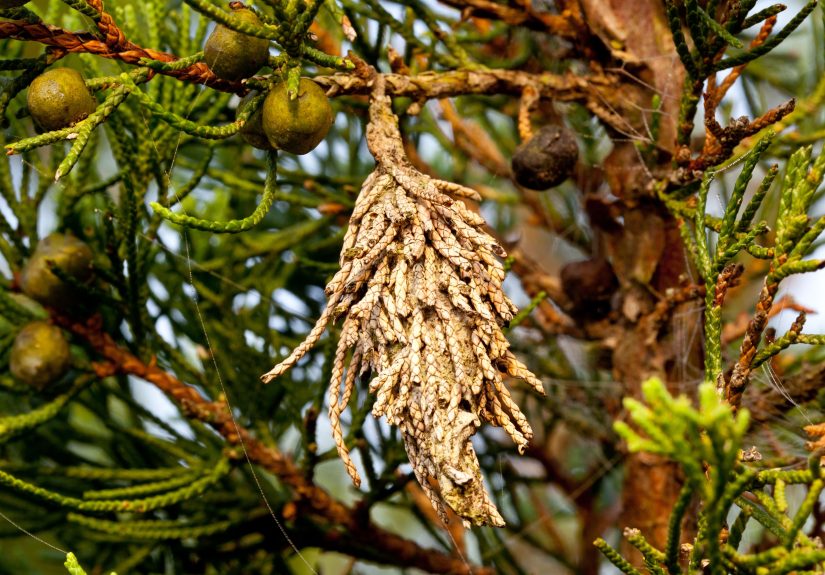
Bagworms look like small, dangling, cone-shaped casesoften resembling tiny pinecones or clumps of dead needles.
Early in the season, the bags are very small and blend in because they’re made from fresh plant material.
As the caterpillar grows, the bag gets bigger (often reaching about 1–2 inches by late summer).
Where to check first
- Arborvitae and juniper: top suspects for bagworm feasts.
- Spruce and pine: also common hosts, especially in landscapes with prior infestations.
- Plants that had bagworms last year: bagworms are creatures of habit.
- Sunny outer foliage: many infestations start on the outside where new growth is easy to reach.
Fast confirmation test
Gently pinch a suspicious bag (with gloves if you’re squeamish). In season, it may feel firm and “alive,” and
you might see the caterpillar partially emerge when disturbed. In fall/winter, old bags often still contain eggs
so don’t assume “inactive” means “harmless.”
Pro tip: A bagworm bag is usually attached to a twig with tough silk. If it looks like debris
that fell into the branches, it may be something else. If it’s anchored like it pays rent there, be suspicious.
Bagworm Life Cycle: Timing Is Everything
Bagworm control is mostly a timing game. Treat too early and you waste effort (and product). Treat too late and
the bag is basically a tiny bunker. Here’s the quick, practical version:
1) Eggs overwinter in old bags
Female bagworms lay a large number of eggs inside their bag near the end of the season. Those eggs stay protected
inside the bag through winter. This is why winter bag removal can be incredibly effective: you’re eliminating next
year’s infestation before it hatches.
2) Hatch happens in late spring / early summer (varies by region)
In many U.S. regions, eggs hatch roughly late May through early to mid-June (weather-dependent). Newly hatched larvae
are tiny, and they immediately start feeding and building small bags. They can also disperse by “ballooning” on silk
threads, which is a fancy way of saying: they can take the wind and move in with your neighbors’ plants (or vice versa).
3) Summer feeding and bag growth
Larvae feed through summer, enlarging their bags. Early on, they’re easier to kill with softer, targeted products.
Later, they’re bigger, better protected, and more stubborn.
4) Late summer: bags attach and pupation begins
Toward late summer, mature bagworms attach their bags more permanently to twigs and pupate. Once they’re closed up
and attached, spray control becomes much less effective. At that stage, removal is often the best move.
Bottom line: The best “spray window” is soon after egg hatch when larvae and bags are still small. The best
“no-spray” control is removing bags during fall, winter, or early spring before hatch.
Step-by-Step Action Plan: Get Rid of Bagworms (Without Losing Your Mind)
Step 1: Decide if you can hand-pick (often the fastest win)
If the plant is reachable and the infestation isn’t “every branch has a bag,” hand-picking is your best friend.
It’s immediate, chemical-free, and oddly satisfyinglike popping bubble wrap, but for plant people.
- Wear gloves.
- Pull or snip bags off branches (they’re usually attached with strong silk).
- Destroy the bags (don’t toss them on the ground). Seal in a trash bag, crush them, or drop them in soapy water.
Important: Bags left on the ground can still hatch later and crawl right back to your plants.
Think of it like taking out the trash… and then storing it next to your kitchen door.
Step 2: Prune strategically (especially on evergreens)
If bagworms are concentrated on certain branch tips, pruning can remove a large chunk of the problem quickly.
On arborvitae and juniper, don’t over-prune into bare wood (many evergreens don’t regrow well from old, leafless stems).
Take a conservative approach: remove heavily infested tips and follow up with monitoring.
Step 3: If you’re going to spray, time it like a pro
Sprays work best right after eggs hatchwhen larvae are small and actively feeding. If you wait until mid-to-late summer,
the bags are larger, tougher, and sometimes closed while the caterpillar molts or pupates.
How do you nail the timing?
- Inspect plants frequently in late spring/early summer, especially plants that had bagworms last year.
- Look for tiny new bags that appear “fresh” because they’re made from the plant’s current foliage.
- Use local cues: in some areas, bloom timing of certain landscape plants can line up with egg hatch.
Step 4: Coverage matters more than your hopes and dreams
Whatever product you use, it must reach the foliage where bagworms are feeding. Bagworms die when they ingest treated foliage
(and some products also work on contact). Skipping coverage is like putting sunscreen on one shoulder and calling it a beach day.
- Spray thoroughlyouter and inner foliage.
- Focus on the infested sections (but don’t ignore adjacent branches).
- Re-check in about two weeks; if you still see active bagworms, you may need a follow-up treatment per label directions.
Step 5: For tall trees or big infestations, call in a pro
If the canopy is tall, the infestation is severe, or you need specialized equipment for coverage, hiring an ISA-certified arborist
is often safer and more effective than turning your weekend into “DIY Ladder Olympics.”
Spray Options: From “Soft” to “Stronger” (Pick What Fits Your Situation)
There’s no single best bagworm spray. The best choice depends on timing, bagworm size, plant type, and your comfort level.
Always read the product label to confirm the plant and pest are listed, and follow safety instructions.
Option A: Bt (Bacillus thuringiensis kurstaki) for young larvae
Bt (often sold as products labeled for caterpillars) is a targeted biological insecticide that affects caterpillars when they
eat treated foliage. It’s most effective when bagworms are smallearly in the season. If bags are already large,
Bt tends to be less effective.
- Best for: early hatch window; small larvae; gardeners aiming for a more targeted approach.
- Watch-outs: needs ingestion; may require repeat applications (especially after rain or heavy sun).
Option B: Spinosad for a slightly wider timing window
Spinosad is commonly used against caterpillars and can be more effective than Bt once larvae are a bit larger.
It still performs best when bagworms are actively feeding and not fully sheltered.
- Best for: early-to-mid season when you’re not perfectly timed but still reasonably close.
- Watch-outs: can affect some beneficial insects if misusedapply carefully and follow label precautions.
Option C: Neem/azadirachtin and other “softer” products (mixed results)
Some gardeners use neem-based products or insecticidal soaps as part of an integrated approach. These may help when bagworms are very small
and coverage is excellent, but they are not a magic wandespecially later in the season when bags are larger.
- Best for: light infestations; very early stages; combined with hand-picking.
- Watch-outs: inconsistent results; requires great timing and repeat monitoring.
Option D: Broad-spectrum insecticides (when timing is late or pressure is high)
When bagworms are larger and Bt/spinosad are less effective, some labeled broad-spectrum products may be used (examples often include
certain pyrethroids or carbaryl-based options, depending on what’s available and labeled in your state).
These can work, but they also tend to impact a wider range of insectsso they’re best used thoughtfully and as a last step, not the first instinct.
- Best for: heavier infestations; older larvae; situations where plant loss is a real risk.
- Watch-outs: greater non-target impact; strict label compliance is critical.
Option E: Systemic options (special case, not always necessary)
In some situationsespecially on small evergreen shrubssystemic treatments (applied to soil or trunk according to label directions)
may be used ahead of hatch so the active ingredient is in the foliage when larvae begin feeding. This is more technical, varies by product,
and is not automatically “better.” It’s simply another tool for specific cases.
Good rule: If you can hand-pick, do that first. If you can’t, spray early. If you’re late, remove bags anyway and focus on prevention.
A Simple Bagworm Calendar (So You Don’t Have to Guess)
Fall to early spring (best time for no-spray control)
- Scout evergreens for hanging bags.
- Hand-pick and destroy bags (trash, soapy water, sealed baganything except “decorate the ground”).
- Plan ahead: note which plants were hit hardest.
Late spring to early summer (prime spray window)
- Inspect plants weeklytiny new bags mean hatch has started.
- Use targeted products (like Bt) when larvae are small, if you’re spraying.
- Re-check after about two weeks; repeat only if needed and allowed by label.
Mid-to-late summer (hard mode)
- If bags are large and numerous, hand removal is often the most effective immediate move.
- If spraying, understand that effectiveness may drop as larvae mature and bags toughen.
- Prioritize plant health: water during drought, avoid extra stress, and prevent secondary issues.
How to Prevent Bagworms Next Year
1) Make winter bag removal a habit
This is the single most reliable prevention tactic for most homeowners: remove bags before eggs hatch. If you do only one thing,
do this. Put a reminder on your phone if you must. Bagworms don’t take hints, but they do take consequences.
2) Monitor “repeat offender” plants
If you had bagworms last year, inspect those plants first in late spring. Early detection turns a big problem into a small errand.
3) Reduce plant stress
Stressed evergreens are more likely to suffer serious damage. Water during dry stretches, mulch appropriately, and avoid heavy pruning
or excess fertilizer when plants are already struggling.
4) Be careful with new plants
Bagworms can hitchhike in on infested nursery stock. Before planting new arborvitae, juniper, or other favorites, give them a quick inspection.
One hidden bag today can become hundreds of tiny roommates next year.
5) Use integrated pest management (IPM), not panic management
IPM simply means using the least disruptive method that will still get the job done: start with monitoring and mechanical removal, then choose
targeted treatments if necessary, and reserve broad-spectrum options for true emergencies.
FAQ: Quick Answers to Common Bagworm Questions
Will bagworms kill my arborvitae?
They can. Evergreens don’t always bounce back from heavy defoliation, especially if damage is repeated year after year.
Catching infestations early and removing bags in the off-season makes a huge difference.
Can I just leave the bags and spray later?
You can spray later, but results are usually weaker once bags are larger and the caterpillars are more protected. Late-season control often shifts
toward hand removal and prevention for next year.
Should I compost the bags?
It’s safer not to. Compost piles may not reliably destroy eggs. Bagworms are experts at surviving your good intentions.
Trash (sealed) or destruction is a better bet.
Do birds or beneficial insects help?
Yes, natural enemies exist (including tiny parasitic wasps), but they rarely eliminate a serious infestation on their own. Your best strategy is still
removing bags and timing control efforts correctly.
How often should I inspect?
If you’ve had bagworms before, check weekly during the hatch window. Otherwise, a few inspections per seasonplus winter bag removalusually keeps
things manageable.
Field Notes: Real-World Experiences & Lessons (About )
Here’s what gardeners and homeowners commonly learn the hard way about bagworm controlso you don’t have to pay tuition in dead arborvitae.
These aren’t “secret hacks.” They’re the practical patterns that show up again and again in real yards with real schedules and real weather.
1) The most successful bagworm plan is boringand that’s a compliment
People who “win” against bagworms usually aren’t doing anything fancy. They remove bags during fall/winter, then watch closely in late spring.
That’s it. No dramatic midnight spraying. No complicated potion recipes. Just consistent timing. Bagworms thrive when we forget. They struggle
when we’re annoyingly predictable.
2) Bagworms are masters of camouflage when they’re small
Early-season bags can look like normal foliage textureespecially on dense evergreens. Gardeners often report that once they finally spot the first
tiny moving “speck,” they suddenly see them everywhere. That’s not paranoia; it’s pattern recognition kicking in. A good trick is to look for
fresh-looking bits on a tiny bag that don’t quite match the surrounding needleslike a bad hairpiece on a caterpillar.
3) Hand-picking feels slow until you compare it to “doing nothing”
Many people hesitate because removing bags one by one sounds tedious. Then late summer hits, bags multiply, and the plant starts browning out.
Suddenly, hand-picking doesn’t look tediousit looks like the fastest option left. Even partial removal helps. If you can’t reach the whole plant,
pulling off what you can still reduces the population and lowers next year’s pressure.
4) Spray timing matters more than brand loyalty
In real-life scenarios, the “best” product often fails because it was applied too early or too late. Homeowners commonly report wasting a spray
application when they treat on a nice weekend in Aprilbefore hatchbecause it feels proactive. Unfortunately, bagworms don’t care about your weekend.
They care about biology. A better approach is to monitor for tiny new bags and treat only when you confirm active larvae. It feels less heroic, but it
works more often.
5) Coverage is the hidden difference between “worked” and “didn’t work”
Two neighbors can use the same product and get different results because one sprayed the outside of the shrub like misting perfume, and the other
actually saturated the feeding zones. Bagworms aren’t hovering in midair waiting to be hitthey’re tucked into foliage. People who succeed usually
slow down, aim carefully, and cover the plant thoroughly (again: label directions always).
6) Bagworms love stressed plantsand stressed owners
Drought-stressed evergreens tend to show damage faster and recover slower. A common “aha” moment is realizing that watering and mulching are part of
pest management. If a plant is already struggling, even a moderate bagworm population can cause noticeable browning. Supporting plant health won’t
eliminate bagworms, but it can prevent a manageable issue from becoming a plant funeral.
If you take one lesson from all of this, make it simple: remove old bags in the off-season, then monitor closely during hatch. Bagworms aren’t
unbeatable. They’re just counting on you to be busy.
Conclusion
Getting rid of bagworms comes down to three moves: remove old bags (especially fall through early spring),
monitor during hatch (late spring to early summer), and treat early if you need to spray.
Hand-picking is often the fastest and most reliable solution for homeowners, while targeted sprays like Bt or spinosad can be highly effective
when timed correctly and applied with thorough coverage. And if the infestation is high or the plant is tall, professional help is often the safest shortcut.
Bagworms may be crafty, but they’re not complicated. You don’t need luckyou need timing.