Table of Contents >> Show >> Hide
- What Is Queen Anne’s Lace?
- Before You Plant It: A Quick Reality Check
- Best Growing Conditions for Queen Anne’s Lace
- How to Plant Queen Anne’s Lace
- How to Care for Queen Anne’s Lace Through the Seasons
- Common Problems and Smart Solutions
- Why Gardeners Still Love It
- Should You Grow Queen Anne’s Lace?
- Real-World Experiences Growing Queen Anne’s Lace
- Conclusion
- SEO Tags
If you have ever driven past a sunny field in summer and thought, “Well, that looks like a lace doily escaped into the countryside,” you were probably admiring Queen Anne’s lace. Also known as wild carrot or Daucus carota, this airy white bloomer has a talent for looking delicate while behaving like a plant that absolutely did not come to play. It is charming, useful to pollinators, wonderfully old-fashioned in bouquets, and surprisingly tough. It is also, depending on where you live, a bit of a garden gate-crasher.
That is the first thing to know before learning how to grow and care for Queen Anne’s lace: this plant does not need coddling. In fact, the real trick is often managing it, not pampering it. Give it the right site, sow it sensibly, and keep an eye on its seed heads, and you can enjoy its soft, frothy flowers without accidentally creating your own tiny roadside meadow where one was not requested.
This guide covers what Queen Anne’s lace is, where it grows best, how to plant it from seed, what kind of care it actually needs, and how to enjoy its beauty while staying smart about its weedy side. Think of it as a practical field guide with better manners.
What Is Queen Anne’s Lace?
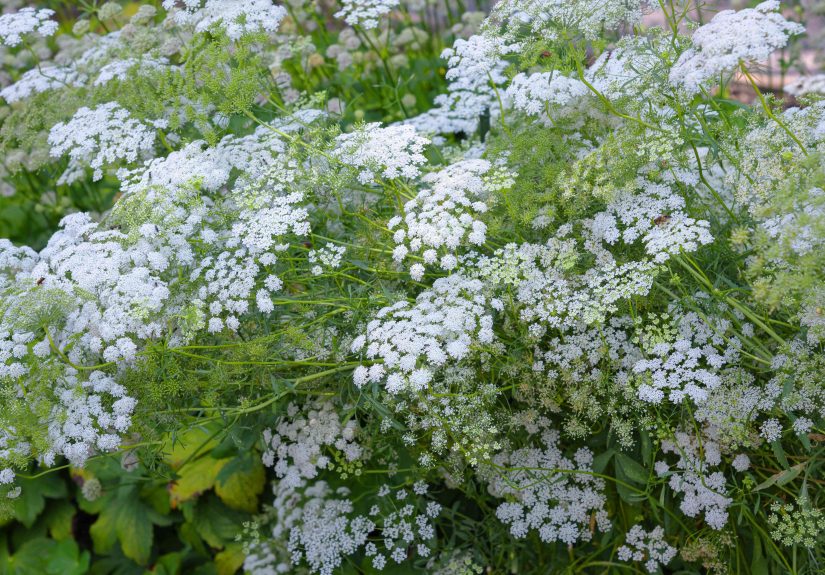
Queen Anne’s lace is a biennial flowering plant in the carrot family. In plain English, that means it usually spends its first year making a low rosette of ferny leaves close to the ground, then shoots up in its second year to bloom, set seed, and finish its life cycle. The flowers are flat to slightly domed clusters of tiny white florets, often with a single dark purple or reddish flower in the center. When the seeds mature, the flower head curls inward into a little cup or “bird’s nest” shape that gives the plant another common nickname.
It is closely related to the garden carrot and has the same unmistakable carrot-family look: lacy foliage, umbrella-shaped flower clusters, and a taproot with a carrot-like scent when crushed. That family resemblance is charming in the garden and less charming when people start confusing it with toxic relatives. More on that in a minute, because plant identification is not the place to get creative.
Before You Plant It: A Quick Reality Check
Queen Anne’s lace is lovely, but it is not always the best-behaved choice. In many areas of the United States, it has naturalized so thoroughly that it is considered weedy, and in some places it is treated as invasive or noxious. That does not mean every gardener in every state must avoid it. It does mean you should check local extension guidance and state invasive plant lists before sowing seed on purpose.
If your region already has plenty of Queen Anne’s lace along roadsides, fields, and disturbed ground, you may not need to add more. On the other hand, if you are gardening in a contained cutting patch, a wild-style border, or a managed meadow where self-seeding is acceptable and allowed, it can be a beautiful textural plant. The key is growing it with intention instead of acting surprised when it behaves exactly like a prolific wildflower.
In other words, Queen Anne’s lace is the cottage-garden version of a houseguest who arrives with flowers and somehow ends up staying through three seasons.
Best Growing Conditions for Queen Anne’s Lace
Light
Queen Anne’s lace grows best in full sun. It can tolerate light shade or partial shade, but the strongest stems and best flower production usually happen where it gets plenty of direct light. If you tuck it into a crowded border with too much competition and too little sun, it may grow lanky or flower less generously.
Soil
This plant is not a soil snob. One reason it has spread so widely is that it adapts to a broad range of soil types and pH levels. It performs especially well in lean, well-drained soil and is commonly found in dry or moderately dry sites such as roadsides, meadows, field edges, and other open areas. Rich, heavily amended beds are not necessary. In fact, overly fertile conditions can encourage too much floppy green growth and make the plant feel a little too comfortable.
If your soil drains well and is not constantly soggy, Queen Anne’s lace will probably be content. Wet, heavy ground is a less appealing match. Think open, sunny, and a little rough around the edges rather than lush, pampered, and fussy.
Water
Once established in the right setting, Queen Anne’s lace is not especially demanding. Keep the soil lightly moist during germination and while seedlings are getting established. After that, it typically needs far less attention than thirstier ornamentals. In average garden conditions, natural rainfall may be enough unless you are dealing with a prolonged dry spell.
The biggest mistake is not underwatering. It is treating this plant as though it were a needy annual that requires constant babying. It is not. Queen Anne’s lace tends to succeed precisely because it can handle a more hands-off routine.
Fertilizer
Skip the gourmet plant buffet. Queen Anne’s lace rarely needs fertilizer in ordinary garden soil. Too much feeding can push excess foliage at the expense of structure. If your soil is truly poor and you are trying to establish seedlings, a very light application of compost is fine, but heavy fertilizing is usually unnecessary.
How to Plant Queen Anne’s Lace
Start with Seeds, Not Transplants
The simplest way to grow Queen Anne’s lace is by direct sowing seed where you want it to grow. Because the plant develops a taproot, it is much happier starting in place than being moved around once established. If you have ever tried relocating a taprooted plant and received a dramatic performance in return, you already know the general vibe.
When to Sow
In most climates, sow seed in early spring after the ground can be worked, or in fall so the seeds settle in naturally and sprout when conditions are right. Since Queen Anne’s lace often germinates over an extended period in nature, it is not overly fussy about timing as long as the site is suitable and the seed has soil contact.
Because it is usually a biennial, do not panic if you only get leafy growth the first season. That is the plan. Flowers typically show up in the second year, after which the plant sets seed and dies. If you allow some seed to mature each year, you can create a rolling display that looks perennial even though individual plants are not.
How to Sow
Scatter the seed on prepared soil and press it in lightly. A thin dusting of soil is enough. Water gently so you do not wash the seed into next Tuesday. Once seedlings appear, thin them so air can move between plants. Crowded seedlings can become a tangled mess, and while Queen Anne’s lace enjoys looking wild, there is a difference between “naturalistic” and “botanical traffic jam.”
For a more deliberate look, sow in drifts rather than straight lines. This plant shines when it appears to have landed there by good luck and excellent styling.
How to Care for Queen Anne’s Lace Through the Seasons
First Year Care
During the first year, expect a basal rosette of finely cut leaves close to the ground. Keep the area weeded so the young plants are not smothered. Water during extended dry periods if seedlings are struggling, but otherwise do not overmanage them. This first-year stage is about root development and energy storage, not floral fireworks.
Second Year Care
In the second year, flower stalks rise quickly and can reach roughly 1 to 4 feet depending on conditions. At this point, care is mostly about observation and control. Enjoy the bloom show, cut some stems for arrangements if you like, and decide early whether you want seeds to mature.
If you want a self-sowing patch, leave some flower heads in place to dry and curl into their bird’s nest form. If you do not want volunteers popping up like confetti with ambitions, deadhead the flowers before the seed heads fully dry and disperse.
Pruning and Deadheading
Deadheading is the main maintenance job for Queen Anne’s lace. There is no elaborate pruning schedule, no complicated shaping strategy, and no need to have a deep conversation with your secateurs. Just remove spent blooms before they go to seed if you want to control spread. If you are growing it mainly for cut flowers, that routine becomes even easier because harvesting stems naturally limits some reseeding.
Common Problems and Smart Solutions
Problem: It Spreads More Than You Expected
Solution: Cut off developing seed heads before they dry and scatter. Pull or dig first-year rosettes while they are still manageable. This is easiest when plants are young; older plants develop a long taproot that makes removal more annoying than anyone asked for.
Problem: Skin Irritation After Handling
Solution: Wear gloves and long sleeves if you are sensitive or handling a lot of fresh foliage. Some people experience contact dermatitis or a light-triggered skin reaction after sap exposure. Wash exposed skin after working with the plant, especially before spending time in strong sun.
Problem: Confusing It with Poison Hemlock
Solution: Never rely on the flowers alone for identification. Queen Anne’s lace is usually shorter, hairier, and more delicate looking. Poison hemlock is much taller, smoother, and known for purple blotches on its stems. If you are uncertain, do not harvest, handle closely, or move the plant until you have identified it correctly. This is a marvelous moment to choose caution over confidence.
Problem: It Looks Tired in a Fancy Border
Solution: Move the design, not the plant. Queen Anne’s lace looks best in informal settings: meadows, cottage-style plantings, cutting gardens, field-edge designs, or naturalized spaces where its airy structure can weave through neighboring plants. In a formal bed with tightly groomed companions, it may look like it showed up underdressed.
Why Gardeners Still Love It
For all the warnings, Queen Anne’s lace remains popular for good reason. The flowers are beautiful in a loose, old-fashioned way. They pair well with grasses, black-eyed Susans, echinacea, cosmos, and other informal bloomers. The umbels attract bees, butterflies, and beneficial insects, which gives the plant value beyond looks. And in arrangements, it adds that elusive “soft cloud” effect florists and home gardeners love.
It is also one of those plants that teaches a useful gardening lesson: not every pretty flower is a plant you should scatter with abandon. Good gardening is not only about what thrives. It is about what belongs, what behaves, and what fits your space responsibly.
Should You Grow Queen Anne’s Lace?
Grow Queen Anne’s lace if you have checked local guidance, have room for a naturalistic planting, appreciate self-sowers, and do not mind doing a little seed-head management. Skip it if your area treats it as invasive, your garden is small and formal, or you want something airy without the risk of spread.
If you love the look but want a more regionally appropriate option, ask your local extension office or native plant nursery for an umbel-flowered native alternative suited to your state. That way you get the lace effect without creating extra work for yourself or extra pressure on local ecosystems.
In the right place, Queen Anne’s lace is elegant, easygoing, and pollinator-friendly. In the wrong place, it is the botanical equivalent of glitter: pretty at first, then suddenly everywhere.
Real-World Experiences Growing Queen Anne’s Lace
Gardeners who grow Queen Anne’s lace often describe the same strange combination of delight and mild suspicion. The delight comes first. The seedlings are neat little rosettes with feathery leaves that hint at carrots, and by the second year the flower stalks rise with a kind of effortless grace. Then the first umbels open, and suddenly the planting looks softer, lighter, and more romantic. Even a rough corner of the yard can start to look like it belongs on a postcard from a farmhouse that definitely has better pie than the average household.
One of the most common experiences is discovering how beautifully Queen Anne’s lace mixes with other sunny plants. It threads through summer borders and meadows without creating heavy blocks of color. Instead, it adds movement and air. Gardeners often find that bold flowers such as coneflowers, bee balm, blanket flower, rudbeckia, or zinnias look less stiff when Queen Anne’s lace is nearby. It works almost like a visual exhale. Everything around it seems more relaxed.
Another frequent experience is realizing that this plant needs almost no emotional support. In lean soil, open sun, and ordinary weather, it tends to hold its own. Many gardeners say it performs best when they stop trying so hard. The more they fuss, enrich, and water, the less naturally it behaves. In a simple, well-drained site, it settles in and does its thing with a level of confidence that is both inspiring and slightly insulting to fussier flowers.
Cut-flower gardeners also tend to appreciate it, especially for casual arrangements. A few stems in a jar can make grocery-store flowers look far more expensive than they are, which is a useful trick and frankly a public service. The blooms add softness around roses, dahlias, cosmos, or even branches with berries. That said, people who cut it regularly also notice how quickly they learn to identify the right stage for harvest: too early and the stems feel underdeveloped, too late and the seed head starts plotting its escape across the property.
Of course, the cautionary experiences are just as memorable. Many gardeners first fall for Queen Anne’s lace in bloom and only later realize how eagerly it reseeds. A patch that looked charming one summer can become a conversation the next. That is usually the moment when deadheading becomes less of a chore and more of a lifestyle choice. Others learn the hard way that plant identification matters. Once you have compared true Queen Anne’s lace with poison hemlock side by side, you never again look at a white umbel casually.
Perhaps the most honest gardening experience with Queen Anne’s lace is this: it rewards people who enjoy a little looseness in the landscape. If you like gardens that feel polished, clipped, and exact, this may not be your forever plant. But if you love a border that drifts, mingles, and catches light like lace in a breeze, Queen Anne’s lace has a way of earning its keep. It is beautiful, useful, and a tiny bit unruly, which, if we are being fair, is also a decent description of many good gardens.
Conclusion
Learning how to grow and care for Queen Anne’s lace is less about mastering a difficult flower and more about understanding its personality. Give it sun, well-drained soil, and a little room, and it will usually do the rest. The real care comes in deciding where it belongs, how much self-seeding you can tolerate, and how responsibly you want to manage it. Treat it as a controlled wild beauty rather than a precious bedding plant, and you will get the best of what it offers: elegant summer texture, pollinator value, and old-fashioned charm with very little fuss.