Table of Contents >> Show >> Hide
- Quick Overview: The Best Way to Harvest and Store Cauliflower
- When to Harvest Cauliflower
- How to Harvest Cauliflower Without Beating It Up
- Post-Harvest Handling: The First Hour Matters
- How to Store Fresh Cauliflower in the Refrigerator
- Freezing Cauliflower (The Best Way to Store It for Months)
- Other Ways to Preserve Cauliflower
- Troubleshooting: Common Harvest and Storage Problems
- Food Safety Notes (Because Nobody Wants a Science Experiment)
- Conclusion: Your Cauliflower Game Plan
- Experience Notes From the Garden (Real-World Lessons)
Cauliflower has a reputation for being a little dramatic. One day it’s a tight, gorgeous head you’re proud to show off.
The next day it’s “ricey,” loosening up, and threatening to bolt into a flower show you did not buy tickets for.
The good news: harvesting and storing cauliflower isn’t hardyou just need good timing, gentle handling, and a plan for
what happens after you cut it.
This complete guide walks you through exactly when to harvest cauliflower, how to cut it so it lasts longer,
and the best ways to store it in the fridge, freezer, and pantry (plus what to do when you miss the perfect window).
If you grew your own, you’ll protect all that effort. If you bought it, you’ll protect your grocery budget. Everyone wins.
Quick Overview: The Best Way to Harvest and Store Cauliflower
- Harvest timing: Pick when the head is firm, smooth, compactusually about 6–8 inches acrossbefore curds separate.
- Harvest method: Use a clean, sharp knife; cut the main stem; leave a “ruffle” of outer leaves to protect the head.
- Immediate handling: Keep it shaded and cool. Don’t let it sit in the sun like it’s on vacation.
- Fridge storage: Store unwashed in the crisper (high humidity) in a loose or perforated bag.
- Freezer storage: For best texture, blanch florets, cool fast, dry well, then freeze.
When to Harvest Cauliflower
Cauliflower is at its peak when the head (also called the “curd”) is tight and dense. The best harvest moment is a window,
not a single magical secondbut it can feel like one if you’ve ever walked out to find your perfect head suddenly turning
into a fuzzy, loosening science project.
Signs Your Cauliflower Is Ready
- Size: Many home-garden varieties are ready around 6–8 inches in diameter (some go larger, but compactness matters more than bragging rights).
- Texture: The head should feel firm and tight, not spongy.
- Surface: Look for a smooth, uniform curd. If you can clearly see individual florets separating, quality is slipping fast.
- Color: White types should still look creamy-white, not yellowing. Colored varieties (purple, green, orange) should be vibrant, not dull.
Don’t Wait Too Long: What “Ricey” Means (and Why It Happens)
“Ricey” cauliflower is what gardeners call a head that turns coarse and grainy, often with visible, separating florets.
It typically happens when the head becomes overmature or the plant experiences stress (especially heat swings).
You can still eat it, but the texture is less tender and the flavor can be stronger.
Harvest Timing Tips That Save Heads
- Check daily once the head forms. Heads can go from “perfect” to “past it” faster than a phone battery at 2%.
- In warm spells, harvest earlier. Heat can accelerate loosening and discoloration.
- Before a hard freeze: Cold can discolor heads. If a serious freeze is coming, pick mature heads and store them properly.
How to Harvest Cauliflower Without Beating It Up
Bruising and rough handling shorten storage life. Cauliflower isn’t delicate like a peach, but it’s not a bowling ball either.
The goal is a clean cut, minimal damage, and a protective “leaf collar” that keeps the curd from drying out.
Tools You’ll Want
- A sharp knife or sturdy garden harvest knife
- Optional: pruners (for thick stems)
- A clean container or basket lined with a towel (less bruising)
- Basic sanitation: soap and water, or a disinfectant wipe for tools
Step-by-Step: Harvesting Cauliflower
- Pick the right moment: Harvest in the cool part of the day, ideally morning, when produce is crisp and hydrated.
- Inspect the head: Confirm it’s tight and compact. If florets are separating, harvest immediately.
- Cut the stem: Hold the head steady and cut the main stem cleanly below the curd.
- Leave outer leaves attached: Keep a ruffle of leaves around the head for protection and longer keeping quality.
- Move to shade fast: Put harvested heads out of sun and heat right away.
What About “Blanching” in the Garden?
Gardeners sometimes “blanch” cauliflower by folding or tying leaves over the developing head to keep white varieties from yellowing.
If you did that, heads are often ready within about a week or two after blanching begins (variety and weather matter).
The key harvest rule stays the same: pick before curds separate.
Post-Harvest Handling: The First Hour Matters
If you want cauliflower to last, treat the first hour after harvest like it’s a VIP. Heat and dehydration are the enemies.
Commercial handlers cool cauliflower quickly and store it cold with very high humidity. At home, you’re approximating that.
Do This Right Away
- Keep it cool: Bring it indoors promptlydon’t leave it in a hot car “for just a minute.”
- Keep it dry: Avoid washing before storage unless it’s muddy. Extra water encourages decay.
- Trim lightly: If leaves are huge or damaged, trim them, but keep some protective leaves if you can.
Should You Wash Cauliflower Before Storing?
For the longest fridge life, store cauliflower unwashed and wash it right before cooking.
If you must wash (for obvious soil or pests), dry it very thoroughlylike “paper towels and patience” thoroughly.
How to Store Fresh Cauliflower in the Refrigerator
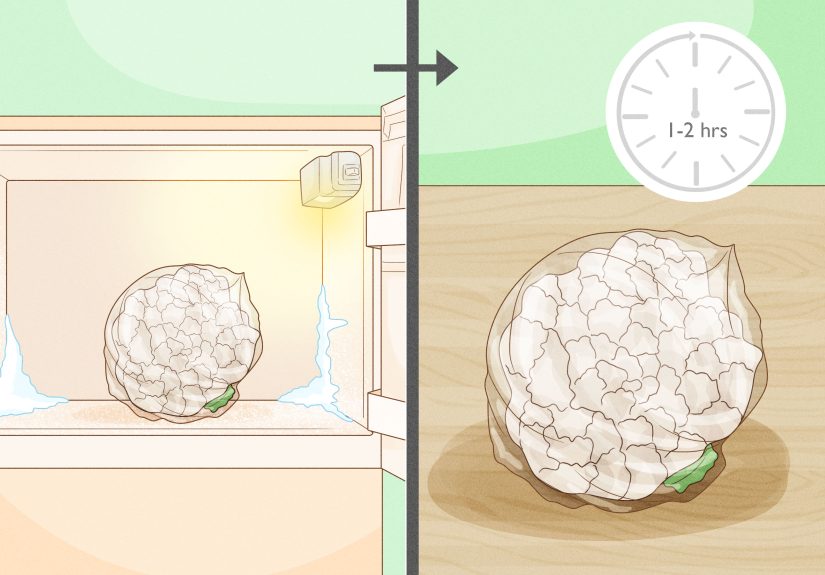
Refrigeration is the easiest way to keep cauliflower crisp. The ideal commercial conditions are very cold (around 32°F) and
very humid. Home fridges can’t perfectly match that, but you can get close enough to keep cauliflower in good shape for days
to a couple weeks depending on freshness and temperature stability.
Best Fridge Setup (Whole Head)
- Location: The crisper drawer (high-humidity setting if your drawer has a slider).
- Packaging: A perforated or loosely closed plastic bag to reduce moisture loss while preventing condensation buildup.
- Leaves: Keeping some outer leaves can help protect the head and extend quality.
How Long Does Cauliflower Last in the Fridge?
As a practical home range, plan on about 7–14 days for best quality (sometimes longer if your fridge runs cold and humidity is high).
Extension guidance often notes that cauliflower can keep for a couple weeks under good refrigeration, and up to several weeks
under near-ideal cold storage. The fresher it was at harvest, the longer it lasts.
Storing Cut Cauliflower (Florets or “Riced”)
Once cut, cauliflower dries out and spoils faster. Store cut pieces in an airtight container or zip-top bag in the fridge,
ideally with a dry paper towel tucked in to absorb excess moisture. Aim to use within 3–5 days for best texture.
Avoid Ethylene Trouble
Cauliflower can yellow faster around ethylene-producing produce like apples, melons, and tomatoes. If your fridge is packed,
give cauliflower its own space when possible.
Freezing Cauliflower (The Best Way to Store It for Months)
Freezing is the go-to method when your garden decides to produce three heads at once and your meal plan was… “vibes.”
You can freeze cauliflower raw, but the texture is usually better if you blanch first.
Blanching briefly heats the vegetable to slow enzyme activity that causes flavor, color, and texture losses in the freezer.
How to Blanch and Freeze Cauliflower
- Choose good heads: Start with compact, high-quality cauliflower (freezing won’t improve flaws).
- Trim and cut: Remove leaves and cut into florets about 1 inch across (consistent size = even blanching).
- Optional insect step: If you suspect insects, soak florets briefly in a salt-water solution, then drain.
- Boil water: Use a large pot so the water returns to a boil quickly after adding cauliflower.
- Blanch: Boil florets for about 3 minutes.
- Ice bath: Cool immediately in ice water to stop cooking.
- Drain and dry: Drain very well and pat dryextra water = freezer burn and icy clumps.
- Pre-freeze: Spread on a baking sheet to freeze individually.
- Pack: Transfer to freezer bags/containers, remove as much air as possible, label and date.
How Long Does Frozen Cauliflower Last?
For best quality, use frozen cauliflower within about 8–12 months. It will often remain safe longer if kept consistently frozen,
but flavor and texture are best within that window.
Best Uses for Frozen Cauliflower
- Soups and stews (it blends like a dream)
- Roasting from frozen (hot oven, don’t crowd the pan)
- Curries and stir-fries
- Mash or puree (texture changes matter less)
Other Ways to Preserve Cauliflower
Freezing is the easiest long-term option, but it’s not the only one. If you like pantry projects (or just enjoy making your kitchen
smell like vinegar for a day), try these.
Pickling (Refrigerator or Canned)
Pickled cauliflower is crunchy, tangy, and dangerously snackable straight from the jar. Refrigerator pickles are the simplest:
pack raw florets in a jar, pour hot brine over them, and chill. For shelf-stable pickles, follow a tested pickling recipe
(cauliflower is low-acid on its own, so safe canning depends on proper acidity and method).
- Flavor ideas: garlic + dill, turmeric + mustard seed, or spicy peppers for heat.
- Texture tip: Use very fresh cauliflower for best crunch.
Fermenting (Gut-Friendly Crunch)
Lacto-fermented cauliflower can be wonderfully crisp and complex. The basics: submerge florets in a salt brine, keep them
under the liquid, and ferment at room temperature until tangy, then refrigerate. Keep everything clean and watch for mold.
Drying/Dehydrating (Not Usually the Star Option)
Cauliflower isn’t everyone’s favorite dehydrated vegetablesome preservation guidance notes it’s not well-suited for drying,
and results can be tough or strongly flavored. If you experiment, use it for soups or grinding into powder rather than
expecting “chips that change your life.”
Troubleshooting: Common Harvest and Storage Problems
Problem: The Head Is Yellowing
- Cause: Overmaturity, sun exposure, or ethylene exposure in storage.
- Fix: Harvest earlier next time; store away from ethylene producers; keep it cold and protected by leaves.
Problem: “Ricey” or Loose Curds
- Cause: Head stayed in the garden too long or grew through heat stress.
- Fix: Harvest as soon as it’s compact; use “ricey” heads in soups, purees, or cauliflower rice.
Problem: Brown Spots or Bruising
- Cause: Rough handling, pressure in storage, or decay starting.
- Fix: Handle gently; don’t stack heavy items on it; trim minor spots and use soon.
Problem: Bad Smell, Slime, or Mold
- Cause: Excess moisture, poor airflow, or cauliflower already near the end of its life.
- Fix: Discard if slimy or moldy; improve airflow (perforated bag); store unwashed and dry.
Food Safety Notes (Because Nobody Wants a Science Experiment)
- Wash before eating: Especially if homegrown or stored loose.
- Keep cold foods cold: Don’t leave cut cauliflower at room temp for long periods.
- When in doubt, throw it out: If it’s slimy, moldy, or smells off, it’s done.
Conclusion: Your Cauliflower Game Plan
Cauliflower rewards decisive gardeners. Harvest when the head is compact and firm, cut cleanly with a sharp knife, and
leave a protective ruffle of leaves if you want it to last. Then store it like the cool-season vegetable it is:
cold, humid, and protected from drying out.
For short-term storage, the fridge crisper and a perforated bag do most of the work. For long-term storage, blanch and freeze
so you can toss cauliflower into weeknight meals months later without regret. And if you ever miss the perfect window?
Congratulationsyou still have cauliflower. It just wants to be soup now.
Experience Notes From the Garden (Real-World Lessons)
The first time many gardeners grow cauliflower, the surprise isn’t that it’s hardit’s that it’s fast.
You baby the plants for weeks, then the head forms and suddenly you feel like you’re in a reality show called
“Harvest It Before It Turns Weird.” A common lesson is to start checking heads every day once they reach baseball size.
That daily check becomes a tiny ritual: lift the leaves, look for tight curds, and decide whether today is “the day.”
And when it is, you’ll want a sharp knife ready. Trying to snap a thick stem by hand usually ends in a cracked curd,
a bruised head, and you muttering promises to buy better tools.
Another real-life trick: harvest early in the morning if you can. The head is cooler and the leaves are crisp, which makes
the whole process feel smoother. If you harvest at midday in warm weather, cauliflower can warm up quicklythen it hits the fridge,
condensation forms, and you’ve basically made a tiny moisture climate that encourages spoilage. Gardeners who store cauliflower longer
tend to do one simple thing consistently: they get it out of the sun and into cool conditions fast. Shade first, fridge second,
washing last.
There’s also the “leaf ruffle” debate. Some people trim everything for a clean look; others leave plenty of leaves.
In practice, keeping a few outer leaves attached often helps the head hold up longer in the fridge because it reduces drying and protects
the curd from bumps when your crisper drawer turns into a produce mosh pit. You can always trim leaves right before cooking,
which is when appearance matters. Storage is about survival, not glamour shots.
Freezing brings its own learning curve. The first time you blanch cauliflower, it’s tempting to rushskip the ice bath, pack it wet,
and call it a day. Then you open the freezer later to find a single cauliflower iceberg, welded together like it’s preparing for a polar expedition.
The fix is boring but effective: cool quickly, drain thoroughly, pat dry, and pre-freeze on a tray. That one extra step is what turns
frozen cauliflower into “grab a handful whenever” convenience instead of “chip at this with a spoon” frustration.
Finally, the best “experience tip” is emotional: cauliflower doesn’t have to be perfect to be useful.
If a head goes slightly ricey, it’s still excellent for roasting, soups, mashing, and cauliflower rice.
If it’s smaller than expected, it’s still delicious (and honestly, a smaller head is sometimes easier to use up before it declines).
The point of growing and storing cauliflower isn’t to achieve museum-quality curdsit’s to get great food onto your plate
with less waste. Once you adopt that mindset, harvesting and storing cauliflower feels less like a test and more like a skill you
improve every season.
![18 Best Types of Charts and Graphs for Data Visualization [+ How to Choose]](https://corkopencoffee.org/wp-content/uploads/2026/05/18-best-types-of-charts-and-graphs-for-data-visualization-how-to-choose-qKM1PBYG-thumb.jpg)