Table of Contents >> Show >> Hide
- First, a Quick Reality Check About “Mob Spawners”
- Method 1: Turn a Natural Dungeon Spawner Into an XP Farm
- Method 2: Build a Classic Mob Farm From Scratch
- Best Tips to Make Your Minecraft Mob Farm Work Better
- Common Mistakes That Make Players Think the Farm Is Broken
- Which Mob Spawner Setup Is Best?
- What the Experience of Building One Is Really Like
- Conclusion
- SEO Tags
If you have ever stumbled into a mossy dungeon, heard a zombie groan from behind a wall, and thought, “Perfect, I shall now monetize this chaos,” congratulations: you are ready to build a mob spawner in Minecraft. Or, at least, what most players call a mob spawner. The phrase usually means one of two things: turning a natural dungeon spawner into an XP-and-loot farm, or building a dark mob farm that spawns enemies automatically.
Both are useful. Both are satisfying. And both can turn your survival world from “I need three bones and a prayer” into “Please, game, I have more arrows than emotional stability.”
In this guide, you will learn the difference between a true Minecraft spawner and a player-built mob farm, how to build each one, which design is best for your world, and how to avoid the mistakes that make players stare into a dark box for ten minutes wondering why nothing is happening.
First, a Quick Reality Check About “Mob Spawners”
Let’s clear up the biggest misunderstanding first: in vanilla Survival mode, you cannot craft a real spawner block. You cannot make one with cobblestone, blaze rods, optimism, or a suspicious amount of redstone. If you want a true spawner cage, you have to find one naturally generated in the world, usually in a dungeon-style room. In Creative mode, that is a different story, but for normal survival play, you are working with what the world gives you.
That means when people search for how to make a mob spawner in Minecraft, they usually mean one of these:
- Turning a natural spawner into an XP farm
- Building a classic mob farm from scratch
The good news is that both methods work well. The better news is that neither one requires you to become a redstone wizard with twelve monitors and a spreadsheet.
Method 1: Turn a Natural Dungeon Spawner Into an XP Farm
This is the easiest and most beginner-friendly way to make a mob spawner setup in Minecraft. If you find a zombie, skeleton, spider, or cave spider spawner, you already have the hard part done. The game is basically handing you a renewable loot machine and whispering, “Please don’t break this block.”
Why This Method Is So Good
A dungeon spawner farm is compact, reliable, and excellent for early-to-mid game survival. A skeleton spawner is especially valuable because it gives you arrows, bones, and sometimes bows. Zombie spawners are great for XP and general drops. Spider and cave spider spawners can be useful too, though they are a little more annoying because spiders move like they paid extra for flexibility.
What You Need
- Torches
- A pickaxe and shovel
- Water buckets
- Building blocks
- Signs, trapdoors, or fences for water control
- Chests and hoppers if you want item collection
- A sword for cleanup duty
Step 1: Find and Secure the Spawner
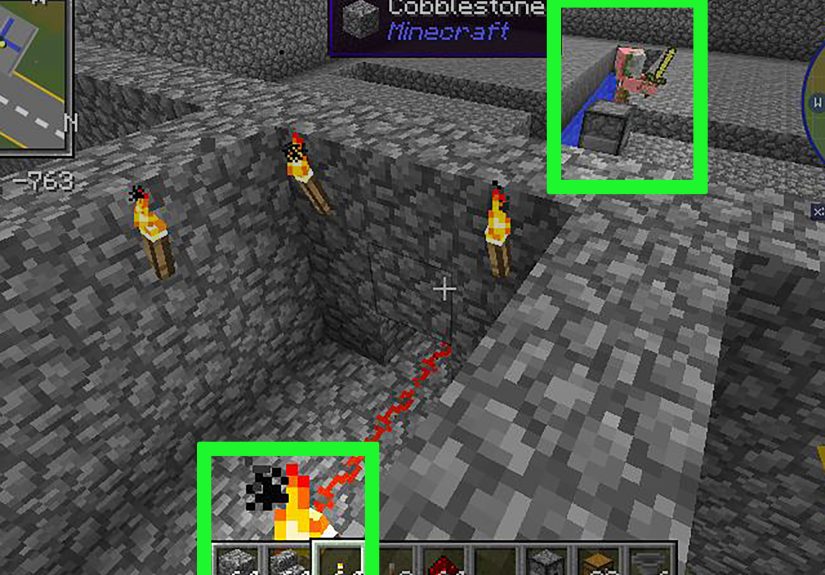
As soon as you discover a dungeon spawner, light it up immediately. Place torches around the room and on or near the spawner so mobs stop pouring out while you work. This is the Minecraft equivalent of putting a lid on a blender before pressing the button.
Loot the chests, but do not destroy the spawner. Breaking it gives you a tiny burst of XP and then permanent regret.
Step 2: Dig Out the Room
A spawner needs enough open space around it to create valid spawn spots. So instead of keeping the tiny dungeon exactly as you found it, carve out a larger chamber around the cage. A safe rule of thumb is to dig several blocks in every direction around the spawner and make sure the room has enough height for the mobs you want to farm.
If you are farming zombies or skeletons, keep the room simple and roomy. If you are dealing with spiders, give them more space and plan for extra control because they love climbing, sticking, and generally behaving like unpaid interns with too much initiative.
Step 3: Create Water Channels
Your goal is to move spawned mobs into one collection point. The classic method is to make shallow channels in the floor and place water so it pushes mobs toward a central hole or corner chute. Keep the water from washing directly over the drop shaft if you want fall damage to do its job.
This is the part where your farm starts looking less like a dungeon and more like a weirdly aggressive lazy river.
Step 4: Build the Drop Shaft or Elevator
For a basic XP farm, create a vertical drop that weakens mobs without killing them outright. A drop in the low-twenties is the classic sweet spot for zombies and skeletons. After the fall, they should be easy to finish with one or two hits, which means you get XP as well as drops.
If you only care about loot and not experience, you can use a kill chamber that finishes them automatically. Lava blades, campfires, and other damage methods can work, but once the farm kills mobs for you, XP collection becomes less efficient or disappears entirely. If enchanting is your goal, leave yourself the final hit.
Step 5: Build the Kill Chamber
At the bottom of the drop, make a safe little window where you can hit the mobs’ legs. Add slabs, signs, trapdoors, or a half-block design so they cannot reach you easily. If you want automatic loot storage, place hoppers under the chamber and connect them to chests.
A nice touch is to make the area comfortable. Add lighting, storage, an anvil, and maybe an enchanting setup nearby. If you are going to spend quality time repeatedly bonking skeleton ankles, you might as well decorate.
Step 6: Darken the Spawner Room and Test It
Once everything is ready, remove the temporary torches and step back. Wait nearby and see whether mobs start moving through the water channels into the chamber. If your setup works, you now have a compact Minecraft mob farm powered by a real spawner block.
If it does not work, the usual causes are simple: too much light, not enough open spawning space, water flowing the wrong direction, or you are standing too far away for the spawner to stay active.
Method 2: Build a Classic Mob Farm From Scratch
If you have not found a dungeon spawner, do not panic. You can still build a Minecraft mob spawner setup by creating a dark structure where hostile mobs spawn naturally and then funneling them into a grinder.
This type of hostile mob farm is popular because it does not depend on luck. The trade-off is that it takes more blocks, more time, and a little more patience.
What This Farm Does Best
A dark-room farm can produce a mix of common hostile mobs like zombies, skeletons, and creepers. That makes it great for general drops such as bones, arrows, rotten flesh, string, and gunpowder. It is also useful if you want a farm early in a world where dungeon luck has been absolutely rude.
Basic Materials
- A lot of solid building blocks
- Trapdoors
- Water buckets
- Chests and hoppers
- Slabs
- Torches for the outside and roof
- Scaffolding or ladders for building upward
How the Design Works
The standard design has a kill chamber at the bottom, a tall drop shaft above it, canals or bridges feeding into the center, and a dark spawning room at the top. Mobs spawn inside, shuffle over trapdoors because they think they are real floor blocks, fall into the water channels, and get carried to the center shaft.
It is one of the funniest systems in Minecraft because the mobs are defeated largely by their own terrible judgment.
Step-by-Step Build
Start with a collection area at ground level. Place chests and hoppers, then cap them with slabs so mobs can land while items are gathered below. Build a tall central shaft above that chamber so falling mobs take heavy damage but usually survive long enough for you to finish them.
At the top, build cross-shaped canals or bridges leading into the center. Enclose those paths with low walls, then connect the outer edges with platforms and a roof to create one large, pitch-dark spawning room. Add trapdoors along the canal edges so mobs wander into the water instead of standing around like confused shoppers in a parking lot.
Put water at the far ends of the canals so it flows toward the center but stops before falling down the shaft. Then light the roof and outside of the farm so mobs do not spawn on top of it. Finally, create a safe AFK area in the sky or a nearby protected room.
This classic mob grinder works in both Java and Bedrock, although rates and behavior can vary by version and world settings. Test the farm before you fully finish the cosmetics.
Best Tips to Make Your Minecraft Mob Farm Work Better
Light Up Everything Around It
Nearby caves, overhangs, and dark holes can steal spawns from your farm. If your rates feel weak, the problem might not be the farm itself. The problem might be that half the local skeleton population has decided to hang out in a cave down the hill.
Stay in the Right Area
Spawners and natural mob farms both depend on player position. If you stand too far away, your setup may slow down or stop. Build a comfortable place nearby and test where the farm performs best.
Choose the Right Farm for Your Goal
If you want fast early-game XP, a dungeon spawner farm is usually the winner. If you want a wider mix of drops, a dark-room hostile mob farm is more flexible. If you want premium Nether loot and bigger danger, blaze spawners are fantastic later on.
Use Looting When It Matters
If you are finishing mobs manually, a Looting sword can increase the value of your time. This matters most when you are farming items rather than just stacking experience levels.
Do Not Ignore Spiders
Spider-based farms can be productive, but their movement makes them more annoying to manage. If your first farm is a spider spawner, keep your design simple and expect a little extra troubleshooting.
Common Mistakes That Make Players Think the Farm Is Broken
- Too much light: A single overlooked torch can ruin your grand evil box of productivity.
- Too little spawning space: Mobs need enough valid room to appear and move.
- Wrong water flow: Water should guide mobs, not rescue them from fall damage.
- Standing too far away: If you wander off to sort your pumpkins, the farm may stop doing its job.
- Using Peaceful mode: This one sounds obvious, but you would be shocked how often it happens.
- Breaking the spawner block: That mistake has a very special flavor of sadness.
Which Mob Spawner Setup Is Best?
If you want the simplest answer, here it is: a skeleton or zombie dungeon spawner farm is usually the best all-around option for most survival players. It is compact, cheap, and reliable. You can build it early, use it often, and place it near your base if you are lucky enough to find one nearby.
If you do not find a natural spawner, a classic dark mob farm is still absolutely worth building. It takes more effort, but it gives you a renewable source of loot without depending on cave luck. It is also one of those Minecraft builds that feels incredibly satisfying once it starts working, because it turns darkness itself into a machine.
What the Experience of Building One Is Really Like
Building a mob spawner in Minecraft is one of those projects that teaches you more about the game than you expect. At first, it feels simple. You find the spawner, place a few torches, and tell yourself this will be a quick little side project. Ten minutes later, you are knee-deep in cobblestone, arguing with a water bucket, and wondering why a spider can apparently violate geometry.
But that is exactly why players love it. A good mob farm feels like a survival milestone. It is the point where your world shifts from scavenging to systems. You stop hunting for every bone or arrow one mob at a time and start thinking in terms of efficiency, layout, and output. It feels less like surviving the world and more like bending it slightly in your favor.
There is also a weirdly satisfying emotional arc to the whole thing. The early stage is tension. You are lighting up the dungeon, hearing groans, checking every corner, and trying not to accidentally smash the spawner in a panic. Then comes the engineering stage, where you carve out tunnels and channels and begin feeling like the least licensed contractor in gaming history. After that comes the doubt stage, which usually sounds like this: “Why is nothing spawning? Did I break it? Is the game mad at me?”
Then the magic happens. A skeleton slides down the water stream. Then another. Then a small pile of hostile regrets starts stacking in your kill chamber, and suddenly the whole build makes sense. Your farm is alive. Or, more accurately, your farm is producing things that are about to become very not alive.
What makes the experience memorable is that mob farms are practical, but they also feel personal. Some players build neat stone grinder rooms with labeled storage. Others turn the whole thing into an underground lair with blackstone, chains, and dramatic lantern lighting. Some people build glass viewing tubes because they want to watch the mobs drop like a medieval theme park ride. Minecraft always leaves room for utility and style to shake hands.
There is also a genuine sense of reward when you use the farm later. The first time you walk in with a half-broken iron sword and walk out with levels, loot, and a chest full of supplies, the build stops being “that project I made” and becomes “part of my world.” It saves time. It supports enchanting. It gives you resources on demand. It becomes one of those places you return to again and again, usually while pretending you are only stopping by for a minute.
And that may be the best part of learning how to make a mob spawner in Minecraft: it is more than a farm. It is one of the clearest examples of how Minecraft rewards curiosity. You notice a mechanic, you experiment, you refine it, and eventually you build something that feels clever every single time it works. That is peak Minecraft. A little messy, a little funny, and unbelievably satisfying once the machine starts humming.
Conclusion
If you want to make a mob spawner in Minecraft, the smartest approach is to decide which kind of farm you actually need. A natural dungeon spawner is the easiest route for steady XP and simple loot. A dark-room mob farm is the better fallback when luck refuses to cooperate. Neither build is hard once you understand the basics: darkness creates mobs, water moves them, fall damage weakens them, and good positioning keeps the whole thing running.
Build one well, and your Minecraft survival world gets a whole lot easier. You will have more XP, more drops, and fewer reasons to wander into random caves looking for trouble. Let the mobs come to you. It is faster, cleaner, and far more satisfying than chasing zombies through the woods at midnight like an unpaid night-shift manager.