Table of Contents >> Show >> Hide
- Quick Overview
- What You’ll Need
- Step 1: Stack and Accordion-Fold (the “Paper Lasagna” Phase)
- Step 2: Cinch the Center (the “Give It a Waistline” Phase)
- Step 3: Trim the Ends (the “Choose Your Petal Personality” Phase)
- Step 4: Fluff Each Layer (the “Here Comes the Glow-Up” Phase)
- How to Hang and Style Tissue Paper Pom-Poms
- Size and Fullness Guide (So Your Pom Doesn’t Look Like a Sad Onion)
- Color Ideas That Look Way More Expensive Than They Are
- Troubleshooting: Common Pom-Pom Problems (and the Fixes)
- Safety and Setup Notes (Because Scissors Don’t Care About Your Party Theme)
- Make It More Eco-Friendly
- of Experience-Based Tips (the “Stuff You Only Learn After Making a Few” Section)
- Conclusion
Tissue paper is usually hired for one of two gigs: (1) looking pretty in a gift bag for 12 seconds, or (2) becoming a crumpled emotional support cloud in the trash. Today, we promote it to main character.
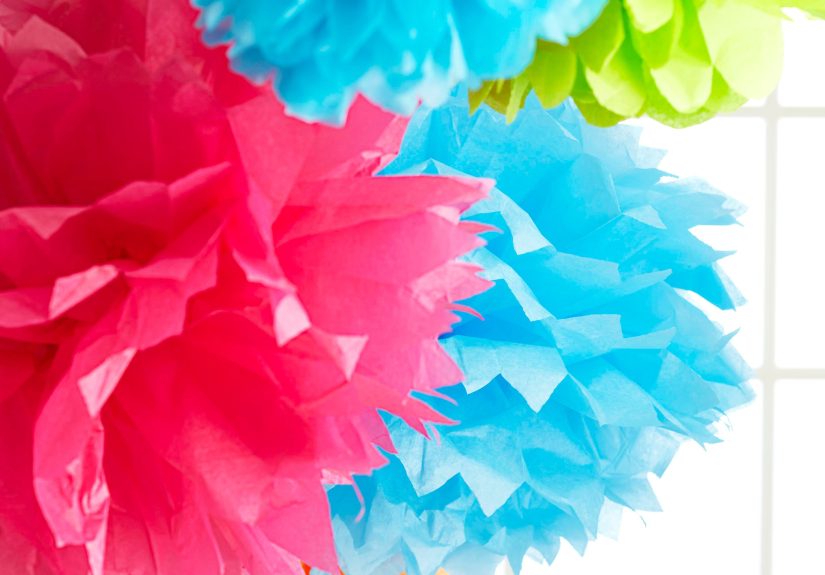
DIY tissue paper pom-poms are the kind of party decor that looks like you planned your life (even if you made them while wearing yesterday’s hoodie and eating cereal at 3 p.m.). They’re inexpensive, surprisingly forgiving, and they instantly make any space feel festivebirthdays, baby showers, weddings, classroom parties, you name it.
Below is a streamlined, beginner-friendly method that matches what most classic craft guides recommendstack, accordion-fold, cinch the middle, shape the ends, then fluff like you mean it.
Quick Overview
- Time per pom: ~10–20 minutes (faster once you get into a rhythm)
- Skill level: Beginner (with advanced-level “gentle handling”)
- Best for: DIY party decorations, wedding decor, baby shower decor, photo backdrops, garlands
What You’ll Need
- Tissue paper: 8–12 sheets per pom (more sheets = fuller pom)
- Scissors: sharp is your friend; dull is your frenemy
- Floral wire or pipe cleaner: to cinch the center (pipe cleaners are extra beginner-friendly)
- String, ribbon, or fishing line: for hanging
- Optional: bone folder (or a ruler edge) to make crisp folds
Sheet size matters: bigger sheets make bigger pom-poms. If you’re using the larger 20″ x 30″ tissue, you’ll get a more dramatic bloom; smaller sheets make smaller, denser poms.
Step 1: Stack and Accordion-Fold (the “Paper Lasagna” Phase)
Stack your tissue sheets neatly. If you’re going for an ombré or multi-color look, arrange colors in the order you want them to appear as the layers fluff out.
How to fold
- Lay the stack flat on a clean surface.
- Starting on the short side, fold a strip about 1.5–2 inches wide.
- Flip the stack over and fold back the same width in the opposite direction.
- Repeat until you have a full accordion (like a paper fan, but with more attitude).
Don’t panic if your pleats aren’t perfectly identical. Tissue paper is surprisingly forgiving, and once it’s fluffed, no one will be measuring your folds with a tiny craft ruler.
Step 2: Cinch the Center (the “Give It a Waistline” Phase)
Find the center of your accordion stack. If you want to be extra precise, fold the accordion in half to locate the midpoint.
- Slide a piece of floral wire or a pipe cleaner under the center.
- Wrap it tightly around the middle and twist to secure.
- Leave extra length on the wire/pipe cleaner if you plan to hang it directly from that.
The tighter the cinch, the sturdier your pom will be. If your pom flops sadly later, it usually means the center wasn’t tight enough. (We’ve all been there.)
Step 3: Trim the Ends (the “Choose Your Petal Personality” Phase)
This step is where your pom-pom gets its vibe. The end shape controls how “floral” or “starburst” your pom looks.
Three easy edge styles
- Rounded ends: Soft, peony-like, classic and fluffy.
- Pointed ends: Spiky, chrysanthemum-ish, extra dramatic.
- Fringed ends: Airy, firework-like (takes a little longer but looks fancy).
Keeping the accordion stacked, trim both ends at once so everything stays symmetrical. A shallow cut = subtle petals; a deeper cut = more defined “petals.”
Step 4: Fluff Each Layer (the “Here Comes the Glow-Up” Phase)
This is the part where your flat accordion turns into a cloud-bloom that makes people say, “Wait… you made that?” (Yes. Yes you did.)
- Gently fan out one side of the accordion.
- Separate the tissue layers one sheet at a time, pulling each toward the center.
- Repeat until that half is fully fluffed, then flip and do the other half.
- Adjust the “petals” so the pom looks round and evenly distributed.
Go slowtissue paper tears when rushed or when you’re trying to impress someone watching you craft. If a layer rips, don’t toss the whole pom; just hide the torn bit inside like it’s a secret.
How to Hang and Style Tissue Paper Pom-Poms
A pom-pom’s natural habitat is “floating above a celebration,” but it also loves a good wall moment.
Hanging options
- Ceiling clusters: Hang multiple poms at different heights for instant party magic.
- Garlands: String smaller pom-poms along twine for a lightweight bunting effect.
- Backdrop wall: Tape or pin poms in a grid (great for photos).
- Table decor: Use minis as centerpieces or gift toppers.
Pro tip: fishing line or clear thread makes poms look like they’re floating. Ribbon is cuter when you want the hanging element to be part of the design.
Size and Fullness Guide (So Your Pom Doesn’t Look Like a Sad Onion)
- Small (8–10″): Use smaller tissue sheets or cut larger sheets in half; aim for 8–12 layers.
- Medium (12–14″): Standard tissue sheets with 10–12 layers works well.
- Large (16–20″+): Large tissue sheets (like 20″ x 30″) with 8–12 layers; consider adding a couple extra sheets if the paper is thin.
If you increase sheet size, you often need more layers to keep the pom looking full. Thin tissue can look sparse if you don’t compensate with extra sheets.
Color Ideas That Look Way More Expensive Than They Are
1) Ombré blend
Stack lighter shades on the outside and darker shades toward the center (or reverse it for a “surprise core” effect). This creates depth even before you fluff it.
2) Confetti core (easy drama)
Use mostly one color, but sneak 1–2 sheets of metallic or patterned tissue in the middle. When you fluff, it peeks out like your pom is wearing jewelry.
3) Two-tone split
Stack half the sheets in one color, half in another. When fluffed, you’ll get a clean two-tone bloomperfect for team colors, school spirit, or theme parties.
Troubleshooting: Common Pom-Pom Problems (and the Fixes)
Problem: It keeps tearing while I fluff
- Slow down and separate layers closer to the base (near the center tie), not at the fragile edges.
- Try using slightly wider pleats (2″) so the folds aren’t overly tight.
- Add one extra sheet next time if your tissue is very thinthin paper tears easier.
Problem: My pom looks flat on one side
- Make sure you fluffed an equal number of layers on both halves.
- Rotate the pom and “fan” the petals outward to round it out.
Problem: The middle is slipping
- Twist the wire/pipe cleaner tighter, or wrap a second time.
- Use floral wire for heavier, larger pomsit grips better than string alone.
Safety and Setup Notes (Because Scissors Don’t Care About Your Party Theme)
- Keep scissors pointed away from you while trimming folded stacks (it’s easy to slip).
- If kids are helping, let them do folding and fluffing; adults should handle trimming the stack.
- If hanging from ceilings, use removable hooks or painter’s tape where appropriateand test one pom first.
Make It More Eco-Friendly
If you’re using leftover gift-wrap tissue, you’re already ahead. Skip glittery/foiled tissue if you want a more compost-friendly craft, and consider saving poms for reuse (they fold surprisingly flat in a big box).
of Experience-Based Tips (the “Stuff You Only Learn After Making a Few” Section)
After you’ve made your first couple of tissue paper pom-poms, you start noticing a funny truth: the instructions are simple, but the “polish” comes from tiny habits. The biggest one is learning what gentle actually means. Most people hear “pull the layers apart” and immediately go full tug-of-war. Tissue paper responds better to a slow peelalmost like you’re turning pages in an old paperback you found in a beach house. If a layer starts to resist, change the angle of your fingers and separate closer to the center. That small shift saves a shocking amount of tearing.
Another real-world lesson: your fold size is basically your pom’s haircut. Wider accordion pleats tend to create chunkier, looser petals. Narrow pleats create more “petals” and a denser, fancier lookbut they also take longer and can be harder to fluff without ripping. If you’re decorating a big room and you need volume fast, go for 2-inch pleats and larger paper. If you’re making a photo backdrop where people will stand close, tighter pleats and carefully rounded ends look extra lush.
Color planning is where beginners accidentally become design geniuses. Solid colors always look clean, but mixed colors give you depthespecially in bright daylight or camera flash. A sneaky trick is to use two shades of the same color family (like blush + hot pink, or pale blue + navy). Your eyes read it as “intentional,” like you hired someone who owns a color wheel and says things like “tones” and “hues” with confidence. And if you’re short on tissue paper, put your prettiest sheets on the outside layers where they’ll show most, and use plain white or a cheaper color in the middle.
Hanging is its own mini-adventure. The first time people hang pom-poms, they often put them too high or too evenly spaced, and the display looks a little… waiting-room. The fix is simple: create a cluster with different heights. One low, one mid, one high. Suddenly it looks like a styled party installation. Clear fishing line makes the pom “float,” but ribbon adds charmespecially if it matches your theme. If you’re photographing the setup, ribbon can double as a visual frame, while fishing line disappears on camera.
Finally, don’t underestimate storage and reuse. Tissue pom-poms can survive more than one event if you treat them like delicate decor, not disposable confetti. After the party, compress them gently (don’t crush the center), tuck them into a big box, and label the box with the color scheme. Months later, when you need quick DIY party decorations again, you’ll feel like Past You was a responsible adult. The best part? Re-fluffing is faster than making new onesand it still gives you that “I made this” satisfaction without starting from scratch.
Conclusion
DIY tissue paper pom-poms are proof that simple materials can deliver maximum “wow.” With a tidy stack, a confident center cinch, a quick trim, and a patient fluff, you can turn basic tissue paper into party decor that looks boutique-level. Make a few in different sizes, hang them in clusters, and watch your space transform from “normal Tuesday” into “someone’s having a celebration and we’re all invited.”
Sources synthesized (US-based): Better Homes & Gardens, Martha Stewart, PBS Parents, National Geographic Kids, Instructables, The Spruce, Real Simple, Michaels, Party City, HGTV, Lia Griffith, All Things Mamma, Shabby Fufu, Typically Simple, Deeply Southern Home.