Table of Contents >> Show >> Hide
- Why mixed metals look so good (when they’re done right)
- Step 1: Learn the metal “temperature” game (warm vs. cool)
- Step 2: Pick your “metal trio” (or duo) and assign roles
- Step 3: Start with the stuff you can’t (or won’t) change
- Step 4: Repeat each finish at least twice (the “no lonely metal” rule)
- Step 5: Mix sheen on purpose (polished vs. brushed vs. matte)
- Step 6: Use “bridge” materials so metals don’t have to do all the work
- Room-by-room playbook: where to mix metals without stress
- 3 foolproof “formulas” you can steal
- Common mistakes (and the quick fixes)
- How to shop (and test) metals without regret
- Conclusion: Mixing metals is a system, not a guessing game
- Real-Life Experiences: What Actually Happens When You Mix Metals in Your Home (and Learn a Few Things)
Mixing metals used to be treated like wearing stripes with plaid: “Technically allowed, but are you sure?”
Good news: the design world has officially moved on from “everything must match,” and your home can too.
When you mix metal finishes on purpose, your rooms look layered, collected, and a little more “designer,”
even if your biggest design credential is owning a level and actually using it.
The secret isn’t finding the one perfect finish and copy-pasting it across every doorknob, faucet, and lamp.
The secret is creating a metal hierarchya main finish, a supporting finish, and maybe a small “sparkle” finishthen repeating them with just enough structure that it feels intentional, not accidental.
Think: curated jewelry, not a tangled drawer of random earrings.
Why mixed metals look so good (when they’re done right)
A single metal finish everywhere can look cleanbut also a bit “new-build showroom.”
Mixing metals adds depth, contrast, and a lived-in quality that makes a space feel personal.
It also helps you avoid the “one trend to rule them all” trap: when your tastes change, you’re not stuck replacing every finish in the house to keep up.
Step 1: Learn the metal “temperature” game (warm vs. cool)
Most finishes fall into two vibe families:
warm metals (brass, gold, copper, bronze) and cool metals (chrome, stainless, nickel).
You can mix within a family for a softer look, or mix warm + cool for a crisp, modern contrast.
And yes, you can absolutely pair “silver” and “gold” finishesjust do it deliberately.
Quick cheat sheet: common finishes and what they feel like
- Brass (polished, satin, unlacquered): warm, classic, a little glamespecially in softer tones.
- Gold (often similar to brass): warmer and brighter; can skew modern or art-deco depending on shape.
- Chrome: very reflective; reads clean, modern, and high-contrast.
- Nickel (polished or brushed): a softer “silver” that can play nicely with warm metals.
- Stainless steel: practical, cooler, and usually more mattecommon in kitchens.
- Matte black / blackened steel: the ultimate “neutral” bridge that pairs with basically everything.
- Oil-rubbed bronze / aged bronze: warm, grounded, traditionalgreat for cozy spaces.
Step 2: Pick your “metal trio” (or duo) and assign roles
The most foolproof approach is limiting yourself to two or three finishes in one room.
Two is calm and classic; three is lively and layered. More than three can work, but it’s advanced-level styling
(like juggling knivesimpressive, but maybe not the first hobby you try).
The hierarchy that keeps things from looking random
- Dominant metal (about 60–75% of the visible metal): your anchor finish.
- Secondary metal (about 20–35%): your contrast and support.
- Accent metal (about 5–10%): a small “pop” in decor or lightingoptional, but fun.
This “dominant + secondary + accent” structure is what makes mixed metal decor feel cohesive instead of chaotic.
If you remember nothing else, remember this: mixing metals should look deliberate, not random.
Step 3: Start with the stuff you can’t (or won’t) change
Before you fall in love with a faucet online at 1 a.m., take a quick inventory of the fixed elements in the room:
appliances, existing plumbing, door hardware, tile with metallic flecks, and big lighting you’re keeping.
Your “dominant metal” often chooses youespecially in kitchens where stainless appliances are the elephant in the room
(a very useful, fingerprint-attracting elephant).
Practical rule: keep plumbing finishes consistent
In kitchens and bathrooms, it’s usually easiest if your main plumbing fixtures match each other
(faucet, shower set, tub filler). Then you can mix metals through cabinet hardware, lighting, mirrors, and accessories.
Step 4: Repeat each finish at least twice (the “no lonely metal” rule)
A metal finish that shows up only once often looks like an accidentlike you bought the wrong sconce and decided
to pretend it was a bold design choice. The fix is simple: repeat each finish at least two times
in the same room (or at least within the same open-concept sightline).
Examples of smart repetition
- Brass cabinet pulls + brass picture frames
- Chrome faucet + chrome mirror frame
- Matte black lighting + matte black curtain rod
Step 5: Mix sheen on purpose (polished vs. brushed vs. matte)
Metal “color” is only half the storyfinish sheen matters a lot.
Polished finishes bounce light and feel dressier; brushed/satin finishes feel softer and more forgiving
(also known as “less likely to show every fingerprint you’ve ever made”).
A common design mistake is mixing finishes that are too similarfor example, chrome and satin nickel
because it can look unintentional. If you’re mixing, make the contrast clear: pair shiny with aged, or warm with cool,
or matte with polished.
Step 6: Use “bridge” materials so metals don’t have to do all the work
Want mixed metals to feel calmer? Bring in textures that act like visual shock absorbers: wood, stone, leather, linen, wool,
ceramics, and glass. Metallics look best when they’re balanced by softer surfacesotherwise your room can start to feel like a
very fashionable robot.
Matte black is also a famous peacekeeper. If brass + chrome feels too jumpy, add a small amount of matte black
(or a dark bronze) to create a grounded “bridge” between temperatures.
Room-by-room playbook: where to mix metals without stress
Kitchen: the easiest room to overthink
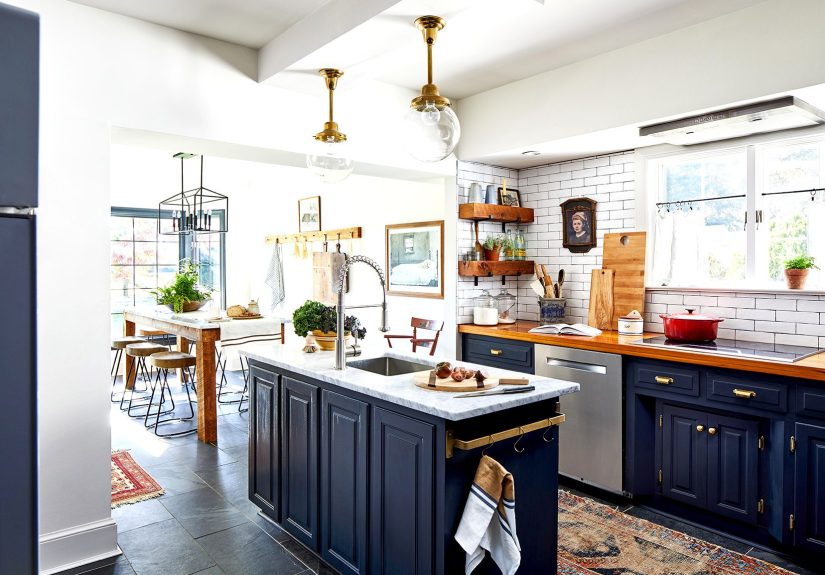
Kitchens have lots of metal moments: appliances, faucet, cabinet hardware, lighting, and sometimes even bar stools.
The simplest strategy is to pick one “level” to stay consistent and let another level carry the contrast.
- Safe combo: Stainless appliances + chrome faucet (cool) + brass hardware (warm) + matte black pendants (neutral).
- More classic: Brushed nickel faucet + brushed nickel lighting + aged brass pulls (warm accent).
- Modern edge: Matte black faucet + matte black lighting + brushed brass pulls.
Pro tip: If your kitchen is open to the living space, repeat your dominant finish in both areas (even subtly)
so the whole zone feels connected.
Bathroom: small room, big impact
Bathrooms are perfect for mixed metal finishes because the scale is smalleryou can make it feel high-end without buying 47 things.
Keep the plumbing consistent (faucet + shower), then mix in the secondary finish through the mirror frame, lighting, or cabinet pulls.
- Classic spa: Brushed nickel plumbing + brass vanity hardware + black-framed mirror.
- Warm and moody: Aged brass faucet + matte black shower frame + bronze sconce bases.
- Bright and modern: Chrome fixtures + brass light fixture accents + clear glass + white tile.
Living room: “metal” doesn’t have to mean “hardware”
In living rooms, metals often show up in lighting, tables, frames, and decornot faucets. That makes it easier to experiment.
Start with a dominant finish (say, matte black in the lighting), add a secondary (like brass in a coffee table base),
and sprinkle a tiny accent (chrome in a picture frame or tray).
Bedroom: keep it soft, then add shine
Bedrooms usually look best when metallics are calmer: brushed or aged finishes, warmer tones, fewer high-gloss surfaces.
Use texture to keep things cozy: a brass lamp next to linen bedding, or a black metal bed frame with warm bronze picture frames.
3 foolproof “formulas” you can steal
1) The Classic: Nickel + Brass
Nickel is the friendly silver that plays well with warm tones. Pair it with brass for a look that feels timeless,
especially when at least one finish is brushed or satin.
2) The Modern: Matte Black + Brass
This pairing is high-contrast but not loud. Matte black grounds the room; brass warms it up.
Use black in larger, simpler shapes (lighting, rods) and brass in smaller details (hardware, accents).
3) The Clean: Chrome + Warm Accent
Chrome can look crisp and contemporaryespecially in bathrooms and kitchens.
Add warmth with a controlled brass or bronze accent (mirror frame, cabinet pulls, or a single statement light).
Common mistakes (and the quick fixes)
Mistake: Too many finishes fighting for attention
Fix: Reduce to two finishes, or keep the third as a tiny accent only. If the room feels busy, it probably is.
Mistake: Mixing metals that look almost the same
Fix: Make the contrast intentionalchoose one clearly warmer or cooler finish, or contrast sheen (polished vs. brushed).
Mistake: One random “odd metal out”
Fix: Repeat it once more. Add a small accessory in the same finish (a frame, tray, or lamp detail) so it looks planned.
Mistake: Everything is shiny
Fix: Swap one finish to brushed/satin or add soft textures (wood, linen, wool). Shine looks best in moderation.
How to shop (and test) metals without regret
- Collect samples: Order hardware samples or pick up inexpensive pieces first (like a tray or frame) to test at home lighting.
- Check undertones in the actual room: Warm bulbs make brass glow; cool daylight can make chrome feel extra icy.
- Commit in layers: Start with accessories before replacing fixtures if you’re unsure.
- Use “bridge” colors: White, black, wood, and stone help mixed metals feel unified.
Conclusion: Mixing metals is a system, not a guessing game
If mixing metals has ever made you nervous, you’re not alonefinishes feel permanent, and “wrong” can be expensive.
But the rules are simpler than the internet makes them: pick a dominant metal, add one supporting metal,
optionally sprinkle an accent, and repeat each finish at least twice. Keep plumbing consistent, vary sheen thoughtfully,
and let soft textures (and maybe matte black) act as the glue.
When you mix metals in your home with intention, the result isn’t clutteredit’s layered.
It’s the difference between “I bought this all at once” and “This space grew up beautifully over time.”
And honestly, your home deserves that kind of main-character energy.
Real-Life Experiences: What Actually Happens When You Mix Metals in Your Home (and Learn a Few Things)
Here’s a pattern you’ll see again and again in real homes: the first metal is chosen for practical reasons, and the second metal is chosen for personality.
A common kitchen scenario starts with stainless appliances (because they came with the house, or because they’re durable and easy to find).
Then someone picks a chrome or brushed nickel faucet because it matches the sinkand because “matching” feels safe.
At that point, the kitchen looks fine… and also slightly like it’s waiting for its first day of school photo.
The moment the room levels up is usually when a warm metal enters the chat: brass pulls, an aged brass pendant, or a gold-toned paper towel holder.
Suddenly the space has contrast, and contrast reads as confidence.
Another real-life lesson: the “one lonely finish” problem is more common than people admit.
Homeowners will add a single brass light fixture because they love it, but everything else remains cool-toned.
The fixture looks like it wandered into the wrong partyuntil they repeat brass somewhere else.
The fix is often tiny and affordable: a brass-framed picture, a brass mirror, even a decorative bowl.
Once the finish appears twice, your brain stops labeling it as a mistake and starts reading it as a theme.
That’s why “repeat each metal” feels almost magical in practice: it’s not about rules for the sake of rules, it’s about giving the eye a pattern to follow.
Bathrooms tend to teach the “keep plumbing consistent” lesson fast.
People who try to mix a chrome faucet with a brushed nickel shower often discover that near-matching finishes don’t feel eclecticthey feel accidental.
The bathrooms that work best typically choose one plumbing finish (all chrome, all brushed nickel, or all brass) and then mix metals elsewhere:
cabinet hardware, a mirror frame, a sconce base, or even a small stool.
It’s also where matte black earns its reputation as a mediator.
If you’re stuck between warm and cool, adding black in a mirror frame or light fixture often makes both finishes look more intentionallike they’re part of a plan, not a compromise.
Lighting creates some of the happiest “mixed metals” stories because it’s easy to change and it functions like jewelry for the room.
A living room with black curtain rods, a brass floor lamp, and a chrome side table can sound like a recipe for chaosuntil you add soft textures:
a wool rug, a linen sofa, wood tones, and maybe a ceramic vase.
Then the metals stop shouting and start sparkling.
The people who love their results most are usually the ones who treat metals as accents, not the whole outfit.
They let stone, wood, and fabric do the heavy lifting, while metal adds highlight and definition.
Finally, the most practical experience of all: mixed metals make your home more flexible over time.
When you’re not locked into one finish everywhere, you can swap a lamp, a mirror, or cabinet pulls without feeling like you have to redo the entire room.
That flexibility is why mixed metal decor often feels “collected”because it can actually be collected, gradually, with pieces you genuinely like.
If you want a real-world approach, start small, repeat what you introduce, and choose contrast you can clearly see.
Your home won’t look confused. It’ll look considered.