Table of Contents >> Show >> Hide
- Should You Paint a Fiberglass Canoe or Repair the Gelcoat?
- What You Will Need
- How to Paint a Fiberglass Canoe: Step by Step
- 1. Wash and decontaminate the canoe
- 2. Inspect the hull like a slightly suspicious detective
- 3. Repair damage before you even think about primer
- 4. Sand the repaired areas fair
- 5. Sand the whole area to be painted
- 6. Mask everything you do not want painted
- 7. Prime if needed
- 8. Apply the paint in thin, even coats
- 9. Let the finish cure fully
- Best Paint for a Fiberglass Canoe
- Best Weather and Working Conditions
- Common Mistakes That Ruin a Nice Paint Job
- Can You Paint the Inside of a Fiberglass Canoe?
- How Long Will a Painted Fiberglass Canoe Last?
- Field Notes: Real-World Experiences People Have When Painting a Fiberglass Canoe
- Final Thoughts
- SEO Tags
A fiberglass canoe can age with all the drama of an actor in a period piece. One season it looks sleek and ready for adventure; a few years later it is faded, chalky, scratched, and giving off strong “retired rental fleet” energy. The good news is that a tired canoe can often be brought back to life with the right prep, the right paint, and a little patience.
If you want to paint a fiberglass canoe the right way, the secret is not the final coat. It is the prep work. A glossy can of marine paint may get all the attention, but the real magic happens in the boring steps: cleaning, dewaxing, sanding, filling, priming, and waiting for things to cure. Skip those, and your beautiful new finish may peel faster than your motivation on a humid Saturday afternoon.
This guide walks you through exactly how to paint a fiberglass canoe, including how to choose paint, how to prep the hull, how to handle scratches and repairs, and what mistakes can turn your canoe project into a floating regret. We will focus mainly on the exterior hull, because that is where most people want the fresh finish and added UV protection.
Should You Paint a Fiberglass Canoe or Repair the Gelcoat?
Before you open a can of paint, ask one simple question: Does this canoe really need paint? Many fiberglass canoes have an outer gelcoat layer. If the surface is only lightly oxidized or scratched, a deep cleaning, polishing, or spot gelcoat repair may be enough. But if the canoe has widespread fading, multiple patched areas, ugly mismatched repairs, or worn-through cosmetic layers, painting becomes a very reasonable option.
Painting is especially useful when the canoe looks rough but is still structurally sound. It also makes sense after repair work, because patched fiberglass and fairing compound rarely blend into the original finish gracefully. In other words, if your canoe looks like it has survived both a river trip and a bad breakup, paint may be the clean slate it deserves.
That said, paint is not a structural fix. If the hull has soft spots, cracks, punctures, delamination, exposed cloth, or deep gouges, repair those first. Paint should be the final cosmetic and protective layer, not a disguise for damage.
What You Will Need
- Mild soap, water, clean rags, and a dewaxer or solvent wash recommended by your paint system
- Painter’s tape and masking paper or plastic
- Sandpaper in several grits, usually from about 80 or 120 up through 220
- A fairing or epoxy filler for chips, gouges, and low spots
- A compatible marine primer, if your system requires it
- Marine topside paint, usually one-part polyurethane, two-part polyurethane, or marine enamel
- Foam rollers, good-quality brushes, paint trays, and stir sticks
- Protective gloves, eye protection, and a respirator suitable for sanding dust and paint fumes
Always read the technical data sheet for the exact paint and primer you buy. Marine coatings are picky in the way only expensive products can be. They care about temperature, humidity, dry time, sanding grit, recoat windows, and compatible reducers. Follow the can, not your cousin’s “I paint everything with whatever’s in the garage” method.
How to Paint a Fiberglass Canoe: Step by Step
1. Wash and decontaminate the canoe
Start by giving the canoe a serious cleaning. Remove dirt, algae, road grime, sunscreen residue, old wax, and anything else that has been living on the hull rent-free. Use soap and water first, rinse thoroughly, and let it dry.
Then use the dewaxer, solvent wash, or surface prep product recommended for fiberglass by your paint manufacturer. This step matters more than people think. Contaminants such as wax and mold-release residue can wreck adhesion. Clean first, then sand. If you sand a dirty surface, you can grind contaminants right into it, which is a wonderfully efficient way to make your paint fail later.
2. Inspect the hull like a slightly suspicious detective
Once the canoe is clean, inspect the entire hull. Look for deep scratches, worn stems, chips, crazing, exposed fiberglass cloth, old repairs, peeling paint, and soft or damaged spots. Circle problem areas with a pencil or masking tape.
If the canoe already has old paint and that paint is loose, cracked, or peeling, remove it from those problem areas or strip it back farther as needed. Sound, well-adhered paint can sometimes be sanded and overcoated, but failing paint should not get invited to stay.
3. Repair damage before you even think about primer
For shallow chips and gouges, use a compatible epoxy fairing compound or marine filler. For deeper structural damage, repair the fiberglass with epoxy and cloth before moving on. Let repairs cure fully.
One mistake beginners make is assuming paint will level everything out. It will not. Paint is decorative, not magical. If a gouge looks like a tiny canyon before paint, it will become a shiny tiny canyon afterward. Fill first, fair second, paint last.
4. Sand the repaired areas fair
After the filler or epoxy cures, sand the repaired sections smooth so they blend into the surrounding hull. On repaired fiberglass, sand the cured epoxy, not the cloth itself. The goal is a fair, even surface with no ridges or craters.
Start with a coarser grit if needed to knock down proud filler, then work toward a finer grit that matches your paint system. Many marine paint systems for sound gelcoat or repaired surfaces land somewhere in the 120- to 220-grit range before primer or topcoat. What matters is that the surface ends up uniformly dull and evenly abraded, not glossy in some spots and clawed to death in others.
5. Sand the whole area to be painted
Now sand the rest of the canoe exterior that will receive paint. On sound gelcoat, the purpose is to create a mechanical tooth for the primer or paint to grab. You are not trying to grind your canoe into a canoe-flavored powder. You just want a consistent, dull, frosted appearance.
If the canoe has heavily oxidized gelcoat or rough cosmetic wear, you may need a slightly coarser starting grit. If the surface is already in decent shape, lighter abrasion may be enough. After sanding, vacuum thoroughly and wipe the surface clean using the method recommended by the paint system.
6. Mask everything you do not want painted
Mask the gunwales, thwarts, handles, seats, hardware, decals you want to preserve, and any trim that should stay paint-free. Good masking saves cleanup time and keeps the job looking intentional. Bad masking creates the kind of edge lines that make people say, “Ah, home improvement was involved.”
7. Prime if needed
Not every system requires primer in every situation, but many do. Primer is commonly recommended on bare fiberglass, repaired areas, filled areas, unknown old coatings, and surfaces where maximum adhesion and uniformity matter. Primer also helps hide patchy color and gives the topcoat a smoother foundation.
Apply the compatible primer in the number of coats specified by the manufacturer. Let it dry, then sand lightly if the system calls for it. If you are switching paint systems or painting over questionable old finishes, using primer is usually the safer, smarter path.
8. Apply the paint in thin, even coats
For most DIY canoe projects, the easiest application method is brush-and-roll, often called “roll and tip.” One person rolls on a thin section of paint, and another follows immediately with a brush to smooth out the stipple. If you are working solo, you can still do it by moving in small sections and keeping a wet edge.
Use a high-quality foam roller and a good brush recommended for marine finishes. Work from one end of the canoe to the other in manageable sections. Do not overload the roller. Do not keep brushing back over tacky paint. Do not decide halfway through that thicker coats will save time. Thicker coats usually save nothing and introduce runs, sags, and texture.
For a fiberglass canoe, two thin coats are common, though some systems may call for more. Let each coat dry according to the label and observe the recoat window. If you miss the recoat window, you may need to sand again before applying the next coat.
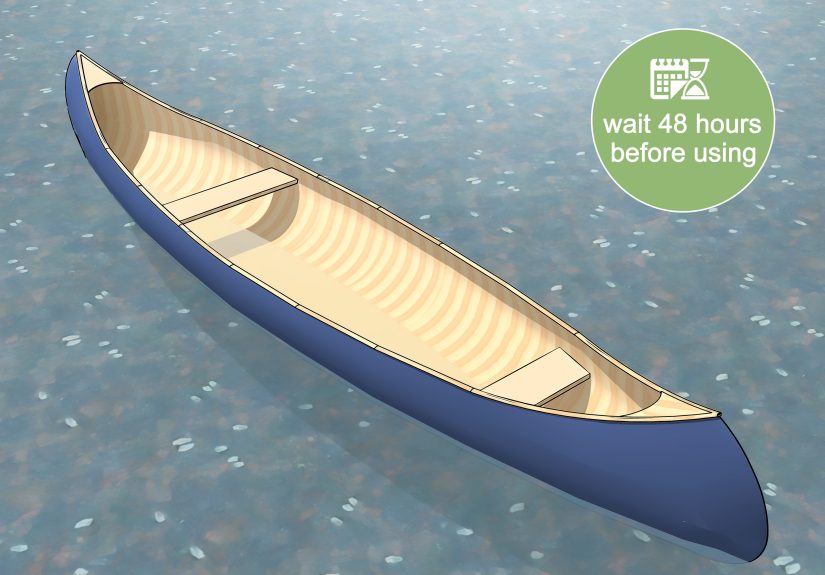
9. Let the finish cure fully
Dry is not the same as cured. That distinction has broken many hearts. A canoe can feel dry to the touch long before the coating has reached full hardness. If you drag it onto a roof rack, strap it down, and launch it too soon, you may imprint straps, scuff the fresh finish, or dull the gloss.
Give the canoe the full cure time recommended on the product sheet, especially with polyurethane coatings. If the weather has been cool or humid, add some patience. It is cheaper than repainting.
Best Paint for a Fiberglass Canoe
The best paint for a fiberglass canoe depends on how nice you want it to look, how much abuse it will take, and how complicated a project you are willing to manage.
One-part polyurethane
This is the sweet spot for many DIY canoe owners. It is easier to use than two-part systems, brushes and rolls well, and gives a durable, glossy finish. If you want a good-looking canoe without turning your garage into a temporary paint lab, this is often the smartest option.
Two-part polyurethane
This is the overachiever of marine coatings. It is tougher, glossier, and generally more chemically resistant, but it is also less forgiving and more demanding on prep, mixing, safety, and conditions. Some two-part products involve more serious solvents and catalysts, so PPE and ventilation matter even more. Great finish, higher drama.
Marine enamel
Marine enamel can work on some canoe projects, especially budget-conscious refreshes. It is usually easier to apply but may not match the durability or gloss retention of quality polyurethanes. Think of it as decent sneakers versus hiking boots. Both have their place, but one is better when conditions get rough.
In general, a trailered or stored-dry fiberglass canoe does well with a marine topside coating rather than a bottom paint. Antifouling bottom paint is designed for boats that live in the water and deal with constant marine growth. Most canoes do not need that.
Best Weather and Working Conditions
If possible, paint in a dry, well-ventilated area with moderate temperatures and low humidity. Many marine paints perform best somewhere around the 50°F to 85°F range, though some products allow up to 90°F. Avoid painting in direct sun, strong wind, fog, or when evening dew is likely to settle before the coating has flashed and begun curing.
Late morning is often the sweet spot: the dew is gone, the hull is dry, and the temperature is still manageable. Painting a dark canoe in blazing afternoon sun is a fine way to shorten your wet edge and expand your vocabulary.
Common Mistakes That Ruin a Nice Paint Job
- Skipping the dewaxing step: Paint hates wax even more than your kitchen floor does.
- Sanding too aggressively: You want abrasion, not accidental excavation.
- Painting over failing old paint: Loose paint underneath means loose paint later.
- Using the wrong primer or mixing incompatible systems: Marine coatings are not improv comedy.
- Applying heavy coats: Runs and sags are ugly, and they sand like punishment.
- Painting in bad weather: High humidity, direct sun, and dew can all dull or delay the finish.
- Rushing cure time: Fresh paint is tender, even when it feels dry.
Can You Paint the Inside of a Fiberglass Canoe?
Yes, but think carefully before you do. The inside of a canoe gets foot traffic, gear abrasion, wet shoes, sandy coolers, dogs, and the occasional heroic failure of balance. If you paint the interior, choose a coating that can handle wear, and consider whether a full glossy finish makes sense. Many paddlers focus on the exterior and only spot-refinish the inside where repairs or wear make it necessary.
If you do paint the interior, prep rules still apply: clean, sand, repair, prime if needed, and allow plenty of cure time. Also remember that slick glossy paint plus wet footwear can become a comedy sketch you did not audition for.
How Long Will a Painted Fiberglass Canoe Last?
A well-prepped and properly painted fiberglass canoe can look good for years, but longevity depends heavily on use and storage. If the canoe is stored out of the sun, carried instead of dragged, rinsed after use, and kept off rough concrete, the finish will last much longer. If it is beached on gravel every weekend and lives upside down in full sun twelve months a year, expect more touch-ups.
Think of paint as a maintenance layer, not an eternal force field. It protects the canoe and improves appearance, but it still appreciates basic respect.
Field Notes: Real-World Experiences People Have When Painting a Fiberglass Canoe
One of the most common experiences first-time canoe painters report is surprise at how much better the canoe looks before the paint even goes on. Once the hull is washed, degreased, sanded, and the ugly gouges are filled, the boat already starts to look less neglected. That moment is encouraging, because it proves that prep is not just busywork. It is the project.
Another very real experience is discovering that old scratches tell stories. Some people start out thinking they will do a “quick cosmetic refresh,” then notice one stem is worn, one side has deep river rash, and a few old repairs were apparently performed with optimism and mystery glue. That is normal. Fiberglass canoes tend to reveal their history gradually, like a family member who suddenly mentions they once lived on a shrimp boat. The answer is not panic. It is simply to slow down, repair what matters, and accept that a proper paint job is part restoration, part archaeology.
Many DIY painters also learn the hard way that weather has opinions. A calm, dry morning can produce a finish that looks smooth and glossy. The same paint on a hot, windy afternoon can drag, flash too fast, and leave brush marks that seem to appear out of pure spite. People often remember the moment they realized the garage, shed, or shaded side yard mattered almost as much as the brand of paint. If the work area is dusty, breezy, or damp, the coating will absolutely notice.
There is also the classic “I thought one heavy coat would save time” experience. It rarely does. Heavy coats run near the stems, sag under the chines, and stay soft longer. Most people who repaint a fiberglass canoe successfully end up becoming believers in thin, patient coats. They discover that marine paint rewards restraint. Lay it on evenly, leave it alone, and it levels better than expected. Fuss with it endlessly, and it punishes you with texture.
Another common takeaway is that fresh paint changes how people treat the canoe. Once the boat looks sharp again, owners are less likely to drag it across pavement, toss it onto gravel, or leave it baking in the sun without a thought. A refinished canoe often gets better storage, gentler handling, and a little more pride of ownership. Funny how a new finish can improve both the boat and the behavior of the human attached to it.
Finally, many people finish the project realizing that painting a fiberglass canoe is not difficult in a mysterious, expert-only way. It is difficult in a discipline-and-patience way. The skills are learnable. The materials are accessible. The real challenge is resisting shortcuts. In that sense, canoe painting is almost philosophical: prep what matters, respect the process, do not rush the cure, and you will probably end up with something both useful and beautiful. Which, honestly, is not a bad lesson for the rest of life either.
Final Thoughts
If you want to know how to paint a fiberglass canoe successfully, here is the short version: clean it thoroughly, repair damage first, sand it properly, use a compatible primer and marine paint, apply thin coats in the right weather, and let the finish cure before you head for the water. None of those steps are flashy, but together they produce the kind of result that makes an old canoe look loved again instead of merely old.
Do it carefully, and your fiberglass canoe can come out looking sharp, protected, and ready for many more miles of lakes, rivers, and questionable parking-lot compliments from strangers who suddenly become boat experts. And honestly, that is part of the fun.