Table of Contents >> Show >> Hide
- First: What Rhubarb Is (and the One Part You Should Never Eat)
- Buying Rhubarb Like You’ve Done This Before
- How to Clean and Trim Rhubarb (Step-by-Step, No Drama)
- Cutting Rhubarb for Different Desserts (and Why Size Matters)
- How to Tame Rhubarb’s Tartness Without Erasing Its Personality
- Pre-Cooking Methods That Make Rhubarb Desserts Behave
- How to Store Rhubarb So Spring Doesn’t End on a Tuesday
- Spring Desserts (and Not-Desserts) That Love Prepared Rhubarb
- Common Rhubarb Problems (and How to Fix Them)
- Final Thoughts: Prep Once, Bake Anything
- Kitchen Experiences: What Rhubarb Taught Me (the Fun Way)
Rhubarb is spring’s quirky overachiever: it looks like neon celery, tastes like a lemon wearing a
leather jacket, and somehow ends up starring in the sweetest desserts on the table. If you’ve ever
brought home a bundle of ruby stalks and thought, “Okay… now what?”, you’re in the right kitchen.
This guide walks you through prepping rhubarb the smart waycleaning, trimming, peeling (sometimes),
cutting for different recipes, and preventing the classic rhubarb problems: watery pies, stringy bites,
and “why is my crumble suddenly soup?” moments. We’ll finish with storage tricks so you can keep spring
flavor on standby, plus lots of delicious ways to use rhubarb beyond pie.
First: What Rhubarb Is (and the One Part You Should Never Eat)
Rhubarb is technically a vegetable, but it behaves like fruit in the kitchentart, bright, and happiest
when paired with sugar. It shows up in many U.S. markets in spring, usually from early-to-mid spring
through early summer, which is why it feels like a seasonal celebrity cameo.
Important safety note (a real one, not a “don’t run with scissors” situation): eat the stalks, not the
leaves. Rhubarb leaves contain high levels of oxalic acid and are considered toxic. If you buy rhubarb
with leaves attached, remove and discard them right away.
Buying Rhubarb Like You’ve Done This Before
Look for crisp stalks, not limp “sad celery”
Choose stalks that feel firm and snap-prone, not rubbery. The cut ends should look relatively fresh
(not dried into a brown, shriveled mystery). Minor blemishes are fineyou can trim them.
Color is not a ripeness detector
Here’s a common myth: “Red means ripe, green means sour.” In reality, color varies by variety. Some
rhubarb is blushing pink; some stays green with rosy streaks; some goes full lipstick. Tartness is
normal across the boardyour recipe and technique determine how balanced it tastes.
How to Clean and Trim Rhubarb (Step-by-Step, No Drama)
Prepping rhubarb is refreshingly low-effort. Think “quick spa day,” not “12-step sourdough ritual.”
1) Remove the leaves (immediately) and trim the ends
If leaves are attached, cut them off and discard. Then trim the root end and any dried or woody bits.
If you see brown or rough spots along the stalk, slice them away.
2) Rinsedon’t soak
Wash rhubarb under cool running water and give it a gentle rub to remove grit. Avoid soaking it in a
bowl of water; rhubarb already likes to release liquid, and you don’t need it absorbing extra.
3) Dry it well (especially if you plan to freeze it)
Pat the stalks dry with a clean towel. This matters for freezing and for baking, because excess surface
water can turn your “crisp” into “cautiously optimistic oatmeal.”
4) Do you need to peel rhubarb?
Sometimes. Many stalks are tender enough to use as-is. But if the outer skin looks thick, tough, or
stringy (you’ll often notice this in very large stalks), peeling helps. To peel, use a paring knife to
lift a strip of the outer skin at one end, then pull the stringy fibers down the length of the stalk.
Don’t overdo ityou’ll lose some of that pretty red color with the peel.
Cutting Rhubarb for Different Desserts (and Why Size Matters)
How you cut rhubarb affects texture, bake time, and how much liquid it releases. Decide based on what
you’re making:
Small dice (about 1/4–1/2 inch): quick breads, muffins, scones
Smaller pieces distribute more evenly and soften fast. They’re great in batter-based bakes where you
want little tart pops without giant wet pockets.
Medium chunks (about 1/2–1 inch): crisps, cobblers, compotes
This is the sweet spot (ironically) for most spring desserts. The pieces soften but still hold their
shape, giving you jammy fruit vibes without turning into pink pudding.
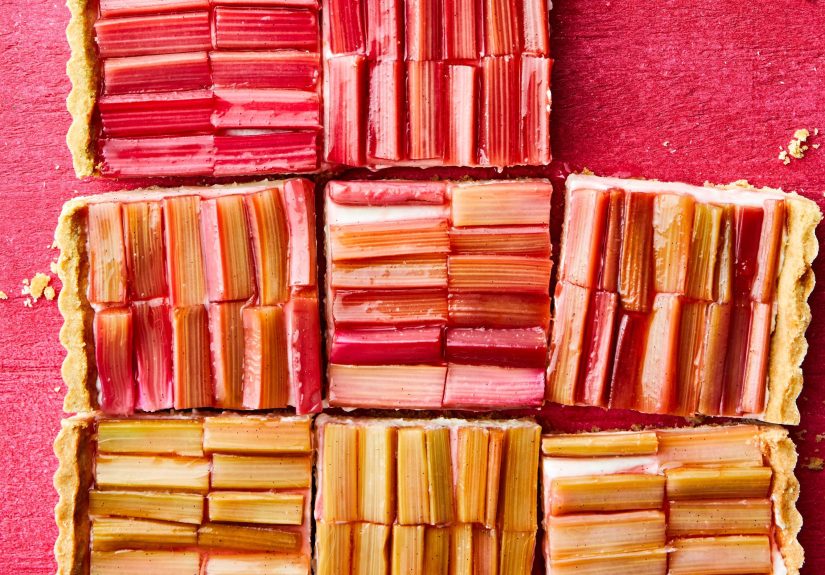
Long batons: roasting, galettes, “fancy” tarts
Longer cuts look dramatic and bake into elegant ribbonsperfect when you want your dessert to whisper,
“Yes, I do own a linen napkin.”
How to Tame Rhubarb’s Tartness Without Erasing Its Personality
Rhubarb’s tang is the point. The goal isn’t to mute it into sugary silenceit’s to balance it so it
tastes bright, not aggressive.
Use sugar strategically: maceration is your best friend
Toss cut rhubarb with sugar and let it sit for a bit. This draws out liquid and starts dissolving sugar
into a syrup, which helps in two ways:
- Better texture: the fruit softens more evenly during baking.
- Less watery filling: you can manage the liquid before it floods your crust.
Bonus: the syrup tastes like spring and makes an excellent drizzle for yogurt, pancakes, or cocktails.
(We’ll pretend you didn’t just pour it straight onto a spoon. We’re among friends.)
Pair rhubarb with flavor “buffers”
Rhubarb loves company. Pair it with naturally sweet fruit (strawberries are the classic), warm spices
(ginger, cinnamon), vanilla, citrus zest, or even a touch of almond. These don’t just add flavorthey
round sharp edges so the tartness feels intentional.
Pre-Cooking Methods That Make Rhubarb Desserts Behave
You can absolutely bake rhubarb raw. But if you want more control over texture and liquid (especially
for pies and pastries), a quick pre-cook can save your dessert’s reputation.
Option A: Roast it (high reward, low effort)
Roasting concentrates flavor and reduces moistureexactly what you want for crisp toppings, tart
fillings, and ice-cream ripples. Spread rhubarb pieces on a sheet pan, add sugar and flavorings, and
roast until tender. You’ll end up with syrup plus soft pieces that still have shape.
Option B: Stovetop compote (the “instant dessert upgrade”)
A simple rhubarb compote is basically spring in a saucepan. Simmer rhubarb with sugar and a splash of
water (or orange juice) just until it breaks down slightly. Keep it chunkier for spooning over cake or
yogurt; cook longer for a smoother sauce.
Compote also solves the “what do I do with a random half-pound of rhubarb?” problem. Answer: compote.
Always compote.
Option C: Pie filling that isn’t watery
Rhubarb releases a lot of liquid. For pies, one smart approach is to macerate the fruit with sugar,
then briefly cook it with a thickener (or use a thickener designed for fruit pies). This helps the
filling set without becoming gluey, and it can keep fruit pieces distinct rather than dissolving into
a sugary swamp.
Thickener choice matters: some thickeners set clear and glossy; others can look cloudy or taste starchy
if underbaked. Some (like tapioca) benefit from a resting period so they hydrate before baking. If you
bake a lot of fruit pies, learning how different thickeners behave is one of those “small effort, big
payoff” kitchen skills.
How to Store Rhubarb So Spring Doesn’t End on a Tuesday
Short-term (refrigerator)
Store rhubarb stalks unwashed in the fridge and wash right before use. Keeping them dry helps them stay
crisp longer. If you’ve already cut it, wrap it well or store in an airtight container.
Long-term (freezing)
Rhubarb freezes beautifully, which is great because rhubarb season is short and your love for strawberry
rhubarb pie is… not seasonal.
- Prep: remove leaves, trim ends, rinse, and dry thoroughly.
- Cut: slice into the size you typically use (chunks are versatile).
- Freeze smart: spread pieces in a single layer on a sheet pan to freeze first.
- Bag it: transfer to freezer bags/containers, remove air, label, and date.
- Portion if you’re future-you’s best friend: freeze in recipe-sized amounts.
Some guides mention blanching as optional, but many home cooks skip it and still get great results. The
key is drying well and freezing in a single layer before bagging so pieces don’t clump.
Spring Desserts (and Not-Desserts) That Love Prepared Rhubarb
Once your rhubarb is cleaned, trimmed, and cut, you’re basically five minutes away from something
impressive.
Classic spring desserts
- Strawberry rhubarb pie: the headliner. Manage liquid with maceration and a reliable thickener.
- Crisp or crumble: forgiving, fast, and perfect with vanilla ice cream.
- Galette: “pie, but make it casual.” Great for showcasing longer rhubarb pieces.
- Upside-down cake: rhubarb’s tartness balances buttery cake like it was born for it.
- Muffins and scones: dice rhubarb small; pair with orange zest or ginger.
Cold, creamy, and dangerously snackable
- Ice cream ripple: swirl roasted rhubarb syrup into vanilla ice cream.
- Yogurt bowl upgrade: spoon compote over Greek yogurt with granola.
- Cheesecake topping: glossy rhubarb sauce makes any cheesecake look like it has a publicist.
Beyond dessert: rhubarb’s savory side
Rhubarb can be surprisingly good in savory applications because it behaves like a tangy fruit. Try it
in chutneys, quick sauces, or glazesespecially alongside pork, duck, or rich roasted vegetables. You
get acidity and brightness without reaching for vinegar every time.
Common Rhubarb Problems (and How to Fix Them)
“My rhubarb is stringy.”
Peel thicker stalks. Also, smaller pieces soften more evenly. If the stalks are huge and older, they’re
more likely to be toughsave them for compote or roasting.
“My pie is watery.”
Rhubarb releases liquid. Use maceration, consider briefly cooking the fruit before baking, and choose
a thickener that works for fruit pies. Also, let the baked pie cool fully before slicingmany fruit
pies set as they cool.
“It tastes too sour.”
Balance tartness with sweetness and aroma: add vanilla, citrus zest, or a sweet fruit partner like
strawberries. Cooking also mellows rhubarb’s sharpness and turns it jammy.
“It turned to mush.”
Use larger pieces, roast instead of simmering too long, and avoid overmixing delicate baked fillings.
Rhubarb can go from “tender” to “pink fog” quickly if cooked aggressively.
Final Thoughts: Prep Once, Bake Anything
Rhubarb isn’t complicatedit’s just particular. Treat it like the tart, juicy ingredient it is:
trim it, rinse it, dry it, cut it for your recipe, and manage its liquid with a little strategy.
Do that, and rhubarb becomes less “mystery vegetable” and more “spring dessert superpower.”
Prep a batch, freeze some, make a quick compote, and suddenly you’re the kind of person who can say,
“Oh this? Just a little rhubarb situation I threw together,” like you didn’t plan your entire week
around it.
Kitchen Experiences: What Rhubarb Taught Me (the Fun Way)
The first time I worked with rhubarb, I treated it like a well-behaved berry. I chopped it, tossed it
into a pie crust with sugar, slid it into the oven, and waited for applause. What I got instead was a
heroic amount of pink liquid that basically auditioned to become soup. The crust was doing its best,
but the filling was living its own lifelike a toddler with a marker.
That was my introduction to rhubarb’s main personality trait: it leaks. Not in a rude waymore in a
“I’m excited to be here and I’m going to express myself” way. The fix was simple, but it felt like a
secret handshake: macerate first. The next time, I tossed the rhubarb with sugar and let it sit while
I prepped everything else. The bowl filled with syrup. I tasted it and suddenly understood why people
get poetic about “spring flavor.” It was tart, floral, and brightlike lemon candy that went to art
school.
I also learned that rhubarb rewards small, practical choices. Drying it well before freezing? That’s
the difference between neat, pourable chunks and a frozen rhubarb boulder you have to chisel apart
like an archaeologist. Cutting it to the size you actually use? Future-you will feel personally hugged.
I started freezing rhubarb in recipe-friendly bags“pie amount,” “crumble amount,” “chaotic neutral
amount”and it made spring baking feel effortless even months later.
Then there’s the peeling debate. I used to think peeling was fussy and optional (which it is, sometimes).
But one year I bought extra-thick stalks and ignored the fibers. The dessert tasted fine, but the
texture kept catching in my teeth like I was eating a delicious shoelace. Now I do a quick “string test”:
if I can lift a strip of skin and it pulls like celery threads, I peel. If it looks tender, I don’t.
Rhubarb doesn’t demand perfectionjust attention.
My favorite surprise has been how rhubarb changes a table. Bring out anything strawberry-rhubarb and
people suddenly act like you run a small bakery in a charming town. Make a simple compote and spoon it
over yogurt, and breakfast feels fancy enough to deserve background music. I’ve watched guests go from
“I don’t think I’ve had rhubarb” to “Wait, can I have that recipe?” in the span of one forkful.
The biggest lesson rhubarb taught me is that good baking isn’t always about complex technique. Sometimes
it’s about understanding an ingredient’s quirks and planning around them. Rhubarb is tart, juicy, and
dramaticin the best way. Prep it with intention, pair it with friendly flavors, and you get desserts
that taste like the moment the weather finally decides to stop being rude.