Table of Contents >> Show >> Hide
- What Rhubarb Is (and Why It’s Not “Just a Pie Thing”)
- Rhubarb Safety 101: The Leaf Rule (Don’t Skip This)
- How to Choose Great Rhubarb at the Store
- Step-by-Step: How to Prepare Rhubarb for Cooking and Baking
- How to Make Rhubarb Dessert-Ready (Without Turning It into Sugar Paste)
- Best Spring Desserts to Use Rhubarb (and the Prep Each One Needs)
- Beyond Dessert: “More” Ideas That Make Rhubarb a Year-Round Ingredient
- How to Store Rhubarb So It Stays Crisp
- How to Freeze Rhubarb (Because Spring Is Rude and Leaves Early)
- Common Rhubarb Prep Mistakes (and How to Avoid Them)
- Conclusion: Your Rhubarb Game Plan
- Real-World Kitchen Notes: What Rhubarb Prep Actually Feels Like
Rhubarb is spring’s lovable oddball: it looks like celery that joined an indie band, tastes like a lemon
had a dramatic monologue, and somehow ends up in the sweetest desserts you’ll make all year.
If you’ve ever bought a bunch and thought, “Okay… now what?”you’re in the right kitchen.
This guide walks you through how to prepare rhubarb from the moment it hits your counter:
trimming safely, cleaning it properly, cutting it for specific desserts, and using simple techniques
to tame its tartness without burying it in sugar. Then we’ll take rhubarb beyond pie into
compotes, syrups, savory sauces, and make-ahead freezer prepbecause spring is short, but your cravings don’t have to be.
What Rhubarb Is (and Why It’s Not “Just a Pie Thing”)
Botanically, rhubarb is a vegetable, but culturally it’s been adopted by desserts with full custody.
Its edible part is the stalk (the thick, juicy petiole). The leaves are a hard nomore on that in a second.
Flavor-wise, rhubarb is bright, sharp, and fruity when cooked, which is why it pairs so well with sugar, berries,
vanilla, citrus, and warm spices.
You’ll see stalks ranging from pale green to deep red. Here’s the plot twist:
color isn’t a reliable “ripeness meter.” Different varieties simply skew greener or redder.
The best clue is texturelook for stalks that are firm, crisp, and not floppy.
Rhubarb Safety 101: The Leaf Rule (Don’t Skip This)
Rhubarb leaves contain high levels of oxalic acid and are considered toxicso they should not be eaten raw or cooked.
When you bring rhubarb home (or harvest it), remove and discard the leaves promptly.
The stalks are the edible part used in cooking and baking.
Quick safety checklist
- Do eat: the stalks (fresh, cooked, baked, roasted).
- Do not eat: the leaves.
- If harvesting: remove leaves soon after picking to keep stalks from wilting.
How to Choose Great Rhubarb at the Store
For the best spring desserts, you want stalks that are:
- Firm and crisp (they should snap, not bend like a sad straw).
- Glossy and hydrated, not shriveled or rubbery.
- Medium thickness if you’re newvery thick stalks can be more fibrous.
- Freshly cut ends (not dried out and brown).
If the leaves are attached at the market, that’s not automatically badjust remove them at home and toss them.
If you’re buying pre-trimmed stalks, check for clean ends and minimal bruising.
Step-by-Step: How to Prepare Rhubarb for Cooking and Baking
1) Trim and discard leaves
If leaves are attached, cut them off completely. Don’t compost them if pets might get into the pile.
(Rhubarb leaves are not a “maybe” food. They’re a “nope.”)
2) Wash and dry
Rinse stalks under cool running water and gently rub away any grit (garden-grown rhubarb can be sneaky with dirt).
Pat dry. Dry stalks are easier to slice cleanly and less slippery.
3) Trim the ends
Slice off the dry end and any tough, browned sections. If the bottom inch is woody or stringy, don’t be sentimentalremove it.
4) Decide whether to peel (most of the time: don’t)
Rhubarb generally does not need peeling. The skin softens as it cooks, and peeling can remove color and flavor.
That said, if you have very thick stalks with obvious strings (think celery vibes),
you can pull off a few tough outer fibers with a paring knife the way you’d de-string celery.
5) Cut to match your recipe
Rhubarb breaks down quickly when heated, so your cut size matters. Here’s a practical cutting guide:
- Compote, jam, sauce: 1/2-inch pieces (fast breakdown, smooth texture).
- Crisps, crumbles, cobblers: 1/2- to 1-inch pieces (soft but still chunky).
- Pies: 1/2-inch pieces (even cooking and better structure).
- Roasted “batons” for fancy toppings: 2–4-inch lengths (best with fresh rhubarb, not frozen).
- Muffins/quick breads: small dice (1/4- to 1/2-inch) so pockets don’t turn soggy.
How to Make Rhubarb Dessert-Ready (Without Turning It into Sugar Paste)
Rhubarb is naturally tart. That’s the charm. The goal isn’t to erase the tangit’s to balance it.
These techniques help you control moisture and flavor so your desserts taste bright instead of flat.
Macerate for pies (aka “teach rhubarb to behave”)
For pies and juicy bakes, tossing rhubarb with sugar and letting it sit for 15–30 minutes pulls out liquid.
This gives you two wins: you can drain off excess juice (less soggy crust), and the rhubarb starts to soften evenly.
Some bakers combine this with thickeners (like tapioca) so the filling sets cleanly when baked.
Use the right thickener (because rhubarb is basically water with ambition)
Strawberry-rhubarb fillings are notoriously juicy. To avoid “pie soup,” thickeners matter.
Common options include cornstarch, flour, and tapioca. Tapioca is popular because it holds up well with acidic fruit,
and it keeps fillings glossy and sliceable when properly baked and cooled.
Practical thickening tips for pies
- Let the filling bubble in the center before pulling the piethis activates starch thickeners fully.
- Cool completely (yes, completely) so the filling sets before slicing.
- When in doubt: rhubarb usually needs more thickener than higher-pectin fruits.
Balance tartness with flavor, not just sugar
Sugar is essential, but it’s not your only lever. These pairings keep rhubarb lively:
- Vanilla: rounds sharp edges and adds dessert “warmth.”
- Citrus zest: brightens without adding extra liquid.
- Ginger: spicy heat loves rhubarb’s tang.
- Strawberries/raspberries: add aroma and natural sweetness.
- Pinch of salt: makes the fruit taste more like itself (kitchen magic).
Best Spring Desserts to Use Rhubarb (and the Prep Each One Needs)
Rhubarb crisp or crumble
If you want maximum reward for minimum effort, crisp is the move. Cut rhubarb into 1/2- to 1-inch pieces.
Toss with sugar, a little thickener (cornstarch or flour), and maybe strawberries if you want it more jammy than zingy.
The topping hides all sins, including “I eyeballed everything and now we’re just vibing.”
Strawberry-rhubarb pie
For pie, prep is all about moisture control: cut evenly, macerate briefly, use a thickener, and bake until the center bubbles.
If your pie looks perfect but slices like a puddle, it probably needed more bake time, more cool time, or both.
Rhubarb compote
Compote is rhubarb’s glow-up: a spoonable topping for yogurt, ice cream, pancakes, cheesecake, and “I’m just standing at the fridge” moments.
Basic versions use rhubarb, sugar, and a splash of water, simmered until tender. Add vanilla, orange zest, or ginger if you want it to taste like a fancy brunch place.
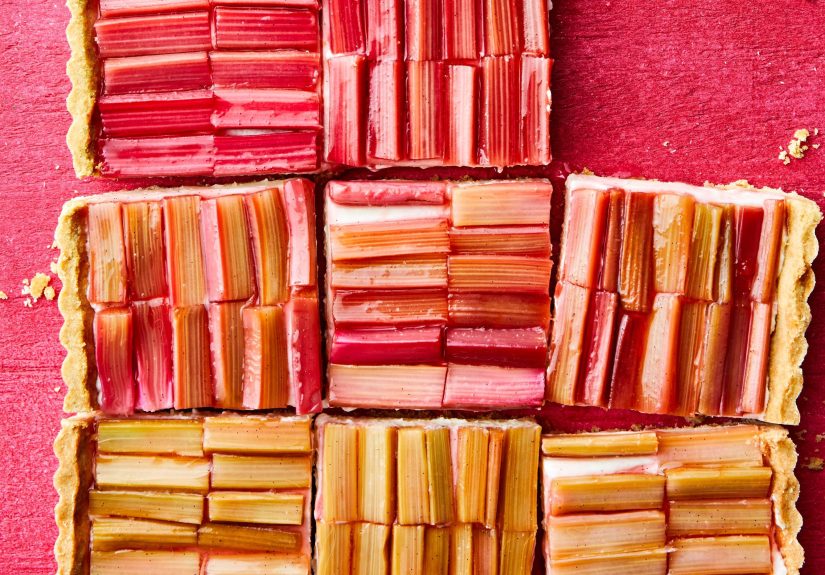
Roasted rhubarb (for toppings that look expensive)
Roasting keeps shape better than stovetop simmering. Cut into longer batons, toss with sugar and a little citrus,
then roast until tender but still structured. Spoon the rosy syrup over pound cake, pavlova, or whipped ricotta on toast.
Rhubarb quick breads and muffins
Dice smaller (1/4- to 1/2-inch) so the fruit distributes evenly. If using frozen rhubarb, expect extra moisture.
Frozen is better for crumbles and pies than for cakes, which can turn soggy if too wet.
Beyond Dessert: “More” Ideas That Make Rhubarb a Year-Round Ingredient
Rhubarb simple syrup (cocktails, mocktails, lemonades)
Rhubarb syrup is how you make any drink taste like spring showed up in a pastel blazer.
Simmer chopped rhubarb with sugar and water, then strain. Use it in sparkling water, lemonade, iced tea, or cocktails.
(Also: drizzle it over fruit salad or spoon it into whipped cream if you like chaos in a good way.)
Pickled rhubarb
Quick-pickled rhubarb is tangy, crunchy, and great with rich foods: pork, grilled chicken, salmon,
sharp cheeses, or a sandwich that needs a bright bite. Slice stalks thin, pour over warm vinegar-sugar-salt brine,
and chill. It’s spring in condiment form.
Savory rhubarb sauce
Rhubarb’s acidity makes it a natural for savory saucessimilar to how you’d use citrus or vinegar.
Cook rhubarb down with aromatics (shallot or onion), a sweetener (honey or brown sugar),
and spices (ginger, black pepper, even chili flakes). Serve with pork tenderloin or chicken thighs for a sweet-tart glaze vibe.
How to Store Rhubarb So It Stays Crisp
Rhubarb dries out faster than you’d expect, and once it’s limp, it’s still usablebut less pleasant to prep.
For best results, store stalks in the refrigerator crisper, wrapped to retain moisture (think damp paper towel or similar).
Kept properly chilled, rhubarb can last a surprisingly long timeoften up to a couple of weeks, sometimes longer depending on freshness.
Storage do’s and don’ts
- Do: store cold, wrapped to prevent drying out.
- Do: keep leaves off.
- Don’t: wash long before storing if you’re not using it soon (excess moisture can speed spoilage).
How to Freeze Rhubarb (Because Spring Is Rude and Leaves Early)
Freezing is the easiest way to preserve rhubarb for pies, crisps, sauces, and compotes later.
You can freeze it raw (no blanching required), or blanch briefly if you prefer.
Either way, frozen rhubarb will soften as it thawsso it’s best for baked or cooked recipes rather than neat decorative slices.
Method A: Freeze raw (fast, easy, totally legit)
- Trim leaves, wash stalks, and dry well.
- Cut into the size you’ll use (1/2-inch is the universal crowd-pleaser).
- Spread pieces on a sheet pan to freeze individually (optional but reduces clumping).
- Transfer to freezer bags/containers, label, and freeze.
Method B: Blanch (optional)
- Drop cut rhubarb into boiling water for about 1 minute.
- Cool immediately in cold water, drain, and dry.
- Pack and freeze.
Frozen rhubarb is typically best used within several months for peak quality, though it can last longer if well sealed.
For baking, you can often use it straight from frozenjust expect extra juices and plan for a thickener.
Common Rhubarb Prep Mistakes (and How to Avoid Them)
Mistake 1: Treating it like a berry
Rhubarb isn’t delicateit’s sturdy. You can roast it, simmer it, freeze it, and it will still show up to the party.
Just respect its water content and acidity.
Mistake 2: Skipping thickener in juicy desserts
Crisps can get away with less. Pies cannot. If you want slices that hold, use a thickener and bake long enough
for it to activate.
Mistake 3: Overcooking when you want shape
If you want rhubarb pieces to stay intact (for tarts or toppings), use larger cuts and gentler cooking:
roasting or brief poaching beats long simmering.
Mistake 4: Forgetting the “cooling is cooking” rule
Pies and thickened fillings keep setting as they cool. If you slice too early, you’re basically grading a test mid-exam.
Conclusion: Your Rhubarb Game Plan
Preparing rhubarb isn’t complicatedit just has a few rules and a lot of payoff.
Trim the leaves, wash and dry, cut based on your dessert, then manage moisture with maceration and thickeners when needed.
Once you’ve got the prep down, rhubarb becomes less of a seasonal mystery and more like a spring superpower:
pies, crisps, compotes, syrups, savory sauces, and a freezer stash that will make Future You feel wildly supported.
Real-World Kitchen Notes: What Rhubarb Prep Actually Feels Like
The first time most people prep rhubarb, the surprise isn’t the tartnessit’s how normal it looks and how
not-normal it tastes. You slice it raw expecting something celery-adjacent and thenboomyour mouth gets
hit with citrusy sharpness and you immediately understand why rhubarb ends up hanging out with sugar so often.
That moment is useful, because it sets your expectations: rhubarb is not “sweet fruit that needs a little help.”
It’s “bright, sour spring stalk that becomes dessert when you treat it right.”
A common real-life scenario: you buy a gorgeous bunch, toss it in the fridge, and two days later it’s slightly limp.
Don’t panic. Limp rhubarb is still excellent for compote, jammy fillings, or syrupanything where it’s going to cook down.
If you were dreaming of picture-perfect roasted batons for a tart, that’s when you’ll wish you’d used the crisp stalks first.
A practical rhythm helps: use the freshest stalks for “pretty” applications (roasting, poaching, decorative pieces),
and save the older stalks for sauces, crisps, and pie filling where texture is forgiving.
Another real-world surprise is stringiness. Some batches are tender and slice like a dream; others pull fibers when you cut.
This isn’t a moral failing on your part. It’s just plant variability. The easiest fix is also the least dramatic:
use a sharp knife, trim off any tough ends, and if the outer layer is clearly fibrous, peel off a few strings.
You don’t need to strip the whole stalk like you’re whittling. Think “remove the obvious ropes,” not “give it a full spa treatment.”
Moisture management is where rhubarb prep starts to feel like kitchen wisdom instead of a checklist.
If you’ve ever made a strawberry-rhubarb pie that tastes amazing but leaks like a busted waterbed, you’ve met the problem:
rhubarb releases a lot of juice. In practice, you get better results by choosing one moisture strategy and committing to it:
either macerate and drain a bit, or keep the juices and increase thickener. What doesn’t work as well is hoping the oven will
magically solve everything while you do absolutely nothing. (The oven is powerful, but it’s not psychic.)
Sweetness is another “feel it out” skill. Recipes give you numbers, but your rhubarb’s tartness varies.
When you simmer compote, taste near the end. If it’s still too sharp, add sugar in small increments.
If it tastes sweet but flat, add a pinch of salt or a little citrus zest. If it tastes good but one-note,
add vanilla or ginger. These tiny adjustments are what make homemade rhubarb desserts taste intentional rather than accidental.
The goal isn’t to make rhubarb taste like strawberries; it’s to let rhubarb taste like rhubarbjust in a way you want to eat again tomorrow.
Finally, freezing rhubarb is one of those habits that feels boring until you’re mid-summer and you want a springy dessert.
Frozen rhubarb won’t stay neat and tidy, so it shines in pies, crisps, and saucesanything cozy and baked.
If you freeze it in recipe-sized portions (say 2-cup or 4-cup bags), you’ll thank yourself later when you can grab exactly what you need.
And if you label the bag with the date like a responsible adult, you get bonus points. If you don’t, you’ll still eat it.
It’s rhubarb. It forgives a lotas long as you don’t invite the leaves to dinner.