Table of Contents >> Show >> Hide
- What Is Vanishing Twin Syndrome?
- How Common Is Vanishing Twin Syndrome?
- Why Does a Twin “Vanish”?
- Signs and Symptoms: Will You Feel Anything?
- How Vanishing Twin Syndrome Is Diagnosed
- What Does This Mean for the Surviving Baby?
- How Vanishing Twin Syndrome Can Complicate Prenatal Screening
- What Happens Next: Care, Monitoring, and “Normal” Questions
- The Emotional Side: Grief With a Side of Whiplash
- Conclusion
- Experiences: What Vanishing Twin Syndrome Can Feel Like (Real-Life Style Scenarios)
Pregnancy has a way of keeping things “interesting.” Sometimes that means cravings for pickles at 2 a.m. Sometimes it means an early ultrasound that shows two little sacs… and then, later, only one. That surprise plot twist has a name: vanishing twin syndrome (VTS). It can be confusing, scary, and emotionally complicatedbecause you may be grieving one baby while still carrying another.
This article breaks down what vanishing twin syndrome is, why it happens, what you might notice, how doctors diagnose and monitor it, and what it can mean for prenatal testing and the rest of your pregnancy. We’ll keep it real, keep it respectful, and yeskeep it human. (Because your feelings are not a “side note.”)
What Is Vanishing Twin Syndrome?
Vanishing twin syndrome happens when a pregnancy starts as a multiple pregnancy (usually twins) but one embryo or fetus stops developing, most often in the first trimester. The tissue is typically absorbed by the placenta, the surviving twin, or the pregnant person’s bodyso on later ultrasound, it can look like the “missing” twin disappeared.
VTS is being recognized more often today largely because early ultrasounds are more common and more sensitive than they used to be. Years ago, many early twin conceptions likely went unnoticed if the pregnancy looked like a singleton by the first scan.
How Common Is Vanishing Twin Syndrome?
Estimates vary (because some cases are never detected), but research and clinical references commonly cite that vanishing twin can occur in a substantial share of early multiple pregnanciesoften discussed around roughly one-third of twin pregnancies and higher in pregnancies that begin with three or more sacs. It’s also reported more frequently in pregnancies conceived with assisted reproductive technology (ART), partly because early monitoring makes multiple sacs easier to detect.
If you’re thinking, “Why have I never heard of this?”you’re not alone. Even when it’s medically “common,” it can feel strangely invisible in everyday conversation, especially when the loss happens early.
Why Does a Twin “Vanish”?
The simplest (and most honest) answer is: often, we can’t pinpoint one exact reason. But medical literature frequently points to a few likely contributors:
- Chromosomal abnormalities in the embryo that stopped developing (a common cause of early miscarriage overall).
- Placental or implantation factorsearly issues with how the embryo implanted or how the placenta developed.
- Random biological chancenot a satisfying explanation, but reality doesn’t always come with a neat PowerPoint deck.
Importantly, mainstream clinical sources emphasize that vanishing twin syndrome usually can’t be prevented and isn’t something you “caused.”
Signs and Symptoms: Will You Feel Anything?
Sometimes: yes. Often: no. Many people with VTS feel completely normal and only learn about it at a follow-up ultrasound. When symptoms do happen, they can look like typical early pregnancy issues, such as:
- Light vaginal bleeding or spotting
- Cramping
- Pelvic discomfort
Clinical references note that bleeding and cramping can occur, especially around the time one embryo stops developingbut these symptoms can be mild or may be missed entirely.
If you have heavy bleeding, severe pain, dizziness, or you’re worried for any reason, it’s worth contacting a clinician promptly. (Not because you’re “dramatic,” but because you deserve reassurance and appropriate care.)
How Vanishing Twin Syndrome Is Diagnosed
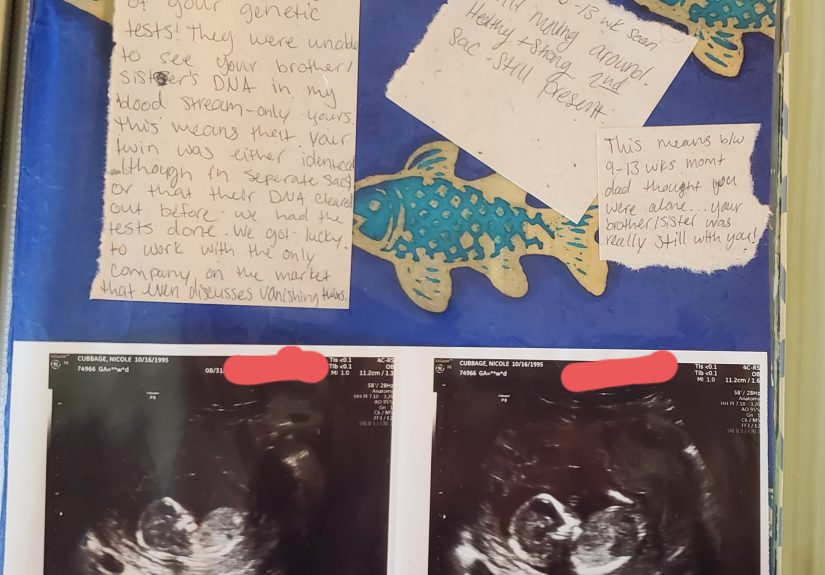
VTS is usually diagnosed through ultrasound. An early scan may show two gestational sacs (or two embryos with cardiac activity), and a later scan may show one developing fetus.
People sometimes ask about pregnancy hormone (hCG) trends. Hormones can be confusing in early pregnancyespecially with multiplesso clinicians generally don’t diagnose VTS by hCG alone. Ultrasound findings and clinical context matter most.
What Does This Mean for the Surviving Baby?
Here’s the hopeful part that many expecting parents need to hear out loud: when vanishing twin happens in the first trimester, the remaining pregnancy often continues and results in a healthy baby. Major clinical references describe that early loss frequently has minimal impact on the surviving fetus, though care is individualized.
Timing matters. Later losses (second or third trimester) can carry more risks and may require closer monitoring. Multiple pregnancy complications in general can include higher risks than singleton pregnancies, and clinicians evaluate the specific situationespecially depending on whether twins share a placenta (chorionicity).
Research on outcomes can be nuanced. For example, studies in IVF populations have explored whether pregnancies affected by vanishing twin differ in obstetric outcomes compared with singleton or ongoing twin pregnancies, with some findings suggesting differences in placental development and mixed outcome patterns depending on the group studied. Your provider will interpret what’s relevant for your pregnancy.
How Vanishing Twin Syndrome Can Complicate Prenatal Screening
This is a big one, and it’s one reason VTS deserves more than a shrug in the exam room. If one twin stops developing, fragments of DNA from that pregnancy tissue can linger for a while. That can affect certain prenatal screening testsespecially cell-free DNA screening (cfDNA), also called NIPT.
NIPT/cfDNA: Why Results Can Be Tricky
The American College of Obstetricians and Gynecologists (ACOG) notes that in multifetal gestations, if a vanishing twin or fetal demise is identified, there is a significant risk of inaccurate screening resultswhich means extra caution and counseling are important.
Patient education resources from major health systems also flag vanishing twin as a situation that can complicate prenatal screening.
In practice, that can look like:
- Screen-positive results that don’t match ultrasound findings
- Confusing sex chromosome results (for example, discordant fetal sex signals)
- Recommendations for follow-up testing or repeat evaluation depending on the scenario
Professional guidance documents discuss cfDNA screening in multifetal gestations, and research reviews specifically examine NIPT performance when a twin has demised early. The takeaway is not “NIPT is bad,” but rather “context matters,” and vanishing twin is a context that requires careful interpretation.
Other Screening (Blood Tests and Ultrasound Markers)
Traditional first- and second-trimester screening methods can also be influenced by the biology of a changing multiple pregnancy. That’s why clinicians may adjust recommendations about which tests are most appropriate and when.
What Happens Next: Care, Monitoring, and “Normal” Questions
There’s no “treatment” that reverses vanishing twin syndrome. Care typically focuses on:
- Monitoring the ongoing pregnancy (often with follow-up ultrasounds)
- Managing symptoms if there’s bleeding or cramping
- Discussing prenatal screening options and what results mean in your context
- Supporting emotional wellbeingbecause your brain and heart are also part of this pregnancy
Cleveland Clinic’s overview emphasizes that VTS can’t be prevented and underscores the importance of both clinical and emotional support as pregnancy continues.
Common Questions People Ask (Because Google Is a Chaotic Place)
“Did my body absorb the baby?”
Often, yesthe tissue may be reabsorbed by the placenta, the surviving twin, or the pregnant person. This is part of why it may no longer be visible later.
“Will I still have symptoms of pregnancy?”
Many people do, because the pregnancy is still continuing. Hormones are being produced by the ongoing pregnancy, so symptoms can continue or change like any other pregnancy.
“Is this the same as miscarriage?”
It’s a form of pregnancy loss affecting one embryo/fetus in a multiple pregnancyso it can be described as an early miscarriage of one twin.
“Should I get extra testing?”
That decision is personal and medical. Because vanishing twin can affect screening accuracy, it’s worth having a detailed conversation with your OB/GYN or maternal-fetal medicine specialist about which tests make sense and how to interpret results.
The Emotional Side: Grief With a Side of Whiplash
Vanishing twin syndrome can bring a very specific emotional experience: you may feel grateful for the surviving pregnancy and heartbroken about the losssometimes within the same five minutes. People often describe it as grief that doesn’t fit neatly into other people’s expectations (“But you’re still pregnant!” can be both true and painfully incomplete).
Support resources for pregnancy and infant loss emphasize that grief can be complex and isolating, and that connecting with supportprofessionals, groups, trusted friends, or familycan help.
If you find yourself minimizing your loss because it was “early” or because you’re “supposed to be happy,” consider this your permission slip: you can hold joy and sadness at the same time. That doesn’t make you ungrateful. It makes you human.
Conclusion
Vanishing twin syndrome is a surprisingly common early pregnancy event in which a pregnancy that began as twins (or more) becomes a singleton pregnancy, most often in the first trimester. It may come with spotting or crampingor no symptoms at alland is typically diagnosed by ultrasound. For many families, the surviving pregnancy continues normally, but the experience can complicate prenatal screening (especially NIPT/cfDNA) and can carry real emotional weight.
If you’re navigating VTS, the best next step is a conversation with your prenatal care team about monitoring, testing choices, and emotional support. You deserve clear explanations, thoughtful care, and space to feel what you feelno matter how many ultrasound images you end up taking home.
Experiences: What Vanishing Twin Syndrome Can Feel Like (Real-Life Style Scenarios)
1) “We went in for a heartbeat… and left with a whole new vocabulary.”
One of the most common experiences starts with an early scan that unexpectedly shows twins. The room gets lighterparents laugh, gasp, and immediately start doing mental math about car seats and college funds. Then, at a later appointment, the ultrasound shows one developing fetus. The clinician may explain that this can happen early, and that it’s called vanishing twin syndrome. Many parents describe a stunned, split-second reaction: relief that one baby is okay, followed instantly by grief for the one that isn’t. Some people say they felt “silly” being sad because the pregnancy was continuinguntil they realized the sadness wasn’t competing with the joy. It was simply sharing space with it.
2) IVF and early monitoring: “We knew too much, too soon… and that made it harder.”
With IVF or other fertility treatments, early ultrasounds are common, and multiple sacs may be detected very early. Some families describe a strange paradox: they were grateful for close monitoring, but the early visibility also meant they learned about a loss that might have gone unnoticed otherwise. After weeks (or years) of trying, a second sac can feel like a miracleso when it stops developing, it can feel like the rug got pulled out from under that joy. People often report needing extra emotional support during this time, especially when friends and relatives expect a “simple happy ending” once one baby is confirmed healthy.
3) The confusing test result: “The lab report said one thing. The ultrasound said another.”
Another common story involves prenatal screeningespecially NIPT/cfDNAafter a vanishing twin. A family might receive a result that seems inconsistent with later ultrasound findings (for example, an unexpected high-risk flag or a confusing sex-related result). This can trigger a stressful loop of follow-up calls, repeat scans, and genetic counseling. Many parents say the hardest part wasn’t just the uncertaintyit was feeling like they had to become their own project manager, tracking timelines (When did the twin stop developing? When was the blood drawn?) to make sense of what the screening could and couldn’t tell them. When clinicians explain that vanishing twin can affect screening accuracy, parents often describe feeling both frustrated (“Why didn’t anyone warn us?”) and relieved (“So I’m not crazythere’s a reason this looks messy.”).
4) Making space for grief: “We named the lost twin privatelyjust for us.”
Not everyone wants rituals, but many people find comfort in small, personal ways of honoring the loss. Some write a letter they never send. Some plant a flower or keep a small charm. Some choose a nickname“Star,” “Sunny,” “Little Bean”as a way to acknowledge that this baby mattered. Parents often say these gestures help them feel less alone in a grief that other people may not see. And when the surviving baby is born, some families continue to carry that memory gently, not as a shadow over the joy, but as part of the story that shaped them.
5) The mixed-emotion day-to-day: “I was excited in the morning and sad by lunch.”
A lot of people describe VTS as emotional whiplash. One moment you’re browsing baby names; the next you’re thinking about the twin who won’t be coming home. You might avoid sharing the pregnancy for longer, or you might share it and then feel complicated about the reactions you get. Many families find it helpful to practice a simple truth: two feelings can be true at once. If you’re happy and heartbroken, you’re not “indecisive.” You’re processing something genuinely complex.