Table of Contents >> Show >> Hide
- First, Understand What You’re Actually “Removing”
- Safety Rules That Save Paint (and Your Mood)
- What You’ll Need
- Step-by-Step: Safely Removing Fine Scratches
- Step 1: Wash Like You’re Trying Not to Add More Scratches
- Step 2: Decontaminate the Paint (Clay) for Cleaner Polishing
- Step 3: Tape Off Trim and Sensitive Edges
- Step 4: Do a “Test Spot” with a Finishing Polish First
- Step 5: Step Up to a Light Compound or Scratch Remover (Only If Needed)
- Step 6: Machine Polishing (Safer Than It SoundsIf You Use a DA)
- Step 7: Wet SandingOnly for Advanced DIY (and Only for Certain Scratches)
- Step 8: Reveal the Truth (Panel Wipe) and Protect the Finish
- Common Mistakes That Create More Scratches
- When DIY Isn’t the Answer (and That’s Okay)
- Preventing Fine Scratches So You Don’t Have to Do This Again Next Weekend
- FAQ: Quick Answers to Common “Can I Just…?” Questions
- Wrap-Up: Safe Scratch Removal Is a Process, Not a Product
- Real-World Experiences: What Usually Happens in the Driveway (and What People Learn)
- Experience #1: The Black Car That Looked Perfect… Until Tuesday
- Experience #2: The “Mystery Scratch” That Was Actually Paint Transfer
- Experience #3: The Overachiever Who “Fixed” the Scratch and Accidentally Dull-Polished the Whole Spot
- Experience #4: The “One Towel” Household That Keeps Recreating the Problem
Fine scratches on car paint are like bad selfies: they’re invisible until the worst possible lighting shows up.
One minute your car looks glossy and heroic, the next it looks like it fought a swarm of angry shopping carts.
The good news is that many “fine scratches” (including swirl marks and light scuffs) can be safely improvedor fully removedat home.
The trick is doing it the safe way: clean first, start gentle, test often, and protect afterward.
This guide walks you through a careful, pro-style process that minimizes risk to your clear coat.
You’ll learn how to tell what kind of scratch you have, what products/tools actually help, and what to avoid
unless you enjoy turning a tiny scratch into a big “learning opportunity.”
First, Understand What You’re Actually “Removing”
Modern automotive paint is typically layered: primer, base coat (color), and a clear coat on top.
Most fine scratches live in the clear coat. That’s important because most DIY “scratch removers” don’t
magically fill scratches foreverthey usually level the surrounding clear coat so the scratch becomes less visible.
Done correctly, it’s safe. Done aggressively, you can thin the clear coat too much.
Quick Scratch Check: Is It Fine, or “Body Shop Fine”?
- Wash first. Dirt can make a harmless scuff look like a canyon. Don’t diagnose a scratch on a dusty car.
-
The fingernail test (gentle!). Lightly run a clean fingernail across the scratch.
If your nail doesn’t catch, it’s usually a surface-level clear coat scratchgood DIY territory.
If it catches hard, it may be deeper and might not fully polish out. -
The “wet look” test. Mist the area with water (or quick detail spray). If the scratch nearly disappears when wet,
it’s typically in the clear coat and likely correctable with polishing. -
Color showing? If you see a different color (white/gray primer, bare metal, or plastic),
polishing won’t “remove” that. You’re in touch-up or professional repair land.
Safety Rules That Save Paint (and Your Mood)
- Work in the shade on a cool panel. Hot paint makes products flash fast and increases risk of marring.
- Start with the least aggressive method that can do the job. You can always step upstepping down is harder.
- Use clean, dedicated tools. A dirty towel is basically sandpaper with better marketing.
- Test a small section (like 1 ft x 1 ft) before doing the whole panel.
- Avoid edges and sharp body lines when polishing aggressivelypaint is often thinner there.
What You’ll Need
You don’t need a professional detailing van. You do need the right basicsand clean ones.
Essentials
- Car wash soap (not dish soap for regular washing), plus a wash mitt
- Two buckets (or one bucket + lots of rinsing) and a hose
- Quality microfiber drying towels (cleanno crumbs, no mystery grit)
- Clay bar or synthetic clay mitt + clay lubricant (optional, but very helpful)
- Painter’s tape (to protect trim and edges)
- Foam or microfiber applicator pads
- A fine finishing polish and/or a light scratch remover
- Wax, paint sealant, or ceramic spray to protect after correction
- Good lighting (sunlight, garage LEDs, or a bright flashlight)
Optional (but makes life easier)
- Dual-action (DA) polisher or a drill-powered polishing pad kit for small areas
- Panel wipe (isopropyl alcohol diluted with water) to remove polishing oils and check true results
- Multiple pads (you’ll want clean padsswapping is normal)
Step-by-Step: Safely Removing Fine Scratches
Step 1: Wash Like You’re Trying Not to Add More Scratches
This step matters more than people want it tobecause it’s not as exciting as “buff it until it shines.”
But washing removes loose grit that can cause fresh scratches while you polish.
- Rinse thoroughly to remove loose dirt.
- Use a soapy wash mitt and wash top-to-bottom (the lower panels are the grimiest).
- Rinse often. If you drop the mitt, stop and rinse it well (or swap it).
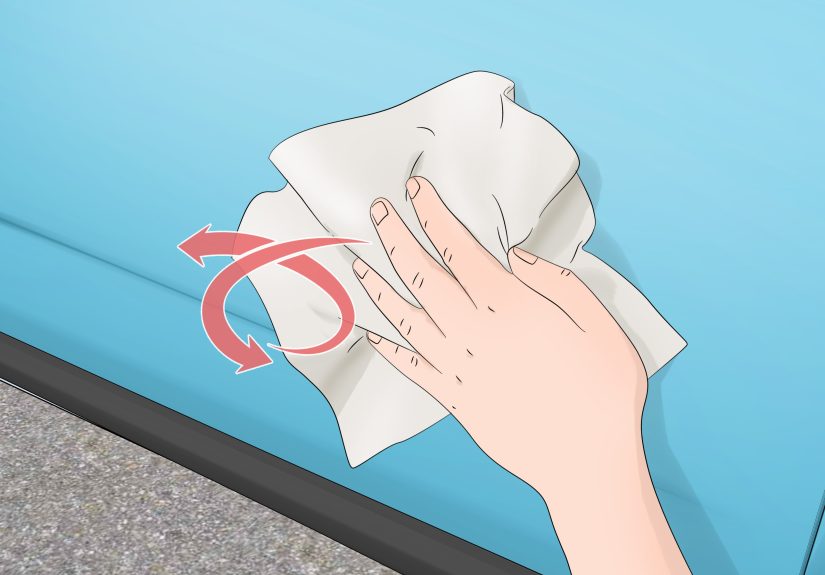
- Dry gently with a clean microfiber drying towel. Pat or glidedon’t grind.
Step 2: Decontaminate the Paint (Clay) for Cleaner Polishing
Even after washing, paint can hold bonded contamination (tar, rail dust, tree sap mist).
Polishing over that junk can cause additional micro-marringexactly what you’re trying to fix.
Clay removes bonded contaminants so your pad can focus on the scratch, not the crud.
- Spray clay lubricant on a small section.
- Gently glide the clay bar or clay mitt until it feels smooth.
- Wipe residue with a clean microfiber towel.
Step 3: Tape Off Trim and Sensitive Edges
Tape plastic trim, badges (if needed), and sharp edges near the scratch area.
This prevents staining and reduces the chance of catching an edge with a pad.
Step 4: Do a “Test Spot” with a Finishing Polish First
The safest strategy is to start with a finishing polish (least abrasive) on a small test area.
If that improves the scratch enough, congratulationsyou just saved clear coat thickness and time.
- Put a small amount of finishing polish on an applicator pad.
- Work a small area using light-to-moderate pressure.
- Use overlapping passes (up/down, then left/right) for even correction.
- Wipe off residue with a clean microfiber towel.
- Check under strong light. If you’re happy, repeat on the rest of the affected area.
Step 5: Step Up to a Light Compound or Scratch Remover (Only If Needed)
If the finishing polish barely made a dent, step up to a dedicated scratch remover or a light cutting compound.
This has more bite and levels the clear coat more quicklyso it also deserves more respect.
- Use a clean foam or microfiber applicator pad (or a polishing pad on a DA polisher).
- Work in small sections (roughly 1–2 square feet) so product doesn’t dry out.
- Use a controlled pattern: slow overlapping passes, not frantic scrubbing.
- Wipe residue and inspect often. The goal is “just enough,” not “let’s see what’s under the clear coat.”
Step 6: Machine Polishing (Safer Than It SoundsIf You Use a DA)
If you have lots of swirl marks or you’re working on harder clear coats, a dual-action polisher can be a big help.
A DA is generally safer than a rotary buffer for beginners because it’s less likely to concentrate heat in one spot.
You can also use smaller, drill-powered kits for isolated fine scratchesjust keep control and don’t linger.
- Prime your pad with a small amount of product (don’t soak it).
- Spread product on the panel before turning the machine up.
- Use moderate pressure for cutting, then lighten pressure for finishing passes.
- Keep the pad flat and moving slowly. Hovering in one spot builds heat.
- Wipe, inspect, repeat if needed. Swap pads if they load up with product.
Step 7: Wet SandingOnly for Advanced DIY (and Only for Certain Scratches)
Wet sanding can remove deeper defects by leveling the clear coat faster, but it’s easy to overdo.
If you’re not comfortable measuring risk, skip this step and stick to polishingor consult a pro.
- Use very fine grit (think ultra-fine finishing grits), keep the surface wet, and sand lightly.
- Stay away from edges/body lines where clear coat is thinner.
- Stop immediately if you see color transfer on your paper/pad (that can mean you’ve reached base coat).
- Always follow with compounding, then finishing polish to restore gloss.
Step 8: Reveal the Truth (Panel Wipe) and Protect the Finish
Some products contain oils that can temporarily mask fine defects. A quick panel wipe helps you see real results.
Once you’re satisfied, protect the corrected areabecause polishing removes a bit of whatever protection was there.
- Optional: wipe with a diluted isopropyl alcohol mix to remove polishing oils.
- Apply wax, paint sealant, or a ceramic spray according to directions.
- Let it cure as recommended before washing again.
Common Mistakes That Create More Scratches
- Dry wiping dust off paint with a towel. That’s how swirl marks are born.
- Using one towel forever. Towels need to be clean, and you need more than one.
- Going aggressive immediately. Heavy compound first is like using a chainsaw to open a package.
- Working in direct sun or on hot paint (product flashes, you overwork, bad things happen).
- Skipping protection after polishing (your paint is more vulnerable afterward).
When DIY Isn’t the Answer (and That’s Okay)
Sometimes the safest scratch removal plan is admitting you’re not actually removing it at home.
Consider professional help if:
- The scratch goes through color or shows primer/metal/plastic.
- There’s rust beginning in the scratch.
- The panel has failing clear coat (peeling/flaking). Polishing won’t fix that.
- You have a leased vehicle and need near-perfect results for inspection.
- You’re not sure what you’re seeingand you’d rather not “learn by repaint.”
Preventing Fine Scratches So You Don’t Have to Do This Again Next Weekend
- Use a touchless wash or careful two-bucket hand wash when possible.
- Avoid dirty brushes at automatic car washesthe swirl marks are basically included.
- Use a drying aid (quick detailer or spray sealant) to add lubrication while drying.
- Keep protection on the paint (sealant/wax/ceramic spray). Protected paint cleans easier.
- Use clean wash media and retire towels that feel rough or have debris embedded.
FAQ: Quick Answers to Common “Can I Just…?” Questions
Can toothpaste remove fine scratches from car paint?
Sometimes it can slightly improve very light scuffs because it’s mildly abrasive, but it’s inconsistent and not formulated for automotive clear coat.
If you care about doing it safely, use a proper automotive polish or scratch remover designed for paint.
Will scratch remover remove my wax or ceramic protection?
Most likely, yes. Anything abrasive enough to level a scratch is also abrasive enough to reduce or remove protective layers.
Plan to reapply protection afterward.
Why do scratches look worse at night under streetlights?
Swirl marks and micro-scratches scatter point-source light (like LEDs), making them pop.
That’s why inspection lighting is so effectiveand why parking lot lights can feel personally judgmental.
Wrap-Up: Safe Scratch Removal Is a Process, Not a Product
If you remember only three things, make them these: clean first, start gentle, and protect after.
Most fine scratches are correctable because they’re in the clear coat, but your clear coat is also a finite resource.
Careful technique beats aggressive products every time.
Real-World Experiences: What Usually Happens in the Driveway (and What People Learn)
To make this practical, here are a few common “real life” scenarios that car owners run into when trying to remove fine scratches.
These aren’t meant to be dramaticjust familiar. If you’ve ever stared at your hood under a flashlight like a detective,
you’ll feel seen.
Experience #1: The Black Car That Looked Perfect… Until Tuesday
A very common story: someone buys (or lovingly maintains) a dark-colored car. In soft daylight, the paint looks deep and glossy.
Then they go through a quick tunnel wash because it’s fast and “probably fine.”
That night under LED lights, the hood looks like it was polished with a sweater made of tiny knives.
What typically works here is not jumping straight to heavy compound. Most of these marks are shallow wash-induced swirls.
The best results usually come from a gentle wash, claying if the paint feels rough, and then using a finishing polish
often with a dual-action polisher for consistency. The lesson: for dark paint, your wash routine is half the battle,
and your drying towel is the other half. (Yes, the towel matters. It always matters.)
Experience #2: The “Mystery Scratch” That Was Actually Paint Transfer
Another common moment: you find a thin, ugly mark on a bumper or door edge and assume the clear coat is destroyed.
But sometimes it’s not a scratch at allit’s paint transfer from a pole, another car’s bumper, or a garage mishap.
When the mark looks like a different color smeared on top, there’s a good chance you’re dealing with transfer.
In these cases, people often get surprisingly good results with safe chemical help and light polishing.
After washing, a dedicated automotive cleaner or a gentle polishing product can lift transfer without aggressive abrasion.
The lesson: diagnose before you “correct.” Not every mark is a crater.
Experience #3: The Overachiever Who “Fixed” the Scratch and Accidentally Dull-Polished the Whole Spot
This is the cautionary tale: someone focuses on a scratch like it insulted their family.
They rub and rub in one small area, using a more aggressive compound than needed.
The scratch improves… but now the area looks hazy or dull compared to the surrounding paint.
This usually happens because the cutting step wasn’t followed with a refining step.
Cutting compounds can leave micro-marring or hazetotally normal. The fix is a finishing polish afterward,
ideally with a softer pad and lighter pressure. The lesson: paint correction is often a two-step dance:
cut (if necessary), then refine. Don’t skip the second song.
Experience #4: The “One Towel” Household That Keeps Recreating the Problem
Many people do everything right oncewash, polish, protectand the car looks awesome. Then, a week later,
they wipe dust off with a dry towel they found in the trunk (which also once cleaned a spilled iced coffee).
The swirls return like a sequel nobody asked for.
The lesson here is simple and slightly annoying: maintenance prevents rework.
If you keep dedicated, clean wash mitts and microfiber towels for paint, wash them properly,
and avoid dry wiping, your corrected paint stays looking corrected.
It’s the difference between “I fixed it” and “I fix it every Saturday forever.”
The bottom line from these experiences: most fine scratch removal success comes from
patience, cleanliness, and using the least aggressive method that works. The products matter,
but technique matters morebecause even the fanciest polish can’t outsmart a gritty towel.