Table of Contents >> Show >> Hide
- Quick Basics: What You’re Controlling (and Why It Matters)
- Before You Start: Set Yourself Up for Smooth Shifts
- The Main Event: How to Shift Gears on a Motorcycle in 10 Steps
- Step 1: Start the bike in neutral and get your hands/feet in “ready” position
- Step 2: Squeeze the clutch all the way in
- Step 3: Click down into first gear (from neutral)
- Step 4: Find the friction zone and roll on a little throttle
- Step 5: Smoothly release the clutch the rest of the way as you gain speed
- Step 6: Upshift to second: roll off the throttle, clutch in, shift up, clutch out, throttle on
- Step 7: Repeat upshifts as needed (2 → 3 → 4, etc.) and use engine sound as your cue
- Step 8: Downshift smoothly while slowing: brake first, clutch in, shift down, (optional blip), clutch out
- Step 9: Come to a stop in first gear (or select neutral when stopped)
- Step 10: Practice until it’s muscle memorythen practice a little more
- How to Upshift Smoother (The “No Head Bob” Checklist)
- How to Downshift Without the “WHAM!”
- When Should You Shift? Practical Cues (No Tach Required)
- Common Beginner Mistakes (and How to Fix Them)
- Simple Practice Drills (Parking Lot Friendly)
- FAQ: Quick Answers for New Riders
- Conclusion: Smooth Shifting Is a Skill (and You’re Building It)
- Rider Experiences: What It Feels Like When Shifting Finally “Makes Sense” (Extra)
Shifting a motorcycle is basically a three-person group project where your left hand, left foot, and right wrist
are all convinced they’re the team captain. The good news? Once they stop arguing, shifting becomes so natural
you’ll do it without thinkingkind of like blinking, but with more vroom.
This guide walks you through exactly how to shift gears on a motorcycle in 10 clear steps,
with beginner-friendly explanations, examples, and a few “please don’t do that” moments to help you stay smooth,
safe, and in control.
Quick Basics: What You’re Controlling (and Why It Matters)
Most manual motorcycles use a sequential transmission. That means gears go in order:
you don’t jump from 2nd to 5th like you’re clicking a Netflix episode list.
You shift one gear at a time with a foot lever.
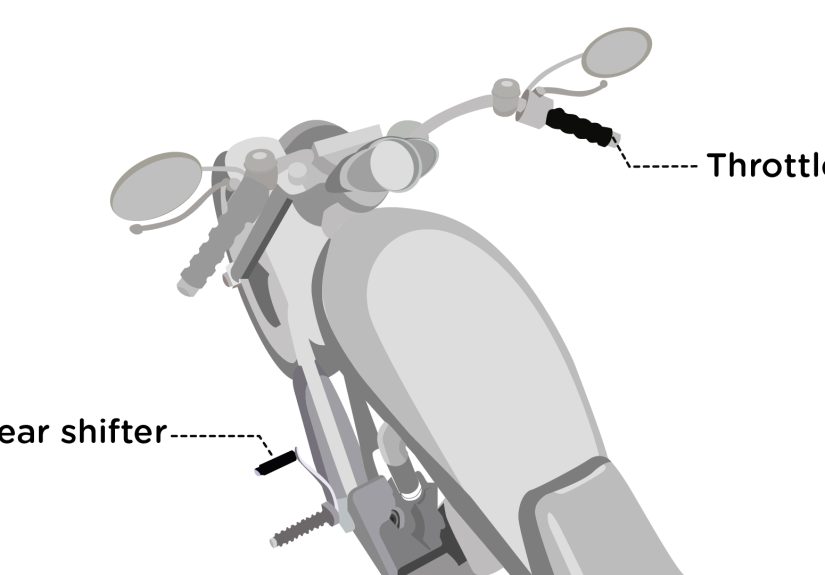
The three main controls for shifting
-
Clutch lever (left hand): Temporarily disconnects engine power from the rear wheel so the
transmission can change gears smoothly. - Shift lever (left foot): Clicks the bike up or down through gears.
- Throttle (right hand): Controls engine RPM; how you time it affects how smooth the shift feels.
The usual shift pattern
On most street motorcycles, it’s: 1st gear down, neutral half-click up, then 2-3-4-5-6 up.
People often remember it as: “one down, the rest up.”
(Yes, there are exceptionssome bikes have quickshifters, some are automatic/DCT, and some track setups use a
reverse “GP shift.” But for a typical beginner manual bike, you’re living in One-Down-World.)
Before You Start: Set Yourself Up for Smooth Shifts
The smoothest shifting technique in the world won’t help if you’re tense, staring at your feet, or practicing in
a cramped driveway with a trash can playing goalie.
Do this first
- Practice in a flat, open area (empty parking lot beats “busy street with opinions”).
- Wear proper gear: helmet, gloves, over-the-ankle footwear, long pants, and a jacket.
- Adjust your controls if needed: levers and shifter should feel easy to reach and operate.
-
Get familiar with the “friction zone”: that sweet spot where the clutch begins to transfer
power and the bike starts to move.
The Main Event: How to Shift Gears on a Motorcycle in 10 Steps
These steps cover the whole flow: starting, moving off, upshifting, downshifting, and stopping. Read them once,
then practice them slowly until your body does the choreography without you narrating it like a sports commentator.
-
Step 1: Start the bike in neutral and get your hands/feet in “ready” position
With the bike upright and stable, start the engine in neutral (often indicated by a green “N”
light). Place your left foot near the shift lever, left fingers covering the clutch, right hand lightly on the
throttle, and right fingers ready for the front brake. -
Step 2: Squeeze the clutch all the way in
Pull the clutch lever fully to the handlebar. This disconnects engine power from the transmission so you can
select a gear without drama, grinding, or your bike doing an unexpected interpretive dance. -
Step 3: Click down into first gear (from neutral)
Press the shifter down firmly with your left foot until it clicks into 1st gear. Keep the
clutch squeezed in. Your bike may “clunk” a bitthat’s normal, especially when it’s cold. -
Step 4: Find the friction zone and roll on a little throttle
Slowly begin releasing the clutch until you feel the bike want to movethis is the friction zone.
Add a small, steady amount of throttle (think “gentle twist,” not “summon thunder”).The goal: the bike starts moving forward smoothly without stalling or launching.
-
Step 5: Smoothly release the clutch the rest of the way as you gain speed
As the bike rolls, continue easing out the clutch until it’s fully released. Keep your throttle smooth.
If the bike feels jerky, slow down your clutch release and be gentler with the throttle. -
Step 6: Upshift to second: roll off the throttle, clutch in, shift up, clutch out, throttle on
Here’s the classic upshift sequence:
- Roll off the throttle slightly (reduce power)
- Squeeze the clutch in quickly
- Lift the shift lever firmly to the next gear
- Release the clutch smoothly
- Roll on the throttle again
Timing tip: this should feel like one fluid motion, not five separate meetings with a committee.
-
Step 7: Repeat upshifts as needed (2 → 3 → 4, etc.) and use engine sound as your cue
Most beginners either shift too early (bike bogs/lugs) or too late (engine screams). You don’t need perfect
RPM numberslisten and feel:- Lugging (low RPM, shaky/struggling feel) means you likely need a downshift.
- High, busy engine sound when accelerating usually means it’s time to upshift.
Example: In a neighborhood, many bikes cruise comfortably in 2nd or 3rd. On faster roads, you’ll climb into
higher gears to keep the engine calmer. -
Step 8: Downshift smoothly while slowing: brake first, clutch in, shift down, (optional blip), clutch out
Downshifting is where riders either become butter-smooth legends… or head-bobbing dashboard toys.
The stable approach is:- Roll off the throttle and begin braking to reduce speed
- Squeeze the clutch in
- Press the shifter down one gear
- Optional: add a small throttle blip to raise RPM (rev matching) for extra smoothness
- Release the clutch smoothly (don’t dump it)
If you release the clutch too quickly in a downshift, the bike may jerk because the engine speed doesn’t match
the wheel speed yet. That’s exactly what rev matching helps with. -
Step 9: Come to a stop in first gear (or select neutral when stopped)
As you approach a stop, downshift one gear at a time as your speed drops. Many rider training programs teach
stopping in 1st gear with the clutch in so you’re ready to move if needed.Once stopped, you can stay in 1st (clutch in) or shift to neutral. New riders often prefer neutral at long
lights to rest the handjust stay alert and ready. -
Step 10: Practice until it’s muscle memorythen practice a little more
Shifting is a coordination skill. At first, your brain will feel “full.” That’s normal.
Practice short sessions and stop before fatigue turns smooth practice into sloppy habit.
How to Upshift Smoother (The “No Head Bob” Checklist)
- Don’t stare at the shifter. Look where you want to go; your foot will learn the lever.
- Be quick with clutch-in, smooth with clutch-out. That combo reduces lurching.
- Ease off the throttle slightly before the shift. It helps “unload” the transmission.
- Shift with a firm, clean click. Half-hearted taps can land you in a false neutral.
- Don’t rush the first-to-second shift. It’s often the clunkiest and the one beginners notice most.
How to Downshift Without the “WHAM!”
Downshifting is really two goals at once: selecting the right gear and matching engine speed to the new
gear so the transition doesn’t yank the bike.
Beginner-friendly method: “Brake, clutch, click, smooth release”
Focus on braking first. Let your brakes do the majority of slowing, then downshift as your speed drops. When you
release the clutch, do it smoothly through the friction zoneespecially in lower gears.
Next-level smooth: add a small throttle blip (rev matching)
A throttle blip is a quick, small twist to raise RPM while the clutch is in. The idea is simple:
lower gear needs higher RPM at the same road speed. A blip helps the engine meet the wheel speed,
so the clutch release feels like a handshake, not a shove.
Keep it modest. If your blip is huge, the bike may surge forward like it just read an inspirational quote.
When Should You Shift? Practical Cues (No Tach Required)
Different motorcycles like different shift points. A small beginner bike may like higher RPM before it pulls
strongly; a bigger bike may happily short-shift and cruise.
- Shift up when the engine sounds busy and you’re accelerating steadily.
- Shift down when the engine feels weak, shakes, or struggles when you ask for acceleration.
- Match gear to situation: choose a gear that gives you smooth control, not panic revs.
Example: You’re cruising at 35 mph and twist the throttle to pass, but the bike hesitates and feels “chuggy.”
That’s a classic downshift momentdrop one gear, then accelerate.
Common Beginner Mistakes (and How to Fix Them)
1) Stalling at takeoff
Usually caused by releasing the clutch too fast or not adding enough throttle. Fix it by slowing down the clutch
release and holding the friction zone a beat longer.
2) Jerky downshifts
Usually clutch release is too quick. Smooth it out through the friction zone, and consider a tiny rev-match blip.
3) False neutral between gears
Often a “lazy” shift. Be deliberate with your foot: firm click, then release pressure and let the lever reset.
4) Riding the clutch
Hanging out in the friction zone too long can wear the clutch. Use the friction zone for starts and slow-speed
control, but fully release the clutch once you’re moving normally.
5) Looking down too much
Your bike goes where you look. Train your eyes up and ahead. Your feet can learn their job without supervision.
Simple Practice Drills (Parking Lot Friendly)
Drill 1: Friction-zone crawl
In first gear, practice moving at walking speed using tiny clutch adjustments and light rear brake. This builds
control and makes shifting feel calmer.
Drill 2: Start–stop repeats
Start smoothly, roll 20–30 feet, brake smoothly, clutch in, stop. Repeat. Your goal is consistency, not speed.
Drill 3: 1st-to-2nd-to-1st loop
Ride a simple oval. Practice one clean upshift to 2nd on the straight, then slow and downshift back to 1st before
the next slow section.
FAQ: Quick Answers for New Riders
Can I shift without the clutch?
Some riders do clutchless upshifts on certain bikes, and some bikes have quickshifters designed for it. But if
you’re learning, use the clutch. Master the basics first; you can unlock bonus features later.
Do I need to downshift every time I slow down?
You should be in a gear that lets you accelerate if needed. Many riders downshift progressively as speed drops so
they’re always in the right gear for control.
Why does first gear feel “clunky”?
First gear engages hard because of how the transmission is built and how much torque is involved at low speed.
A solid click into first is normalespecially when the bike is cold.
Conclusion: Smooth Shifting Is a Skill (and You’re Building It)
If shifting feels awkward at first, congratulationsyou are currently learning a real skill, not just pressing
buttons. Start with the 10-step flow, practice in short sessions, and prioritize smooth clutch release and clean
lever clicks. Within a surprisingly short time, your hands and feet will stop holding a meeting and start working
as a team.
And when it finally “clicks,” you’ll wonder why it ever felt complicatedright up until you try to explain it to
a friend and realize your body just does it now. That’s the magic of muscle memory.
Rider Experiences: What It Feels Like When Shifting Finally “Makes Sense” (Extra)
Most new riders don’t struggle because shifting is difficultthey struggle because it’s new. The first
few sessions often feel like your brain has a tiny whiteboard where it’s writing: “Clutch… throttle… foot… no,
the other foot… why is my helmet so loud?” That’s normal. Early on, you might notice you can do one part well
(like starting smoothly) but then your upshift feels like a cartoon “BONK.” The usual turning point is when you
stop treating shifting like five separate actions and start blending it into one motion.
Riders often describe their first smooth 1st-to-2nd upshift as oddly satisfyinglike sliding a drawer shut and it
lands perfectly without rattling. It’s also common to realize that being smooth isn’t about being slow; it’s about
being consistent. A quick clutch pull paired with a calm clutch release is what stops the bike from
lurching. People also notice that when they relax their shoulders and loosen their grip a bit, the whole bike feels
less jerky. Tension travels straight into your controlsyour hands squeeze, your wrist twists too much, and then
you blame the motorcycle like it had free will.
Downshifting has its own “aha” moment. Beginners often say the bike feels like it’s “jumping” when they downshift.
What’s really happening is the engine speed and wheel speed aren’t matching yet, so releasing the clutch too fast
creates a sudden tug. When riders learn to release the clutch smoothly through the friction zoneor add a small,
polite throttle blipdownshifts start feeling like a gentle settling instead of a head-nod. A lot of riders also
learn that braking first makes everything calmer. When your brakes do the slowing and your downshift simply selects
the right gear, the bike feels more stable and predictable.
Another common experience is “gear confidence.” At first, riders obsess over which gear they’re in. Later, they
start thinking in outcomes: “Do I need more power right now?” If yes, downshift. “Is the engine screaming and I’m
just cruising?” If yes, upshift. That shift in thinkingfrom counting gears to reading the bikemakes riding feel
dramatically easier. Many riders also develop little habits like lightly pre-positioning their foot under the
shifter before an upshift, or keeping their toes in a consistent spot so they don’t hunt for the lever.
Finally, almost everyone has a “comedy stall” story: stalling at a stop sign with an audience, then restarting
while trying to look like they meant to do that. The best riders you know? They’ve done it too. The difference is
they kept practicing until stalling became rareand then basically stopped caring because they knew how to recover
smoothly. If you take anything from rider experiences, let it be this: smooth shifting isn’t a talent you either
have or don’t have. It’s a rhythm you buildone clean start, one calm upshift, one buttery downshift at a time.