Table of Contents >> Show >> Hide
- Why Grocery Store Ads Can Be Misleading
- Red Flags on Food Packaging
- Price Tricks and “Deals” That Aren’t Really Deals
- A Simple Checklist for Spotting False or Misleading Grocery Ads
- Teaching Kids and Teens to Be Ad-Savvy Shoppers
- What to Do If You Think an Ad Is Truly Deceptive
- Real-Life Experiences: How Shoppers Learn to Spot False Grocery Ads
- Bottom Line: Be a Label Detective, Not a Target
Walk into any modern supermarket and you’re instantly greeted by a wall of promises:
“All Natural!”, “No Sugar Added!”, “Made with Real Fruit!”, “Buy One, Get One Free!”
It’s like a dating app for groceries everything looks amazing, and almost nothing is
telling you the full story.
The truth is, grocery store advertising and food labels are carefully designed to get your
attention, push emotional buttons, and nudge you to spend more. Most of it is legal, but a
surprising amount can be misleading, confusing, or just plain sneaky. Learning how to
decode these messages is one of the smartest money- and health-saving skills you can build.
In this guide, you’ll learn how to spot false or misleading ads at the grocery store,
understand the most common tricks on packaging and price tags, and use simple strategies
to become the kind of shopper marketers secretly fear: informed, calm, and impossible to
manipulate.
Why Grocery Store Ads Can Be Misleading
In the U.S., food ads and labels are regulated, but they’re not written by nutrition
fairies. The Federal Trade Commission (FTC) requires advertising claims
to be truthful, not deceptive, and backed up by evidence, while agencies like the FDA and
USDA regulate what can go on food packaging and nutrition labels. However, there’s still
a lot of wiggle room between “technically accurate” and “actually helpful for shoppers.”
Marketers use that wiggle room to:
- Create a “health halo” with words like “natural,” “wholesome,” or “light,” even if the food is highly processed.
- Highlight the good (like added vitamins) while burying the bad (like added sugar or sodium) in tiny print.
- Frame prices in ways that make deals look better than they really are.
The result? Foods that appear healthier or cheaper than they are, and shoppers who feel
like they’re making smart choices when they’re actually just responding to smart marketing.
Red Flags on Food Packaging
False or misleading grocery ads don’t just live on TV or in circulars. Most of the action
happens right on the package sitting on the shelf. Here’s what to watch for.
1. “All Natural” and Other Vague Health Halos
The term “natural” sounds comforting, but in the U.S. it is loosely defined
for many foods and does not automatically mean “healthy.” Products labeled “natural”
can still be high in sugar, sodium, or refined ingredients. Some guidance only limits the
use of artificial colors and synthetic ingredients not overall processing or nutrition.
Other fuzzy halo words to watch:
- “Wholesome” – Feel-good language, not a regulated health claim.
- “Packed with goodness” – Completely subjective, usually paired with small print of less-awesome ingredients.
- “Made with simple ingredients” – Sometimes true, sometimes marketing magic with a long ingredient list on the back.
How to double-check: Flip the package over. If the ingredients list is
long, full of added sugars, refined flours, and preservatives, that “natural” claim is
there to sell you a feeling, not nutrition.
2. “Made with Real Fruit” (But How Much?)
You’ll see this on fruit snacks, cereals, drinks, and even cookies. “Made with real fruit”
may mean there’s a tiny splash of fruit juice concentrate in a product that’s otherwise
mostly sugar and starch. Companies aren’t required to show you the percentage of fruit
on the front of the package.
Red flag: The front of the box shows fresh, whole berries, but the
ingredients list starts with sugar, corn syrup, or “fruit juice concentrate.” The fruit is
doing more work in the picture than in the recipe.
3. “Multigrain” and “Made with Whole Grains”
Here’s a classic example of something that sounds healthier than it is:
- “Multigrain” just means the product contains more than one type of grain. They can all be refined and low in fiber.
- “Made with whole grains” may mean there’s a sprinkle of whole grain in a mostly white-flour product.
How to check:
- Look for “100% whole grain” or a similar phrase.
- Check the ingredients list: the first ingredient should be a whole grain (like “whole wheat flour” or “oats”), not “enriched wheat flour.”
- Check the fiber content: a higher-fiber product is more likely to truly be whole grain.
4. “Low-Fat,” “Fat-Free,” and “No Cholesterol”
These claims are regulated but still easy to misunderstand.
- “Fat-free” or “sugar-free” products can contain up to 0.5 grams of that nutrient per serving. If the serving size is unrealistically small, you might consume more than you think.
- “Low-fat” foods often compensate with added sugar or refined carbs to improve taste.
- “No cholesterol” on plant-based products doesn’t mean they’re low in saturated fat, sugar, or calories it just means they never contained cholesterol to begin with, because cholesterol comes from animal products.
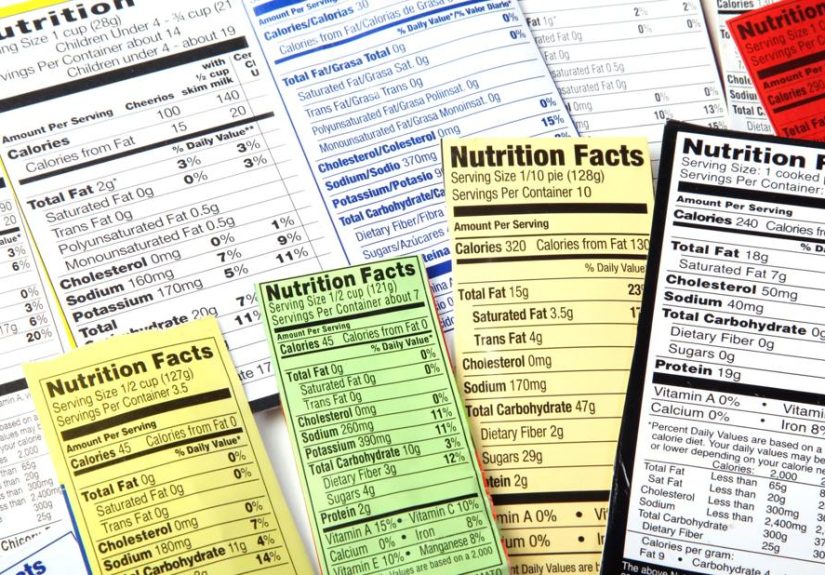
Label detective tip: Ignore the big “low-fat” sticker at first. Go
straight to the Nutrition Facts panel and compare total sugar, fiber, sodium, and
calories with a regular version or another brand.
5. “No Sugar Added” vs. Low Sugar
“No sugar added” sounds perfect if you’re trying to cut back. But this claim only means
that no sugar was added during processing. The food can still be naturally
high in sugar think fruit juice, dried fruit, or flavored milk. A bottle of juice with
“no sugar added” can still deliver a big sugar load in one serving.
What to look at instead:
- Check “Total Sugars” and “Added Sugars” on the Nutrition Facts label.
- Watch serving sizes a bottle might contain two or more servings.
- Compare with an unsweetened or whole-food option (like whole fruit instead of juice).
6. Hidden Sugars and Tiny Serving Sizes
Ingredients lists are ordered by weight, so the first few items matter most. Companies
sometimes use multiple types of sugar (like cane sugar, honey, brown rice syrup, and
fruit juice concentrate) so that none of them appears first, even if the product is very
sweet overall.
Another trick is to use tiny serving sizes. If the label serving is only
a few chips or half a cup of cereal, the numbers look better but no one eats that little
in real life.
Pro move: Multiply everything by the number of servings you actually eat.
Suddenly that “reasonable” snack might look like an entire meal’s worth of sugar and
salt.
Price Tricks and “Deals” That Aren’t Really Deals
Misleading grocery ads aren’t just about health or ingredients they’re also about
prices. Some of the most common “false feeling” ads happen on shelf tags and in the
weekly circular.
1. BOGO (Buy One, Get One) and Multi-Buy Offers
BOGO and “2 for $5” deals are everywhere. Sometimes they’re great, but often the “sale”
price is based on an inflated regular price. In some cases you may be able to buy just
one at the sale price; in others, you’re pushed to buy more than you really need.
Lawsuits and consumer investigations have pointed out that in some promotions, shoppers
actually pay more per pound for BOGO meat or produce than they pay when those
items are simply on a straightforward per-pound sale. Meanwhile, multi-buy offers (“3 for
$6!”) may cost the same per unit as the regular price they just look more exciting on
the sign.
How to protect yourself:
- Check the unit price (price per ounce, pound, or liter) on the shelf tag.
- Ask if you must buy two to get the deal or if the sale applies to a single item.
- Skip the “free” second item if you’ll end up wasting it.
2. Shrinkflation: Smaller Packages, Same Price
Shrinkflation is when the price stays the same but the package quietly gets smaller.
Instead of raising the shelf price, manufacturers shave a few ounces off a bag of chips or
reduce the number of sheets in a paper towel roll. The package design often changes just
enough to distract you.
Spotting shrinkflation:
- Compare package size in ounces or grams to what you remember not just how it looks.
- Check the unit price to see if you’re paying more per ounce than you used to.
- Watch for new “improved” packaging with oddly specific sizes like 13.2 ounces instead of 16.
3. “Sale” Signs Without Real Savings
Sometimes a bright “SALE!” sign appears under a product, but the price is the same as
last week or only a few cents less. In some cases, the “regular price” listed on a
sign might never have been widely charged for any meaningful period of time.
While most stores have policies about accurate pricing, they still use big fonts, bright
colors, and percentage-off language to make small discounts feel more impressive than
they are.
Smart shopper move: Focus less on “50% OFF!” and more on the actual
price you’ll pay today compared with store brands or other sizes.
4. Confusing Shelf Placement and Similar Packages
Have you ever grabbed a product you thought was on sale, only to find at the checkout
that the sale tag belonged to the item right next to it? That’s not always an accident.
Putting full-price items near sale signs or using nearly identical packaging for premium
and budget versions can cause rushed shoppers to grab the wrong one.
Quick check: Before dropping it in your cart, match the brand, flavor,
size, and barcode number on the shelf tag with the package in your hand.
A Simple Checklist for Spotting False or Misleading Grocery Ads
Before you believe the big print, walk through this mini-checklist:
- Ignore the front first. Go straight to the Nutrition Facts and ingredients list.
- Decode buzzwords. “Natural,” “multigrain,” and “no cholesterol” are not guarantees of health.
- Scan for sugar aliases. Words ending in “-ose,” syrups, honey, and concentrates all count.
- Check serving size. Multiply nutrients by how much you’ll actually eat.
- Compare unit prices. Use the per-ounce or per-pound cost to judge real value.
- Check for shrinkflation. Don’t assume the package is the same size as last month.
- Pause on promotions. Ask yourself: “Would I buy this much if it weren’t on sale?”
Teaching Kids and Teens to Be Ad-Savvy Shoppers
Kids are prime targets for grocery advertising bright colors, cartoon mascots, and
“collect them all!” boxes are everywhere. You can turn each trip into a mini media-literacy
lesson:
- Ask them what the front of the box is trying to make them feel or believe.
- Show them how the back of the package tells a different story.
- Play a game: who can spot the most misleading claim in an aisle?
The goal isn’t to make kids cynical, just curious to see packaging as advertising, not
truth.
What to Do If You Think an Ad Is Truly Deceptive
Most grocery advertising tricks are legal, if annoying. But if you think a store or brand
is crossing the line for example, if the price at the register doesn’t match the shelf
tag, or the product flat-out doesn’t match its claims you have options.
- Start with the store. Ask customer service or a manager to honor the shelf price or clarify the promotion.
- Document the issue. Take photos of the product, signs, and receipt.
- Contact your state consumer protection office. Many states have hotlines or forms for reporting deceptive pricing and advertising.
- Submit a complaint to the FTC. If the ad seems clearly misleading, you can report it online. While they may not investigate every case, complaints help regulators spot patterns.
Remember: you’re not being “difficult” you’re asking for honest information in a system
that’s supposed to provide it.
Real-Life Experiences: How Shoppers Learn to Spot False Grocery Ads
Let’s talk about what this looks like in real life, beyond the nice, tidy checklist.
Most of us learn to spot false or misleading grocery ads the hard way: by getting fooled
and then slowly getting wiser.
Picture this: You’re in a rush after work, standing in front of the yogurt case. A
brightly colored carton screams “NO SUGAR ADDED” in big, happy letters. You toss it in
the cart, feeling pretty proud of your healthy choice. Later at home, you glance at the
label while eating and realize the yogurt still has more than 20 grams of sugar per
serving all “naturally occurring” from fruit and milk. Technically, the claim was true.
Practically, your blood sugar doesn’t care about the technicality.
Or maybe you’ve fallen for the “made with real fruit” cereal that your kids beg for. The
box shows glossy strawberries and blueberries practically leaping off the front. When you
finally read the ingredients list, you discover the “fruit” is mostly juice concentrate
and flavoring, and the cereal itself is mostly refined grains and sugar. The first time
you notice that, you feel a mixture of annoyance and a weird sort of gratitude the ad
just gave you a crash course in marketing.
Price promotions teach equally memorable lessons. Many shoppers can recall their first
“aha” moment with a BOGO sale. You see “BUY ONE, GET ONE FREE” on a family pack of
chicken, only to notice the price per pound is suspiciously high. A week later, the same
chicken is on a straightforward per-pound sale that’s actually cheaper than the flashy
BOGO was. Once you’ve seen that trick, you start checking unit prices like a hawk and
suddenly the store feels less like a treasure hunt and more like a math puzzle you’re now
equipped to solve.
Shrinkflation stories are just as common. Maybe you’ve opened a bag of chips and thought,
“Did this always feel this light?” You look at the net weight and realize the bag is now
13 or 13.5 ounces instead of the 16 ounces you grew up with same brand, same look,
slightly smaller contents. The next time you shop, you automatically compare weights
between brands, and that 20 minutes you once spent doom-scrolling on your phone gets
repurposed into quietly becoming an expert on snack pricing.
Over time, these small experiences add up. You start treating every bold claim as a
conversation starter, not a conclusion. “Low-fat?” Okay, what did they add instead?
“Organic?” Great, but how much sugar or salt is in there? “On sale?” Compared to what,
exactly? Your inner monologue shifts from “Ooh, that looks good” to “Let me see if this
actually makes sense.”
Some shoppers even turn it into a personal challenge or game. They see how many times per
trip they can catch a misleading phrase, or how often the store brand beats the flashy
advertised product in both price and nutrition. Others share tips with friends or family:
“Hey, did you notice these two cereals are basically identical, but one is half the price
because it doesn’t have cartoon characters on the box?”
The more you practice, the faster it goes. What feels like detective work at first
eventually becomes automatic. Within a few months of paying attention, many shoppers
report that they:
- Spend less money on impulse buys triggered by ads and promotions.
- Bring home fewer products that cause “label regret” when they read them later.
- Feel more in control of their health and budget, even when prices are rising.
And that’s really the payoff. You don’t have to memorize every regulation or obsess over
every aisle. You just need a handful of habits check the back, compare unit prices,
question big claims and a willingness to learn from your own experience. Grocery ads
will always try to persuade you. But once you’ve seen the tricks up close, they lose a
lot of their power.
Bottom Line: Be a Label Detective, Not a Target
Grocery stores and food brands aren’t going to stop using bold language, bright colors,
and clever offers it works too well. But you don’t have to be an easy target. By
understanding how packaging, labels, and price signs can mislead, you turn a chore into a
skill set.
Next time you’re shopping, treat every “amazing” claim and “can’t-miss” deal as an
invitation to look closer. With a little practice, you’ll spot false or misleading ads
quickly, buy what actually suits your health and budget, and walk out of the store with
groceries that make sense even if the marketing didn’t.