Table of Contents >> Show >> Hide
- What Overthinking Really Looks Like
- 12 Steps to Survive Overthinking
- 1. Catch the Exact Moment Thinking Turns Into Spiraling
- 2. Name the Loop Instead of Becoming the Loop
- 3. Separate Solvable Problems From Hypothetical Problems
- 4. Use a Daily Worry Window
- 5. Get the Thoughts Out of Your Head and Onto Paper
- 6. Challenge the Worst-Case Story
- 7. Make Smaller Decisions Faster
- 8. Ground Yourself in the Present Moment
- 9. Move Your Body to Break the Thought Loop
- 10. Reduce the Input That Feeds Overthinking
- 11. Practice Self-Compassion Instead of Self-Cross-Examination
- 12. Ask for Support Before the Spiral Becomes Your Personality
- What to Do in the Moment When Overthinking Hits Hard
- When Overthinking Might Be More Than a Habit
- Real-Life Experiences With Overthinking and What They Teach Us
- Conclusion
Overthinking is sneaky. It rarely barges in wearing a villain cape and announcing, “Hello, I’m here to ruin your evening.” It usually shows up disguised as responsibility, self-improvement, or “just trying to think things through.” Then suddenly you are replaying a five-second conversation from Tuesday, drafting imaginary arguments in the shower, and wondering whether your text message sounded weird, aggressive, passive-aggressive, or weirdly aggressive in a passive way.
If that sounds familiar, you are not broken, dramatic, or doomed to live inside your own brain forever. Overthinking is a habit pattern, and habits can be changed. The goal is not to become a thoughtless robot who breezes through life making flawless decisions with movie-trailer confidence. The goal is to stop giving every thought a VIP pass to your nervous system.
This guide breaks down 12 practical steps to survive overthinking in real life. You will learn how to spot mental spirals, calm racing thoughts, stop catastrophizing, make decisions faster, and create daily habits that make your brain a little less chaotic and a lot more helpful. Think of it as a survival kit for the moments when your mind starts acting like it is being paid by the thought.
What Overthinking Really Looks Like
Overthinking usually falls into two main camps: worry and rumination. Worry tends to point toward the future. It asks, “What if this goes badly?” Rumination points backward and asks, “Why did that happen, and why am I like this?” One is obsessed with what might happen. The other is obsessed with what already happened. Both can leave you mentally exhausted.
The tricky part is that overthinking can feel productive. It can masquerade as planning, preparing, analyzing, or being careful. But if your thoughts keep circling without leading to action, clarity, or peace, that is not problem-solving. That is mental cardio with no finish line.
12 Steps to Survive Overthinking
1. Catch the Exact Moment Thinking Turns Into Spiraling
The first step is learning the difference between useful thinking and overthinking. Useful thinking moves you toward a decision, plan, or action. Overthinking keeps you stuck in loops. A simple check-in question helps: Is this thought helping me solve something, or is it just making me feel more tangled?
For example, planning what to say in a job interview is useful. Rehearsing every possible answer until you convince yourself to cancel the interview is overthinking. Once you recognize the shift, you can interrupt it earlier instead of waiting until your brain is hosting a 2 a.m. symposium.
2. Name the Loop Instead of Becoming the Loop
When thoughts feel intense, they also feel true. Naming the pattern creates just enough distance to calm things down. Try labels like: “I’m catastrophizing.” “I’m mind-reading.” “I’m replaying.” “I’m doing the what-if thing again.”
This sounds almost too simple, but it works because it turns a foggy emotional storm into something identifiable. You are no longer trapped inside the thought. You are observing it. That small shift matters. “I’m having an anxious thought” feels very different from “This disaster is definitely coming.”
3. Separate Solvable Problems From Hypothetical Problems
This step is a game changer. Ask yourself whether the issue in front of you is solvable now or merely possible someday. If it is solvable, write down the next action. If it is hypothetical, your task is not to solve it perfectly. Your task is to tolerate uncertainty.
Suppose you are worried about failing an exam next month. That is partly solvable: make a study plan, ask for help, and schedule review sessions. But the thought “What if I fail, disappoint everyone, ruin my future, and end up living emotionally in a parking lot?” is not a real plan. That is your mind speed-running a worst-case movie trailer.
4. Use a Daily Worry Window
Trying to force yourself not to think about something all day often backfires. The mind loves forbidden fruit. A better move is to schedule a short worry window, such as 15 to 20 minutes in the late afternoon.
When anxious thoughts pop up earlier, jot them down and tell yourself, “I’ll deal with this at 5:30.” During the worry window, review the list. Some worries will already look less dramatic. Some will turn into small action steps. Others will reveal themselves as emotional spam. Either way, the worry is no longer running your whole day like an unpaid intern with too much power.
5. Get the Thoughts Out of Your Head and Onto Paper
Overthinking gets stronger when it stays abstract. Journaling gives your thoughts edges. It turns a vague mental storm into actual words you can examine. You do not need a leather-bound notebook, beautiful handwriting, or candlelight. A notes app, sticky note, or scrap of paper works fine.
Try this three-part prompt:
- What am I worried about?
- What facts support this worry?
- What is one realistic next step?
This method is especially useful when your mind starts stacking fears like pancakes. Writing them down often reveals that five “different” worries are actually one fear wearing several hats.
6. Challenge the Worst-Case Story
Overthinking loves drama. It takes a small uncertainty and writes a full disaster script. That is why it helps to challenge the story with evidence. Ask:
- What is the most likely outcome, not just the scariest one?
- Have I handled something like this before?
- What would I say to a friend in the same situation?
Say your friend replies with “K.” Your overthinking brain may instantly declare the friendship deceased. But evidence might suggest they are busy, tired, in class, or simply a person who texts like they are being charged by the letter. Reality testing does not eliminate uncertainty, but it stops your imagination from taking over the steering wheel.
7. Make Smaller Decisions Faster
Many people overthink because they believe every decision must be optimized. But not every choice deserves a full committee meeting in your head. Create rules for low-stakes decisions. Give yourself five minutes to pick a restaurant, two options for an outfit, or one draft to send after a quick proofread.
This matters because decision fatigue feeds overthinking. The more choices you treat like life-or-death events, the more mentally drained you become. Save your deep analysis for genuinely important decisions. Your sandwich order does not need a risk assessment report.
8. Ground Yourself in the Present Moment
Overthinking pulls you into the future or traps you in the past. Grounding brings you back to where your body actually is: here, now, in this room, on this chair, with this breath. One of the easiest tools is the 5-4-3-2-1 method:
- 5 things you can see
- 4 things you can feel
- 3 things you can hear
- 2 things you can smell
- 1 thing you can taste
You can also do a body scan, hold a cold drink, or focus on ten slow breaths. These are not magical tricks that erase your problems. They are practical ways to remind your nervous system that you are in a moment, not in every possible future at once.
9. Move Your Body to Break the Thought Loop
When your mind is stuck, movement helps. A brisk walk, stretching, dancing badly in your kitchen, lifting weights, or pacing during a phone call can all reduce mental intensity. Physical activity does not solve every worry, but it often lowers the volume enough for clearer thinking to return.
This is why some of your best ideas appear in the shower, on a walk, or after cleaning your room. Movement changes state. It interrupts the freeze-and-loop cycle. If your thoughts are spiraling, do not wait until you “feel motivated” to move. Move first. Motivation is often a lagging indicator.
10. Reduce the Input That Feeds Overthinking
Sometimes the problem is not only your thoughts. It is the amount of fuel you keep handing them. Doomscrolling, checking messages repeatedly, re-reading comments, comparing yourself online, and refreshing for updates can all crank up anxiety.
Create friction between you and the inputs that trigger spirals. Put social media on a timer. Stop reading the same email seven times. Avoid searching symptoms at midnight. Give yourself fewer openings to collect more mental material than your nervous system can handle. Information is useful. Unlimited information is often just anxiety with Wi-Fi.
11. Practice Self-Compassion Instead of Self-Cross-Examination
Overthinkers are often extremely hard on themselves. They do not just worry about the situation; they also attack themselves for worrying. That adds a second layer of suffering. Self-compassion is not letting yourself off the hook. It is treating yourself like a person instead of a courtroom.
Try replacing “Why am I such a mess?” with “I’m overwhelmed, and I need support.” Replace “I always ruin everything” with “I’m having a hard moment, not a permanent identity.” Harsh self-talk does not make you wiser. It usually makes you more anxious, more rigid, and less effective.
12. Ask for Support Before the Spiral Becomes Your Personality
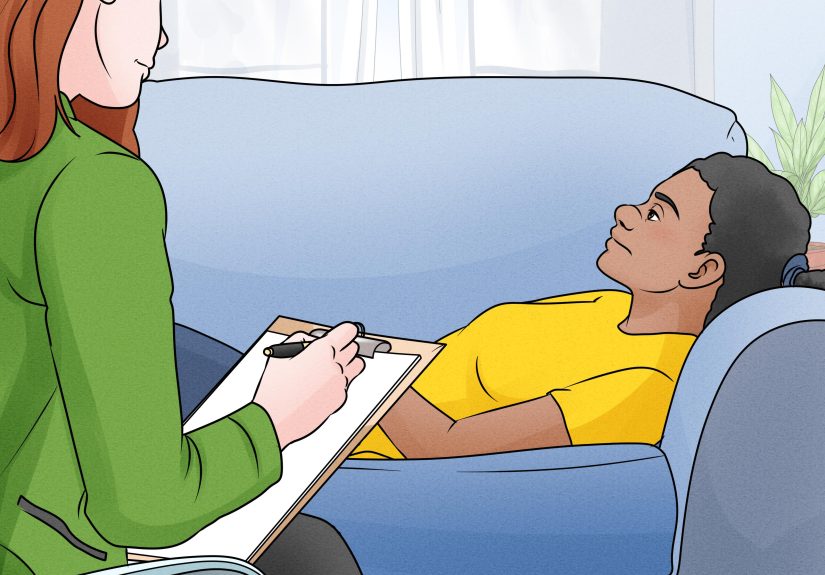
You do not have to fight overthinking alone. Talking to a trusted friend, family member, school counselor, coach, or licensed mental health professional can help you get perspective faster. Sometimes the most powerful sentence is, “Can I say this out loud and let you tell me whether it makes sense?”
If overthinking is affecting your sleep, school, work, relationships, appetite, or ability to function, it may be time for more structured help. Therapy, especially approaches like cognitive behavioral therapy, can teach you how to identify thought distortions, respond differently to anxiety, and build healthier mental habits. Asking for help is not a last resort. It is a smart skill.
What to Do in the Moment When Overthinking Hits Hard
When your brain is racing and you need a quick reset, use this simple sequence:
- Pause and take five slow breaths.
- Name the pattern: worry, rumination, catastrophizing, mind-reading.
- Write one sentence describing the actual problem.
- Decide whether it is solvable now or later.
- Choose one tiny action, or deliberately postpone it to your worry window.
This five-step reset works because it turns panic into process. It does not promise instant inner peace or cinematic healing music. It simply gives your mind rails to run on.
When Overthinking Might Be More Than a Habit
Sometimes overthinking is a temporary stress response. Other times, it may be tied to anxiety, perfectionism, chronic stress, burnout, or depression. If your thoughts feel relentless, if you cannot relax, if you are losing sleep regularly, or if everyday tasks feel harder because your mind will not switch gears, pay attention to that pattern.
Reaching out for support early can make a huge difference. A trusted adult, doctor, therapist, or counselor can help you sort out what is stress, what is anxiety, and what tools make the most sense for you. You deserve support before your mind convinces you that suffering in silence is somehow a personality trait.
Real-Life Experiences With Overthinking and What They Teach Us
One of the strangest things about overthinking is how ordinary it can look from the outside. A student appears to be “just studying,” but inside they are spiraling because one hard practice question has turned into a whole identity crisis. Suddenly the brain is not thinking about one test. It is thinking about scholarships, the future, disappointing family, and whether one bad grade means the entire timeline has collapsed. The lesson here is simple: when the mind leaps five chapters ahead, pull it back to the next page. Study the next section. Send the email. Ask the teacher the question. Tiny actions calm giant fears.
Another common experience is social overthinking. Someone sends a text, does not get a reply for two hours, and their mind immediately begins writing fan fiction from the darkest possible genre. “Did I say too much? Too little? Was the joke weird? Did they hate the emoji?” By the time the other person responds with a completely normal message, the overthinker has mentally gone through rejection, embarrassment, retirement, and spiritual exile. The lesson is that a delay is not always a verdict. Most people are busy, distracted, tired, or bad at texting. Overthinking often fills silence with stories that reality never approved.
Then there is work and performance overthinking. You finish a meeting, presentation, or conversation and feel okay for about twelve seconds. Then your brain opens the replay booth. You analyze your tone, your wording, your posture, your face, and possibly the symbolic meaning of how you held your pen. This kind of overthinking is exhausting because it pretends to be self-improvement. But endless replay rarely improves performance. It usually just shreds confidence. A better approach is to ask two questions: What went well? and What is one thing I want to do differently next time? That creates reflection without turning your mind into a hostile review panel.
Nighttime overthinking deserves its own dramatic award. During the day, a thought may seem manageable. At 1:17 a.m., the same thought shows up wearing a trench coat and acting like the end of civilization. Sleep-deprived minds are terrible editors. Everything feels more urgent, more absolute, and more personal. Many people find that nighttime spirals ease when they stop trying to solve life in bed. A notepad by the bed, a gentle rule of “no major decisions after midnight,” and a short wind-down routine can help train the brain that the bed is for rest, not emergency philosophy.
There is also the more hidden kind of overthinking: the perfectionist version. This is the person who delays starting because they want the plan to be flawless first. They over-research, over-prepare, over-edit, and over-rehearse. From the outside, it can look impressive. Inside, it is often fear in a nice outfit. The experience teaches an important truth: clarity does not always come before action. Very often, clarity comes from action. Start the draft. Submit the application. Practice the skill badly at first. Momentum is often the antidote to mental gridlock.
Most people who learn to manage overthinking do not become permanently calm, mysterious zen masters who smile softly at all inconvenience. They simply get faster at noticing the spiral and kinder in how they respond to it. They stop believing every thought deserves a debate. They build routines that support their nervous system. They ask for reassurance less often and real support more often. They learn that peace is usually not found by finally thinking enough. It is found by knowing when to stop.
Conclusion
If you want to survive overthinking, do not aim to have zero anxious thoughts forever. That is not realistic, and frankly it sounds exhausting in its own special way. Aim to recognize overthinking sooner, respond to it more skillfully, and build daily habits that make your mind feel safer. That means naming the loop, separating real problems from imaginary disasters, grounding yourself in the present, moving your body, limiting unhelpful input, practicing self-compassion, and reaching out when the spiral gets too loud.
Your brain may still try to hand you an unnecessary documentary about every possible outcome from time to time. You do not have to watch the whole thing. You can pause it, step back, and choose a different next move. That is not avoidance. That is progress.

![18 Best Types of Charts and Graphs for Data Visualization [+ How to Choose]](https://corkopencoffee.org/wp-content/uploads/2026/05/18-best-types-of-charts-and-graphs-for-data-visualization-how-to-choose-qKM1PBYG-thumb.jpg)