Table of Contents >> Show >> Hide
- Before You Touch Your Eye: Set Yourself Up for Success
- Step-by-Step: How to Remove Soft Contact Lenses (Most People Wear These)
- Step-by-Step: How to Remove Hard (RGP) Contact Lenses
- What If You Can’t Get the Lens Out?
- After You Remove Your Contacts: Clean, Store, or Toss Correctly
- Common Mistakes to Avoid (So Your Eyes Don’t File a Complaint)
- When to Call an Eye Doctor
- Conclusion: Clean Hands, Calm Moves, Happy Eyes
- Experiences and Practical Tips (The Stuff People Wish They’d Been Told)
Taking out contact lenses sounds like it should be easyuntil your eyeball decides it’s auditioning for a
drama series. If you’ve ever hovered over a mirror whispering, “Please… just come out,” you’re in the right place.
This guide breaks down how to take out contacts (soft and hard/RGP), what to do if a lens feels stuck,
and how to avoid the classic mistakes that make your eyes cranky. It’s based on widely used U.S. eye-care guidance
(think major medical organizations and public health agencies), rewritten in a friendly, real-world way.
Before You Touch Your Eye: Set Yourself Up for Success
1) Wash and dry your hands like you mean it
Contacts are medical devices that sit directly on your eye. Translation: your hands need to be clean.
Wash with soap and water, rinse well, and dry with a lint-free towel. Wet fingers can make lenses
slippery, and lint can turn into “why does my eye feel scratchy?” in about two seconds.
2) Create a “no-lens-left-behind” zone
- Use good lighting and a mirror (bathroom mirror works; magnifying mirror is even better).
- Put a towel on the counter (or close the drain) so a dropped lens doesn’t vanish into plumbing folklore.
- Have your supplies ready: lens case, fresh solution (if reusable), and rewetting drops if you use them.
3) Quick self-check: nails, makeup, and dry eyes
- Long nails? Use the pads of your fingers onlyno nail “assistance.” Your cornea is not a scratch-off ticket.
- Wearing makeup? In general, remove your contacts before using makeup remover around your eyes.
- Eyes feel dry? A lubricating/re-wetting drop can make removal easier (more on that below).
Step-by-Step: How to Remove Soft Contact Lenses (Most People Wear These)
Soft lenses include daily disposables, two-week, and monthly lenses. The technique is basically the same:
you’ll stabilize your eyelids, move the lens off the cornea, then gently remove it.
Method A: The “Slide-Down-and-Pinch” (Beginner-friendly)
- Look straight ahead in the mirror. Take a breath. (Your eye can smell fear. Kidding. Mostly.)
- Hold your upper eyelid steady with your non-dominant hand to prevent blinking.
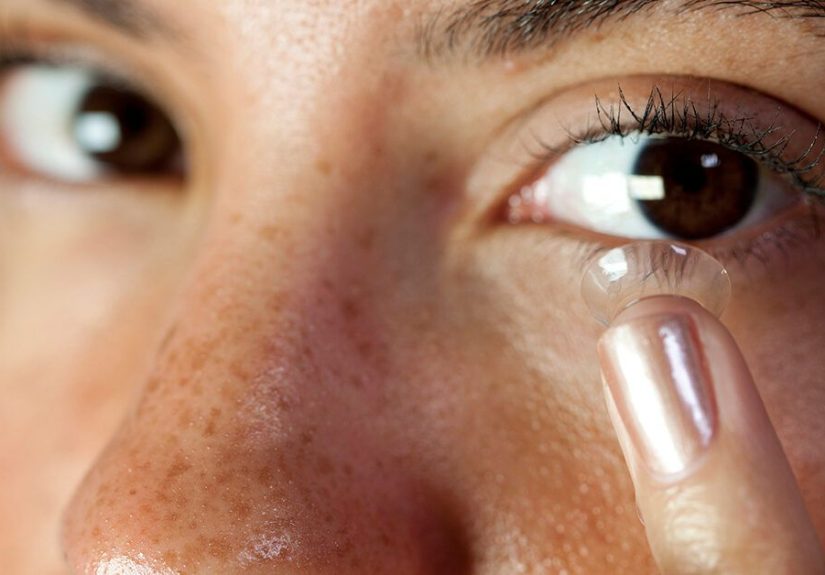
- Pull down your lower lid with the middle finger of your dominant hand.
-
With the tip/pad of your index finger, gently touch the lower edge of the lens.
Slide the lens down to the white part of your eye (the sclera). -
Once it’s on the white part, pinch the lens lightly between the pads of your thumb and index finger.
Think “pick up a potato chip,” not “crush a soda can.” -
Lift it off and either:
- Discard it (daily disposable), or
- Clean and store it properly (reusable lenses).
- Repeat for the other eye.
Method B: The “Pinch Method” (Direct removal)
- Stabilize upper and lower lids the same way as above.
- Look slightly upward.
-
With the pads of your thumb and index finger, gently pinch the lens and remove.
Avoid pinching your eyelid (your eyelid will file a complaint).
If you’re new, Method A is often easier because moving the lens off the cornea reduces that “I’m poking my soul”
sensation.
Method C: The “Slide-to-the-Side” (Good for lenses that cling)
- Hold lids open.
- Use your index finger pad to slide the lens to the side (onto the white of your eye).
- Pinch gently and remove.
If your lens folds or “tacos” itself
- Stay calmfolding is common.
- Use a drop of rewetting solution if needed.
- Gently pinch the folded lens and remove; don’t scrape.
Step-by-Step: How to Remove Hard (RGP) Contact Lenses
Rigid Gas Permeable (RGP) lenses are smaller and firmer than soft lenses. You generally don’t pinch them off the eye
the same way. Many people use a “blink” technique or a small suction remover (often called a plunger/remover).
Follow your eye doctor’s instruction for your lens type.
Method A: The Blink Method (popular and quick once you learn it)
- Wash and dry hands.
- Cup your hand under your eye or hold a clean towel below your face (so the lens lands somewhere safe).
- Use your fingers to pull the skin at the outer corner of your eye (toward your ear) so your eyelids become taut.
- Blink firmly. The lens should pop out into your cupped hand/towel.
Method B: Remover/Plunger Tool (often easiest for long nails or shaky beginners)
- Wash hands and ensure the remover is clean.
- Lightly moisten the tip (per your provider’s instructions; usually with sterile saline or lens solution).
-
Look straight ahead and touch the tip to the center of the lensnot your eye itself.
It should gently adhere to the lens. - Pull straight out with steady, gentle pressure.
- Release the lens into your palm and store/clean as directed.
Important: removal tools are typically for hard/RGP or scleral lenses, not soft lenses.
If you wear scleral lenses, removal often involves breaking suctionget hands-on training from your eye-care provider.
What If You Can’t Get the Lens Out?
Scenario 1: “My soft lens feels stuck to my eye.”
Soft lenses can stick when your eyes are dry or you’ve accidentally napped in them. Try this:
- Don’t panic and don’t dig. Digging increases irritation and risk of scratches.
- Add lubricating/re-wetting drops (sterile, contact-lens-safe).
- Close your eye and gently massage the lid for 10–20 seconds to help the lens move.
- Wait a minute, then retry Method A (slide down to the white of the eye, then pinch).
Scenario 2: “I think the lens went up under my upper eyelid.”
- Look down and gently massage the upper lid toward the center of the eye.
- If you can see the lens, you may be able to slide it down onto the white part of your eye, then remove normally.
- If you can’t find it, avoid aggressive rubbing and contact an eye-care professional for help.
Scenario 3: “It hurts, my eye is very red, or my vision is blurry.”
Stop trying to force it. Remove the lens only if it comes out easily after lubrication. If pain, redness, light sensitivity,
discharge, or vision changes persist, contact an eye doctor urgently. Those can be signs of irritation, abrasion,
or infection.
After You Remove Your Contacts: Clean, Store, or Toss Correctly
If you wear daily disposables
One and done. Toss them after removal. (Your eyes love a routine that doesn’t include “mystery buildup.”)
If you wear reusable soft lenses (two-week/monthly)
- Rub and rinse lenses with the solution recommended by your provider (even if the label says “no-rub,” many clinicians still advise rubbing).
- Use fresh solution every timedon’t “top off” yesterday’s solution.
- Keep water away from lenses and cases. No rinsing with tap water. No “just this once.”
- Replace your case regularly (many guidelines suggest every ~3 months).
If you wear RGP/hard lenses
Follow your provider’s cleaning and storage steps carefullyhard lens solutions and routines can differ from soft lenses.
If you’re unsure, ask your eye-care provider to re-teach the routine. (It’s normal. No one is born knowing how to care for tiny eye frisbees.)
Common Mistakes to Avoid (So Your Eyes Don’t File a Complaint)
- Using fingernails to pry a lens off (hello, scratches and torn lenses).
- Touching lenses with wet hands or letting lenses contact water (showering/swimming in contacts is a known risk habit).
- Sleeping in contacts unless your eye doctor specifically prescribed lenses approved for overnight wearand even then, understand the added risk.
- Keeping lenses past their replacement schedule (old lenses tend to get uncomfortable and less safe).
- Removing makeup first and then touching contacts with remover residue around your eyes.
When to Call an Eye Doctor
Contact lenses should never require a wrestling match. Reach out for professional help if you have:
- Moderate to severe eye pain
- Significant redness that doesn’t improve after lens removal
- Light sensitivity
- Blurred vision or a sudden change in vision
- Discharge or a feeling that something is stuck even after the lens is out
- A lens that you cannot remove after lubrication and gentle attempts
Quick care matters because some contact-lens complications can worsen fast if ignored.
Conclusion: Clean Hands, Calm Moves, Happy Eyes
The secret to removing contacts is boringand that’s a compliment. Clean, dry hands. Steady eyelids. Gentle slide, then pinch (for soft lenses),
or the proper technique/tools (for hard lenses). If something feels off, stop and reset instead of forcing it.
With a little practice, taking out contacts becomes as routine as taking off socksexcept your socks don’t sit on your eyeballs and judge you.
(Okay, maybe they do. But at least they don’t scratch your cornea.)
Experiences and Practical Tips (The Stuff People Wish They’d Been Told)
Let’s talk about the real-life side of contact lens removalbecause the first few attempts can feel like learning to parallel park
while someone narrates your mistakes in real time. If you’re new, you’re not “bad at contacts.” You’re just building a tiny skill
that requires calm hands, good lighting, and a willingness to blink less than your body insists is reasonable.
The “first week” learning curve is real
Many new wearers describe the same pattern: Day 1 takes forever, Day 2 is slightly less dramatic, and by Day 7 you’re thinking,
“Wait… this was the thing that made me sweat?” A helpful trick is to practice at the same time each day in the same spot, with the same mirror.
Consistency reduces fumbling. Also, give yourself a time buffer at nighttrying to remove lenses when you’re exhausted and already late for bed
is like trying to fold a fitted sheet during a fire drill.
The “contacts vanished!” moment (spoiler: they usually didn’t)
People often think a lens “went behind the eye.” Anatomically, that’s not how your eye worksthere’s a membrane that prevents a lens from
disappearing into your skull like it’s entering a secret portal. What usually happens is the lens slides under the upper eyelid or folds.
This is where gentle techniques shine: lubricating drops, looking down, and softly massaging the eyelid can help the lens move back into view.
The key is resisting the urge to poke around aggressively. Your eye is sensitive, not stubborn furniture.
Dry-eye days change the game
On dry or windy days (or after staring at a screen for hours), lenses can cling. If removal feels harder than usual, treat it like a “reset”
situation, not a “try harder” situation. Add a rewetting drop, blink a few times, and wait a minute. People are often surprised how much easier
removal becomes after that tiny pause. If you frequently struggle, ask your eye-care provider whether your lens material, replacement schedule,
or rewetting routine should change.
Long nails, shaky hands, and “I can’t touch my eye” anxiety
If you have long nails, the safest strategy is leaning heavily on the finger pads, keeping nails out of the zone, and using the slide method
so you’re pinching the lens on the white part of your eye rather than directly on the cornea. For RGP/hard lens wearers, many people find a remover tool
far less stressful than the blink method at firstespecially if you’re worried about the lens “launching” into the unknown. And if the idea of touching your eye
makes your whole body go “NOPE,” you’re in good company. Try desensitizing slowly: practice holding your lids, then lightly touching the lens edge, then sliding,
all while breathing out. It’s weirdly effective.
The “over-the-sink tragedy” and other preventable plot twists
Plenty of experienced wearers have lost a lens to the drain at least once. The fix is unglamorous but powerful:
close the drain, lay a towel down, or remove lenses over a clean surface. Also, if you drop a lens, don’t immediately pop it back in.
Clean and disinfect it properly (or replace it if it’s disposable). Your eye should not be the testing lab for whatever the countertop has been up to.
Bottom line: removing contacts gets easier, faster, and less “why am I bargaining with my eyeball?” with practice. Keep it gentle, keep it clean, and if something
feels wrongpainful, unusually red, or persistently blurrytap out and get professional guidance. Your future self (with comfortable eyes) will thank you.