Table of Contents >> Show >> Hide
- Can Conures Really Learn to Talk?
- Why Parrots Mimic Human Speech
- Before You Start: Build the Right Foundation
- How to Teach a Conure to Talk: Step-by-Step
- Best Training Methods for a Talking Conure
- Mistakes to Avoid
- What If Your Conure Prefers Screaming to Talking?
- How Long Does It Take a Conure to Learn Words?
- Signs Your Conure Is Learning
- When to Call an Avian Veterinarian
- Experiences and Lessons from Real Conure Homes
- Conclusion
Teaching a conure to talk is a little like coaching a tiny comedian with wings: the talent might be there, the attitude is definitely there, and the timing is usually terrible. Still, many conures can learn words, short phrases, and household sounds when training is consistent, upbeat, and built around trust. The trick is not to treat your bird like a feathered voice assistant. A conure learns best when speech becomes part of daily social life, not a forced performance under bright lights and unrealistic expectations.
If you are hoping your conure will suddenly deliver a perfect “Good morning!” after two practice sessions and one sunflower seed, I admire your optimism. But real progress usually happens more slowly. Some conures pick up a few words. Some prefer whistles, squeaks, kisses, or dramatic flock calls that sound suspiciously like a smoke alarm filing a complaint. And some never become talkers at all. That is normal.
The good news is that you can absolutely improve your bird’s chances. With the right environment, short daily sessions, simple words, and plenty of positive reinforcement, you can help your conure build confidence and start mimicking human speech in a way that feels natural rather than stressful.
Can Conures Really Learn to Talk?
Yes, many conures can learn to mimic words and phrases, but they are not usually the marathon talkers of the parrot world. In general, conures tend to have smaller vocabularies than famous chatterboxes like African greys or some Amazons. That does not mean they are less smart. It just means their vocal style is different. Conures are playful, social, expressive birds, and plenty of them would rather squeal, chirp, whistle, and invent sound effects than hold a polite conversation about the weather.
That is why setting realistic expectations matters. A successful outcome may be one clear word, two favorite phrases, or a handful of sounds used in the right context. Honestly, that still counts as a win. When a conure says “hello” every time you enter the room or mutters “step up” before climbing onto your hand, that is not just cute. It is communication.
Why Parrots Mimic Human Speech
Parrots are lifelong vocal learners, and they are deeply social animals. In the wild, vocalizations help them stay connected to the flock. In your home, you become part of that flock. So when your conure imitates your voice, your laugh, or your favorite phrase, your bird is not trying to become a tiny person in pajamas. Your conure is trying to fit in, participate, and connect.
This is one reason training works better when speech is tied to real moments. A phrase used at the same time every day, such as “good bird,” “hello,” “want a snack?” or your conure’s name, is easier to learn than a random vocabulary list recited like an awkward language app. Context gives words meaning, rhythm, and repetition.
Before You Start: Build the Right Foundation
1. Earn trust first
If your conure is still nervous around hands, still biting out of fear, or still unsure about stepping up, talking practice should not be your first goal. Trust comes first. A bird that feels safe, curious, and comfortable around you is far more likely to experiment with new sounds.
2. Keep your bird healthy and engaged
A bored, stressed, overtired, or unwell bird is not in the mood for language lessons. Conures need daily social interaction, time outside the cage, enrichment, toys, predictable routines, and good sleep. Training works best when the rest of your bird’s life is also working well.
3. Accept your bird’s individual personality
Some conures are bold little extroverts who seem ready to host their own talk show. Others are quieter observers. Your bird’s temperament matters. Training should work with your conure’s personality, not bulldoze it.
How to Teach a Conure to Talk: Step-by-Step
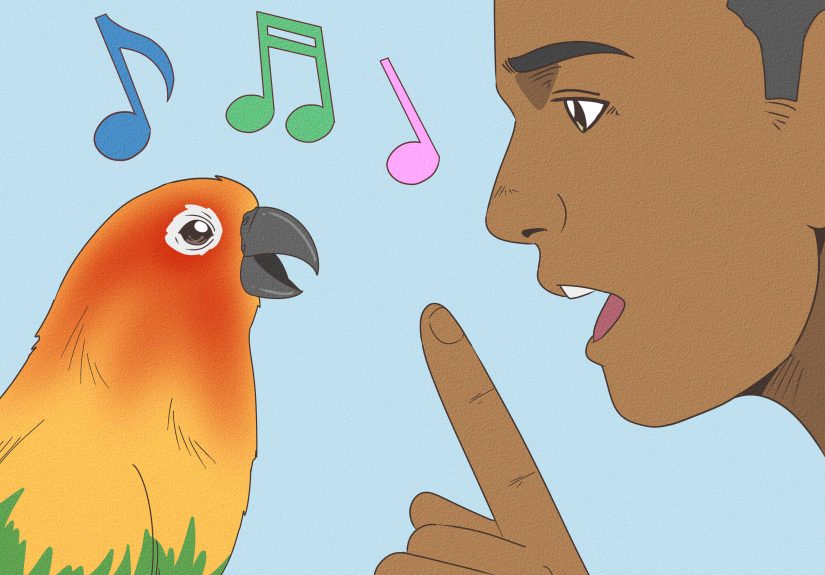
Step 1: Choose one easy word or phrase
Start small. Very small. One short word or phrase is enough at first. Good beginner options include:
- Hello
- Hi bird
- Good bird
- Step up
- Your conure’s name
- Want a treat?
Pick something you naturally say often. That way your conure hears it in the same tone, in the same setting, over and over. Repetition is your best friend here.
Step 2: Train in short sessions
Do not turn practice into a 45-minute motivational seminar. Most birds do better with short, focused sessions. Aim for about 5 to 10 minutes, once or twice a day. Stop while your conure is still interested. Leaving your bird wanting more is smarter than pushing until everyone in the room becomes cranky.
Step 3: Use the same tone and rhythm
Say the target word clearly and consistently. Do not say “Hello!” in the morning, “Hullooooo” at lunch, and “Hey buddy, what’s up, handsome goblin?” by dinner if your goal is one clean cue. Keep your delivery simple. Birds are excellent listeners, but consistency helps them lock onto patterns.
Step 4: Pair words with meaningful moments
This is where the magic happens. Say “hello” when you uncover the cage. Say your bird’s name when you approach. Say “step up” every time you offer your hand or perch. Say “night night” before bed. When words match repeated situations, your conure has a much easier time learning them.
Step 5: Reward any honest attempt
Your conure’s first attempt may sound like a squeaky shoe arguing with a microwave. Reward it anyway. Offer praise, a favorite treat, head scratches if your bird enjoys them, or a quick play session. The goal is to make vocal experimentation feel rewarding.
Timing matters. Reward right after the sound or attempt, not five minutes later when your bird is upside down on a toy planning chaos.
Step 6: Practice when your conure is alert
Choose times when your bird is calm, awake, and ready to interact. Many parrots are naturally more vocal in the morning and evening, so those windows can be useful. Avoid training when your conure is sleepy, hungry, overexcited, or distracted by every moving object in the house.
Step 7: Be patient with progress
Some birds start mimicking quickly. Others take weeks or months before you hear anything close to a recognizable word. That does not mean the training is failing. Your conure may be listening, storing patterns, and practicing quietly before trying the sound out loud.
Step 8: Add new words slowly
Once one word is clear and reliable, then add another. Do not introduce ten new phrases at once unless you enjoy confusing both yourself and your bird. Build vocabulary one phrase at a time, and keep revisiting older words so they stay fresh.
Best Training Methods for a Talking Conure
Positive reinforcement
This is the gold standard. Reward the behavior you want. Ignore or redirect what you do not want. If your bird says something close to the target word, celebrate. If your bird screams for attention, avoid accidentally rewarding the noise by rushing over dramatically every single time.
Modeling and repetition
Conures learn by hearing. Repeated exposure to the same sounds in a familiar social setting gives them the best shot at mimicry. You can say the word yourself, have one household member consistently model it, and repeat it during daily routines.
Context-based learning
Words attached to real actions often stick better than random sounds. “Step up,” “hello,” and “good bird” are classics for a reason. They show up often, and they matter to the bird’s social world.
Calm energy
Birds are famously good at reading mood. If you sound tense, impatient, or frustrated, your conure will notice. Keep your voice warm and relaxed. Think encouraging coach, not disappointed spelling bee judge.
Mistakes to Avoid
Expecting every conure to become a talker
This is the big one. Some conures talk. Some do not. Your bird is not broken if speech never becomes a favorite skill.
Using punishment
Do not scold, flick, spray, or punish a bird for screaming, refusing, or “not performing.” Punishment can damage trust and make vocal behavior worse, not better.
Training too long
Overdoing sessions can create frustration and boredom. Short, upbeat, repeatable sessions beat marathon lessons every time.
Rewarding screaming by accident
If your conure learns that one loud flock call makes you sprint into the room like a panicked stage manager, that sound may become very popular. Praise and reward calm vocalizations, quiet play, and desirable sounds whenever you can.
Rushing physical affection
Keep touch appropriate and respectful. Most birds prefer scratches on the head and neck. Too much body petting can create hormonal problems, frustration, and behavior issues that do not exactly help talking lessons.
What If Your Conure Prefers Screaming to Talking?
First, remember that vocalizing is normal. Conures are not decorative throw pillows with feathers. They are social parrots with opinions. Morning and evening calling can be part of normal flock behavior.
What you want to watch for is excessive, stress-based, or attention-seeking screaming. If that starts happening, do not just focus on “how do I make my conure talk instead?” Look at the whole picture. Is your bird bored? Lonely? Tired? Overstimulated? Has the routine changed? Are meals, sleep, and out-of-cage time predictable?
Very often, better enrichment, more structure, and more intentional attention reduce problem screaming and make training easier. A bird that feels secure is more likely to practice pleasant sounds.
How Long Does It Take a Conure to Learn Words?
There is no universal timeline. Some conures begin mimicking within a few weeks. Others take several months. Younger birds may seem especially quick to experiment, but older birds can learn too. Parrots remain capable of vocal learning throughout life, so do not assume your adult conure has missed the boat. This is not bird kindergarten with a hard cutoff date.
Progress also depends on consistency. A few minutes every day is far more effective than one big effort on Sunday followed by six days of “we’ll circle back next week.”
Signs Your Conure Is Learning
- Soft babbling or muttering during relaxed times
- Trying out sounds when alone or half-covered
- Repeating the rhythm of your phrase before the words are clear
- Using a sound in the same context repeatedly
- Watching your face closely when you say the target word
That soft, weird, almost-word you hear from across the room? That is often the beginning. Many birds rehearse quietly before they unveil the final version with great confidence and questionable pronunciation.
When to Call an Avian Veterinarian
If your conure suddenly stops vocalizing, becomes withdrawn, plays less, grooms less, changes eating habits, or shows a sharp behavior shift, do not assume the bird is being moody or stubborn. Birds often hide illness. A decrease in normal activity or vocal behavior can be a red flag. If something seems off, schedule an exam with an avian veterinarian before treating it as a training problem.
Experiences and Lessons from Real Conure Homes
One of the most common experiences conure owners describe is the “nothing is happening” phase. For weeks, they repeat “hello,” “good bird,” or the bird’s name and get absolutely nothing back except blinking, toy destruction, and the occasional dramatic side-eye. Then one morning, while the owner is half awake and carrying coffee like a life-support device, the bird suddenly whispers a fuzzy little “hello.” It is rarely crisp on day one. It may sound like the word is being spoken through a kazoo. But it counts, and once it starts, confidence often grows.
Another frequent experience is that conures seem to learn phrases tied to emotion and routine faster than random vocabulary. Owners often report that the first successful words are things said with feeling and repetition: “step up,” “night night,” “what are you doing?” or the bird’s own name. In many homes, the conure does not just repeat the phrase. The bird starts using it at the moment it usually happens. That is when owners realize their pet is not simply making noise. The bird is participating in household life.
There is also the classic conure surprise: the bird ignores every carefully planned training phrase, then perfectly copies the one thing nobody meant to teach. Maybe it is a laugh. Maybe it is a kiss noise. Maybe it is the squeak of a cabinet door, the ringtone on a phone, or a dramatic “uh-oh” after something hits the floor. Conures have a talent for choosing their own curriculum. Smart owners learn to work with that instead of against it. If your bird loves a certain sound, you can use that success to build momentum and then guide training toward a more useful word.
Some owners also notice that progress improves when the household calms down. A conure trained in a chaotic room with multiple people talking, a television blaring, and a blender auditioning for a heavy metal band may struggle to focus. But in a quieter setting, with one familiar voice and one short phrase, the bird starts practicing more. This does not mean your home must sound like a meditation retreat. It just means clarity helps.
Then there are the birds that never become impressive talkers, yet still succeed beautifully. Many owners eventually realize they were chasing a spoken word when what they really wanted was connection. Their conure may never say full phrases, but it comes when called, steps up happily, makes a kiss sound on cue, babbles contentedly during family time, and clearly tries to join the flock. That is a meaningful result.
The biggest lesson from everyday conure experience is simple: the birds that learn best are not always the birds with the “most talent.” They are often the ones with patient humans, predictable routines, fun sessions, and zero pressure to perform. In other words, teaching a conure to talk is less about forcing speech and more about building a relationship where speech feels worth trying.
Conclusion
If you want to teach a conure to talk, focus less on perfection and more on partnership. Choose one simple phrase, repeat it consistently, train in short sessions, reward every honest attempt, and make words part of daily life. Keep expectations realistic, because not every conure becomes a chatterbox. But even a bird that learns only one or two words can still become a brilliant communicator in its own way.
So yes, your conure might someday greet you with a cheerful “hello.” Or it might just master your laugh and deploy it at suspiciously judgmental moments. Either way, if training is kind, consistent, and fun, you are doing it right.