Table of Contents >> Show >> Hide
- Why These Two Holiday Cacti Get Mixed Up So Often
- The Fastest Way to Identify Your Holiday Cactus
- Thanksgiving Cactus vs. Christmas Cactus: The Key Differences
- 1. Look at the Stem Segments First
- 2. Bloom Time Helps, but It Is Not Perfect
- 3. The Flowers Offer More Clues Than You Think
- 4. Most “Christmas Cactus” Sold in Stores Are Actually Thanksgiving Cactus
- 5. Care Is Nearly the Same for Both Plants
- What If You Still Cannot Tell?
- A Simple Real-World Example
- Why Knowing the Difference Actually Matters
- Final Thoughts
- Experience: What I Learned After Comparing Holiday Cacti Up Close
- SEO Tags
If you have ever stood in a garden center squinting at a plant tag that says Christmas cactus while your brain whispers, “Ma’am, this thing is blooming before the turkey is even in the oven,” you are not alone. Holiday cacti are famous for causing seasonal identity crises. They look similar, they bloom around the same time of year, and stores often label them in ways that are, let’s say, emotionally confident but botanically casual.
The good news is that learning how to tell a Thanksgiving cactus from a Christmas cactus is not difficult once you know what to check. In fact, the difference usually comes down to a few easy clues: the shape of the stem segments, the timing of the blooms, the flower structure, and even the color of the anthers. Once you see those details, you will never look at a “mystery holiday cactus” the same way again.
This guide breaks down the key differences in plain English, with a few gardener-friendly tricks along the way. Because yes, this is botany. But it is botany you can do in your kitchen window while holding coffee.
Why These Two Holiday Cacti Get Mixed Up So Often
Let’s start with the root of the confusion. Thanksgiving cactus and Christmas cactus are close relatives in the Schlumbergera group, and both are tropical cacti native to Brazil. That means they are not desert cacti at all. They are epiphytic or lithophytic plants that naturally grow in moist, shaded environments, often on trees or in rocky crevices rather than in dry sand. So right away, these plants are already breaking the mental “cactus” stereotype of a spiky loner baking in the sun.
On top of that, many plants sold in stores as Christmas cactus are actually Thanksgiving cactus. That is one reason so many people think they own a Christmas cactus when they really own the earlier-blooming cousin. Retail timing plays a huge role here. A plant that looks festive and blooms reliably before the holiday shopping rush is just easier to sell. The result is years of mistaken identity and a nation of houseplant owners saying, “Wait, what do I actually have?”
The Fastest Way to Identify Your Holiday Cactus
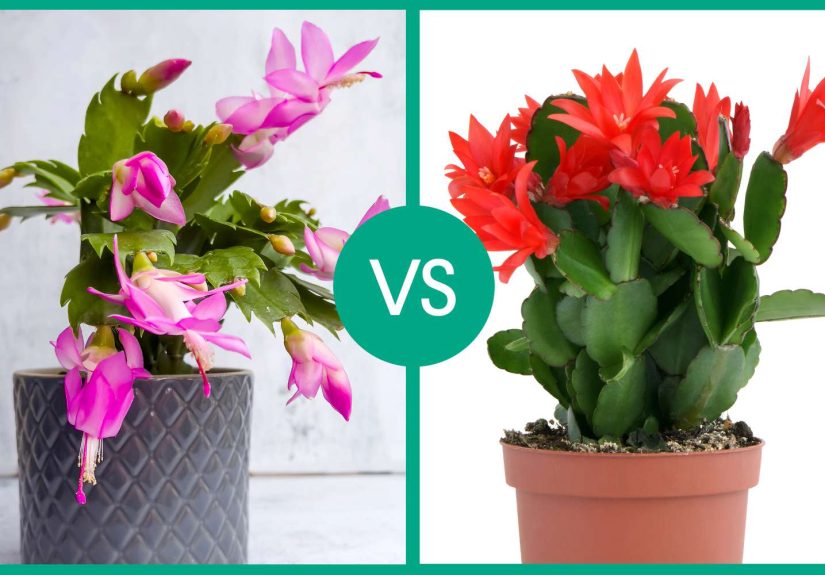
If you are in a hurry, skip the flowers and look at the flattened green stem segments. Those are your best clue.
Thanksgiving cactus
- Stem segments have pointed, claw-like teeth along the edges
- Often looks a bit sharper or more angular overall
- Usually blooms around late November
- Anthers are typically yellow
Christmas cactus
- Stem segments have rounded, scalloped edges
- Looks softer and less jagged
- Usually blooms closer to late December
- Anthers are usually purplish-brown
If your plant has “little crab claws” on the edges, it is probably a Thanksgiving cactus. If the edges look rounded and smooth, it is more likely a true Christmas cactus. That one visual cue solves most cases in about five seconds.
Thanksgiving Cactus vs. Christmas Cactus: The Key Differences
| Feature | Thanksgiving Cactus | Christmas Cactus |
|---|---|---|
| Scientific name | Schlumbergera truncata | Schlumbergera x buckleyi |
| Stem edges | Pointed, toothed, claw-like | Rounded, scalloped |
| Typical bloom time | Late November | Late December |
| Anther color | Yellow | Purplish-brown |
| Store availability | Most commonly sold | Less commonly sold |
| Overall look | Sharper, more angular | Softer, more rounded |
1. Look at the Stem Segments First
The most reliable way to identify a Thanksgiving cactus vs. a Christmas cactus is by the shape of the stem segments, sometimes called phylloclades. These are the flat, green, leaf-like pieces most people casually call leaves, even though they are actually modified stems. No plant police will arrest you for calling them leaves, but the stems are where the truth lives.
A Thanksgiving cactus has distinct points or teeth along the margins of each segment. They often look like tiny hooks, claws, or jagged crab legs. That is why Thanksgiving cactus is sometimes also called crab cactus. Once you notice those pointed edges, the plant suddenly looks less like a generic holiday houseplant and more like it is ready to pinch anyone who mislabels it.
A Christmas cactus, on the other hand, has smoother, rounded segment edges. Instead of sharp projections, the margins appear scalloped or gently lobed. The whole plant looks softer, more relaxed, and a little less dramatic. If Thanksgiving cactus is wearing a spiky holiday sweater, Christmas cactus is in a cozy knit cardigan.
2. Bloom Time Helps, but It Is Not Perfect
Bloom time is another clue, but it should not be the only clue you trust. Under normal conditions, Thanksgiving cactus blooms earlier, usually around Thanksgiving, while Christmas cactus blooms closer to Christmas. That is where the common names come from, and it sounds wonderfully tidy.
Real life, however, enjoys chaos. Holiday cacti are short-day plants, which means flowering is triggered by long nights and cooler temperatures. If the plant experiences the right conditions earlier or later than usual, bloom time can shift. Commercial growers also manipulate light and temperature so plants flower exactly when shoppers are wandering the seasonal aisle with peppermint coffee and weak impulse control.
So yes, bloom time matters. But if a plant flowers in November and also has pointed segments, that is a strong sign it is a Thanksgiving cactus. If it blooms later in December and has rounded segments, you are likely looking at a true Christmas cactus. If timing and shape disagree, trust the stem shape first.
3. The Flowers Offer More Clues Than You Think
Once your plant blooms, the flowers can help confirm what you already suspect. Both Thanksgiving and Christmas cactus produce tubular blooms, often in shades of pink, red, white, peach, purple, or cream. They are beautiful enough to make people suddenly become “plant people” for at least ten minutes.
Still, there are subtle differences. Thanksgiving cactus flowers often appear a bit more angular, and the blooms may project more horizontally from the stem. Christmas cactus flowers can look softer and more pendulous overall. This is not always the easiest distinction for beginners, but experienced growers often notice the difference right away.
If you want the flower clue that is easier to trust, look closely at the anthers, the pollen-bearing part of the bloom. Thanksgiving cactus usually has yellow anthers. Christmas cactus typically has purplish-brown anthers. It is a small detail, but it is one of the best ways to confirm an identification when the plant is in flower.
4. Most “Christmas Cactus” Sold in Stores Are Actually Thanksgiving Cactus
This is the plot twist that explains a lot of family arguments near windowsills. The holiday cactus most commonly sold in the United States is often the Thanksgiving cactus, not the true Christmas cactus. That means your grandmother may have been lovingly caring for a plant she called a Christmas cactus for 20 years while the plant quietly continued being a Thanksgiving cactus the whole time.
This does not mean anyone has failed. It just means common names are messy, the plant trade is practical, and houseplants do not come with tiny botanical passports. Since Thanksgiving cactus blooms earlier and is widely available during the holiday shopping season, it shows up more often in nurseries, grocery stores, and big-box garden sections.
So if your newly purchased “Christmas cactus” has jagged stem edges, go ahead and solve the mystery: you probably brought home a Thanksgiving cactus wearing a seasonal alias.
5. Care Is Nearly the Same for Both Plants
If this sounds like a dramatic identity reveal with life-altering consequences, here is the calming part: Thanksgiving cactus care and Christmas cactus care are almost identical. You do not need separate watering playlists or a plant therapist.
Both prefer bright, indirect light rather than harsh direct sun. Both like a well-draining potting mix and a pot with drainage holes. Both appreciate being watered when the soil begins to dry, but they do not want to sit in soggy soil. In fact, overwatering is one of the most common problems with holiday cacti. These plants may be tropical by cactus standards, but they still dislike wet feet.
They also appreciate a bit of humidity and do best in average indoor temperatures, with cooler nights helping encourage buds in fall. Because they are not desert cacti, treating them like a prickly barrel cactus from a Western movie is not the move. Think filtered light, moderate moisture, and “I live in a forest canopy, not a sand dune.”
What If You Still Cannot Tell?
If your plant is not blooming and the segment shape seems somewhere in the middle, you may have a hybrid. That happens. Some holiday cacti show traits that are not perfectly textbook, especially after years of cultivation and crossing. In those cases, use a combination of clues rather than betting the whole case on one detail.
Ask yourself these questions:
- Are the segment edges sharply toothed or softly rounded?
- Did the plant naturally bloom in late November or closer to late December?
- Are the anthers yellow or darker purplish-brown?
- Did the flowers look more angular and horizontal, or softer and drooping?
Even if you cannot place it with total botanical certainty, you can usually get close enough to stop calling everything a Christmas cactus and move on with your life in peace.
A Simple Real-World Example
Let’s say you buy a holiday cactus at a home store in mid-November. It is already covered in buds. The stem segments have pointy little teeth that look like crab claws, and when it opens, the anthers are yellow. The tag says Christmas cactus.
That plant is almost certainly a Thanksgiving cactus.
Now imagine a plant passed down through the family that usually blooms in late December. Its segments are rounded and scalloped, and the flowers have darker anthers. That is much more likely to be a true Christmas cactus.
Once you know what to look for, these plants stop being confusing and start feeling delightfully obvious.
Why Knowing the Difference Actually Matters
On one level, this is a fun plant trivia victory. On another, knowing the difference helps you understand your plant’s natural rhythm. If you have a Thanksgiving cactus and keep wondering why it always blooms “too early,” the answer may be that it is not early at all. It is doing exactly what Thanksgiving cactus does.
Correct identification also makes conversations with gardeners, plant shops, and online care guides much easier. When you understand what you own, you can follow bloom-timing advice more accurately and set better expectations for reblooming. It is one of those small pieces of plant knowledge that makes you feel disproportionately powerful, like suddenly understanding wine labels or how to fold a fitted sheet.
Final Thoughts
If you remember only one thing, let it be this: check the edges of the stem segments. Pointed, jagged, claw-like edges usually mean Thanksgiving cactus. Rounded, scalloped edges usually mean Christmas cactus. Bloom time, flower posture, and anther color can help confirm your answer, but the stem shape is the quickest and most dependable place to start.
And if your so-called Christmas cactus turns out to be a Thanksgiving cactus, do not feel duped. You are in very good company. Plenty of gardeners, retailers, and well-meaning relatives have made the same mistake. Holiday cacti are charming, long-lived, and gloriously low on drama once you know who is who. The plant does not mind what you call it, but it is admittedly satisfying to finally get the name right.
Experience: What I Learned After Comparing Holiday Cacti Up Close
One of the most helpful lessons I have seen gardeners learn is that holiday cacti make much more sense once you stop trying to identify them from a distance. From across the room, a Thanksgiving cactus and a Christmas cactus can look nearly identical. They are both arching, segmented, and covered in colorful flowers that seem timed to brighten the darkest stretch of the year. But the moment you pick up the pot and really study the stems, the mystery starts to fall apart in the best possible way.
I have watched people assume a plant was a Christmas cactus for years simply because that was the name on the tag or the name that came with it from a relative. Then they compare it side by side with another plant and suddenly notice the edges. One has those dramatic little points that look like crab claws. The other has soft, rounded scallops. From that point on, they cannot unsee it. It is like learning the difference between two fonts you thought were the same. At first, you wonder why anyone cares. Then one day you care a lot.
Another common experience is realizing that bloom time can be misleading. Plenty of people say, “Mine blooms at Christmas, so it must be a Christmas cactus,” only to discover the stem segments are clearly pointed. Indoor conditions change everything. A cooler room, a darker corner, or a grower-controlled greenhouse schedule can shift flowering enough to confuse the calendar clue. That is why experienced plant owners tend to rely on structure first and timing second.
I have also noticed that once someone learns the difference, they begin spotting mislabeled plants everywhere. They see a “Christmas cactus” in a store in early November, glance at the jagged segments, and instantly know what is going on. It is a tiny thrill, but a real one. Plant knowledge often works that way. Nobody outside your house may care that you correctly identified a Thanksgiving cactus, yet somehow it still feels like winning.
There is also something wonderfully personal about these plants. Many holiday cacti are heirloom houseplants passed through families for decades. They get moved from apartment to apartment, bloom beside different windows, and show up in old holiday photos like a recurring guest star. Figuring out whether that inherited plant is a Thanksgiving cactus or a Christmas cactus can feel like learning one more detail about a living family keepsake. It adds context without changing the affection attached to it.
In practical terms, the experience that matters most is confidence. Once you know how to identify a holiday cactus correctly, you stop second-guessing the plant every season. You are not wondering why it bloomed “too soon,” or whether the care guide you found actually applies to what you own. You simply look at the segments, check the flower details when they appear, and move forward. That confidence makes plant care easier and more enjoyable.
So yes, on paper this topic is about two closely related tropical cacti and a few botanical differences. In real life, it is also about paying attention, trusting what the plant is showing you, and enjoying the small satisfaction of getting the story right. For many people, that little moment of recognition is part of the fun of keeping houseplants in the first place.