Table of Contents >> Show >> Hide
- What Happened in Grand Blanc Township?
- The Victims and the Immediate Human Toll
- Who Was the Suspect?
- What Investigators Have Said About Motive
- Law Enforcement Response and the Later Prosecutor Review
- Why This Story Shocked So Many People
- The Community Response Was Strikingly Different From the Online Rage Machine
- What We Still Do Not Know
- What the Experience of a Church Shooting Does to a Community
- Final Thoughts
Some news stories hit like a thunderclap. Others arrive with a sickening, familiar dread. The Michigan church shooting falls into the second category: a tragedy so shocking, so cruelly out of place, that it instantly forces an entire country to stop and ask how a Sunday service became a crime scene.
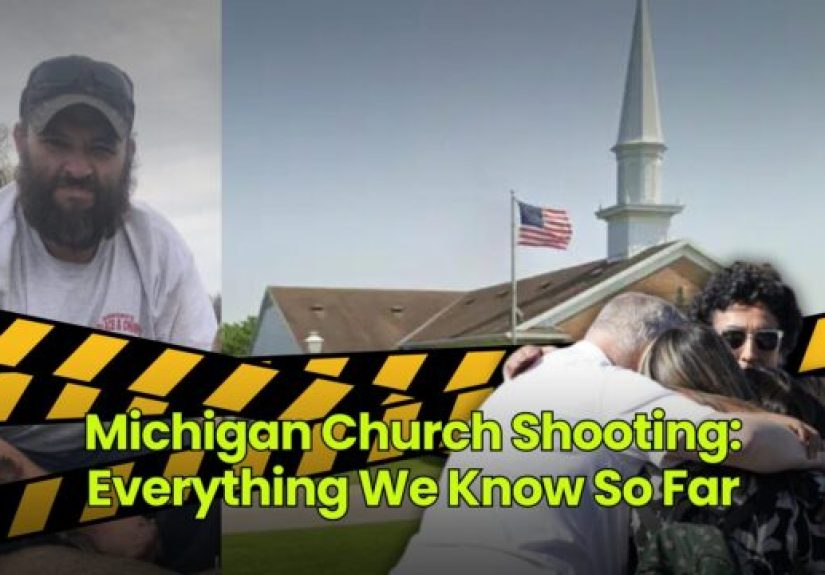
On September 28, 2025, worshippers gathered at a Church of Jesus Christ of Latter-day Saints meetinghouse in Grand Blanc Township, Michigan, expecting an ordinary Sunday morning. Instead, authorities say a man drove into the building, opened fire, and set the church ablaze. What followed was a fast-moving, deeply traumatic attack that left four people dead, several others injured, and a Michigan community trying to make sense of devastation that no congregation should ever have to endure.
This is everything we know so far about the Michigan church shooting, including what happened, what investigators have said, what has changed in the case since the first wave of reports, and why the human response to this tragedy may be one of the most remarkable parts of the story.
What Happened in Grand Blanc Township?
The attack took place at the Church of Jesus Christ of Latter-day Saints on McCandlish Road in Grand Blanc Township, near Flint. Early reports from local police and national outlets described a horrifying sequence: a man drove a pickup truck into the church during a Sunday service, got out with a rifle, and began shooting. Authorities also said the church was intentionally set on fire during the attack.
That basic outline has remained consistent across official updates. The scene was chaotic from the start. Hundreds of people were believed to be inside or on church grounds when the violence began. Emergency crews rushed in, law enforcement engaged the suspect, and firefighters worked against a blaze that badly damaged the building.
If there is one detail that captures how mercilessly fast this unfolded, it is the timeline. What began as a normal worship service turned into a life-and-death emergency in minutes. In the earliest hours, there was confusion over casualty numbers, whether all victims had been accounted for, and what exactly had happened inside the building once the fire spread. That uncertainty is common in major breaking-news events, but it made this story even more harrowing for families waiting for answers.
A Rapid and Violent Timeline
Police said the attack began at about 10:25 a.m. on a Sunday morning. Investigators later released information showing just how quickly responders arrived. Early public comments suggested an almost immediate response, and later reporting clarified that officers were on scene in under four minutes. That matters, not because it softens the horror, but because it likely prevented an even greater loss of life.
Authorities say the suspect was shot and killed by responding law enforcement after an exchange of gunfire outside the church. By then, however, the damage had already been done. The building was on fire, multiple victims had been struck, and rescue efforts were unfolding alongside an active criminal investigation.
In the first wave of coverage, officials reported four people dead and eight injured. Later FBI and Associated Press reporting updated the number of injured to nine. That kind of revision is not unusual after mass-casualty events, but it is one reason why “everything we know so far” stories matter: the facts can shift as investigators verify who was hurt, where they were found, and how each injury is counted.
The Victims and the Immediate Human Toll
Behind every headline number is a family whose life has been split into a brutal before-and-after. In this case, four people were killed in the attack. Later reporting identified them through family members and community sources as Craig Hayden, William “Pat” Howard, John Bond, and Thelma Armstrong. They were not abstractions, not statistics, and not names destined to be buried in a news crawl. They were churchgoers, relatives, friends, and neighbors.
Several others were injured, including congregants caught in the panic and smoke. The destruction of the building only deepened the tragedy. Houses of worship are supposed to function as places of refuge, ritual, and routine. When violence tears through a sanctuary, it does more than wound bodies. It damages the emotional architecture of a community. Suddenly, every pew, hallway, entrance, and parking lot carries a different memory.
That is part of what made the Grand Blanc attack resonate far beyond Michigan. Americans have sadly become too familiar with public violence in schools, stores, streets, and entertainment spaces. A church, though, still carries a special symbolic weight. When violence enters a place built for prayer, grief hits in a different register.
Who Was the Suspect?
Authorities identified the suspect as Thomas Jacob Sanford, a 40-year-old man from Burton, Michigan. Multiple reports said he was a former U.S. Marine and Iraq War veteran. In the immediate aftermath, investigators searched his background, residence, digital activity, and possible connections in an attempt to understand motive.
At first, that motive was unclear in any official sense. As often happens, the public conversation rushed ahead of confirmed evidence. Neighbors, acquaintances, and commentators all tried to fill the gap. But law enforcement largely stuck to a simpler message in the early days: this was a targeted act of violence, and the investigation was ongoing.
That restraint mattered. In cases like this, rumors spread faster than verified facts, and speculation can distort the truth before investigators have time to do the slow work of establishing it. Eventually, though, authorities did provide a clearer explanation.
What Investigators Have Said About Motive
Weeks after the attack, the FBI publicly confirmed that the shooting was believed to be motivated by anti-religious beliefs against the Latter-day Saints community. That moved the story from terrible uncertainty into something grimly more defined: this was not just random violence. According to federal investigators, it was targeted violence driven by hatred toward a religious group.
That conclusion aligned with reporting from people who said the suspect had expressed hostility toward the faith. Still, the FBI did not release every underlying detail, and that means some questions remain unanswered. We know more about the direction of the motive than we do about every step that led to the attack.
And that distinction is important. “We know the motive” can sound neat and final, but real investigations are rarely that tidy. There is a difference between establishing a broad ideological or emotional motive and fully explaining how a person moved from grievance to preparation to violence.
Law Enforcement Response and the Later Prosecutor Review
One major later development came in February 2026, when the Genesee County Prosecutor’s Office declined to charge the officers involved in the fatal shooting of Sanford. A memorandum reviewing the evidence concluded that the responding officers reasonably feared for their lives and the lives of others present, and that the use of deadly force was legally justified under the circumstances.
That review added more detail to the public record. According to the memo, Sanford had armed himself heavily, made bomb threats to locations other than the church before the attack, and continued to pose an active threat when officers encountered him. The memo described a scene in which both officers and civilians believed he could continue shooting if not stopped.
That does not erase the tragedy. Nothing does. But it does answer one of the major follow-up questions that usually emerges in the aftermath of an officer-involved shooting: whether prosecutors believed the responding officers acted lawfully. In this case, the answer was yes.
Why This Story Shocked So Many People
The simplest answer is that an attack on a church still violates something fundamental in the public imagination. Even in a country that has been repeatedly scarred by mass violence, people expect houses of worship to remain protected spaces. Maybe not perfectly safe, because nowhere is perfectly safe anymore, but protected in a moral sense. Places where grandparents sing, children fidget, volunteers stack chairs, and ordinary people try to make it through another week with a little faith intact.
The Michigan church shooting shattered that illusion in the most devastating way possible. It also landed at a moment when Americans are already exhausted by a constant rhythm of breaking-news alerts, public trauma, and ideological fury. That is part of why the case drew so much attention so quickly. It felt horrifyingly personal, even to people hundreds of miles away.
There is also the specific religious angle. Once the FBI said the attack was motivated by anti-religious beliefs, the story became part of a larger national discussion about violence against faith communities. It was no longer only a local Michigan tragedy. It was also a warning sign about how targeted hate can invade spaces that communities assume are sacred.
The Community Response Was Strikingly Different From the Online Rage Machine
If the attack itself was ugly, the community response often looked unexpectedly graceful. Vigils were held. Families mourned. Religious leaders spoke publicly about peace, healing, and solidarity. And in one of the most talked-about developments after the shooting, a survivor’s public message of forgiveness drew national attention.
A woman who survived the attack after her father was killed wrote that she forgave the gunman “with my heart.” In another startling example of compassion, an online fundraiser organized to support the gunman’s family raised hundreds of thousands of dollars. That response was not universally understood, and plenty of people found it emotionally difficult to process. But it revealed something real about how some faith communities interpret suffering: not as a reason to surrender to vengeance, but as a test of whether love and mercy mean anything when the cost is unimaginably high.
That does not make the pain prettier. It does not tie a neat bow around grief. But it does make this story more complex than a standard crime recap. The aftermath in Grand Blanc was not just about fear. It was also about how a wounded community chose to present itself to the world.
What We Still Do Not Know
Even now, some parts of the story remain incomplete. We know the broad motive described by the FBI, but not every detail investigators uncovered about the suspect’s planning, mindset, or final movements. We know early casualty counts changed as the investigation developed. We know officers responded quickly, but the emotional and physical recovery for survivors will stretch far beyond any official timeline.
We also do not fully know how the attack will reshape security practices at houses of worship in Michigan and elsewhere. Religious communities across the country have been forced to think more seriously about surveillance, emergency drills, volunteer security teams, and coordination with local police. Those conversations tend to accelerate after attacks like this, and Grand Blanc is unlikely to be an exception.
There is a bitter irony in that. Churches are meant to welcome people through open doors. But modern America keeps forcing religious communities to ask how open those doors can safely remain.
What the Experience of a Church Shooting Does to a Community
There is the public story, and then there is the lived story. The public story is made of press conferences, crime-scene tape, casualty counts, and the phrase “ongoing investigation” repeated until it almost becomes wallpaper. The lived story is different. It is made of ringing phones, unanswered texts, borrowed jackets at vigils, smoke in the air, and the strange silence that settles after sirens leave.
For people directly connected to the Michigan church shooting, the experience was not just a single morning of terror. It was almost certainly a series of moments that will replay for years. The bang that did not make sense at first. The split-second decision to run, hide, or help someone else. The frantic drive to a hospital. The unbearable wait for confirmed names. The first time returning to worship, if returning ever feels possible at all.
For families of the victims, grief after a church shooting often becomes unusually complicated. Faith can provide comfort, but it can also sharpen the ache. A sanctuary is supposed to hold baptisms, weddings, holiday services, and ordinary Sundays that blur together in the best possible way. When it becomes the site of a massacre, memory itself gets rearranged. Beloved routines now carry trauma in their seams.
For survivors, the experience can be disorienting in a quieter way. People on the outside may call them lucky. And yes, survival is a blessing. But surviving also means carrying images, sounds, and questions that do not leave on schedule. It means learning how to live with sudden fear in places that used to feel safe. It means discovering that your nervous system now has opinions about parking lots, loud noises, church entrances, and the smell of smoke.
For the broader congregation, these events often create a strange emotional double exposure. One layer is grief for those who were killed or hurt. The other is gratitude for everyone who got out. Those feelings coexist, and not always neatly. In the Michigan case, that emotional complexity appeared in public almost immediately. There was mourning, yes, but also prayer vigils, statements of peace, and gestures of generosity so unexpected they forced the rest of the country to pay attention.
That may be one of the hardest truths in stories like this: communities do not respond in only one register. They cry. They organize meals. They post updates. They sit in fellowship halls and repeat the same facts because facts are easier than feelings. They hug people they have known for years and people they met ten minutes ago. They argue over security. They worry about children. They wonder whether forgiveness is noble, premature, impossible, or necessary. In short, they become very human, very quickly.
And for readers far away, the experience of following a story like this carries its own uneasy weight. There is helplessness in watching another American community absorb a blow like this. There is also the temptation to treat tragedy like content, to refresh for updates and then move on. The better response is harder: to stay attentive, to resist rumor, to honor the dead as people instead of symbols, and to remember that the phrase “everything we know so far” always contains another unspoken truth there is much that only the people who lived it will ever truly know.
Final Thoughts
The Michigan church shooting in Grand Blanc Township remains one of the most disturbing attacks on a house of worship in recent memory. What we know is already devastating: four people were killed, others were injured, a church was destroyed, and investigators later concluded that the violence was driven by anti-religious hate. We also know that the response from survivors, families, and faith leaders complicated the usual script of public fury. In place of pure vengeance, there were visible efforts toward peace, mercy, and solidarity.
That does not make this story hopeful in any easy or sugary sense. It is still a story about lives stolen, safety shattered, and a community pushed into grief. But it is also a story about what people do after the worst thing happens. And in Grand Blanc, what they did was mourn, gather, forgive, rebuild, and insist that violence would not have the final word.