Table of Contents >> Show >> Hide
- The Fast Answer: How to Know Fish Is Fully Cooked
- Why a Thermometer Beats Guesswork
- What Cooked Fish Looks Like
- What Undercooked Fish Looks Like
- How Different Types of Fish Behave When Cooked
- How Cooking Method Affects Doneness
- Common Mistakes That Make Fish Hard to Judge
- How to Avoid Overcooking Fish
- Food Safety Basics You Should Not Ignore
- A Simple Step-by-Step Doneness Check
- Final Thoughts
- Experience and Practical Lessons From Real Kitchens
- SEO Tags
Cooking fish sounds simple right up until you’re standing over a skillet, squinting at a salmon fillet like it owes you an explanation. Is it done? Is it almost done? Is it about to go from tender and buttery to dry and sad in the next 45 seconds? Fish is famously fast-cooking, which is great for dinner and terrible for your nerves.
The good news is that learning how to tell if fish is cooked fully is not some mystical seafood superpower. You do not need a chef’s hat, a culinary degree, or a dramatic TV voice. You just need a few reliable signs, one especially useful tool, and a little confidence. Once you know what fully cooked fish looks and feels like, you can stop guessing and start serving fish that is safe, moist, flaky, and actually enjoyable to eat.
In this guide, we’ll break down the easiest ways to check fish doneness, explain why temperature matters, cover common mistakes, and help you avoid the two classic fish disasters: undercooking it and cooking it until it tastes like flavored paper towels.
The Fast Answer: How to Know Fish Is Fully Cooked
If you want the short version, here it is: the most reliable way to tell if fish is cooked fully is to check the thickest part with a food thermometer. For most fin fish, the target is 145°F. At that point, the flesh should look more opaque than translucent and separate easily into flakes when you press it gently with a fork.
- Best test: Use a food thermometer in the thickest part.
- Target temperature: 145°F for most fin fish.
- Visual clue: The flesh changes from glossy and translucent to opaque.
- Texture clue: The fish flakes easily and feels firm, not mushy.
- Red flag: If the center still looks raw or glassy, keep cooking.
That’s the core rule. Everything else is just helping you double-check your work without turning dinner into a forensic investigation.
Why a Thermometer Beats Guesswork
Let’s be honest: “cook until it looks done” is not the most comforting instruction ever written. Fish can be tricky because different species look different when cooked. Thick cod, thin tilapia, rich salmon, and meaty halibut do not all wave the same little white flag at the same moment.
That’s why a thermometer is your kitchen’s least glamorous but most trustworthy hero. It gives you a clear answer instead of a stressful vibe. Insert it into the thickest part of the fillet or steak, avoiding the pan and any bones, and wait for the reading to stabilize. If it reads 145°F, your fish is fully cooked.
This method matters even more for thicker cuts, whole fish, or expensive seafood you really do not want to ruin. No one enjoys overcooking a beautiful piece of salmon just because they were trying to “play it safe.” Ironically, that usually makes dinner less safe for your taste buds.
What Cooked Fish Looks Like
1. It changes from translucent to opaque
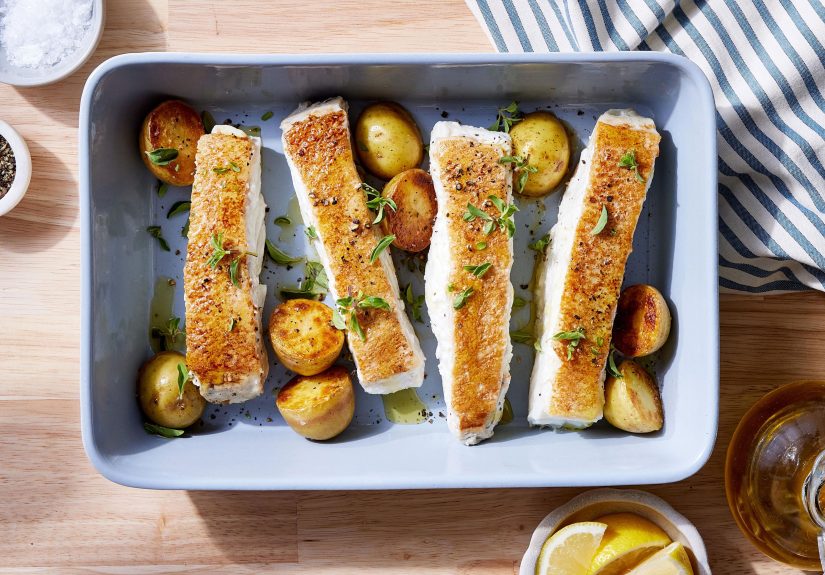
Raw fish usually has a shiny, somewhat translucent appearance. As it cooks, the flesh becomes more opaque. White fish often turns from glossy and slightly see-through to solid white. Salmon and trout remain pink, but the flesh still becomes more opaque and less raw-looking.
This is one of the most helpful visual cues, but not the only one. Color alone should not be your sole decision-maker. Think of it as a witness, not the judge.
2. The flesh flakes easily
Take a fork and gently press into the thickest section. If the fish separates into natural flakes without resistance, that’s a strong sign it’s done. Properly cooked fish should break apart cleanly along its muscle lines. If it resists, looks rubbery, or seems glued together in the center, it likely needs more time.
Be gentle here. You are testing the fish, not trying to punish it. Aggressively stabbing a fillet can make perfectly good fish look like it lost a bar fight.
3. It feels firm but still moist
Fully cooked fish should feel firmer than raw fish, but it should not feel hard or dry. A tender fillet has a little give while still holding together. If the fish is mushy in the middle, it may be undercooked. If it is tough, splitting excessively, or leaking lots of white protein, it may be overcooked.
What Undercooked Fish Looks Like
If you’re trying to figure out whether fish needs more time, look for these signs:
- The center still appears translucent or glossy.
- The flesh resists flaking.
- The texture feels soft, slippery, or jelly-like in the middle.
- The fish is warm on the outside but barely hot inside.
This is especially common when cooking thick fillets over high heat. The outside browns quickly, which can fool you into thinking the entire piece is ready. Meanwhile, the center is still very much living in the raw-fish era.
How Different Types of Fish Behave When Cooked
Lean white fish
Cod, haddock, tilapia, mahi-mahi, and halibut are usually the easiest to read. They turn opaque and flake clearly when done. If you are new to cooking fish, these are often more forgiving choices.
Salmon
Salmon can be a little trickier because it stays pink even when fully cooked. What changes is the texture and opacity. The flesh should lose its raw, translucent look and separate into soft layers. A thermometer is especially helpful here if you want to avoid drying it out.
Tuna and swordfish
These fish are denser and meatier, so doneness can be harder to judge visually. A thermometer is your best bet for accuracy. Their firm texture can hide an undercooked center better than delicate white fish.
Whole fish
With a whole fish, check the thickest area near the backbone. The flesh should pull away cleanly and look opaque. Because whole fish varies in thickness from head to tail, it helps to check more than one spot.
How Cooking Method Affects Doneness
Baked fish
Baking cooks fish gently and evenly, which makes it easier to monitor. Check the thickest section a few minutes before you think it will be done. Once it flakes and reaches temperature, remove it promptly.
Pan-seared fish
Pan-searing gives great flavor, but the outside can look finished before the center is ready. This is where people get tricked. Lowering the heat after the initial sear can help the fish finish cooking more evenly.
Grilled fish
Grilling adds smoky flavor, but it can dry out fish fast. Thin fillets may go from underdone to overdone in what feels like one dramatic backyard moment. Use direct observation and temperature together.
Poached or steamed fish
These methods are excellent for tender results. Because there is less browning, visual cues matter even more. Check for opaque flesh, easy flaking, and a fully heated center.
Microwaved fish
Yes, it’s a real method. And yes, it can work. The key is to cover the fish, cook in short bursts if needed, and allow standing time so the heat finishes distributing. In the microwave, patience is oddly more important than power.
Common Mistakes That Make Fish Hard to Judge
Cooking straight from the freezer without adjusting
Fish can cook unevenly if the outside heats much faster than the inside. Thawing safely first usually gives better texture and a more reliable doneness check.
Using only cooking time
Recipes help, but a six-ounce fillet and a ten-ounce fillet do not care that the recipe said “cook for eight minutes.” Thickness matters more than your timer’s optimism.
Relying on color alone
Color is useful, but it is not foolproof. Some fish remain colorful when done, while others lose translucency quickly. Temperature and texture are more dependable.
Waiting too long to check
Fish keeps cooking fast near the finish line. Start checking early, especially with thin fillets. It is easier to cook fish one minute longer than to reverse one minute too much.
How to Avoid Overcooking Fish
Ironically, many people asking how to tell if fish is cooked fully are really trying to avoid serving fish that is overcooked into oblivion. Here are a few practical tricks:
- Choose fillets of even thickness when possible.
- Use medium or medium-high heat instead of blasting it on high the whole time.
- Pull the fish as soon as it reaches doneness.
- Check early and often during the final minutes.
- Use a thermometer for thick cuts and valuable seafood.
Perfect fish is usually not cooked “until it can survive a drought.” It is cooked just enough to be safe, flaky, and juicy.
Food Safety Basics You Should Not Ignore
Fully cooked fish is about more than taste. It is also about food safety. Wash your hands before and after handling raw fish, keep raw seafood separate from ready-to-eat foods, and do not place cooked fish back on the same plate that held it raw unless the plate has been washed.
Refrigerate leftovers promptly. In general, cooked fish should not sit out for more than two hours. If the room is very hot, that safe window gets shorter. Also remember that proper cooking reduces many foodborne risks, but it does not destroy every marine toxin. Freshness, storage, and sourcing still matter.
A Simple Step-by-Step Doneness Check
- Start checking slightly before the expected finish time.
- Look at the thickest part of the fish.
- See whether it has turned opaque rather than translucent.
- Gently press with a fork to test whether it flakes.
- Use a food thermometer for confirmation, aiming for 145°F.
- Remove from heat once it is done.
- Serve immediately for the best texture.
That’s it. No drama. No guessing game. No seafood séance.
Final Thoughts
If you want to know how to tell if fish is cooked fully, the smartest answer is also the simplest: use a thermometer first, then confirm with texture and appearance. Fully cooked fish should reach 145°F, look opaque, and flake easily. When you combine those signs, you take most of the mystery out of seafood cooking.
Once you get the hang of it, fish becomes one of the easiest proteins to cook at home. It is fast, versatile, and far less intimidating when you stop relying on luck. A few careful checks can turn “I hope this is done” into “wow, I actually nailed that.” And that is a much better thing to hear at the dinner table.
Experience and Practical Lessons From Real Kitchens
One of the funniest things about learning to cook fish is realizing how many people are quietly bluffing. Ask around and you’ll hear the same confession in different forms: “I either undercook it because I’m nervous, or overcook it because I’m nervous about undercooking it.” Fish inspires that kind of chaos. It cooks quickly, changes texture fast, and somehow manages to make even confident home cooks second-guess themselves.
A common experience is the “salmon panic.” You pull a fillet from the oven, see that it is still pink, and assume something has gone terribly wrong. But salmon is supposed to stay pink. The real clues are whether the flesh has turned more opaque, whether the layers separate easily, and whether the thickest part has reached the right temperature. Once people learn that, they stop overbaking perfectly good salmon into an orange brick.
Another classic moment happens with thin white fish like tilapia or cod. Many home cooks wait too long for dramatic visual changes, but thin fillets can be done before they look wildly different from one second to the next. By the time they are “obviously done,” they may already be overdone. Experience teaches you to check earlier than feels necessary. Fish rewards attention, not stubbornness.
Pan-searing teaches another lesson: browning is not the same as doneness. A beautiful golden crust can form while the center still needs time. This catches people all the time, especially with thicker cuts. The outside looks restaurant-ready, so they plate it. Then they cut in and discover a center that is undercooked. The fix is simple: lower the heat a bit after searing and use a thermometer instead of trusting appearances alone.
People also learn quickly that “resting” matters, especially with microwave or oven cooking. Fish can continue to even out in temperature for a short time after you remove it from the heat. That brief pause can be the difference between “almost there” and “just right.”
Perhaps the biggest real-world lesson is that confidence comes from repetition. The first few times you cook fish, every flake feels like a clue in a detective novel. After that, you start recognizing the signs faster. You notice when the center goes from glossy to opaque. You feel the texture change under a fork. You stop poking it every ten seconds like it might answer back. Eventually, checking fish becomes less stressful and more automatic.
And that’s the beauty of it: cooking fish well is not about having magic instincts. It’s about using reliable cues until those cues become second nature. Once that happens, fish night stops feeling risky and starts feeling easy.